Matthew Lynn

Matthew Lynn is a financial columnist and author of ‘Bust: Greece, The Euro and The Sovereign Debt Crisis’ and ‘The Long Depression: The Slump of 2008 to 2031’

Why John Lewis’s profits have soared

From our UK edition

Growth has ground to a halt, manufacturing is collapsing, and the government is desperately scratching around for ways to save some money so it can balance the books. There is not much to make anyone feel optimistic about the state of the British economy right now. Except, that is, for the healthy performance of the UK’s traditional, mid-market retailers. Marks & Spencer and Tesco are both in rude health. Now, John Lewis, which has reported a rise in pre-tax profits of 73 per cent to £97 million, is the latest retailer to demonstrate its ability to bounce back.  After years of steep losses under the hapless leadership of the former civil servant Dame Sharon White, John Lewis has finally turned the corner.

Trump’s Tesla stunt won’t help Musk

From our UK edition

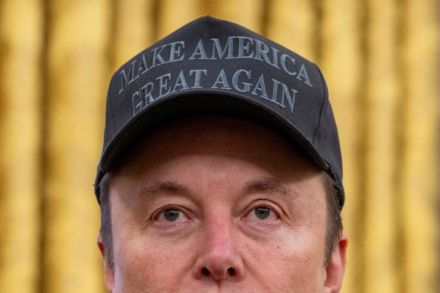
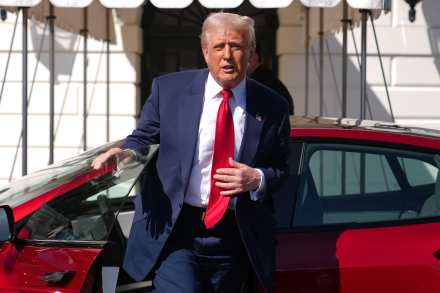
Tesla’s share price has halved, sales have slumped, boycotts are being organised and Chinese rivals are ready to steal the market. It has been a rough few weeks for the electric vehicle manufacturer, but Tesla's CEO Elon Musk has been handed a lifeline by Donald Trump: the US president gave his full-backing to the company by buying one of its cars. Heck, he might even have used his own money. There is just one snag: Trump’s high-profile support will make things worse for Tesla, not better. Outside the White House yesterday, Trump chose from five shiny new Teslas. A day earlier, Trump had posted on his Truth Social feed that ‘radical left lunatics’ were trying to damage the business and that its boss has been ‘penalised for being a patriot’.

Does Trump want a stock market crash?

From our UK edition

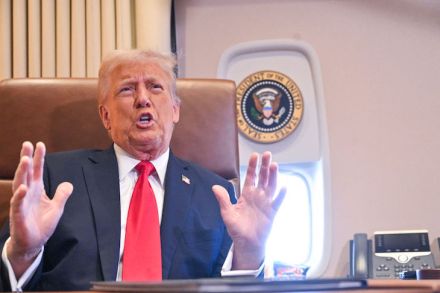
There ‘could be a recession’, said President Trump over the weekend with the kind of nonchalant shrug that suggested he was not too bothered one way or the other. He was even going to buy a Tesla to help out his ‘first buddy’ Elon Musk as the company’s share price collapsed. The markets had assumed there was a ‘Trump put’ – that is the President would always ride to the rescue to keep the bull market running. But there is no sign of it. Instead Trump seems perfectly relaxed about the huge losses, even encouraging the sell-off. Of course, it might just that he does not know what to do. But it is also possible that he wants a correction if not a full-blown crash, and is happy to see the indices fall. It has been a very rough few days for Wall Street.

Europe could pay the price for Germany’s debt shake-up

From our UK edition

Germany has finally decided to join the party – but Europe may come to regret it. After two decades of limited borrowing and fiscal restraint, Europe's biggest economy is finally joining the high-debt club. Incoming chancellor Friedrich Merz will borrow €800 billion (£670 million), and perhaps much more, to pay for extra spending on defence and infrastructure. Sure, Germany needs to spend more on its armed forces and on restructuring its economy. But it will also likely mean the euro-zone no longer has a single solvent member to anchor it. It is hard to see how this situation will end well for Europe. Merz is a centre-right, pro-business leader, but you might not know that from his decision to start borrowing on a massive scale.

The fatal flaws in Trump’s crypto reserve plan

From our UK edition

President Trump was very bullish about his decision over the weekend to create a 'crypto reserve'. It will legitimise crypto currencies, he said. It will turn the United States into the global hub for trade. And it will build the national wealth. In effect, the American government will build up a stock of Bitcoin and other digital currencies, much like the gold held in Fort Knox. But Trump's promise is too good to be true: it is a dangerous scam. Trump's crypto reserve will be wide open to market manipulation by the tech tycoons around him 'I will make sure the US is the Crypto Capital of the World,' Trump wrote on Truth Social. 'We are MAKING AMERICA GREAT AGAIN.

Will Labour MPs scupper a US-UK trade deal?

From our UK edition

A UK-US trade deal is on the table. On a surprisingly successful trip to Washington, US President Donald Trump made it clear to the Prime Minister Sir Keir Starmer that a trade agreement with the United States was close. “We could very well end up with a real trade deal where the tariffs won’t be necessary,” Trump said after his meeting with the British delegation. “We’ll see.” Britain's dire economic performance means that the UK is hardly in a position to turn down a deal With our economy in dire trouble, Britain needs this agreement more than ever. There is just one problem: Sir Keir will have to take on his own party to get it over the line. It is far from clear that he is brave enough to do so.

Will Trump’s ‘golden visas’ threaten Rachel Reeves’s tax plans?

From our UK edition

Fed up with Rachel Reeves's tax rises, with the calls for wealth and mansion taxes, and the loss of non-dom status? For $5 million (£3.95 million), there is now a very easy escape route. President Trump has just announced a 'golden visa scheme', allowing investors an easy path to American citizenship. That is aimed at attracting global entrepreneurs to the US. But it could also pose a real threat to the British economy. The UK depends on a small group of taxpayers to keep its huge state machine financed It is certainly a dramatic move. Golden visas that allow citizenship in return for investment have traditionally been restricted to a handful of micro-states and tax havens. President Trump has now decided to add the United States to the list. We will see how successful this is.

Trump is doing us a favour by targeting our dreadful tech laws

From our UK edition

It will be an unacceptable intrusion on our sovereignty. And it will pave the way for American domination of the internet. Ministers will no doubt be appalled by the suggestion by President Trump that he will impose tariffs on the UK if we don’t rip all the tech legislation that he doesn’t like, especially if that is driven by his new friends in Silicon Valley. But hold on. Sure, the interference in our domestic regulation is unwelcome. And yet, Donald Trump may also be doing us a favour – we have passed some terrible legislation and we would be better off without it.  The UK may soon face tariffs from the US, by far our largest export market, if we don’t make changes to the way we regulate the tech industry.

How France killed its start-up culture

From our UK edition

It would encourage digitally savvy entrepreneurs. It would be a hub for artificial intelligence. And it would encourage a wave of new companies, replacing the ageing giants of French industry. When Emmanuel Macron became president, turning the country into ‘le start-up’ nation was central to his mission to modernise the economy. In fairness, he had some success. And yet with one of the world’s most punishing wealth taxes passed by the National Assembly last week it is about to be killed stone-dead. It was always slightly implausible for a country best known for its long lunches, short working week, endless holidays, and generous early retirement ages, but Macron was determined to create a start-up culture in France.

Is X still worth £38 billion? Elon Musk thinks so

From our UK edition

When Elon Musk bought Twitter in 2022, his many critics gleefully predicted a catastrophe. We were told that everyone would quit the site for its rivals, such as Bluesky and Mastodon. The rebranding to X made Musk the object of ridicule. Musk was warned that he was unlikely to see a return on the $44 billion (£38.1billion) he had splashed out on the site. But hold on: today brings news that Musk is attempting to raise extra cash for his site at the same valuation as what he bought it for. Musk's critics will no doubt say he is deluded. But his business acumen speaks for itself: this is a man who built a car company from scratch and beat Nasa at its own game. So, yes: X under Musk's leadership has changed; but the site is thriving. X's death appears to have been greatly exaggerated.

Does it matter if Rachel Reeves fibbed on her CV?

From our UK edition

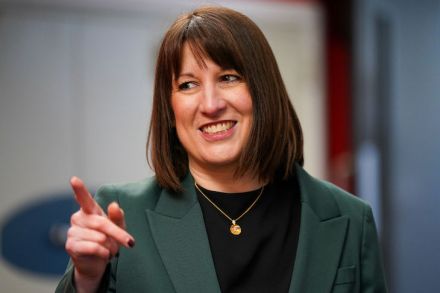
Rachel Reeves is in the headlines again, for all the wrong reasons. The Chancellor's entry in Who’s Who lists her as a contributor to the Journal of Political Economy. The problem? Reeves has, in fact, only published a single article in a far less prestigious publication, the European Journal of Political Economy. At this rate, it is hard to feel confident she is actually called Rachel The latest revelations follow claims that Reeves exaggerated the amount of time she spent working for the Bank of England. Her LinkedIn profile lists her as working at Threadneedle Street for nine months longer than she actually did.

Does Rachel Reeves’s industrial strategy even exist?

From our UK edition

The Labour government was pinning everything on an ambitious industrial strategy to boost growth. It was meant to make the UK the fastest-growing economy in the G7, reboot the economy, raise real wages and generate all the extra tax revenues that were going to pay for improved public services. The trouble is, there is not much sign of it. First we were told that it would be published in the spring, and now it has emerged that we will have to wait until June to finally see it. It is increasingly hard to avoid the conclusion that it may not actually exist.  Today’s GDP figures will have come as a small reprieve for Chancellor Rachel Reeves. A 0.1 per cent expansion for the last quarter was at least a positive figure, even if only just.

Cheaper mortgages won’t save Britain from recession

From our UK edition

Electricity bills are going up. Netflix is adding a couple of pounds a month to the price of a standard subscription, and council tax is going through the roof. Most of us are probably struggling with the cost of living. There is, however, one piece of good news: the sub four per cent mortgage is back. The only catch is that it won’t be around for long. Santander will this week start offering two- and five-year fixed rate mortgages at just 3.99 per cent, the first time any of the major lenders have been willing to lend money to homeowners for less than four per cent for several months. A price war may be about to break out, with the big lenders competing to offer better and better deals. Chancellor Rachel Reeves will no doubt be hoping that lasts.

Vance is right, Europe is smothering AI

From our UK edition

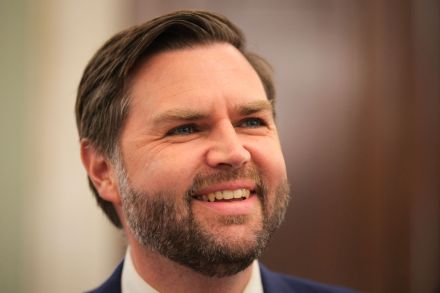
They won't have liked the message or the messenger. With characteristic bluntness, the American vice president J. D. Vance tore into the European Union’s smothering regulation of artificial intelligence today.  Still, Europe’s leaders should listen. Vance happens to be absolutely right. When President Macron convened an AI summit in Paris this week, he was probably hoping for the usual platitudes from world leaders about ‘transformative technologies’ and ‘empowering change’ – along with a few billion euros for some data hubs in France. Unfortunately, no one told Vance how these things are meant to work. In his speech he spoke his mind, and tore into his hosts.

Starmer should split from the EU if it hits back at Trump on tariffs

From our UK edition

The European Union has hit back against Donald Trump's decision to impose 25 per cent tariffs on steel imports. “Tariffs are taxes – bad for business, worse for consumers,” the European Commission president Ursula von der Leyen has said, adding that the levy “will not go unanswered”. Yet for all the fire and fury, Europe will not be quite as united as it wishes. The British government has made it quietly clear that it will not be joining the fight. The Daily Mail reports that the Prime Minister is poised to split from the EU by holding off retaliating. The PM right: this is a fight from which Britain has little to gain and a lot to lose. It isn't clear what kind of retaliatory tariffs the EU might impose on US imports into the Single Market.

Trump’s tariffs could kill Europe’s steel industry

From our UK edition

So, it seems that Donald Trump wasn't bluffing after all. On his way to the Superbowl, the president made time to impose 25 per cent tariffs on steel and aluminium imports into the United States, ramping up a trade war that has been looming ever since he moved into the White House last month. Speaking aboard Air Force One, Trump said he would slap the tariffs on "everybody". "If they charge us, we charge them," he said. These measures will hit Australia, Mexico, and East Asian manufacturers hard. But it will deliver a terminal blow to the European steel industry, unless it finally abandons Net Zero targets that were already crippling the industry.  The stock market had no doubts where the main impact of Trump’s punitive tariffs will be felt.

What Trump’s tariff ‘opening salvo’ will teach him

From our UK edition

Mexico and Canada have been given a last-minute reprieve from Donald Trump's tariffs. China has offered only the most half-hearted response to them. At this rate, even the European Union may be off the hook. Equity markets have rallied strongly as the trade war which seems about to crash the global economy appears to have been averted. But has it really? Investors are kidding themselves if they think the crisis is over.  Trump is clearly a leader who likes to get his own way In the end, it turned out not to be a re-run of the Great Depression, at least not for now.

Europe can’t win a trade war against the US

From our UK edition

It will hit back immediately. It will target the industries that will hurt the most. And it won’t be bullied or pushed around. We can expect to hear lots of tough rhetoric from European leaders today as the bloc prepares to retaliate against Donald Trump’s threat of tariffs of 10 per cent or more on European exports to the United States. There is just one problem, however. It can talk as tough as it wants to – but it is still going to lose.  With 25 per cent levies already in place on Canada and Mexico, and 10 per cent on China, steep tariffs on Europe now look inevitable.

Why Rachel Reeves’ growth plan is doomed

From our UK edition

The wait is over. After six months in government, Chancellor Rachel Reeves has decided that today is the day to step forward and pull the big lever marked ‘growth’. In a widely-trailed speech, she has outlined all the different ways her government is going to get the economy moving again. There is just one snag. The lever isn’t attached to anything. In reality, Reeves doesn’t have a clue where growth comes from – and that means her big speech this morning won’t change anything.  Reeves has, at least, finally got round to detailing how she plans to make the UK the fastest-growing economy in the G7. Cynics might wonder why she has been keeping it all to herself for so long, and why she didn’t include any of the new measures in her Budget. Still, never mind.

Britain is on track for a ‘Reeves recession’

From our UK edition

Business confidence is falling. Companies are warning that profits will be lower than expected, and they are already planning to cut their output. The Chancellor Rachel Reeves might have hoped that this week would open with better news on the economy, especially as she is planning a major speech to relaunch her plan for growth on Wednesday. Instead, it has started with yet more bad news. In reality, a ‘Reeves recession’ is now a certainty – and the Chancellor won’t be able to escape the blame for that. The CBI reported today that British businesses are braced for a ‘significant fall’ in trading over the next few months.