Matthew Lynn

Matthew Lynn is a financial columnist and author of ‘Bust: Greece, The Euro and The Sovereign Debt Crisis’ and ‘The Long Depression: The Slump of 2008 to 2031’

Pollsters should shut up shop after this election disaster

From our UK edition

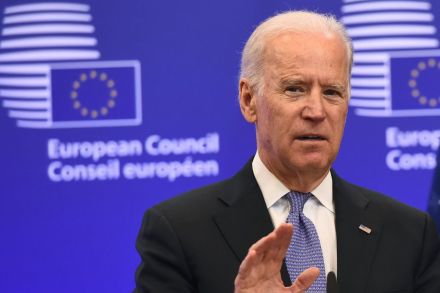
High Street chains are closing all the time. The restaurant chains are shutting their doors. The gyms are going out of business and it doesn't look as if all the airlines will survive. There have been lots of different industries that have been wiped out this year. But now we can add one more to the list: the polling companies. It remains to be seen who won the US Presidential election. Donald Trump and Joe Biden may fight it out for a few more days yet. But it is absolutely clear who lost. The people who are paid plenty of money to talk to voters and work out what they are thinking. It was meant to be a 'Blue Wave', meaning the Democrats would take both the White House and Congress, probably in a landslide.

Trump is flawed but he got one thing right

From our UK edition

By tomorrow morning, he should be back on one of his golf courses. Or prepping for a new series of the Apprentice. Or quite possibly spending more time with his lawyers. Either way, if the polls and bookmakers are to be trusted, Donald Trump will be the first sitting president to be ejected from office since George Bush Senior, way back in 1992. In truth, he won’t be much missed. His bullying, narcissistic manner demeaned the office. His estranged relationship with the truth made him an unreliable ally. And his lack of empathy made him a poor leader at a time of crisis. But in one respect at least he will have a legacy. He is the first leader since Ronald Reagan and Margaret Thatcher to show two things; that you can deregulate; and that you can dramatically reduce taxes.

The eurozone is in deep trouble

From our UK edition

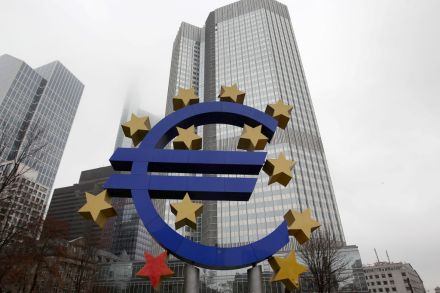
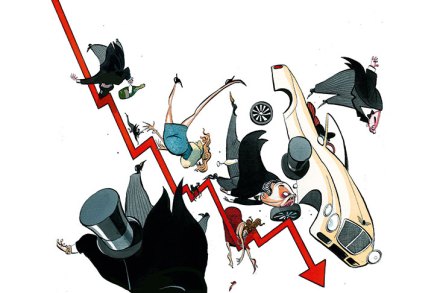
In Germany, the DAX index – the benchmark for the economy – is already down 4 per cent today. In France, the benchmark CAC-40 is down by 3.3 per cent – heading toward the low points seen in the spring. Across Europe a stock-market crash is starting to unfold. Is it a panic? An overreaction of edgy traders? Not really. The reality is that the markets have noticed something that not many people have yet picked up on: that the Eurozone is at the epicentre of the second wave of Covid-19 – and the economic damage this creates is going to be a lot worse than it was in the spring.

Ireland’s lockdown war on the economy

From our UK edition

When they were first introduced in the spring, lockdowns were meant to be a way of controlling the spread of Covid-19. But, in much the same way that viruses themselves sometimes do, they have mutated into something far more sinister and potentially far more dangerous – a way of waging war on every form of normal economic life. Last week, the Welsh banned the sale of non-essential goods in the few shops that are allowed to remain open. Now the Irish have joined in. From last week, the country has introduced one of the strictest lockdowns in the world. Bars and restaurants are closed for all but takeaway service. People are only allowed to exercise up to three miles from their home. Offices will mostly be closed, and people will have to work from home where they can.

Mark Drakeford has declared war on Wales’s economy

From our UK edition

Infections are rising. Hospitals will be overwhelmed. And very soon the vulnerable will start to die. From today, the Welsh First Minister Mark Drakeford is closing down Wales with one of the strictest lockdowns in Europe, shuttering all but essential shops. For the next 17 days, hotels, pubs, restaurants and for a while, schools, will be closed as well. That is meant to fight Covid-19. And yet now the small print is emerging it is increasingly looking like something else is going on in Wales: a war against the economy and the free market. It would be easy to imagine that the Welsh lockdown is very similar to the national one in April and May. In most ways it is.

Rishi Sunak needs to start planning for the post-Covid economy

From our UK edition

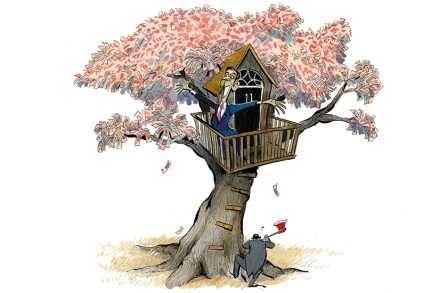
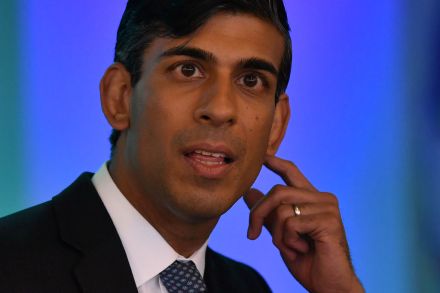
More help for bars and restaurants. Grants for businesses that are forced to close. Additional funding for the self-employed. The Chancellor Rishi Sunak has started shaking the magic money tree again, promising extra assistance to keep the economy alive during a second wave of Covid-19. There is a problem, however, and as the Chancellor runs through rescue package after rescue package it is becoming increasingly apparent. While Sunak is very good at coming up with wheezes to get through the next few weeks there isn’t yet much sign of a plan for a post-Covid economy – and that is increasingly what is needed. The problem is not the measures themselves.

A circuit breaker would break the economy

From our UK edition

More jobs will be lost in the long run. Businesses will go under. And government debt will soar even higher. Labour’s Shadow Chancellor Anneliese Dodds is pushing the argument that a circuit breaker — that is a short, sharp national lockdown — will be cheaper in the long run. It will keep the virus under control, and therefore enable the economy to bounce back quicker. Channelling her inner Gordon Brown, she has even come up with a very precise figure for that. Apparently, not having a circuit breaker will cost us £110 billion. But hold on. Even leaving aside the point that precise estimates should always make us suspicious — is it really £110 billion, rather £107 billion, or £113 billion? — that is crazy.

Covid has killed the EU’s crowning achievement

From our UK edition

Border posts have been dismantled. The armed guards and sniffer dogs have been retired. And the surly looking official who glances at you suspiciously before curtly handing back your passport has long since been consigned to the pages of dusty old spy thrillers. Over the last couple of decades, if the European Union had one crowning achievement it was surely freedom of movement. Borderless travel across the continent was by far the most meaningful change in daily life it had achieved. Indeed, when some Remainers in this country start blubbing into their Prosecco about everything they have lost by leaving the EU, unrestricted travel is often what bothers them most. But hold on. It now turns out that freedom of movement is a far more fragile liberty than we thought.

Silver linings: the asset that’s outperforming gold

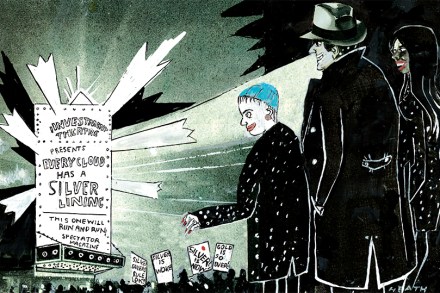
It could have been technology stocks such as Amazon and Zoom, of course; or government bonds; or cash; or a property, preferably in the countryside. As the COVID-19 crisis rippled around the world and locked-down economies crashed into one of the worst recessions ever recorded, there were plenty of different ways investors might have tried to ride out the storm. But there was one asset they could easily have overlooked, and yet which would have outperformed almost any of them: silver. For much of the past decade, silver has been ignored as a largely irrelevant alternative to gold. In the past few months, however, it has started to shine. The precious metal has soared in price, outperforming most alternatives.

silver

The great Bounce Back fraud bonanza

From our UK edition

Fake companies set up under false names. Phantom employees invented to claim compensation. Start-ups trousering loans for ventures that don’t exist. Meals that were never eaten. The British economy has been in a bad place for the last six months. But it turns out one small corner of the economy has been flourishing: defrauding the public purse. The Chancellor's extraordinarily generous range of schemes to keep businesses afloat may have been necessary to prevent a complete collapse in output. But they have also proved a bonanza for spivs, chancers and con men, and that too will have a cost.

Why is Jamie Oliver so against freedom of choice?

From our UK edition

It will involve hundreds of hours of haggling over thousands of different products. It will have to pass torturous debates in Congress. And it will have to survive an election cycle or two. There are lots of hurdles in the way of a British trade deal with the United States. But now we have perhaps the greatest obstacle of all. Jamie Oliver doesn’t like it. Fresh from tidying up the collapse of his restaurant chain, and reminding us all how to get through lockdown by rustling up a tasty pasta bake, the chef is back with a new campaign, this time against ‘sub-standard’ American food. There is a problem, however. There is a very simple solution to the different ways food is produced on either side of the Atlantic.

Winning shot: how the vaccines race has become a power struggle

From our UK edition

34 min listen

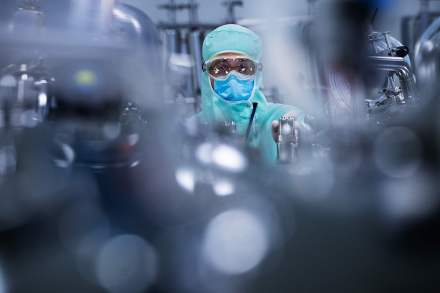
Vaccines are normally in the realm of scientists; but not this time as world leaders race to be the first. (00:50) Brexit is heating up, but is the government in a stronger position than it seems? (13:35) And a modern day Caligula - the life and times of the Thai king Rama X. (22:40)With journalist Matthew Lynn; immunologist Beate Kampmann; our political editor James Forsyth; YouGov pollster Marcus Roberts; and Asia historian Francis Pike.Presented by Cindy Yu.

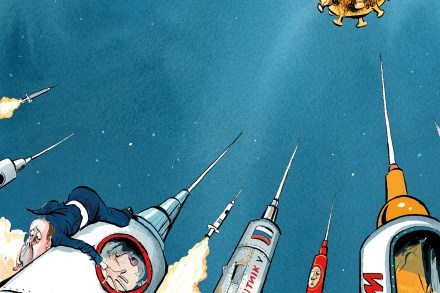
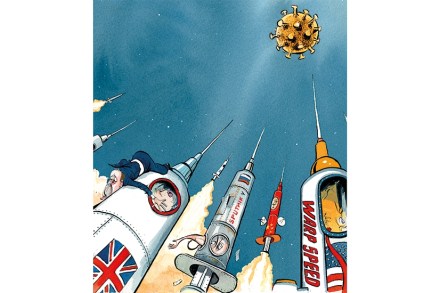
The race to find a Covid vaccine has become a global power struggle

From our UK edition

It could be the most audacious piece of political theatre of modern times. At the end of next month, just a week or so before Americans choose their next president, we could see Donald Trump standing on the White House lawn in front of a handful of friendly journalists, rolling up his sleeve and looking solemnly into the camera with hardly a wince as a nurse expertly administers America’s newly licensed coronavirus vaccine. ‘We did it,’ he will announce, adding that the biggest mass vaccination programme in history is ready to roll out. ‘An American vaccine that has made America great again.’ Far-fetched? Ridiculous? Perhaps not. Even though trials of Britain’s Oxford vaccine were paused this week, others remain on track.

Oxford’s vaccine delay has thrown the global race wide open

From our UK edition

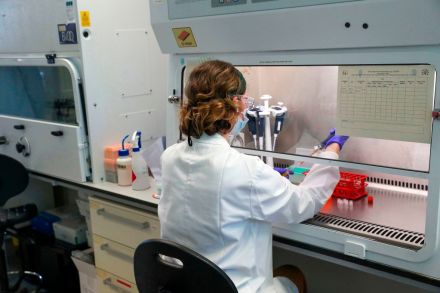
Even a politician as tenaciously optimistic as Matt Hancock was struggling to put any positive spin on it: the world has woken up to the disappointing news that trials of the Oxford vaccine for Covid-19 had been paused after an adverse reaction in one patient. The Oxford-AstraZeneca vaccine was one of seven in Phase 3 trials, in which doses are administered to thousands of people of different ages and varying states of health. A spokesperson at Oxford has said the pause ‘is a routine action which has to happen whenever there is a potentially unexplained illness in one of the studies, while it is investigated, ensuring we maintain the integrity of the trials.

Rishi Sunak needs to learn to add up

From our UK edition

It is, by any measure, a heck of a lot of pizza. The ‘Eat Out to Help Out’ scheme turns out to have been a huge success. We learned today that is was used more than a 100 million times in August. In many cities, it was virtually impossible to get a table from Monday to Wednesday. Plenty of restaurants were grateful for the sudden boom in business, and no doubt a few were saved from closure. There is a problem, however, and it is a significant one. It turns out that we have a Chancellor who struggles to add up, and Treasury officials who don’t know much about basic economics – and that matters. By any measure, Rishi Sunak’s half-price meal deal, launched to persuade us all to get back into the habit of eating out again, has been a hit.

In defence of vaccine nationalism

From our UK edition

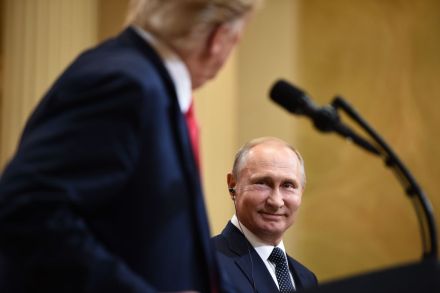
Donald Trump is, perhaps predictably enough, pulling out of the World Health’s Organisation’s global vaccine programme. The Russian president Vladimir Putin has been cutting every corner to get a Russian shot out first, while allegedly sending spies to steal the Oxford one. And China is racing to have the first vaccine on the market, already trying one out on the military, and allegedly hacking the US company Moderna. As the Covid-19 crisis drags out, ‘vaccine nationalism’ is rampant. Everyone from the WHO to the European Union to the United Nations solemnly condemns that. We all have to work together to find a vaccine, and then distribute it fairly, we keep being told.

The work from home brigade should be careful what they wish for

From our UK edition

No more commuting. An end to irritating conversations with slightly dull colleagues. The boss can’t monitor how much time you spend on Facebook anymore, and you have plenty of time to bake sourdough bread/try out online pilates/read the whole of Proust (delete as applicable). A few of us might even be able to carry on earning a salary while spending much of the year in Provence or Tuscany. It is perhaps no great surprise that the British have taken to working from home so enthusiastically. After all, what’s not to like? Well, perhaps this: while it may be great for now, many staffers may soon find that they aren’t employees anymore, simply expendable gig workers – and that isn’t quite so much fun.

The stock market isn’t the success story Trump thinks it is

COVID-19 is still raging, with little sign of coming under control. The economy is already a tenth smaller than it was at the start of the year. Joblessness is soaring. And the budget deficit? Don’t even ask. But, hey, perhaps we shouldn’t worry about any of that. As the President of the United States keeps pointing out, the stock market is doing great, and, in his opinion, anyway, that means America, to borrow the kind of slogan that fits neatly onto a baseball cap, is great again as well. There is a problem, however, with Trump’s breezy 21-character analysis. It is not really true. The main equity indices reflect many different things, and the health of the economy is not always one of them. https://twitter.

stock market

Why are we so sniffy about the Russian vaccine?

From our UK edition

It didn't help that it was unveiled by a swaggering Vladimir Putin. Or that it was called Sputnik V – a hardly subtle reference to the Cold War. Nor that we have grown used to Russian meddling and mis-information. Even so, there is still something a little surprising about the hostility towards the Russian vaccine for Covid-19 going into production this week, and set to be made widely available by October. Medical opinion seems to be universally hostile, condemning the vaccine as untested and potentially unsafe. The WHO sounds suspicious, and a range of government agencies have started to sound alarmed. A few have even started to make the argument that releasing a vaccine too early may well set back the fight against the virus.

Sweden’s Covid-19 strategy is already paying off

From our UK edition

There are lots of different ways of measuring the terrible state of the global economy. The collapse in overall output. The fall in trade as ports and airports empty. The trillions printed by central banks, and the soaring price of gold as investors lose faith in a recovery. But one is surely this: keeping the drop in GDP in single digits actually looks pretty good. Sweden this morning reported its flash estimate of second quarter GDP. Output was down by 8.6 per cent compared with the first quarter, and 8.2 per cent compared with the same quarter last year. It was, as the release helpfully pointed out, the worst result it had recorded since it started this series of statistics in 1980. Without the Scandinavian reserve, however, it could have put a different spin on the figures.