Matthew Lynn

Matthew Lynn is a financial columnist and author of ‘Bust: Greece, The Euro and The Sovereign Debt Crisis’ and ‘The Long Depression: The Slump of 2008 to 2031’

Is it time for Rachel Reeves to give Britain a tax cut?

From our UK edition

The self-employed have paid up. And investors are paying record amounts of capital gains tax. The public finance figures for January have been published, showing record tax receipts and handing the Chancellor, Rachel Reeves, a surprise £30 billion bonus. It is great news that the public finances are stabilising. Manchester mayor Andy Burnham may not be able to complain about being ‘in hock to the bond markets’ for much longer. And yet, surely this also shows that Britain is being overtaxed? Is it perhaps time to hand some of the money back?  The UK’s public finances are suddenly in much better shape, with a record surplus recorded for January. The explanation for this is simple enough. Self-assessment tax returns brought in an extra £3.
Bring on Rachel Reeves’s boring Spring statement

From our UK edition

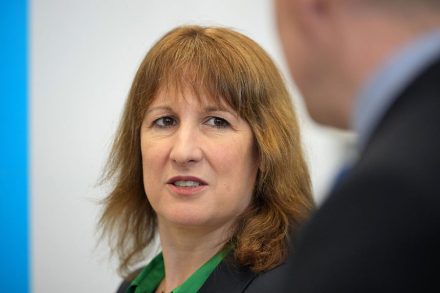
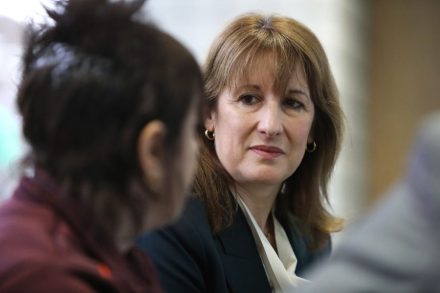
For the Chancellor, Rachel Reeves, to tell everyone in advance that her Spring statement will be ‘boring’ is a little like Nigel Farage telling us he might be popping out for a pint, or Sir Keir Starmer telling us he might change his mind. It is useful information, but hardly a huge surprise. Still, the new ‘no drama’ Reeves will at least be an improvement on her former tax-raiding iteration – the British economy could use a break from her attempts to improve it.  With the Spring statement looming in just under a fortnight's time, we will at least be spared the constant leaks of madcap ideas that led up to Reeves's first and second Budgets. According to briefings from the Treasury, 'the goal is to be as boring as possible'.

Rejoining the EU single market won’t boost Britain’s growth

From our UK edition

In his speech in Munich on Saturday, the Prime Minister, Sir Keir Starmer, made it very clear that he was planning to rejoin the European Union’s single market, perhaps as early as this year. The argument in favour of this is that it will boost growth – and it will put Britain at the heart of a defence-fuelled industrial revival. But there is just one problem: joining the single market won't do anything to improve Britain's failing economy and may well make it worse. Sir Keir has gone further than any of his colleagues in embracing the EU. Instead of just joining the European customs union, he now wants to align fully with the single market. Very soon he may well be campaigning to rejoin the bloc completely.

Net zero is forcing BP into irrelevance

From our UK edition

It should have moved ‘Beyond Petroleum’ by now, with wind, solar and hydroelectric power powering its profits. If you rewind twenty years, BP had a clear plan to place itself at the forefront of the green energy transition. It hasn’t worked out as they had hoped. Instead, today the company announced it was suspending share buybacks to shore up its balance sheet, sending its shares tumbling. Its rival Shell is in better shape, but only just. As both of Britain’s oil giants struggle, it is becoming painfully clear that the obsession with net zero has destroyed what was one of our major industries – and it will be very hard for it to recover now. It has turned into yet another dreadful day for BP’s long-suffering shareholders.

Musk’s SpaceX is worth every penny

As the hype builds for the reported $1.5 trillion (£1 trillion) IPO of Elon Musk’s SpaceX later this year, there will be plenty of critics who argue the company’s marketing has more hot air than one of its rockets. It has been claimed by some that the IPO will be worth more than the top seven companies currently listed on the London Stock Exchange – including century-old giants such as Shell, HSBC and AstraZeneca – combined. And yes, sure, there is probably an element of wishful thinking in these reports, as there often is with Musk. But SpaceX also has the potential to become one of the giants of the 21st-century economy and is very likely to prove its worth. SpaceX's will be the biggest IPO of the year.

Don’t give up on gold just yet

From our UK edition

Anyone who thought that gold, the world’s oldest form of money, was a safe asset that they could tuck away and forget about has been through a rough few days. It has soared, then plunged, then soared again. Its price has been even more volatile than Bitcoin or one of the overhyped artificial intelligence stocks. Even so, amid all the noise, one point is surely clear: gold’s bull market is not over yet – and it is likely to recover very soon. It has been quite a ride. After surging to an all-time record of $5,580 (£4,085) an ounce last week, gold tumbled by 9 per cent on Friday. It then fell by another 3 per cent as the markets opened on Monday, taking it back down to $4,554 (£3,334).

Is time up for Tesla?

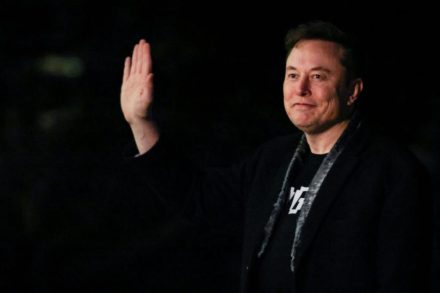
Has Tesla run out of road? The electric car firm put plenty of spin on its annual results, talking bullishly about the new projects that were coming to fruition. Elon Musk's company plans to go big on robots, pivot to Artificial Intelligence, and develop its self-driving unit. Yet there was no disguising the real message from its figures. With falling revenues, and the decision to scrap its premium S and X models, Musk’s pioneer of EVs is in deep trouble – and it may be too late to rescue the company now. Fourth-quarter revenues slumped three per cent to $24.9 billion Fourth-quarter revenues slumped three per cent to $24.9 billion, Tesla said after US markets closed yesterday – pushing revenues for the year down 3 per cent to $94.8 billion.

Is any other investment as good as gold?

Last year might have proved a good time to own shares in the chip-maker Nvidia, along with the booming American tech giants. Or a piece of the defence manufacturers as the world re-arms. Or to hold a position in some of the rapidly growing economies of South America or Asia, or even one of the hyped-up crypto currencies. There were plenty of places investors expected to make money over the past year. As it turned out, however, there was one asset that outpaced them all, even though it generates no income: gold, and to an even greater extent, its junior sibling silver. With government debt soaring out of control, the precious metals are more valuable than ever – and so long as that is true, they will keep on climbing. There is no question it was the stand-out asset of last year.

Elon Musk would be a great new owner for Ryanair

A Tesla would whisk you to the airport. The planes would be self-flying. And robots would serve the over-priced sandwiches, while, inevitably, every seat is hooked up to a live X feed. A full-scale takeover of Ryanair by Elon Musk may still be some way off, but with the billionaire polling his followers on X on whether he should make a bid for the budget airline, it is no longer impossible. Ryanair’s long-suffering passengers should welcome the prospect of a Musk takeover – because, while the airline revolutionised low-cost travel, Ryanair is stuck in a rut. The spat between Elon Musk, and Ryanair’s pugnacious CEO Michael O’Leary is certainly entertaining for anyone who enjoys watching a contest between out-sized corporate egos.

Venezuela could transform the global oil industry

From our UK edition

No one really knows how the situation in Venezuela will unfold over the next few years following President Trump’s audacious kidnap of its former leader Nicolas Maduro. It may or may not be legal. It might restore democracy or it might just pave the way for another dictator. But one point is certain: America looks set to reinvent the country's oil industry. It is hardly surprising that investors are already jumping on that bandwagon.  Oil shares have been soaring ever since the news broke over the weekend of America's raid in Caracas, propelling the FTSE-100 – which is dominated by giants such as Shell and BP – to record highs. President Trump has already promised to restart Venezuela's oil industry, and is even offering subsidies to encourage a wave of investment.

We don’t need a stealth tax on rotisserie chicken

From our UK edition

It depends on whether you re-heat it when you get home, apparently. Or whether it is sold in a bag labelled hot food. The supermarket chain Morrisons has lost a fiendishly complex court battle over whether its rotisserie chickens should be subject to VAT or not. It will have to stump up an extra £17 million to the Treasury. But hold on. This is crazy. The last thing the UK needs right now is what amounts to a stealth tax on spit-roasted poultry.  This is crazy. The last thing the UK needs right now is what amounts to a stealth tax on spit-roasted poultry The tax lawyers will no doubt study the small print of the judgment for months.

Why it’s good the NHS is paying more for medicines

From our UK edition

We have caved in to bullying from President Trump. It will put NHS budgets under even more pressure. And the Green leader Zack Polanski will probably start claiming on X that the entire health service will be sold off to American conglomerates. There will be plenty of critics of the deal between the UK and the US on pharmaceutical tariffs. But they ignore a simple point: it is a great deal for one of the country’s most important industries.  Finally, the UK will now have a key competitive advantage over the EU President Trump is planning to impose punitive 100 per cent tariffs on medicines imported into the US, both to encourage domestic manufacturing, and to try to force prices lower. For the UK industry, that was a huge threat.

The Budget has created a £2 million house-price limit

From our UK edition

It has lots of original features. It is close to good schools, and with a few cans of Farrow & Ball it will make the perfect family home. The estate agents already have lots of familiar lines they use to sell a property. From next year, they will have one that will be more crucial than any other: it is priced at £1.95 million, just escaping the new ‘mansion tax’ introduced by the Chancellor Rachel Reeves in her Budget. In effect, we have just introduced a price limit on houses – and it will distort the market even further. The UK has had some spectacular badly designed taxes over the decades. But the new mansion tax looks set to prove one of the worst The UK has had some spectacular badly designed taxes over the decades.

Reeves’s Budget is dead on arrival

From our UK edition

The Budget speech has no doubt been finalised. The red box has been dusted off. And the pie charts are ready to be released. Assuming Chancellor Rachel Reeves doesn’t call in sick tomorrow, the Treasury, along with the rest of us, will be waiting to see how tomorrow’s Budget is received. But do we really need to wait? With the pound falling, the economy stagnant, and house prices sliding, the truth is that this Budget is dead on arrival. After all the leaks and spin we have endured over the past few months, it may seem as if there have already been ten Budgets. A dozen or more major tax changes have been floated, scrapped, then quietly revived in a stripped down form.

Don’t write off Bitcoin yet

Bitcoin is crashing all over again, and it is taking the smaller crypto currencies down with it. It has fallen by a quarter from its highs, and there is little sign that the relentless selling is going to stop anytime soon. Plenty of people will be reheating arguments about how the digital currency is completely worthless and that the bubble was always going to pop one day. But Bitcoin has been through plenty of bear markets and it has always bounced back – and there is little reason to believe this crash will be any different. It is certainly a substantial fall. From a high of $114,000 (£87,300) a coin at the end of last month it has fallen all the way back to $83,000 (£64,000). It has been just as bad for the other crypto currencies, such as Ethereum and Dogecoin.

Are AI stocks about to crash?

Bitcoin has lost almost a quarter of its value. The tech-heavy Nasdaq index on Wall Street has started to fall. And even leaders of the industry, such as the Google CEO Sundar Pichai, have started to warn about valuations getting out of control. We already knew that AI was driving a boom in investment. But this week there are worrying signs the market is about to crack. The only real question is whether that turns into a full scale crash. Bitcoin, as so often, is leading the market rout. More than $1 trillion has been wiped off the value of the crypto market over the last six weeks, with Bitcoin itself down by 28 per cent since its peak.

The damage from Reeves’s ‘exit tax’ idea has been done

From our UK edition

It appears that Rachel Reeves has scrapped her plans for an ‘exit tax’ that would impose a huge levy on entrepreneurs leaving the UK – at least for now. But is anyone actually going to be fooled by that? Once the concept has been leaked, the only rational response is to get out while you still can.  With less than two weeks left before the Budget, no one seems to have any idea what might be in it, including, slightly alarmingly, the Chancellor Rachel Reeves. The briefings change minute by minute. Even so, it appears that plans for an ‘exit tax’ have been quietly shelved. The Treasury has worked out that it will be very difficult to collect, given that it will be very hard to identify what assets might be included, and what they might be worth.

Will Rachel Reeves listen to easyJet’s warning?

From our UK edition

We are all familiar with the different excuses for why we find ourselves stuck at the Spoons in Luton or Stansted airport for hours, trying to avoid the stag party, as we wait for our flight. There is fog over the Channel. The French air traffic controllers are on strike. There are not enough planes. But there may soon be another reason to add to the list: the Chancellor, Rachel Reeves, has increased taxes too often. The boss of easyJet has warned today that if flight levies go up again in the Budget, he will have to take capacity out of the UK market. Just like France, we may be about to tax one of the most vibrant sectors of the British economy into extinction. The rapid expansion of low-cost flying, which has transformed the aviation industry, may be about to come to an end.

Will London tempt the New Yorkers fleeing Mamdani?

From our UK edition

As New York’s wealthy elite weigh up the options under their new ‘democratic socialist’ Mayor Zohran Mamdani, many of them are now reported to be considering fleeing to London instead. But will it really offer them the safe harbour they are searching for? The truth is that under the Labour Chancellor Rachel Reeves and Mayor Sadiq Khan, Britain's capital has become an even worse place to be rich than the city they are looking to get out of.  There are plenty of reasons for American billionaires to feel nervous about the Mamdani regime. The new mayor has promised an extra 2 per cent tax on incomes above $1 million (£758,000) as well as higher corporate taxes to fund his plans for free buses and childcare. Of course, it remains to be seen whether he can make that happen.

The Bank of England won’t risk bailing Rachel Reeves out

From our UK edition

After yet another dreadful week, the Chancellor Rachel Reeves must be praying the Bank of England helps her out by cutting interest rates tomorrow. It would reduce the huge amount of interest the government has to pay, it would put more money in people’s pockets, and it might even stimulate growth. The trouble is, the Bank’s governor, Andrew Bailey, can’t afford to bail Reeves out of the hole she has dug for herself. If the Bank does, it will be risking its independence. Even the City’s experts have no clear idea what the Bank will decide on interest rates this week. The markets have priced in a one in three chance of a cut, rising to a two in three chance of a cut by the end of the year.