Matthew Lynn

Matthew Lynn is a financial columnist and author of ‘Bust: Greece, The Euro and The Sovereign Debt Crisis’ and ‘The Long Depression: The Slump of 2008 to 2031’

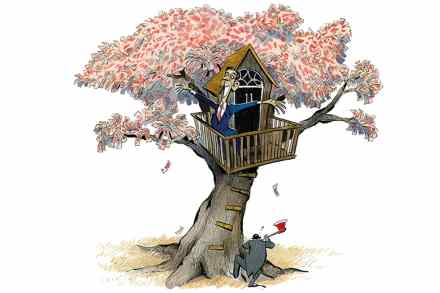
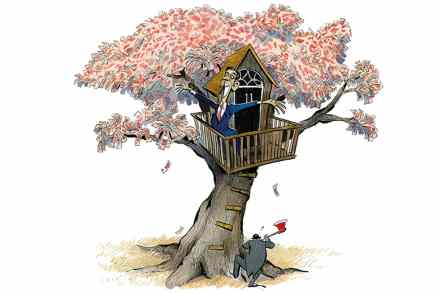
Soaring inflation could tank Rishi Sunak’s Tory leadership bid

From our UK edition

Wages are rising. The economy is growing. The stock market is on the way up, and exports are booming. As he prepares for a long summer trying to persuade the membership of the Conservative party to make him prime minister, Rishi Sunak probably wishes he could be transported to some parallel universe where he could boast about his record as Chancellor. The trouble is, he is stuck with this one: and the news is relentlessly bad. This morning, inflation was up yet again, hitting a 40-year-high of 9.4 per cent. Yesterday, it was real wages falling sharply, as workers' income failed to keep up with rising prices. Over the next six weeks, as Sunak is out on the hustings hustling for votes, it is only going to get worse and worse.

How Sunak can save his stumbling campaign

From our UK edition

He has the widest support among MPs. He easily beats any other candidate with the voters, and is the only one consistently ahead of Sir Kier Starmer in the polls. He has experience, a fluent manner on TV, and as his slick campaign has reminded everyone, he is the most professional campaigner among the politicians left in the race. Against an often underwhelming, inexperienced group of rivals, the former Chancellor Rishi Sunak should be a certainty to become leader of the Conservative party, and so Prime Minister, by the autumn. There is just one catch: his stubborn attachment to raising corporation tax – when in truth, ditching that policy would be the one sure way of rescuing his stumbling campaign.

If the EU disliked Boris, they’ll hate his successor

From our UK edition

Three, five, or perhaps even ten whole minutes. In a more civilised, parallel universe, perhaps Europe's big wigs would have allowed a slightly more dignified period of silence following Boris Johnson’s resignation speech before cracking open the foie gras and champagne. In this one, however, the gloating started immediately.  'The departure of Boris Johnson opens a new page in relations with Britain,' wrote ex-chief Brexit negotiator Michel Barnier. 'Boris Johnson's reign ends in disgrace, just like his friend Donald Trump,' tweeted the former Brexit coordinator of the European parliament Guy Verhofstadt. No doubt we will see a lot more in that vein in the hours and days ahead. But hold on. As so often in the past, the Brussels elite is badly mis-reading British politics.

Rishi Sunak won’t be missed as Chancellor

From our UK edition

Rishi Sunak's resignation was, without question, a brave, honourable and dignified decision. By stepping away from the cabinet, the Chancellor Rishi Sunak may well have done enough to salvage his reputation among Conservative MPs and party members. Perhaps he might even have rescued what was once seen as a potentially meteoric career. But although he may be missed as a politician, one thing is clear: Sunak won’t be missed as Chancellor. In reality, he was a catastrophe in the role – and now that he has gone, his successor will have a chance to reverse his policies. The Chancellor leaves a worse legacy than perhaps any predecessor of modern times Whether Sunak has penned a note for his successor quipping that the money is all gone remains to be seen.

German industry is grinding to a halt

From our UK edition

The Soviet Union had only just collapsed. John Major was still a relatively fresh-faced Prime Minister. And the internet consisted of a few desktop computers linking together a handful of laboratories. The world was a very different place when Germany last posted a trade deficit way back in 1991. But on Monday, the country recorded that imports outstripped exports for more than 30 years. True, other countries are recording huge deficits, not least the UK. For Germany, though, it matters more. Its entire economy has been built around creating an industrial machine that dominates global markets. That machine is now grinding to a halt.

Macron’s Russian oil plan is bound to fail

From our UK edition

It will drain Vladimir Putin of funds for his war machine. It will bring down inflation. And it might even be enough to stop the global economy from tipping into recession. As President Macron put forward his wheeze for solving the energy crisis this week, he no doubt had plenty of persuasive arguments. He appears to have brought the rest of the G7 on board for his plan for a global cap on the price of oil. There is just one problem. Like most price controls, it is not going to work. Indeed. It will only make the crisis worse. Of course, everyone can see where Macron is coming from. Ever since Russia invaded Ukraine, and embargos started to be placed on its energy, the price of oil has soared. From $74 a year ago it has risen to $117 a barrel and could go a lot higher still.

Inflation is a social evil, so why don’t our leaders care?

From our UK edition

It was a ‘destroyer of society’, a ‘tax on ordinary people’s savings’ and a threat to social order. You don’t have to spend very long browsing the history books to find thumping quotes from Ronald Reagan or Margaret Thatcher denouncing rising prices as an evil that had to be defeated. And today? Even with prices in the UK now rising at 9.1 per cent, the fastest for 40 years, there are just a few mumbled apologies, coupled with some evasive excuses. That is not good enough. If we are going to defeat inflation all over again, it will take some leadership. We learned today that inflation has nudged up again, this time well past the 9 per cent barrier.

The eurozone crisis is back

From our UK edition

Stock markets are crashing. Bond yields are soaring. And the cryptos are evaporating. There is so much going on in the financial markets right now it would be hard to miss the most significant event. The eurozone crisis, which almost broke apart the single currency back in 2011 and 2012, is back. And this time around, there is no very obvious way of fixing it. With inflation soaring across the world, the era of plentiful printed money coming to an end and interest rates starting to rise, every kind of financial market is in turmoil. Investors are adjusting to a new set of circumstances, and doing so very quickly. So far, only a few traders who spend their days glued to Bloomberg terminals have paid very much attention.

Why Biden’s inflation plan will fail

From our UK edition

It sounded impressive at the time. On the last day of May, a whole ten days ago, president Biden laid out a three-part plan for bringing inflation back under control. It consisted of making sure the Federal Reserve was allowed to do whatever it took to control prices, releasing oil and gas reserves to try to bring down the soaring costs of energy, and fixing supply chains to try to make industry and retailing more competitive. ‘I have made tackling inflation my top economic priority,’ he announced grandly. To listen to the rhetoric from the White House, you might think that this was an issue that could be fixed with a few tweaks to public policy, after which the President could happily go back to taxing and spending on an unprecedented scale. The problem would be solved.

Things are about to get even worse for Boris Johnson

From our UK edition

A round of tax cuts? A splurge of infrastructure spending? Or perhaps a whizzy way of subsidising housing? Boris Johnson could even decide to forgive student debts, and hand out a massive Christmas bonus for pensioners, craftily dressed up as a cost-of-living rebate.  There are no doubt lots of such ideas being kicked around in Downing Street today to relaunch the Johnson premiership and save Boris's skin after a huge rebellion by Tory backbenchers. But here’s the problem for the PM: the economy is about to turn toxic. The dismal reality is that Boris isn’t going to be able to spend his way out of this scrape.

We’ll all pay the price for Rishi Sunak’s handouts

From our UK edition

A £400 rebate on electricity bills. A cash handout to the poorest households. And a windfall tax on the energy companies that generate the power to keep the lights switched on to try and pay for it all. Chancellor Rishi Sunak was back to doing what he likes to do best today: handing out vast quantities of free money, while making the UK a less and less attractive place for businesses to operate. It was billed as a fix for the ‘cost of living’ crisis. Yet very soon it will become clear it was nothing of the sort. After all, you can’t tax your way out of inflation; taking the approach Sunak has opted for will only make things worse.

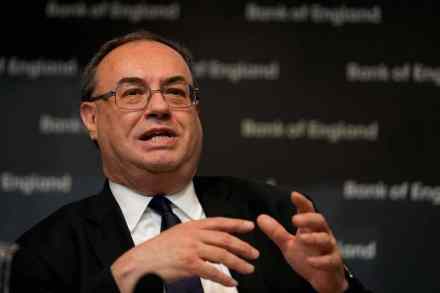
Andrew Bailey is floundering in the face of soaring inflation

From our UK edition

Prices are rising at the fastest pace for 40 years. Real wages are falling rapidly. The cost of servicing the government's vast debts is escalating, and companies are struggling to keep up with the rising price of raw materials. Still, not to worry. Fortunately, a quarter of a century ago Gordon Brown wisely decided to hand over management of inflation to a supremely competent group of expert technocrats, so that we could have stable prices and steady growth forever - or indeed an ‘end to boom’n’bust’ as Brown would have inevitably put it. Oh, but hold on. It turns out it is not quite going to plan.

The tech bloodbath won’t last forever

From our UK edition

To paraphrase the American senator famously talking about government spending, a trillion dollars here or there and very soon you are talking about serious money. Over the last week, a massive $1 trillion has been wiped off the value of the major American technology companies, and, if measured since the start of the year, the carnage is far worse. But is it all as bad as it seems? Sure, some of the excesses of lockdown are being trimmed, and rising interest rates are starting to hurt some wildly over-valued companies. But nevertheless, tech is still where the growth is. And in reality the bloodbath will soon be over. It would be easy to conclude that the tech boom is over. And yet it is more complex than that. It has been a terrible week for investors in tech.

After 25 years it’s time to finally break with New Labour economics

From our UK edition

The state would be prioritised over everything else. Taxes would be constantly, if stealthily, raised. Spending would be reclassified as investment, and shifted off the balance sheet wherever possible. And macro stability would be out-sourced to the Bank of England, while the Treasury would take total control of domestic policy. A quarter of a century ago this weekend, as New Labour was swept into power in a landslide election victory, Gordon Brown, then a relatively fresh-faced Chancellor, completely overhauled economic policy. In a whirlwind week, he put in place the most far-reaching reforms in a generation. And yet, 25 years on, that consensus is still in place. Twelve years of Conservative rule, either alone or in the coalition, has barely shifted it.

The Biden Bust is here

From our UK edition

A wave of government spending would reboot the economy. Fairer taxes would pay for restored infrastructure. Skills would be improved, productivity raised, and new digital champions would emerge. When Joe Biden was elected, he promised the most radical programme of economic reform since Franklin Roosevelt's New Deal in the 1930s, and, to his army of cheerleaders at least, the American economy was about to be completely transformed. But hold on. Only a year into his term, the reality is very different from the promises. In reality, the Biden Bust has arrived. Donald Trump may have been personally obnoxious, but he bequeathed an economy in perfectly good shape The US GDP figures released today was genuinely shocking.

A football regulator is bad news for the beautiful game

From our UK edition

It will stop shady oligarchs and brutal autocracies buying up clubs simply to whitewash their reputations. It will ensure financial stability and fair play between the teams. And it will protect local fans, many of whom have been standing on windswept terraces for years, from seeing their teams turned into mere units of anonymous global corporations. In the wake of the Super League fiasco, and the sanctioning of Chelsea owner Roman Abramovich, it is not hard to understand why the government has today announced the creation of an Independent Football Regulator with sweeping power to oversee the national game. But hold on. Like all regulators, while it is no doubt well intended, it will have unforeseen consequences.

Inflation is the real lockdown scandal

From our UK edition

No. 10 was an endless series of parties. The Chancellor was more interested in socializing than sorting out the economy. And the Prime Minister was imposing rules on everyone else that he cavalierly ignored himself. It remains to be seen whether Boris Johnson and Rishi Sunak can survive the fines handed out for breaking the lockdown rules and the public anger over their behaviour. And yet, in reality, there is a far larger lockdown scandal and one that will cause far more lasting political damage: inflation. The ‘partygate’ scandal, and its fallout, has distracted attention from yet another sobering set of inflation statistics. Today we learned that prices are now rising at an annual rate of 7 per cent, up from 6.2 per cent last month.

If Sunak goes the Treasury needs a real low-tax Tory

From our UK edition

It could be Kwasi Kwarteng, the business minister. Or Nadhim Zahawi, the education minister, and before that the minister who helped make the vaccine roll-out such a success. Or perhaps Sajid Javid will even get his old job back. With an investigation opening into his financial affairs, and with questions over his judgment growing by the day, the Chancellor Rishi Sunak is increasingly damaged goods. It won’t be long before there is speculation about who will get the second most important job in British politics. But hold on. It doesn’t matter so much who moves into No. 11. What is important is that the next Chancellor clears out Sunak’s policies – and tries some conservative economics instead.

Rishi Sunak’s NFT gimmick is a step too far

From our UK edition

We had got used to the expensive trainers. The carefully curated hoodies were just about acceptable. The Twitter feed was starting to grate on people’s nerves, and so were the stage-managed photo ops, such as filling up a borrowed Kia Rio at Sainsbury’s right after cutting fuel duty, but they were part of the package. But the Chancellor Rishi Sunak may finally have come up with a gimmick too far with the launch of the Treasury’s very own digital token. Sunak’s addiction to gimmicks is starting to undermine his credibility The Chancellor, between figuring out how to control inflation, pay for public services and reboot the economy found some time this week to launch the British government’s first NFT.

Can Elon Musk save Twitter?

From our UK edition

Teslas will be permanently trending. So perhaps will space rockets. Petrol cars will be quietly forgotten about. And if you get enough likes and followers perhaps you might win a place on the planned space colony on Mars. With the news that Elon Musk, the founder of Tesla, and one of the richest men in the world, has today taken a 9.2 per cent stake in Twitter there will be lots of jokes about how he might change the social media site. But by far the most significant one is this. He could shift it to the libertarian right. That really would be significant. Twitter shares soared by 25 per cent in early trading on Wall Street today as news broke that Musk had bought a huge slice of the company’s shares. So far, he insists that the stake is merely ‘passive’.