Matthew Lynn

Matthew Lynn is a financial columnist and author of ‘Bust: Greece, The Euro and The Sovereign Debt Crisis’ and ‘The Long Depression: The Slump of 2008 to 2031’

There’s a reason the market is rejecting electric cars

From our UK edition

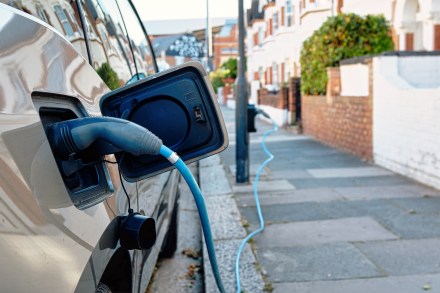
They are cheap to run. They rarely break down. And perhaps most of all they are far better for the environment. For the last decade we have been endlessly lectured about how electric cars are so completely superior to the petrol variety that they would quickly dominate the market. But hold on. Now that some of the subsidies and mandates are being removed sales are collapsing. Left to themselves, it turns out that most drivers don’t don't want them. According to figures from the Society of Motor Manufacturers and Traders released yesterday, sales of EVs slumped by 17 per cent in November, the largest ever monthly fall. After taking a larger and larger share of the market for the last few years, sales now appears to have gone into reverse.

Is climate change really to blame for rising food costs?

From our UK edition

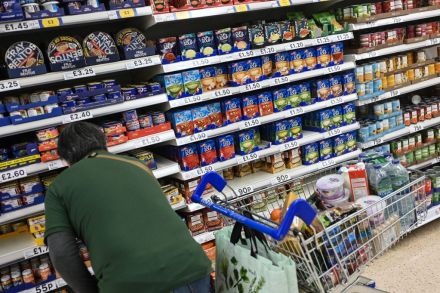
Everything in the shops is getting more expensive and restaurant bills have become prohibitive. We are all aware that food price inflation is a major factor in the overall cost-of-living crisis. It might seem plausible, as claimed today, that climate change is a major factor driving this. After all, weird weather, wildfires and droughts make it far harder to grow crops, right? Well, perhaps. The trouble is there is just one slight flaw: global food prices are falling in many cases this year, not rising. According to a widely-publicised report by the Energy and Climate Intelligence Unit, food bills have risen by £605 per year for the average British household at least in part because of climate change.

Is Javier Milei already defying his critics?

From our UK edition

Critics of Argentina's president Javier Milei have already made up their minds: he is a lunatic and his plans will collapse on first contact with the real world. Argentina's money will run out and the economy will grind to a halt. To some commentators, he is a ‘hard-right’ ideologue who will crash the economy within weeks. They say he's like Liz Truss and Kwasi Kwarteng on roller-skates. If you listen to those attacking Milei, you'd be forgiven for thinking the man in charge in Buenos Aires will precipitate yet another economic calamity in a country which has been stumbling from one disaster to another for almost a hundred years. But hold on. It turns out that the markets don’t quite see it like that.

Don’t be deceived by Jeremy Hunt’s tax ‘giveaways’

From our UK edition

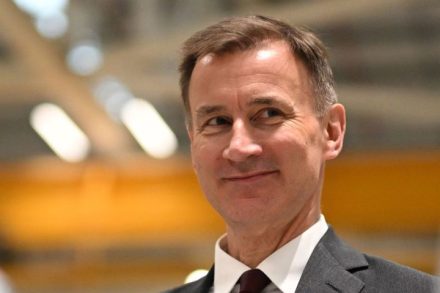
When Jeremy Hunt takes to his feet in the Commons this afternoon to deliver his Autumn Statement, he'll be trying to woo voters with some tax 'giveaways': VAT thresholds might be raised to help small businesses and the basic rate of National Insurance could be reduced for the rest of us. But hold on. Before the Chancellor gives anything back, both he and the Prime Minister Rishi Sunak need to do something far more important: they should apologise for all the tax rises the Tories have imposed. We don’t know the final figure yet, but it turns out that the Chancellor has around £13 billion to £15 billion of ‘headroom’, as the fiscal jargon has it, to cut taxes.

Biden and Xi’s meeting is a boost to the global economy

From our UK edition

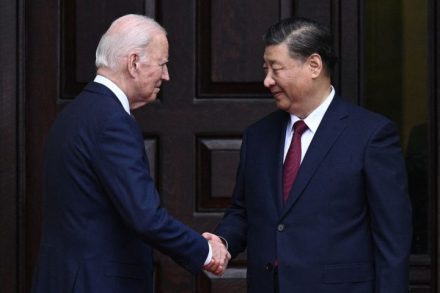
At least there will be some pandas. At his summit with President Biden this week, China’s President Xi pledged to send more cuddly bears to the US, the traditional Chinese way of cementing good relations with other countries. More importantly, there was a significant easing of tensions between the two largest economies in the world. Military communications will resume, reducing the chances of a catastrophic miscalculation between the two nations, controls on narcotics will be tightened up, and there will be a resumption of high-level diplomatic contacts. It remains to be seen if that sticks. But if it does, one point is surely clear. That could yield a huge ‘peace dividend’ for the global economy.

In defence of ‘rip-off’ airline charges

From our UK edition

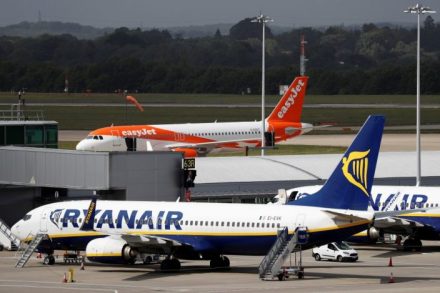
The Conservative party is 25 points behind in the polls. Its backbenchers are scrambling around to find new jobs, and the opposition is already making its plans for government. Rishi Sunak’s grip on the premiership is growing more tenuous with every passing day. But, heck, never mind. It turns out the PM has a cunning plan to restore his electoral fortunes. In the King’s speech tomorrow the government is expected to unveil plans to ban ‘hidden’ charges on air travel. Any of us who have plowed miserably through the expensive minefield of a Ryanair booking will finally have a reason to vote Conservative. It's hard to believe that anyone booking that WizzAir flight to Prague genuinely thinks they will pay less than a tenner But hold on.

Will Elon Musk end up humiliating Rishi Sunak?

From our UK edition

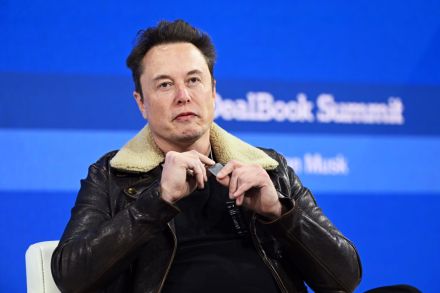
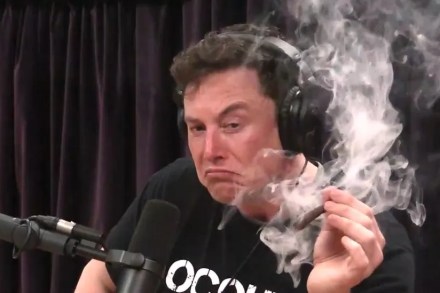
Bill Gates was probably otherwise engaged. Mark Zuckerberg was busy in the metaverse. And Jeff Bezos was tied up on his next rocket trip. When the Prime Minister Rishi Sunak was looking for a major technology tycoon to host a conversation with at his Artificial Intelligence summit later this week those were probably the names at the top of the wish list. When all of them declined, however, the Prime Minister settled for the Tesla founder Elon Musk instead. But hold on. While Musk is without question a major tycoon, he is also a huge wild card. And Sunak may well end up regretting his choice.  Whether he lights up a spliff with the man who is banning smoking cigarettes remains to be seen. But it is the kind of stunt Musk would find amusing Musk is certainly a catch.

What Rachel Reeves’s book blunder reveals

From our UK edition

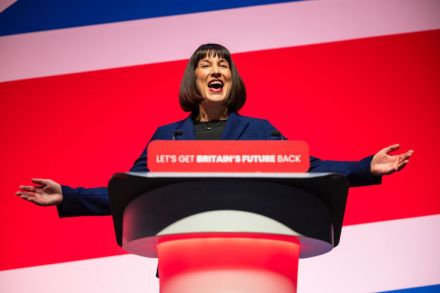
Shadow chancellor’s Rachel Reeves’s new book, The Women Who Made Modern Economics, was meant to put the spotlight on unsung female economists. Instead, the focus has fallen back on Reeves herself – and not for the reason she hoped. Reeves has denied plagiarism after it emerged that the book is littered with passages from other sources, including Wikipedia, apparently lifted without proper acknowledgment. The Financial Times found more than 20 examples of bits in the book with glaring similarities to text from elsewhere. Reeves wasn’t even as savvy as the average GCSE student This is clearly very embarrassing for Reeves, whose office has said 'These were inadvertent mistakes and will be rectified in future reprints'.

Who would lend money to Humza Yousaf?

From our UK edition

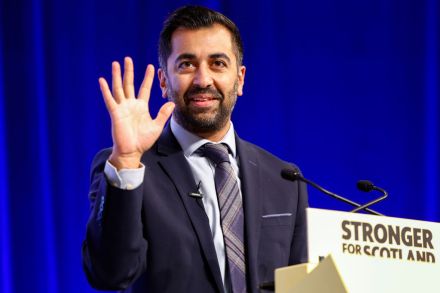
It runs a vast budget deficit. It keeps raising taxes way above its neighbour. It spends wildly, it is at war with its major industry, and its former leader has been arrested over an investigation into missing party funds. But, heck, never mind about that. Humza Yousaf, the leader of the Scottish National Party, has just decided the bond markets will now have the privilege of ignoring Switzerland and Norway for a few days and can lend a few billion to Scotland instead. There is just a small problem, however. Why would anyone want to lend money to Humza?  It was certainly an ambitious proposal. In his conference speech, Humza Yousaf announced plans to tap the bond markets directly.

Mark Carney is wrong to endorse Rachel Reeves

From our UK edition

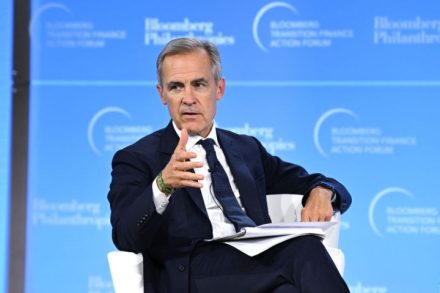
The timing could hardly have been better. Other Labour leaders and shadow chancellors have had to make do with endorsements from the drummer in a 90s Britpop band, or a runner up for the Booker Prize. Rachel Reeves, however, rounded off her speech to the Labour party conference today with no one other than the former Governor of the Bank of England Mark Carney singing her praises. But hold on. Isn't Carney starting to abuse his position – and possibly the Bank's independence as well?  By taking sides so openly Carney is turning the Bank into a political body At least we know who Carney would be voting for if he happened to still be in the country. 'Rachel Reeves is a serious economist,' he told delegates at the conference in a video message.

Why Dame Sharon White failed at John Lewis

From our UK edition

There are lots of plausible explanations for Dame Sharon White’s failure at the department store and grocery chain John Lewis. The retail environment was too tough. Her predecessor expanded too quickly. During a cost–of-living crisis and with the shift to online shopping it was always going to be a very tough gig. Yet once you look a little deeper, the real explanation is this: the quango-cracy, of which she was a leading member, is useless at running a real business. With her early resignation today, Dame Sharon has, to her credit, recognised a fact that was already painfully obvious to everyone else. Put simply, she was not up to the task of turning around John Lewis, and it would be far better for someone with more experience of rescuing failing retailers to take over.

The eurozone isn’t looking healthy

From our UK edition

Bond yields are soaring. The cost of debt, and very soon mortgages, is rising. And the government is getting nervous about how it is going to borrow the next ten or twenty billion. This might sound like the opening of a one-year-on post-mortem of Liz Truss’s ill-fated mini-Budget (we have all been treated to those recently). But in fact, it is a description of what is happening right now across Europe. The eurozone is facing its Liz Truss moment, and the results are likely to be every bit as catastrophic.  Across Europe the bond markets are starting to look jittery. Over the last couple of days, the yield on ten-year Italian bonds has risen to 4.

Labour will regret handing more power to the OBR

From our UK edition

The Office for Budget Responsibility (OBR) will have to sign off on any changes to taxation. It will need to run its slide rule over any spending plans. And it will be mandated to commission an independent panel of experts to approve the Chancellor’s lunch, checking it for nutritional standards, and competitive pricing.  Okay, it is possible that I made that last one up. But the rest are right: the Labour party has just promised to vastly increase the powers of the OBR, allowing it to scrutinise the government machine in minute detail. In effect, it will surrender control of its economic programme to the same grey bean-counters who have already failed Britain – and that will condemn the country to five more years of dismal stagnation.

Mark Carney’s attack on Liz Truss has disgraced the Bank of England

From our UK edition

He was a ‘global superstar’. He was the smartest finance official of his generation. He would bring global contacts and experience. When Mark Carney was appointed as the first foreigner to run the Bank of England he was meant to be a refreshing, technocratic figure who would blow some of the cobwebs off the institution. And yet, with his attack on Liz Truss for creating ‘Argentina on the Channel’, Carney has become a disgrace to the Bank. No former governor should ever be so openly partisan. Indeed, if anyone imposed Argentinian-style monetary policies it was possibly Carney himself. It is unheard of for a former governor of the Bank of England to be so openly partisan There was no mistaking the ferocity of the attack.

Is the EU sacrificing net zero to protect its electric car industry?

From our UK edition

They are too expensive. There are not enough of them on the market. It's too much hassle to charge them. There are lots of reasons why people are still reluctant to switch from petrol to electric cars, with their cost right at the very top of the list. Still, with the world about to be flooded with cheap Chinese electric vehicles (EVs), that is about to change. You might think that anyone seriously worried about combating climate change would welcome that. Except now it turns out that the EU, for all its rhetoric, cares more about protecting its own auto industry and is planning to slap tariffs on Chinese imports.

Why is the EU forcing Apple to change its charger?

From our UK edition

When the iPhone 15 is unveiled later today it will no doubt come with an array of flashy tweaks and upgrades. It may be slightly lighter, the camera might be better, and it could even have a slightly better battery life. But the really big change will be something mundane: its charging port. The European Union has forced Apple to adopt the same USB-C charger that is standard on Android and many other devices. New EU rules require all phones sold after autumn 2024 to use this connector for their charging ports. As a result, Apple has reluctantly decided to bin its lightning charger after 11 years and make the USB-C charging port standard around the world. But hold on. Does the EU really know how smartphones should be designed?

One year on, Truss’s case for growth is stronger than ever

From our UK edition

There won’t be any fireworks. No one is blowing up the balloons, and there isn’t going to be a cake. The first anniversary of Liz Truss’s unfortunate and quickly terminated premiership today won’t be marked by anything other than a few snarky comments on the site formerly known as Twitter. And yet, as the tumultuous 44 days of her leadership start to fade into history, one thing is surely clear. Her argument that the UK badly needs to do something about lifting its miserable growth rate is becoming stronger all the time.

Can private schools survive Labour’s tax grab?

From our UK edition

The latest headmaster of Eton has been recruited from a major private equity firm to help drive the brand’s growth in China. The consortium of hedge funds that own Winchester has been involved in a bitter takeover battle with Rugby, centred mainly on the redevelopment value of its playing fields. Westminster has been acquired by Meta, the owner of Facebook and WhatsApp, to develop campuses in the Metaverse, Netflix has acquired Marlborough to use as a set for romcoms, while Elon Musk has taken control of Ampleforth, sacked most of the teachers and rebranded it as ‘W’ for reasons that no one can quite fathom.

It’s time to get on with the Indian trade deal

From our UK edition

The trade secretary Kemi Badenoch will be in India this week for a meeting of G20 trade ministers. The Prime Minister Rishi Sunak will be visiting the country in September. With so many ministers on hand, it might seem the perfect moment to unveil the long-awaited UK-India trade deal. After all, the former PM Boris Johnson at one point promised to get it wrapped up before Diwali in the autumn of 2022, although as so often he over-promised and under-delivered. Even so, the dithering is getting more and more alarming. A trade deal with India is now the big prize of Brexit – and should be wrapped up without delay.  A trade deal with India is now the big prize of Brexit – and should be wrapped up without delay  Trade deals with Australia and New Zealand are all very well.

Working from home is the new British disease

From our UK edition

Over mighty trade unions. Short-termist management that prioritises profits over investment. And an education system that doesn’t produce enough scientists or engineers. There have been many different versions of the ‘British disease’ over the years to explain the consistent under-performance of our economy compared to some of our main rivals. But right now there is a new one: the British don’t want to go back to the office – and that is hitting output hard.  According to a survey by the consultancy AWA published this week, the British are more reluctant to go back to the office than workers in almost any other major developed country. Even as bosses plead with them to go back in, the average office worker in this country is only showing up at their office 1.