Matthew Lynn

Matthew Lynn is a financial columnist and author of ‘Bust: Greece, The Euro and The Sovereign Debt Crisis’ and ‘The Long Depression: The Slump of 2008 to 2031’

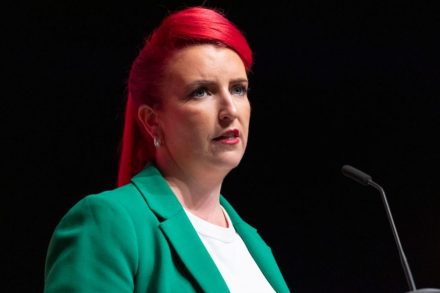
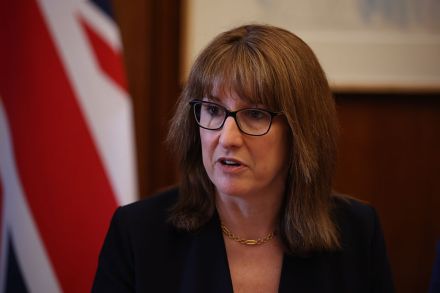
Louise Haigh’s economic plan would hasten Britain’s decline

From our UK edition

The government is on the brink of collapse, ministers are openly fighting for the succession, and the bond vigilantes are already driving up the cost of Britain’s vast debts. Still, never mind. The soft-left Tribune group, which is likely to play a crucial role in any contest for the leadership of the Labour party, has helpfully today published a ‘plan’ to get us out of the mess. There is just one snag: it would most probably bankrupt the country and trigger a full-blown financial crisis.  Will we find out in the next few days, or even hours, whether Sir Keir Starmer can cling on to power? How likely is he to set out a timetable for his departure? Or face a leadership challenge over the summer?

A banking windfall tax would be a terrible idea

From our UK edition

Most people might think that the ability of Britain’s major banks to come through the turbulence of the last decade intact is something to be celebrated. They have survived the pandemic, dealt with leaving the European Union, and successfully switched from a financial system that was based on cash and branches to one that is mostly digital. At least, then, one of the country’s major industries is doing well. It appears, perhaps unsurprisingly though, that the trades unions don't want to celebrate. The TUC is calling for a windfall tax on the banks – even though it could kill them off.  After the big four high street banks reported combined profits of more than £14 billion in the last few weeks, the TUC has decided that the state is entitled to a slice of that money.

Reeves’s mansion tax has backfired before it’s even kicked in

From our UK edition

The Chancellor, Rachel Reeves, made plenty of bold promises for her planned mansion tax when she announced it last year. It would be a victory for social justice. It would create a fairer housing market. And it would raise the money the government needs to fund public services. How has that worked out in practice? It turns out that Reeves's levy on homes worth more than £2 million is already costing hundreds of millions before a penny of the new tax has even been collected. There shouldn’t be any surprise about that. Wealth taxes, which is what the mansion tax amounts to, always backfire. This is just the latest example.

The US is back in charge of the oil industry

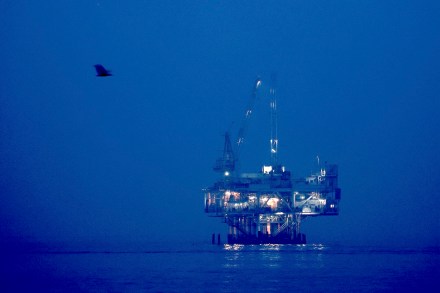
The United States is getting sucked into a conflict in the Middle East, central banks are desperately trying to keep inflation under control and the world is facing an energy shock that may cripple the global economy. There are lots of ways the world looks very similar to the early 1970s. And yet, it is now clear that there is also one significant difference between now and then. Whereas half a century ago, the oil cartel OPEC was rising in power, with Tuesday’s shock decision by the United Arab Emirates to quit the group, it is clear that it is falling apart. In reality, the US is taking back control of the fossil fuel industry – and that is of huge geopolitical significance.

oil

‘Back to Petroleum’ has paid off for BP

From our UK edition

If the energy giant BP’s change of direction over the last year could be summed up in a single phrase, it would be ‘Back to Petroleum’. It has cut its investments in wind and solar power, scaled back its targets for renewables, and brought in new management more familiar with rigs and pipelines than climate change conferences. Today we see the first results of those efforts with a huge increase in profits for the company. BP's strategy, it seems, is paying off. A quarter of a century ago, under its former CEO Lord Browne, BP snappily rebranded itself as ‘Beyond Petroleum’. It seemed a smart enough move at the time.

Rachel Reeves is crushing the economy

From our UK edition

Chancellor Rachel Reeves took office on a pro-growth platform, promising to make Britain the leading economy in the G7. She would turbo-charge investment, remove the restrictions on building, form partnerships with industry to power the industries of the future, and invest directly through her National Wealth Fund. Two years on, she has finally topped a growth chart. Unfortunately, however, it is the wrong one. Britain has the fastest rising taxes in the world, with growth a long way behind.  According to the latest data from the OECD, British taxes on workers are now growing at the fastest rate among its 38 members. It found that the ‘tax wedge’ – that is, the difference between the total amount it cost to employ someone and what they take home in actual cash – rose by 2.

Rachel Reeves may regret goading President Trump

From our UK edition

It is a ‘folly’ with ‘no clear exit plan’. The Chancellor Rachel Reeves certainly made little secret of her views on President Trump’s decision to go to war with Iran as she landed in Washington for a meeting of the International Monetary Fund. If fairness, Reeves may have a point. The trouble is, this was the wrong time, and the wrong place, to start goading the President – Britain can’t afford to lose its trade deal with America right now.  It is a high-risk strategy for a country as vulnerable as ours to pick a fight with the President Reeves feels ‘very frustrated’ and ‘angry’ with President Trump, she told the Mirror as she flew off to the US.

We’re stuck at the worst possible oil price

A ceasefire has been agreed with Iran. The Straits of Hormuz will reopen. And the oil market will get back to normal very quickly. By Wednesday morning, it looked as if the energy crisis was over. Finance ministers will be breathing a sigh of relief as the crisis abates. But hold on. In reality, the truce is fragile, and huge amounts of supply have been taken out of the market. So long as that remains true, the price of oil, and with it the global economy, will remain stuck. The average price of $90 to $100 a barrel is not what anyone really thinks a barrel of oil is worth The price of oil has been on a wild ride ever since the United States and Israel started the attack on Iran a month ago.

oil

Is Bitcoin a British invention?

From our UK edition

Sir Issac Newton, Alexander Flemming and James Watt may all have to move aside to make way for another name in the pantheon of Great British inventors: Adam Back. According to an exhaustive investigation published by the New York Times today, the mystery of who created Bitcoin appears to have been solved. All the signs point to a relatively obscure British computer programmer. If it turns out to be true, Britain should be proud of giving the world its digital currency.  If it turns out to be true, Britain should be proud of giving the world its digital currency The origins of Bitcoin have always been shrouded in mystery.

The US currency is under attack like never before

It was, on the surface, a fairly routine proposal. Officials from the BRICS nations, made up of Brazil, Russia, India, China and South Africa, have decided to discuss, at a summit in New Delhi later this year, how to deepen trade and collaboration. No one was paying very much attention when the decision was made. And yet, according to a report in the well-informed newspaper Berliner Zeitung, a resolution was quietly suggested that might turn the global monetary system upside down. It was the start of what might be termed the “plot against the dollar.” America’s currency is likely to face its most serious challenge of the post-World War Two era. BRICS Pay may not sound very exciting.

The markets have stopped listening to Donald Trump

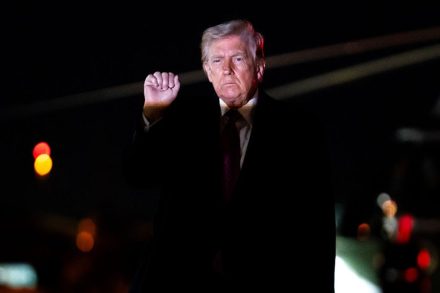
Over the last 24 hours, President Trump has come up with a bewildering series of ‘solutions’ to the global oil crisis triggered by his war with Iran. He might seize all of the country's oil wells. He may send the marines in to capture its main exporting hub, Kharg Island. He has threatened to bomb the country back to the Stone Age if it doesn’t re-open the Straits of Hormuz, while at the same time – apparently – he is very close to a ‘fantastic deal’ that will settle the entire conflict. But will these threats work? Can Trump keep a lid on the unfolding crisis? Crucially, the markets are not listening to him anymore – and the price of oil keeps rising.

Donald Trump can’t simply talk down the price of oil

When the war against Iran started, President Trump could have justifiably felt confident that the price of oil could be controlled from the White House. America, after all, is the biggest oil producer in the world. It has the most refining capacity, and, separately, it has by far the world’s strongest military. And yet, over the last 24 hours it has become alarmingly clear that America has lost its ability to cap the price of an oil barrel. Does big trouble lie ahead for both the President and the global economy? With a single Truth Social post yesterday, President Trump managed to send the prices of both WTI crude oil, the main American benchmark, and Brent crude, the main European one, plunging.

The Greens’ Zack-onomics doesn’t add up

From our UK edition

Tax the billionaires, nationalise the utilities and abolish the Office for Budget Responsibility. Green party leader Zack Polanski has set out his vision for how Britain's economy should be run. The sticking point? There are plenty, not least the fact that there is little in his speech today at the New Economics Foundation to suggest his party's focus is, as the name might suggest, the environment. Nor is there anything very original in his plans. In reality, Zack-onomics consists of re-heated Bennite cliches from the 1970s. The Greens' plans don’t even begin to add up. Let's hope Polanski never become prime minister – or we will all pay the price.

The welcome demise of NCP

From our UK edition

It will probably come as a surprise to anyone who has paid £10 per hour or more for one of its car parks, been stung by one of its ‘overstay charges’, or lost a wing mirror trying to squeeze an average family vehicle into a space that seems to have been designed for a toy car, but National Car Parks does not actually make any money. The country’s biggest private car park operator has collapsed into administration. Sure, it is always sad when a company fails. But no one in their right mind could possibly miss NCP.  It may not have occurred to the bean-counter managers of NCP but perhaps it can’t fill its spaces because it charges too much?

Replacing Churchill with wildlife on our banknotes is a mistake

From our UK edition

The Bank of England has announced that pictures of wildlife will replace famous faces on our banknotes. A cute kitten, perhaps? Or a puppy doing some tricks? Or, given that China may well have hacked into the system, even a panda bear? Whichever animals end up making the cut, it's goodbye to Winston Churchill, Jane Austen, JMW Turner and Alan Turing – and the proud tradition of honouring our greatest Brits. What a travesty. There is nothing wrong, of course, with wildlife pictures in themselves. But on a bank note? Seriously? In reality, paper money, at least since we came off the gold standard, has always been a bit of a conjuring trick.

Rachel Reeves’s Spring Statement was a wasted opportunity

From our UK edition

In some parallel universe, a British Chancellor of the Exchequer today delivered a barnstorming Spring Statement designed to fix the energy crisis before it became critical, bring talent back from the Gulf and restore a crashing labour market. She announced that she was removing the restrictions on new licences in the North Sea and lowering the windfall tax on exploration. She was setting up a royal commission to look again at fracking. She was launching a flat-tax deal to tempt entrepreneurs back from Dubai. And she is cutting employers’ National Insurance to ease the jobs crisis. Unfortunately, in this universe we are stuck with Rachel Reeves. With her non-event Spring Statement, has she fluffed her last chance to save her job?

Is it time for Rachel Reeves to give Britain a tax cut?

From our UK edition

The self-employed have paid up. And investors are paying record amounts of capital gains tax. The public finance figures for January have been published, showing record tax receipts and handing the Chancellor, Rachel Reeves, a surprise £30 billion bonus. It is great news that the public finances are stabilising. Manchester mayor Andy Burnham may not be able to complain about being ‘in hock to the bond markets’ for much longer. And yet, surely this also shows that Britain is being overtaxed? Is it perhaps time to hand some of the money back?  The UK’s public finances are suddenly in much better shape, with a record surplus recorded for January. The explanation for this is simple enough. Self-assessment tax returns brought in an extra £3.

Bring on Rachel Reeves’s boring Spring statement

From our UK edition

For the Chancellor, Rachel Reeves, to tell everyone in advance that her Spring statement will be ‘boring’ is a little like Nigel Farage telling us he might be popping out for a pint, or Sir Keir Starmer telling us he might change his mind. It is useful information, but hardly a huge surprise. Still, the new ‘no drama’ Reeves will at least be an improvement on her former tax-raiding iteration – the British economy could use a break from her attempts to improve it.  With the Spring statement looming in just under a fortnight's time, we will at least be spared the constant leaks of madcap ideas that led up to Reeves's first and second Budgets. According to briefings from the Treasury, 'the goal is to be as boring as possible'.

Rejoining the EU single market won’t boost Britain’s growth

From our UK edition

In his speech in Munich on Saturday, the Prime Minister, Sir Keir Starmer, made it very clear that he was planning to rejoin the European Union’s single market, perhaps as early as this year. The argument in favour of this is that it will boost growth – and it will put Britain at the heart of a defence-fuelled industrial revival. But there is just one problem: joining the single market won't do anything to improve Britain's failing economy and may well make it worse. Sir Keir has gone further than any of his colleagues in embracing the EU. Instead of just joining the European customs union, he now wants to align fully with the single market. Very soon he may well be campaigning to rejoin the bloc completely.

Net zero is forcing BP into irrelevance

From our UK edition

It should have moved ‘Beyond Petroleum’ by now, with wind, solar and hydroelectric power powering its profits. If you rewind twenty years, BP had a clear plan to place itself at the forefront of the green energy transition. It hasn’t worked out as they had hoped. Instead, today the company announced it was suspending share buybacks to shore up its balance sheet, sending its shares tumbling. Its rival Shell is in better shape, but only just. As both of Britain’s oil giants struggle, it is becoming painfully clear that the obsession with net zero has destroyed what was one of our major industries – and it will be very hard for it to recover now. It has turned into yet another dreadful day for BP’s long-suffering shareholders.