Mary Wakefield

Mary Wakefield

Mary Wakefield is commissioning editor of The Spectator.

Jewish fear, ‘the elimination of motherhood’ & remembering Jilly Cooper

From our UK edition

25 min listen

The Spectator’s cover story this week looks at ‘the fear’ gripping Jewish people amidst rising antisemitism. Reflecting on last week’s attack in Manchester, Douglas Murray says that ‘no-one in the Jewish community was surprised’ – a damning inditement on Britain today. How do we tackle religious intolerance? And is there room for nuance in the debate about Israel and Palestine?  Host Lara Prendergast is joined by the Spectator’s US editor Freddy Gray, associate editor – and host of our religious affairs podcast Holy Smoke – Damian Thompson and commissioning editor Mary Wakefield.

Who will stand up for motherhood?

From our UK edition

Scientists at the Oregon Health and Science University have created the beginnings of a baby using not human eggs, but skin cells. My reaction upon reading this news was to try to fold it up and tuck it away deep in some mental crevasse where I’d be sure never to see it again, because the implications are just too grim; the potential for suffering too much to bear. What the lab has done is devise a way to persuade human skin cells to behave like sex cells (eggs and sperm) and to divide using not only mitosis, which replicates all 46 chromosomes, but meiosis, which results in just 23. Once they’ve discarded half their chromosomes, the skin cells can then be fertilised with sperm, just as if they were human eggs.

Crime and no punishment in Khan’s London

From our UK edition

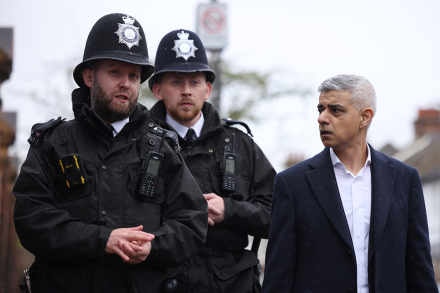
Those of us trapped in Mayor Sadiq Khan’s low traffic neighbourhood scheme are now obedient, resigned. We expect a car journey of under a mile to take 40 minutes. We don’t hope for anything more. On Sunday, around five o’clock, my son and I stuck fast in Dalston Lane, but as we settled down to wait in a mist of carbon monoxide, there was a commotion up ahead. Down the wrong side of the road, horn blaring, lights flashing, came a Mercedes G-wagon, matt black with that handy snorkel up the side, the favourite ride of north London’s gangsters. It was interesting how calm everyone was about it, how unsurprised. A souped-up tank of a car coming at us head-on, and no one shouted or beeped.

How to raise a patriot

From our UK edition

‘Good news for patriots,’ said one of our most celebrated national newspapers this week: ‘Your numbers are likely to swell.’ This was on the editorial page, where the opinions of the paper are laid out, and it referred to a poll conducted by ‘More in Common’ which had found, to everyone’s surprise, that British teenagers are pretty patriotic. About half of all 16- and 17-year-olds feel proud of their country, it found, which is more than their parents. It was an interesting poll for anyone considering the rise of Reform and how that might interact with the incoming slew of teenage voters. Interesting too for those of us in liberal London, trying to keep the flickering pilot light of patriotism alive in our children’s tiny, K-pop-infested minds. (What’s K-pop?

The coming crash, a failing foster system & ‘DeathTok’

From our UK edition

45 min listen

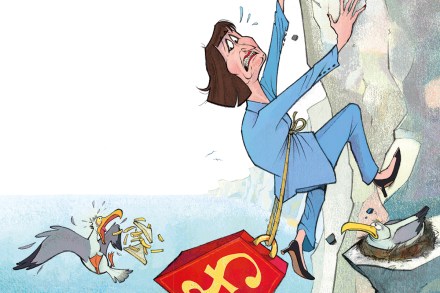
First: an economic reckoning is looming ‘Britain’s numbers… don’t add up’, says economics editor Michael Simmons. We are ‘an ageing population with too few taxpayers’. ‘If the picture looks bad now,’ he warns, ‘the next few years will be disastrous.’ Governments have consistently spent more than they raised; Britain’s debt costs ‘are the worst in the developed world’, with markets fearful about Rachel Reeves’s Budget plans. A market meltdown, a delayed crash, or prolonged stagnation looms. The third scenario, he warns, would be the bleakest, keeping politicians from confronting Britain’s spendthrift state. We need ‘austerity shock therapy’ – but voters don’t want it.

The painful truth about foster care

From our UK edition

The foster care system in this country is collapsing. There are roughly 80,000 children who’ve been removed from violent or neglectful parents and need homes, but there’s a catastrophic lack of people prepared to care for them – a shortfall of around 6,500 foster carers. The rate of decline is terrifying. Every year the small pool of available foster households shrinks and those who do apply to be carers are increasingly elderly. Perhaps you assumed that a generation with ‘Be kind’ tattooed on their wrists would leap to look after the worst off? Not a chance. ‘Be kind’ is an instruction to others, not a memo to self. Neither my generation (X) nor the millennials are interested in stepping up. We rubberneck the tabloid stories of poor abused children online.

Could Danny Kruger save the Conservatives?

From our UK edition

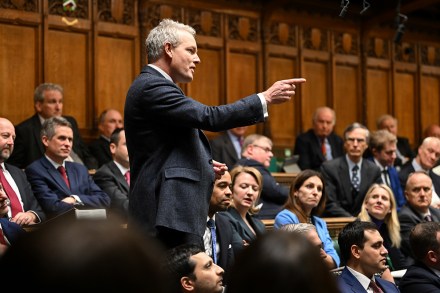
I’ve seen signs of life in the Conservative party – unlikely I know, but true. I had thought it a dead thing, dripping its life-blood slowly into Reform. But ten days ago I saw on YouTube a speech that a Tory MP gave in the House of Commons and… I don’t know. I felt hope. The MP was Danny Kruger, member for East Wiltshire, and as it happens he’s a friend of mine. I’ll say straight away then that this is absolutely not an attempt to promote him as next leader, though the post-Kemi era does seem to be approaching fast. For one thing, Kruger is a middle-aged white Etonian, cursed by association with the last two Etonian PMs. For another, from what I’ve seen of it, high office acts like high altitude on humans. The rarified air gets to them in the end.

Mark Mason, Mary Wakefield, Matthew Parris and Philip Patrick

From our UK edition

26 min listen

On this week’s Spectator Out Loud: Mark Mason reminisces about old English bank notes (00:33), Philip Patrick wonders whether AI will replace politicians in Japan (04:04), Matthew Parris wonders why you would ever trust a travel writer (10:34) and Mary Wakefield looks at the weird world of cults (17:42).

The radical vegan ‘Zizians’ are the cult we deserve

From our UK edition

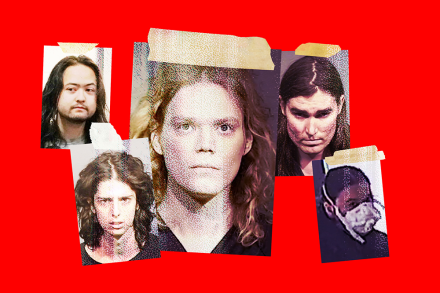
Every week brings a new revelation about the Zizians: the craziest, saddest cult in recent American history. Eight deaths have been linked to them so far, including 80-year-old Curtis Lind, stabbed with a samurai sword, US border patrol agent David Maland, shot by the roadside in Vermont, and the elderly parents of another member, shot dead at home in Pennsylvania. What’s gripping the American press is that the young Zizians seem to have been such nice kids once. The leader of the cult, Jack Amadeus LaSota, has a degree in computer science from Alaska University and a father who still teaches there. Another Zizian, Daniel Blank, was a straight-A student, fluent in three languages, whose bewildered father said he was a model son. The Zizian murder trial is set to begin in October.

The grooming gang inquiry we really need

From our UK edition

It’s disorienting but satisfying that Labour now accepts that Asian grooming gangs exist. Some of my left-identified friends are even beginning to share the outrage – over Qari Abdul Rauf, for instance, one of the nastiest of the Rochdale rapists, who still lives in Rochdale a decade after the first steps to deport him were taken. Rauf simply ripped up his Pakistani passport and couldn’t then be shifted. He’s cost the taxpayer nearly £300,000 in legal fees, but still has enough dosh to throw regular house parties and, it was reported this week, to start building a second home back in Pakistan. Pimping out children pays. It’s nice that the left and right share the impotent anger.

My campaign to bring back real life

From our UK edition

A new book by an American writer, Christine Rosen, details the way in which we are losing touch with the real world: the one we evolved in, as opposed to the virtual one. All the scrolling and texting means we’re forgetting the look and feel of life unmediated by screens. The book is called The Extinction of Experience, and if we get more anxious year by year, then it’s not just wars or the cost of living, Rosen suggests, but because we’re grieving for the real world, whether we know it or not. I definitely know it. I’m Gen X, so I grew up without the internet, yet like other members of my generation now find myself caught in the smartphone itrap, dependent and resentful.

I’ve reached zero tolerance on zero tolerance

From our UK edition

I know an astonishing 89-year-old who climbs mountains, uses a chainsaw and has the muscular, vice-like grip of a gym-built thirtysomething. He refuses pills and painkillers and considers it vital to embrace life’s most horrifying experiences. Last week the astonishing 89-year-old tore his Achilles tendon (leaping into a moving car), was driven to A&E and referred for an ultrasound. On the way to the scanning room, helped along by a male nurse, he put his injured leg down by mistake and yelled: ‘FUCK!’ At this, the nurse turned on his heel and walked off, saying: ‘I don’t have to put up with this.

Why don’t men ask questions?

From our UK edition

I’ll bet most women under 50 in relationships with men have found themselves wondering when on earth the man is going to get round to asking them a question. The man gets home. We ask about his meetings, his lunch, his colleagues, showing empathy and imaginative curiosity. Then we wait in vain for our turn. That sounds too passive. ‘Waiting in vain’ doesn’t begin to summon the way mild pique turns first to incredulity, then actual rage and despair at the man’s apparent lack of interest. ‘Tears are pooling on your collarbones again,’ my husband used to observe quite regularly on date nights in our courting days. ‘Is it because I should be asking a question?’ I soon learned not to say yes.

See change, A.I. ghouls & long live the long lunch!

From our UK edition

38 min listen

This week: the many crises awaiting the next pope‘Francis was a charismatic pope loved by most of the world’s 1.4 billion Catholics’ writes Damian Thompson in the cover article this week. But few of them ‘grasp the scale of the crisis in the Church… The next Vicar of Christ, liberal or conservative’ faces ‘challenges that dwarf those that confronted any incoming pope in living memory’.   Ahead of Pope Francis’s funeral this weekend, Damian joined the podcast alongside the Catholic theologian Fr Alexander Lucie-Smith to unpack all the political intrigue underpinning the upcoming papal conclave. They say that he who enters the conclave as a pope, leaves as a cardinal – do we have any clues to who could emerge as Francis’s successor?

Lily Parr and the creepiness of AI resurrection

From our UK edition

I’m not sure it’s possible to make a horror movie more sinister than the chirpy four-minute film on YouTube purporting to be an ‘interview’ with the late Lily Parr. Parr was a professional footballer who played as winger before the war, a chain-smoking 6ft Lancashire lesbian with that gung-ho spirit I remember from my girls’ boarding school, before the governors purged the spinster games mistresses. Three UK in collaboration with Chelsea FC have cooked up an AI version of Lily, which they insist can answer questions just as she would have done. They’ve persuaded Karen Carney (real, not AI), who played for England, to talk to AI Lily and then presented footage of the conversation as if it were a scoop.

Easter special: in praise of faithful dissent, a conversation with Nigel Biggar and Mary Wakefield

From our UK edition

24 min listen

The Easter issue of the Spectator includes two provocative articles exploring aspects of Christianity.  Nigel Biggar, Regius professor emeritus of moral theology at Oxford University, now a Conservative peer, celebrates the heroic ‘faithful dissent’ of Christian heroes such as Thomas More and Helmuth von Moltke, who lost their lives rather than defend injustice.  Meanwhile Spectator columnist Mary Wakefield interviews Roman Williams, former Archbishop of Canterbury. She’s inspired by his holiness but depressed by his use of ‘C of E bureaucratese’ to uphold liberal orthodoxy on subjects such as gender ideology. But, she says they can share an uncomfortable space together within faith.

‘Jordan Peterson is a sad and angry man’: an interview with Rowan Williams

From our UK edition

Rowan Williams, former Archbishop of Canterbury, has a new book out, a slim, thoughtful introduction to Christianity. But that’s not quite why I went to Cardiff to visit him. I went because, although I admire the superstar culture warriors of the right, there’s something Williams is witness to which they lack. Like many readers, I think Rowan Williams pretty loopy on most subjects – Brexit, Islam, immigration, the dreaded trans debate – but Rod Liddle always says that Rowan is a holy man, and Rod is right. We sit opposite each other drinking tea in his book-lined living room. The 104th Archbishop of Canterbury is looking amiable but confused. ‘The Spectator has been fairly ripe on some of my views in the past,’ he says.

The Met’s misogyny

From our UK edition

My friend Rose likes a drink. She lives on the same street as another friend in Camden and three or four times a year, when the weather warms up, she stands on her doorstep, smashed, and yells at the world. I don’t blame her. Rose has been through the mill. She’s a slight woman and she’s suffered at the hands of predatory men all her life. Perhaps the occasional shouting irritates the neighbours, but it’s only the same monologue most of them paid through the nose to hear Mark Rylance deliver on stage in Jez Butterworth’s Jerusalem: ‘I, Rooster John Byron, hereby place a curse/ Upon the Kennet and Avon Council,/ May they wander the land for ever…’ During those few deceitful warm days in early March, Rose had one of her doorstep rants.

The cat that tamed Dom

From our UK edition

I don’t like cats. I don’t like their reptilian stealth, or the way their heads are set low and poke out from their bodies. I don’t like the constant showing off of their puckered bums, or their disregard for the normal rules of mammal eye contact. There are nearly 13 million cats in Britain – one in three of us owns them. There are roughly 74 million in the United States and until recently I found it inexplicable. Why would anyone choose to love and nurture a psycho that dismembers songbirds, often torturing them first in a casual, playful way? I’ve enjoyed in the past writing about the idiocy of ethical vegetarians who own cats.