Mary Dejevsky

Mary Dejevsky is a writer, broadcaster, and former foreign correspondent in Moscow, Paris and Washington.

Why do American journalists take Trump so seriously?

From our UK edition

You don’t need to know any more about Stephen Colbert than that he is an American political broadcaster and satirist who hosts ‘The Late Show’ on the CBS television channel, which makes him something of a US household name. Last week, after Donald Trump had given his embarrassingly rambling non-concession speech in the White House briefing room, Colbert made some headlines himself – not just for the diatribe he delivered, which included calling the US president a 'fascist', but for 'choking up' (The Hill) as he introduced the item. https://twitter.com/colbertlateshow/status/1324571460673949702?

No, the United States isn’t on the verge of civil war

From our UK edition

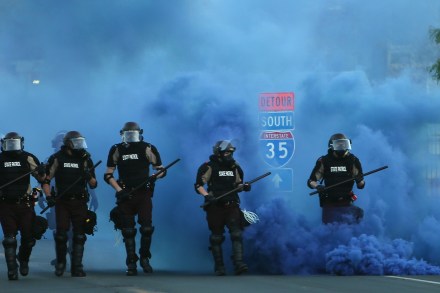
As the US enters the final straight of what has been — to put it mildly — a highly unusual election campaign, something akin to panic is taking hold among observers on both sides of the Atlantic. The premise is that the United States is in a highly fragile state, that the election could easily tip it into widespread violence, and that the social and political divisions currently dubbed the 'culture wars' could escalate into a real war. One scenario suggests blood on the streets were Donald Trump and his supporters to resist defeat. A respected think tank, the International Crisis Group, which usually analyses places such as Somalia has explained that it is currently focusing on 'the risk of violence surrounding the US elections'.

Should the Russia Report have relied on Christopher Steele?

From our UK edition

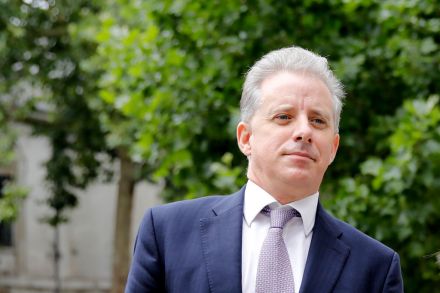
When the Intelligence and Security Committee’s (ISC) Russia Report was finally published last week, the name of one person who gave evidence will have leapt out for many people. Among the ‘external expert witnesses’ listed was none other than a certain ‘Mr Christopher Steele, Director of Orbis Business Intelligence Ltd’. Steele, you may remember, was the official author of the dossier on Donald Trump that was commissioned on behalf of the US Democratic Party in the run-up to the 2016 US election and which acquired a second life when it was published by Buzzfeed shortly before Trump’s inauguration.

What is Russia’s plan to unleash chaos?

From our UK edition

39 min listen

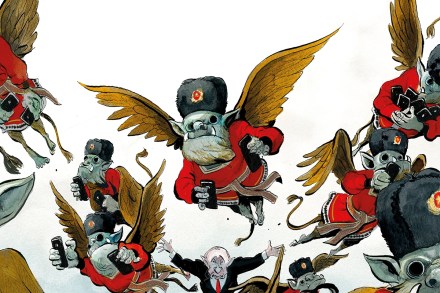
As the long-awaited Russia report is released this week, we discuss Russia's plan to unleash chaos (00:45). Plus, does Boris Johnson have a management problem with his new MPs? (14:30) And last, the pains of dating during lockdown (28:30). With Russia journalists Owen Matthews and Mary Dejevsky; the Spectator's deputy political editor Katy Balls; Conservative Home's editor Paul Goodman; Sunday Telegraph columnist Madeline Grant; and author James Innes-Smith.Presented by Cindy Yu.Produced by Cindy Yu and Pete Humphreys.

Coronavirus is bad for the young but they won’t be the worst hit

From our UK edition

'The expected recession will hit young adults hardest,' BBC presenter, Jonny Dymond, said on 'The World This Weekend’. Almost half the programme was then given over to the dire future that awaits the UK’s 18-24 year olds, with the prospect that a million of them could become unemployed. The latest ‘Weekend Woman’s Hour’ offered a package in the same vein, as did the BBC website, with a feature headlined: ''We feel so lost' - Young face job despair.' Nor is it just the BBC. The media has been full of Cassandras from a variety of London-based think-tanks and plush addresses forecasting, with the same categorical certainty, that the chief victims of the pandemic will be the young.

Coronavirus and the myth of ‘Blitz spirit’

From our UK edition

It had to be. We were barely into the first week of the coronavirus emergency than the Prime Minister and others started invoking the ‘Blitz spirit’. You know, that incomparable time soon after the start of world war two when Brits stood firm and united against the worst that Nazi Germany could hurl at our brave and plucky islands? People helped each other, class distinctions blurred, and the Queen Mother visited London’s bombed-out East End. We kept calm, we carried on, and we prevailed. It has taken a few days, but now, equally inevitably, we have the march of the Blitz-spirit sceptics – of whom, I admit, to being one. Let’s not be too mealy-mouthed. As the enemy pounded British cities, there were extraordinary acts of kindness and generosity.

Brexit day is a gloriously muted occasion

From our UK edition

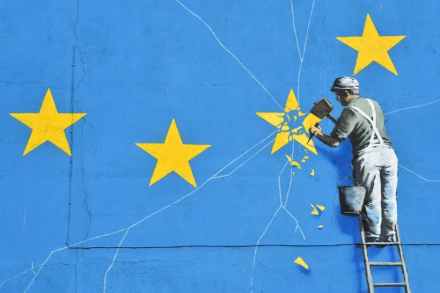
Whatever your feelings about Brexit, this day, 31 January, 2020, will be seen as a point in history. It is the day that the UK left the European Union after nearly half a century and set out, once again, on its own. While we may have been through more than three years of parliamentary wrangling, two elections and something akin to a constitutional crisis to get here, the actual day itself is being marked with characteristic understatement – just a little bit. Bongs from Big Ben were ruled out with two weeks to go, a flag display promised as consolation. No one even dreamt of demanding that Westminster Abbey peal its bells.

Sir David Attenborough didn’t deserve the Chatham House Prize

From our UK edition

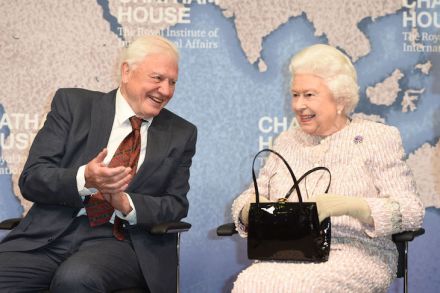
Every November the London based foreign affairs think tank, Chatham House, awards a prize for 'the most significant contribution to the improvement of international relations in the previous year'. This year, the joint laureates were Sir David Attenborough and the BBC Studios Natural History Unit for the television series Blue Planet II. It is a choice which, as a long-standing member of Chatham House, I regret. Don’t get me wrong. My misgivings are not about the prize itself, which was designed to raise the think tank’s national and international profile and is now in its 15th year. My doubts stem entirely from this year’s choice of recipients. The contortions in the official pronouncement betrayed something of the problem.

Boris Johnson and Jeremy Corbyn are both hiding away from voters

From our UK edition

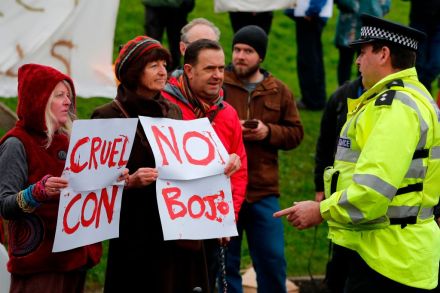
Last week, Boris Johnson made a last-minute change to his itinerary in the West Country after protesters from Extinction Rebellion and others had gathered outside a bakery he had planned to visit near Glastonbury. The visit, it was reported, had not been publicised, but word had nevertheless got out. The Prime Minister swerved off to the nice, placid cathedral city of Wells instead.   I have reported on elections in democracies – real and sham – around the world. And what leapt out from this little episode was not the change of schedule per se; such things happen. It was the detail that would-be protesters had managed to find out where he would be, even though the visit had not been publicised. Not publicised?

Damian Green’s social care model breaches a sacred tenet of the NHS – and a good thing, too

From our UK edition

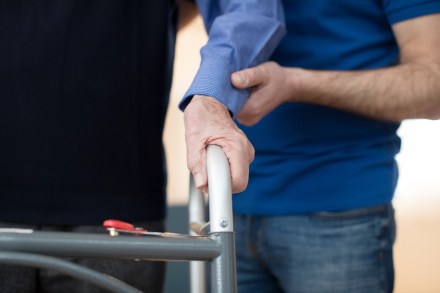
The central proposal in Damian Green’s recent paper on social care is that care provision should be treated like pensions. In ‘Fixing the care crisis’, he argues that everyone should be entitled to 'a decent standard of care' funded by the state – in the same way as they are entitled to a state pension - but could then choose to 'top up' from their own resources to add what he calls 'bells and whistles'. The benefits from such a system, as he sees it – and I agree – could be manifold. It should eliminate the patent injustice, according to which cancer care is fully state-funded while dementia care is not, and many other chronic conditions, such as MS and Parkinson’s fall somewhere (often disputed) in between.

Ukraine’s President prepares to go out in style

From our UK edition

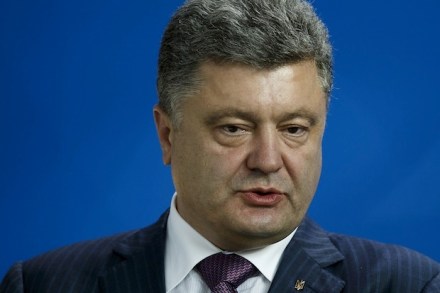
If, as looks likely, Petro Poroshenko loses his bid for re-election as President of Ukraine, he will have gone out in style. On Saturday night, the eve of the vote, his home town staged a huge public concert at the venue he created and sponsored: a state-of-the-art sound-and-light fountain complex just a short walk along the bank of the River Bug from one of the two big confectionary factories his company operates here. There were bands and spectacular waterworks, and, like much that Poroshenko’s company, Roshen, sponsors, it all had a distinctly wholesome, rather American, family air. Through the morning, cleaners wielding brooms were sweeping every inch of every step in preparation for the extravaganza.

Ashes to ashes | 28 February 2019

From our UK edition

It is cold, dank and muddy and I’m contemplating a barely defined path from the paved road into an ever-darkening wood. I should have brought a torch, but I didn’t, and before the light fades completely I need to find the ‘idyllic’ woodland burial ground I have shortlisted as a possible resting place for my late husband’s ashes; and also, when the time comes, for my own. When I get there, the site is glorious: on a slope, on the edge of a real forest — the sort of place the woodland-obsessed Germans probably have a special word for. The colours are sombre in the evening light and flights of birds wheel overhead.

The riddle of Theresa May’s Russia policy

From our UK edition

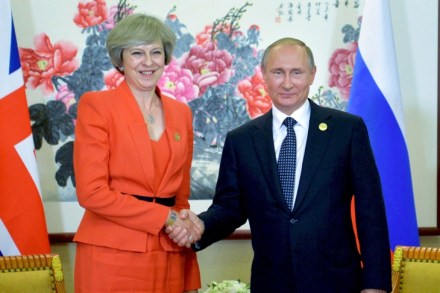
It is just a week since Theresa May used her Mansion House speech to launch a broadside on Russia. During a wide-ranging survey of the international horizon, it was Russia she singled out for special criticism and it was her Russia attack that attracted (and was surely intended to attract) the headlines. Just a reminder of what she said. Russia was 'chief' among those who seek to undermine 'our open economies and free societies'. Not only had it annexed Crimea illegally, but it had fomented conflict in the Donbas, repeatedly violated the national airspace of several European countries, and waged a 'sustained campaign of cyber espionage and disruption'. And this was the climax: 'It is seeking to weaponise information.

Life in the e-lane

From our UK edition

The plane landed a fraction early, at just after 9 p.m. Hope flickered that passport control would be as deserted as the echoing arrivals terminal. But no. By the time we reached sight of what is now labelled in enormous letters the ‘UK Border’, we had joined a mass of humanity in a single corridor to be decanted in batches into ‘the maze’. This is the point where, at most UK airports, the great segregation occurs, between UK/EU passports and the rest, and then between regular channels and ‘e-passports’. Often, they try to chivvy you into e-passports. Tonight, though, these lanes were taped off. After the long shuffle to the control desk, I had the nerve to ask why.

Make way for Ubercare

From our UK edition

There is much to be faulted in Uber, which has branched out from delivering people into delivering meals, under the unappetising name UberEats. But even I, someone who can rarely bring herself to write the word ‘sharing’, as in economy, without inverted commas, am prepared to give credit where credit is due. Uber has made private door-to-door transport accessible to far more people than before. It has thus done a lot of people a favour and hugely expanded the market, harnessing new technology to do so. It has provided jobs for people who did not have them, or who prefer to work in the semi-autonomous Uber way.

Carry on campus

From our UK edition

Town halls and unringfenced government departments are feeling the pinch, but one corner of British public life is conspicuously flush. Visit almost any university in the land and you will find a small city bursting with Portakabins, scaffolding and cranes. If you dare to raise your eyes from the mud puddles, you will see vast hoardings displaying images of glass palaces. Higher education is in the throes of its biggest building boom since the 1960s. Whether it is wise or not, whether the financial and academic calculations add up, are questions rarely asked, so loud is the self-congratulation of those pioneering the expansion.

The war on pensioners

From our UK edition

Who controls the media in Britain? Depending on your political outlook, you might answer: the Conservatives, the liberal-left chattering classes, Rupert Murdoch or the BBC. But if the coverage of the elderly is anything to go by, then we can perhaps agree on one thing: the headlines are decided by a cohort of 25- to 45-year-olds who believe that other people’s parents and grandparents — a.k.a. Britain’s pensioners — have stolen their future, dashed their dreams and nabbed all the plush property. How else to account for a headline such as ‘No pay rise?

Want to understand the conflict in Ukraine? Compare it to Ireland

From our UK edition

What seemed this time last year to be a little local difficulty in Ukraine has metastasised to the point where a peace plan drafted in Paris and Berlin may be all that stands in the way of war between the West and Russia. Over the months, many of those watching, appalled, from the safety of the side-lines, have combed history for precedents and parallels that might aid understanding or offer clues as to what might be done. Last spring, after Russia snatched Crimea and appeared ready to grab a chunk of eastern Ukraine too, the favoured comparisons were with Nazi Germany’s 1938 annexation of Sudetenland. It was a parallel that seemed all too plausible, given the Kremlin’s statements about the need to protect Russian 'compatriots' wherever they might live.

A Lab-Con coalition? It’s not as crazy as you think

From our UK edition

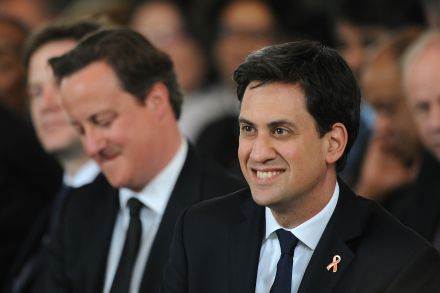
In the few days since Conservative defector Douglas Carswell gave Ukip its first Westminster MP and John Bickley scared the pants off Ed Miliband by almost snatching Heywood and Middleton from Labour, there has been much talk of a broken mould and a new age in British politics. listen to ‘John Bickley: ‘If there was an Olympic medal for hypocrisy, Labour would win gold’’ on audioBoom Election geeks have posited half-a-dozen or more governing permutations in the event that Ukip makes big gains next May.

MH17 blame game reflects badly on all of us

From our UK edition

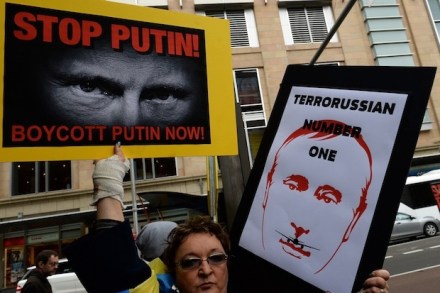
To judge by much of the western media coverage in recent days, you would have thought that Vladimir Putin had spent last Thursday sitting in the Kremlin, plotting how to blacken his image in the West even further, before settling on the brilliant idea of getting some clueless proxies to blow an international airliner out of the sky. At least, if he had, the line of responsibility would be clear; the western arguments casting him and his country as global pariahs would incontestable, and we could all be contemplating moves not just to isolate Russia, but to haul Vladimir before the International Criminal Court.