Mary Dejevsky

Mary Dejevsky is a writer, broadcaster, and former foreign correspondent in Moscow, Paris and Washington.

The Assange compromise leaves a lot to be desired

From our UK edition

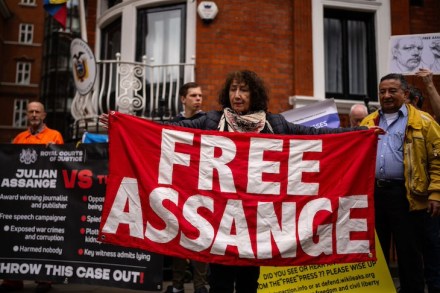
Stella Assange’s elation was palpable, after what she has described as a whirlwind 72 hours. She was speaking to the BBC in Australia, where she was waiting to be reunited with her husband, the WikiLeaks founder Julian Assange, who had just been freed from prison in the UK under a three-way deal between the UK, the US and Australia.  Assange was due to travel to Australia via the Mariana Islands, a US dependency in the Pacific, where a judge was expected to accept his plea of guilty to a single charge under the US Espionage Act, relating to classified material published on his WikiLeaks site back in 2010.
Pensioners should do national service

From our UK edition

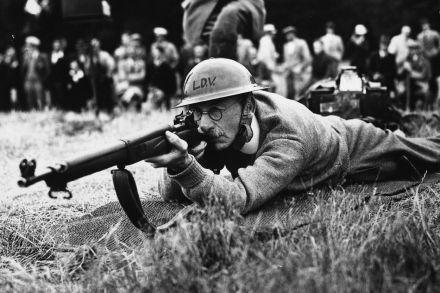
When Rishi Sunak proposed national service for 18-year-olds as the first big idea of his election campaign, my initial thought was: absolutely, bring it on. But then I had a second thought, which was that if Sunak was trying to boost the Conservative vote, rather than the nation’s preparedness, his big idea probably wasn’t going to fly. Younger voters would recall their 18-year-old selves and reject the whole prospect out of hand – as would parents, concerned that their now not so little Harrys (and Hannahs) might be sent off to fight in Ukraine. Meanwhile, all those older people agreeing that the nation’s youth could do with some toughening up will probably be voting Tory anyway.

A crackdown on bad cyclists can’t come soon enough

From our UK edition

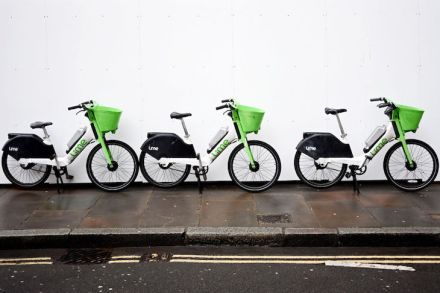
Doesn't it sound wonderful? The police are eyeing a device that could immobilise electric bikes and electric scooters in a split second by zapping them with pulses fired from special backpacks. The prospect conjures up an image of righteous 'ghostbusters' – as per the 1980s sci-fi film – able to stop the new breed of motorised troublemakers in their tracks.  The device – which is being partly developed by a Ministry of Defence Laboratory – is both tantalising and simple, as the best ideas are. Electromagnetic pulses would trick the batteries that power these vehicles into thinking they are overheating, so they cut out, leaving their riders to make a run for it with their loot on foot.  If you can flout one law with impunity, why not another?

The concerning sickness of NHS staff

From our UK edition

If you have been to the cinema recently and arrived in time for the adverts, you may already know what I am talking about. Somewhere between promotions for mega-burgers in glorious technicolour and exotic holiday destinations, you are plunged into what seems an endless, but is actually only a two-minute, horror flick, entitled ‘Sicker than the patients’.  The fitness of at least half  the nursing and support staff I encountered left a lot to be desired It is two minutes of unrelieved gloom and despair, book-ended by a family rendition of ‘Happy Birthday’ around a sick patient (Daddy), who – lucky guy – appears to have a room to himself, not just a curtained bay where the sounds and smells penetrate from all around.

Britain’s roads are becoming a Soviet nightmare

From our UK edition

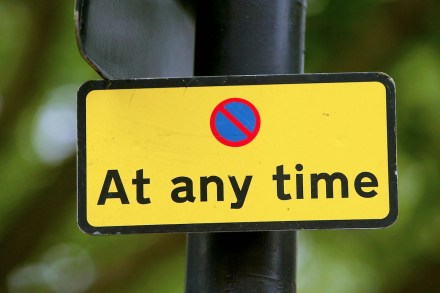
In the dog days of 2021, I spent a grey Sunday afternoon driving around a part of London with a view to an eventual flat move. Why take the car? Because the bus routes didn’t match where I planned to go, I wanted to stay over ground, and I would be able to cover more territory than on foot. It seemed an innocent enough way of spending my time, and the traffic was blissfully light.  So I was surprised to receive – with remarkable speed – a Penalty Charge Notice for using what was called a prohibited road. The notice was supported by two photos of my car, which I am happy to report was perfectly positioned on said road, not encroaching by so much as a millimetre into the bus lane.

Could Assange be freed?

From our UK edition

What could be the final act in the long-running drama of Julian Assange’s legal battles has opened at the High Court in London. The two-day hearing is considering the Wikileaks founder’s appeal for a review of his extradition to the United States, which was given the go-ahead two years ago and approved by the then-Home Secretary, Priti Patel.  The US had applied for his extradition on 17 counts of espionage and one of computer misuse in connection with the publication of a large trove of classified material, which included sensitive diplomatic cables and video recordings of US military operations in Afghanistan and Iraq.

Hit SUV drivers where it hurts: in the pocket

From our UK edition

Heavier cars will soon be hit with higher parking fees. Good. As an urban pedestrian and a car driver, I have two groups of enemies. The first are dark-clad cyclists and scooterists who weave invisibly around other traffic as they ignore their own expensively-made lanes. The other are the drivers of so-called sports utility vehicles – who dreamt up that euphemism? – commonly known as SUVs. A while back they were branded Chelsea Tractors; these cars have since expanded in all directions and might be more accurately dubbed Chelsea Tanks. A crackdown on these vehicles – as proposed by London councils, including Lambeth – is overdue.

The depressing truth about January birthdays

From our UK edition

You can change practically anything about yourself these days, from your appearance through to your gender. But one thing remains practically immutable: your birthday. And here some of us are markedly less fortunate than others, as those of us who made our entry into the world in early January well know. Having a birthday at this time of year means that, in birthday terms at least, you have drawn a very short straw (and it probably won’t have a cocktail attached).  We early January babies already face quite enough dampers on our celebrations without the addition of a prohibition clause The first difficulty is simply party fatigue. This was less of a problem when I was growing up than it is now.

Why the law on assisted dying must change

From our UK edition

Esther Rantzen’s decision to join the campaign to legalise assisted dying, in the light of uncertainty about her cancer prognosis, has rekindled and broadened a debate that has been simmering for many years.  Talking on the latest BBC Today podcast, Rantzen disclosed that she had recently joined Dignitas, the Swiss organisation that helps people who are terminally ill to end their lives. Now 83, the television broadcaster and founder of Childline and Silverline, said that her cancer was now being treated with what she called a miracle drug, but that if it didn’t work, then she wanted to be able to end her life while she is still able to without exposing her family to prosecution, were they to accompany her to Switzerland.

Is a national Holocaust memorial still a good idea?

From our UK edition

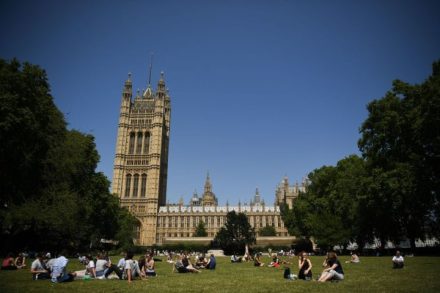
Whatever the fate of the ceasefire and hostage exchange between Israel and Hamas, the latest conflict in the Middle East is reverberating far beyond the region. Recent weeks have seen hundreds of thousands of people march through European and American cities in support of either side. Flag-waving protesters were out in London again this weekend: pro-Palestinians on Saturday, those against anti-Semitism on Sunday.   In London, though, it is not just on the streets where this conflict is resonating. It is sharpening a dispute that has simmered for the best part of eight years over plans to construct a national Holocaust memorial and learning centre in a small park adjacent to Parliament.

Flat-footed: welcome to the floorboard wars

From our UK edition

Jarndyce vs Jarndyce, this wasn’t – at least not yet – and it probably passed much of the country by, especially given the rival distractions of recent weeks. It was nonetheless a lawsuit that will have been followed in compulsive detail by at least two groups of people: those who own their own flats – who are technically leaseholders but prefer to think of themselves as owner-occupiers – and the freeholders and managers of their blocks. Oh, and never forget the lawyers.

The NHS problem that can’t be solved with money

From our UK edition

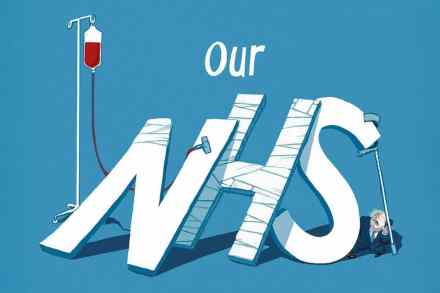
Earlier this year, I wrote, out of a mixture of bewilderment and frustration, about my experience as a novice in-patient at what is widely regarded as one of London’s premier teaching hospitals. I had been admitted with a badly broken ankle, and the result was three stays of just a few days each over the course of a month: the first (from A&E) for an operation that didn’t happen; the second, ten days later, for an operation that did happen, and the third two weeks later after the wound became infected.

Can the BBC World Service really go on like this?

From our UK edition

The BBC has launched what it is calling an ‘urgent investigation’ into six journalists and a freelancer working for its Arabic-language service over accusations they had shown anti-Israel bias in their coverage and expressed support on social media for Hamas. They were said to have called the attacks that killed more than 1,400 Israelis ‘a morning of hope’ and liked posts that included approvingly captioned video footage of dead and captured Israelis.  I worked for the BBC World Service as a writer for the Russian and South-East European Service, as it then was, in the latter stages of the Cold War I will leave it for the BBC investigation to reach its conclusions and take whatever action it deems necessary.

Why can’t I simply book a swim?

From our UK edition

It shames me to admit this, but I haven’t been near a public swimming pool for many a year. Hotel pools, yes; the sea – occasionally, in parts of the world with predictable warmth. But I have resisted the new wave of ‘wild’ swimming and was never a regular – to be honest even an irregular – at the Hampstead Ladies’ Pond. Nor have I frequented health clubs or spas, though I did go to enquire about one that had opened nearby; then came the pandemic.    As a one-time regular pool user, I am taking another look. This is because I have just completed my four-session NHS allocation of hydrotherapy (for a broken ankle).

20mph isn’t plenty: the war on motorists has gone too far

From our UK edition

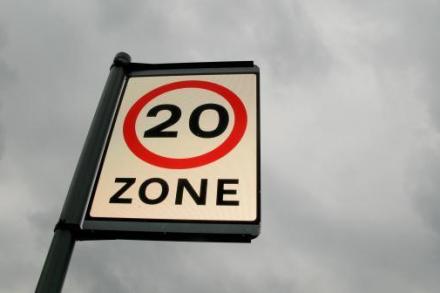
‘Absolutely insane’ is the verdict of Penny Mordaunt MP on the Welsh government’s introduction of a 20mph speed limit on residential roads. Having driven along not a few residential roads in Welsh towns and cities earlier this year, I can only agree, with one caveat. There are quite a few places in Wales, and not just in Wales, where the combination of narrow roads, parking and other traffic makes any thought of reaching even 20mph optimistic. Urban areas, in particular, are quite adept at imposing their own speed limits, in the form of traffic conditions. This is a reality that probably influences someone’s decision about what form of transport, if any, to use, without the need for even the gentlest nudge from officialdom.

The trouble with supermarket self checkouts

From our UK edition

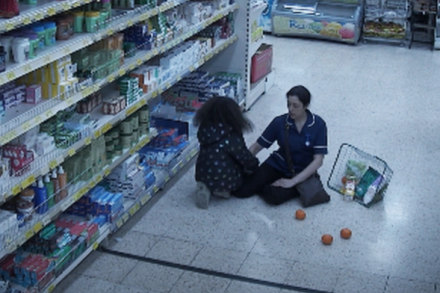
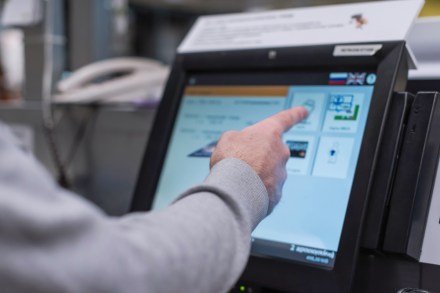
Finishing my latest mini-shop at my closest mini-supermarket, I witnessed something I hadn’t seen before. A couple who had used the self-checkouts were stopped at the exit by a staff member who asked to see inside their (store-branded) plastic bag. The customers obliged without demur and a half-smile sent them on their way. But it could have been different. Recent reports suggest strongly that aggression towards staff at supermarkets is on the rise.  Whatever the reason for the check, I have to confess – as an observer – to a tiny frisson of satisfaction. This was partly that someone was checking; I have seen people quite brazenly leave past the machines without paying, which means higher prices all round, does it not?

What we don’t know about the suspected Bulgarian spies

From our UK edition

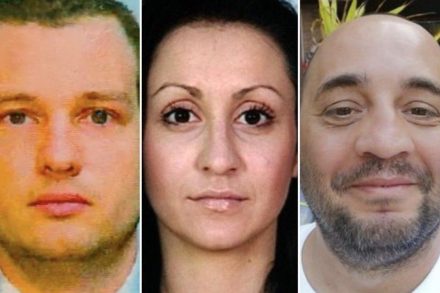
As a British former foreign correspondent in Moscow and Washington, there are few subjects I turn to with more trepidation than spying, and specifically the Russian variety. On the one hand, there is the 007 factor – the glamour, the martinis, and the derring-do – which colours perceptions on both sides. On the other is the awareness that espionage is a slithery, shape-shifting branch of human activity, where the only constant is that little is as it seems.   This is by way of a preface to the news – emblazoned on the front pages of most UK papers today – that three Bulgarian citizens, long resident in the UK, have been arrested and are accused of spying for Russia.

What’s behind Zelensky’s latest purge?

From our UK edition

President Zelensky has announced that he is dismissing the heads of all Ukraine’s regional military recruitment offices and replacing them with veterans who had served on the front line. He used a video address to say that a state investigation had turned up widespread corruption, including bribe-taking and help for draft dodgers to flee abroad.  As a war leader, he has, in effect, autocratic power, beyond anything he would enjoy as an elected leader in peacetime – and he has shown himself willing to use it Sounding a notably tough note, Zelensky said: ‘This system should be run by people who know exactly what war is and why cynicism and bribery during war is treason.

Ulez and the limit of Sadiq Khan’s power

From our UK edition

That the Conservatives retained the west London seat of Uxbridge and South Ruislip, albeit by a whisker, has been put down to a single issue: the London Mayor’s plan to extend the ultra low emissions zone to the outer boroughs, to take effect at the end of next month. A legal challenge is currently in the works, with a ruling expected soon. The Mayor’s argument is that improving air quality for Londoners is a priority, and he was out there repeating his point with his usual verve within hours of Labour’s failure to win Thursday’s by-election. Whichever way the court rules, however, the extension of the Ulez is surely as much of a political issue as it is a legal, or even a health, issue.

The troubling question of Ukrainian cluster bombs

From our UK edition

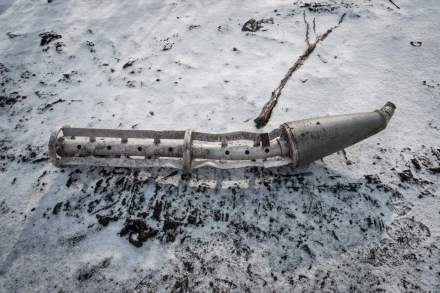
When the war in Ukraine was only a few months old, Amnesty International published a report condemning what it had found to be the extensive use of cluster munitions in Kharkiv – by Russia. It noted that the weapons were banned by more than 100 countries and said that in Kharkiv they had claimed hundreds of civilian victims. Cue accusations of war crimes and western outrage against Russia’s uncivilised way of war.  Now, a few days before the Nato summit convenes in Vilnius, President Biden has announced that the US will deliver similar weapons to Ukraine.