Martin Vander Weyer

Martin Vander Weyer

Martin Vander Weyer is business editor of The Spectator. He writes the weekly Any Other Business column.

Was COP28 any more than hot air?

From our UK edition

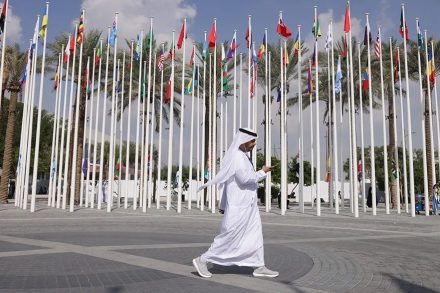
What position should the distant observer take on the COP28 conference in Dubai? That the sight of 70,000 delegates flying into a desert oil state from around the world to discuss human impacts on climate change is beyond satire and that its proceedings are never likely to rise above Greta Thunberg’s encapsulation of all such jamborees as ‘blah blah blah’? Or that the climate problem is now so obvious and urgent that all efforts towards global action, however small, should be uncynically applauded? I leave that choice on the table.

Should Boris Johnson really be telling Canada how to build houses?

From our UK edition

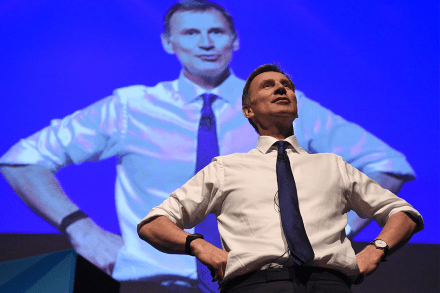
My eye was caught by a passage of the Chancellor’s Autumn Statement last week that other pundits, intent on analysing tax impacts, largely skipped past. As part of ‘progressing further capital market reforms to boost the attractiveness of our markets and the UK as one of the most attractive places to start, grow and list a company’, said Jeremy Hunt, ‘I will explore options for a Natwest retail share offer… It’s time to get Sid investing again.’ Leaving aside the non sequitur that battered NatWest, formerly RBS, still 39 per cent owned by the taxpayer 15 years after its bailout, hardly counts as a start-up with growth prospects, how many of Hunt’s wider audience got the reference to Sid, who he was and why he stopped investing?

A booster shot of optimism

From our UK edition

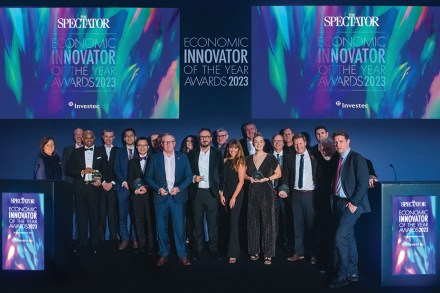
Stormy weather, stormy politics, a flatlining economy — but in a gala gathering of entrepreneurs and venture capitalists there’s always optimism. Our Spectator Economic Innovator of the Year Awards dinner sponsored by Investec at the St Pancras Renaissance Hotel on 9 November really was a booster shot against autumn blues: a glittering crowd, a buzz that could have charged a fleet of Teslas, and a spectacular venue in the great 19th-century railway terminus that was itself an icon of British innovation in its day. These awards, now in their sixth year, salute high-growth, entrepreneur-led businesses from across the UK.

Rishi Sunak can’t take the credit for falling inflation

From our UK edition

Even the best-run companies have occasional leadership crises. But if you asked ChatGPT to come up with a blockbuster boardroom-bloodbath movie scenario, I doubt it would propose anything as extreme as this week’s events in its own San Francisco-based parent company, OpenAI. Chief executive and co-founder Sam Altman was fired last week for failing to be ‘consistently candid’ with OpenAI’s board, though no one was prepared to say what he had not been candid about. By Monday he had a new job leading AI research at Microsoft, OpenAI’s 49 per cent shareholder. One inside source claimed 743 of OpenAI’s 770 staff had signed a letter supporting him and many of them would follow him to Microsoft.

What’s the point of a degree?

From our UK edition

‘Place nose on dot.’ That’s what my screen is telling me to do as the first step in a ‘liveness’ test I must complete to be accepted as a signatory on a club bank account. But if I align the image of my face with the dot, nothing happens. If I press my nose to the screen, I go cross-eyed. And if the test’s purpose is to make sure I’m not dead, it would be simpler to ask me to shout at it.

WeWork and FTX tell us visionary hype is always dangerous

From our UK edition

In the New York trial of Sam Bankman-Fried, founder of the collapsed FTX crypto exchange, there was never a moment when he looked like talking his way to freedom: he was found guilty on seven charges of fraud and conspiracy and now awaits what’s likely to be a very long sentence. Justice has been swift and sure, barring an extraordinary reversal on appeal. But what should worry thoughtful observers is the fact that during the period of the trial, from 3 October to 2 November, the price of bitcoin rose from £22,700 to £28,700. Perhaps investors saw the crypto currency as a safe haven after Hamas’s attack on Israel. Perhaps they just jumped on an irrational uptrend.

Innovator of the Year Awards: Business Services and AI

From our UK edition

31 min listen

Every year, The Spectator travels the country in search of the best and boldest new companies that are disrupting their respective industries. In a series of five podcasts, we will tell you about the finalists for 2023's Innovator of the Year Awards, sponsored by Investec. The awards winners will be announced in a prize ceremony in November. Listeners will have heard businesses in all sorts of fields – from consumer goods to health technology, from sustainability to the cutting edge of British engineering. But what about the companies that make these businesses work? The behind-the-scenes, boiler room people who offer services to businesses themselves. These days, with advancement in artificial intelligence, their work has been made more effective than ever before.

Innovator of the Year Awards: Sustainability and Social Purpose

From our UK edition

32 min listen

Every year, The Spectator travels the country in search of the best and boldest new companies that are disrupting their respective industries. In a series of five podcasts, we will tell you about the finalists for 2023's Innovator of the Year Awards, sponsored by Investec. The awards winners will be announced in a prize ceremony in November. This episode showcases the finalists in the Sustainability and Social Purpose category. These businesses all want to make the world a better place – whether that’s through helping reduce our emissions or giving back to the local community. They believe that business isn’t just for profit, but for a purpose.

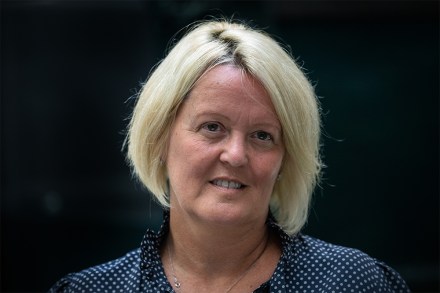
Alison Rose doesn’t deserve a huge NatWest payout

From our UK edition

When I wrote in July that Dame Alison Rose’s forced exit as chief executive of NatWest in the wake of the Nigel Farage scandal was ‘unnecessary’, many readers vehemently disagreed with me. Out she went, Treasury ministers having steamrollered the NatWest board’s brief attempt to hold her in post – and a subsequent Information Commissioner’s Office (ICO) report concluded she had breached data protection laws by revealing to the BBC that Farage had been a customer of the Coutts arm of NatWest and adding the misleading suggestion that his accounts had been closed for purely commercial reasons. Bang to rights, then. Rose should forfeit the £10 million to which she’s contractually entitled and I should execute a swift reverse-ferret. Or should we?

Innovator of the Year Awards: Consumer

From our UK edition

33 min listen

Every year, The Spectator travels the country in search of the best and boldest new companies that are disrupting their respective industries. In a series of five podcasts, we will tell you about the finalists for 2023's Innovator of the Year Awards, sponsored by Investec. The awards winners will be announced in a prize ceremony in November. The businesses in this category are reinventing the very staple goods that we, as consumers, use everyday, from pet food to laundry tabs. You might not think that much can be done to improve on them, but some bright British entrepreneurs have come up with great ideas.

Innovator of the Year Awards: Healthcare

From our UK edition

28 min listen

Every year, The Spectator travels the country in search of the best and boldest new companies that are disrupting their respective industries. In a series of five podcasts, we will tell you about the finalists for 2023's Innovator of the Year Awards, sponsored by Investec. The awards winners will be announced in a prize ceremony in November. In the West, the UK was the first country to create a national health service, free at the point of use. And yet 75 years on, it’s rare that a winter goes by without some kind of crisis in the NHS. And that’s not even to mention the impact of the pandemic on waiting lists. In this category we’re looking at innovations in the British health industry. How can we do things better?

Jeremy Hunt should stick to sensible pledges – it’s too late for big moves

From our UK edition

Imagine you’re Chancellor Jeremy Hunt, drafting your Autumn Statement for delivery in three weeks’ time. Bookies’ odds for a Tory general election win have moved out to six-to-one (against Labour’s dead-cert one-to-seven) following by-election wipe-outs. The Lib Dems look set to nab your South West Surrey seat if you don’t stand down anyway. And you can’t give your back-benches red-meat tax cuts because public borrowing for this year could run £30 billion higher than forecast. Releasing the pension ‘triple lock’ to save money would alienate older Tories. Inheritance tax giveaways that might please them would be campaign gold for Labour.

Innovator of the Year Awards: Manufacturing and Engineering

From our UK edition

38 min listen

Every year, The Spectator travels the country in search of the best and boldest new companies that are disrupting their respective industries. In a series of five podcasts, we will tell you about the finalists for 2023's Innovator of the Year Awards, sponsored by Investec. The awards winners will be announced in a prize ceremony in November. This episode will be focusing on the manufacturing and engineering category. Some of the nominees have found novel uses for old materials, often finding a much more sustainable way of producing things. A couple of them use cutting edge engineering – including graphene, a miracle material rediscovered right here in the UK, by the University of Manchester. Britain is, of course, the home of the industrial revolution.

The attack on Israel must lead to an uptick in inflation

From our UK edition

A 10 per cent increase in oil prices translates to a 0.15 per cent loss of global GDP and a rise of 0.4 per cent in global inflation, says Gita Gopinath, deputy managing director of the IMF. Before Hamas launched its assault on Israel on 7 October, the Brent Crude barrel price had already moved 20 per cent above its summer level of $75 and pundits were predicting $100, based on prospects of tighter supply from Saudi Arabia and Russia. Natural gas prices have also risen sharply with winter approaching – and no one knows how escalation of the latest Middle East conflict might affect other energy flows and supply chains.

Metro’s story tells us markets are still fearful of a banking crash

From our UK edition

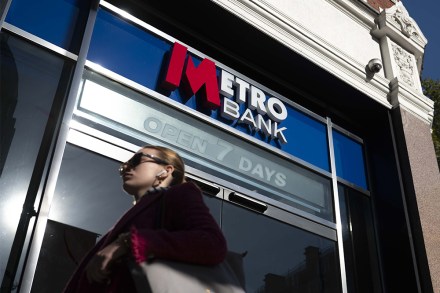
Market sentiment around the possibility of failures in the banking world remains as febrile as ever. Or so we might judge from coverage of Metro Bank – which reports suggested might have been edging towards collapse before finding a new owner over the weekend. Metro was the brashest of the ‘challenger banks’ that sprouted after the 2008 financial crisis and the only one that aimed to build an all-new network of 200 branches. Its American founder, Vernon Hill – whose other interests included a chain of Burger King outlets – declared an urge to ‘make banking fun’ when the first Metro opened in Holborn in 2010, offering free lollipops and dog biscuits. For some observers, it looked too gimmicky to survive. To have done so, having attracted 2.

If Chris Packham is anti it, it’s probably a good idea

From our UK edition

If the broadcaster and eco-warrior Chris Packham describes something as ‘an act of war against life on Earth’, sensible people might suspect that it’s probably, on balance, a good thing. Such is the case with the Rosebank field – the UK’s largest remaining undeveloped reserve of oil and gas, in deep waters west of Shetland, which was green-lighted by the government last week. Leading this £3 billion project will be the Norwegian energy giant Equinor. Rosebank’s 69,000 barrels of oil per day will be shipped to Norway or elsewhere to be refined and sold into world markets.

HS2 has been a fiasco. It’s time to ditch it for good

From our UK edition

In a fantasy world of wise government vision and decision-making, HS2 would have been announced in November 1964, shortly after the Tokyo Olympics. Visitors to those games saw the future in the form of the Tokaido Shinkansen – the first Japanese ‘bullet train’, which raced 320 miles from the capital to Osaka, carrying 1,300 passengers per train and eventually running 360 trains per day, with average delays measured in seconds. But in that era, UK ministers thought only of axeing railways and building motorways. A de novo British high-speed network could not have taken off in the 1970s, when the French were building the first ligne à Grande Vitesse from Paris to Lyon, simply because we were broke.

Bernard Looney shows why every board should be braced for scandal

From our UK edition

Bernard Looney, the fallen BP chief, always had a certain swagger about him. I’ve no idea whether he was unsafe in taxis, but he was certainly prone to unguarded remarks. ‘Not every barrel of oil in the world will get produced’ was a bold way, back in 2018, to introduce BP shareholders to the idea that the world’s energy giants will one day have to strand remaining carbon assets if they really intend to achieve net-zero targets. ‘This is literally a cash machine’ was not the best way to describe BP’s profit performance in November 2021, when British households were beginning to feel the pain of soaring energy bills.

How to do business with China

From our UK edition

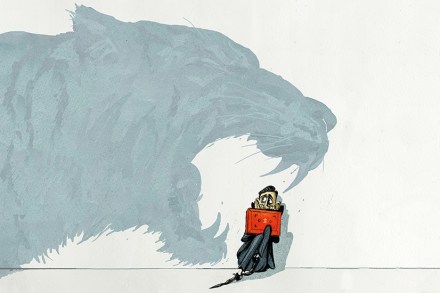
Amid reports of Chinese spies in Westminster, we learn that Huawei – the telecoms manufacturer western governments shun for fear of cyber espionage – has launched a smartphone containing microchips more advanced than anything China was previously thought capable of making. Some analysts say China is now ahead of the US in tech fields ranging from AI to robotics, while, in the auto sector, BMW chief executive Oliver Zipse (announcing plans to make electric Minis at Cowley from 2026) described Chinese electric carmakers with improved battery technology as an ‘imminent threat’ to his industry in Europe.

The economy isn’t as sick as we thought

From our UK edition

It would be churlish not to celebrate revisions from the Office for National Statistics that tell us the UK is not, after all, the post-Covid invalid of the G7. Contrary to previous figures suggesting we had struggled to regain pre-pandemic levels of economic output, it turns out that our gross domestic product passed that benchmark in late 2021 and our performance has been in line with France and ahead of Germany. Large sectoral revisions for agriculture and manufacturing tell us that statistical reporting is almost as much of a mug’s game as forecasting. But the brighter overall picture accords with the anecdotal sketch of ‘definite warming’ in consumer spending and confidence that I offered here early last month.