Martin Vander Weyer

Martin Vander Weyer

Martin Vander Weyer is business editor of The Spectator. He writes the weekly Any Other Business column.

Europe’s leaders worship Mario Draghi. They should listen to him instead

From our UK edition

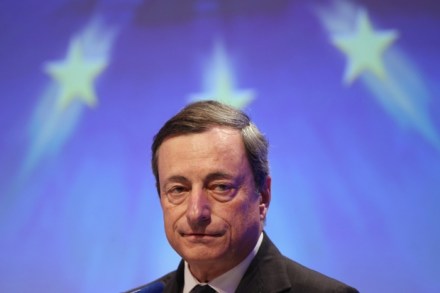
European Central Bank President Mario Draghi secured a place in history by his demonstration, on 26 July 2012, of the power of words in a financial crisis. Not long in office, he had already shown willingness to act firmly, averting a liquidity crunch by providing three-year lending facilities for European banks. That day, he told a conference in London: ‘Within our mandate, the ECB is ready to do whatever it takes to preserve the euro. And believe me, it will be enough.’ While the rest of the speech was an opaque metaphor about the euro as a bumblebee — ‘a mystery of nature because it shouldn’t fly but instead it does’ — ‘whatever it takes’ was clear enough to steady the bond market and ease borrowing costs of eurozone governments.

The lefties are right: we really do pay our bosses too much

From our UK edition

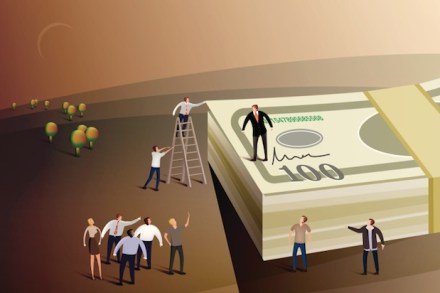
The FTSE100 index stands precisely where it did in the first week of December 1999. Whichever way you look at it, shareholders — including pension funds — have had a rotten run on the economic rollercoaster of the past 15 years. So it’s reasonable to keep asking whether the rise in executive pay over that same period is justified: a report from the High Pay Centre says remuneration of the average FTSE100 chief executive is now at a multiple of 143 times that of the average worker in the same companies. In 1998 that multiple was 47, indicating a tripling of top pay relative to workforce earnings while shareholder returns have stayed flat. Of course this argument is not that simple.

It’s not just left-wingers who think the bosses’ pay boom is unhealthy

From our UK edition

The FTSE100 index stands precisely where it did in the first week of December 1999. Whichever way you look at it, shareholders — including pension funds — have had a rotten run on the economic rollercoaster of the past 15 years. So it’s reasonable to keep asking whether the rise in executive pay over that same period is justified: a report from the High Pay Centre says remuneration of the average FTSE100 chief executive is now at a multiple of 130 times (corrected from the report's original figure of 143 times) that of the average worker in the same companies. In 1998 that multiple was 47, indicating that top pay has almost tripled relative to workforce earnings while shareholder returns have stayed flat. Of course this argument is not that simple.

Why a City job should be graduates’ last resort

From our UK edition

August is the season for conversation about career choices. Every holiday party seems to include new graduates or next year’s graduands in need of grown-up advice. Many yearn to be pastry chefs, having devoted their student years to watching The Great British Bake Off. Some want to be journalists, and I tell them it’s more fun than having a secure job with a decent income. Happily I’ve only met one young man this summer who wants to go into financial PR, the métier in which I believe Satan himself did his first internship.

The man who could sell the British public on fracking

From our UK edition

Iain Conn, who will succeed Sam Laidlaw as chief executive of Centrica, would have been a dead cert for the top job at his current employer, BP, were it not for the Deepwater Horizon oil rig disaster in the Gulf of Mexico in April 2010. The subsequent PR fiasco terminated the BP career of the then chief executive Tony Hayward — who seemed crushed by the episode, but recovered to make a double fortune at Genel Energy and Glencore. Had Hayward served a full term, Conn (BP’s head of refining and marketing) would almost certainly have followed him. As it was, BP found it more politic to appoint an American, Bob Dudley, to repair relations in Washington while simultaneously arm-wrestling with the Kremlin-connected oligarchs who were BP’s co-investors in Russia.

These latest sanctions against Putin might just work

From our UK edition

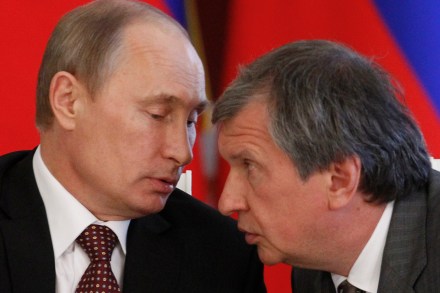
‘Sanctions,’ said Kofi Annan, ‘are a necessary middle ground between war and words.’ Neither the EU nor the US will deploy troops or missiles to defend Ukraine against Russian-backed separatists, while Vladimir Putin basks in hostile Western words and turns them to domestic advantage. That leaves sanctions as the only means of seeking to influence him. But do they work? Evidence is not persuasive: in 200 cases studied by academics in Washington, from the League of Nations action against Italy’s aggression in Abyssinia in the mid-1930s to Russia’s assault on Georgia in 2008, sanctions were judged successful in one third of cases; in many of those, success was ‘partial’.

I know how ineffective sanctions are – but these ones just might work

From our UK edition

‘Sanctions,’ said Kofi Annan, ‘are a necessary middle ground between war and words.’ Neither the EU nor the US will deploy troops or missiles to defend Ukraine against Russian-backed separatists, while Vladimir Putin basks in hostile Western words and turns them to domestic advantage. That leaves sanctions as the only means of seeking to influence him. But do they work? Evidence is not persuasive: in 200 cases studied by academics in Washington, from the League of Nations action against Italy’s aggression in Abyssinia in the mid-1930s to Russia’s assault on Georgia in 2008, sanctions were judged successful in one third of cases; in many of those, success was ‘partial’.

The perverse consequences of punishing the banks

From our UK edition

Lloyds Banking Group is to pay fines of £218 million for fixing interest rates including Libor (the rate at which banks lend to one another) the Financial Conduct Authority and US Commodities and Futures Trading Commission have announced. The FCA described the behaviour as ‘serious misconduct’, and Bank of England Governor Mark Carney said the rigging was ‘reprehensible’. Lloyds follows in the footsteps of Barclays and RBS which have also been fined for market manipulation. But should the banks be punished for their transgressions? In February, The Spectator's business editor, Martin Vander Weyer, asked whether fines might weaken the banks we want strengthened, and whether they might hit us rather than the banks.

Forecasting is a mug’s game – but I was right about the economic revival

From our UK edition

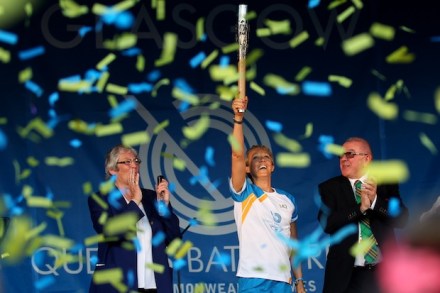
‘Perhaps I should shift my prediction to 23 July 2014,’ I wrote in April 2012. ‘That’s the opening of the Commonwealth Games in Glasgow, and we must all start thinking positively about it.’ I was talking about the moment when the nation would at last shake off its economic gloom, which I had previously pinned to the opening of the London Olympics. But that spring we fell back into negative GDP territory (avoiding a technical two-quarter ‘double dip’ only when the first-quarter result was revised upwards to zero) and I felt obliged to ‘elasticate my timetable’. Since the beginning of last year we have had 18 months of robust growth — but pundits less cheerful than me have continued to report a persistent absence of feelgood.

No wonder Philip Clarke was axed – Tesco has lost its way

From our UK edition

I really wouldn’t want to be chief executive of Tesco, I wrote in January, because the ‘too big, too dull, too dominant’ supermarket giant, besieged by discounters, has become ‘a business-school case study of a brand that has lost all positive emotional connection to its customers’; the incumbent Philip Clarke, a Tesco lifer with scant hope of measuring up to his predecessor Sir Terry Leahy, had ‘everything to lose’. Well, now he’s lost it — to be replaced by Dave Lewis, a Unilever executive who knows how to turn dull products into sexy brands, Dove soap and Lynx deodorant being two of his triumphs.

Does the man who saved Burberry from the chavs deserve £20 million?

From our UK edition

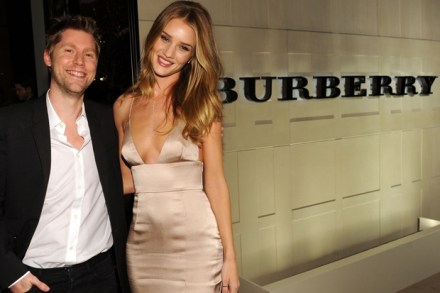
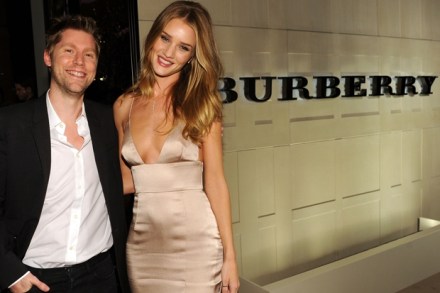
There isn’t a single item of Burberry in my wardrobe, I’m afraid, so I was unaware until this week of the fashion genius that is the firm’s chief executive Christopher Bailey, whose £20 million pay deal received a thumbs-down from 53 per cent of shareholders at last week’s AGM. The vote was not binding on the board, however, so Bailey — the Halifax-born carpenter’s son who, I now know, reinvented the trench coat and rescued the classic Burberry check from the chavs who adopted it a decade ago — will get his giant share award anyway. But does he really deserve it?

Any other business: trouble spots in European banking

From our UK edition

‘1914: Day by Day’, the Radio 4 series by the historian Margaret MacMillan, is a gripping reminder that significant global events often arrive not in a single eruption but in a series of lesser happenings that only afterwards form an obvious pattern. Let’s hope that’s not what we’re watching in the banking sector as anticipation builds towards the results, due in October, of the European Banking Authority’s current round of ‘stress testing’. Last month’s trouble spot — with a certain resonance for the current centenary — was Austria, whose government forced losses on bondholders in the troubled Hypo Alpe-Adria-Bank by overriding a guarantee from the province of Carinthia.

Ryedale Festival: a beacon of survival without subsidy

From our UK edition

There are festivals of everything, everywhere. So why get excited about the Ryedale Festival (11–27 July) apart from the fact that it happens on my Yorkshire home ground — and I used to be its chairman? Every summer music festival proclaims the richness and variety of its menu. Ryedale, under the artistic directorship of Christopher Glynn, competes with the best, from its opening Monteverdi Vespers in Ampleforth Abbey to its Royal Northern Sinfonia finale at Hovingham Hall. But what’s really special about this one is the opportunity to pass an extended fortnight tootling across what I truly believe is England’s loveliest landscape, picnicking en route.

Damp, green and beguiling – the joys of Killarney

From our UK edition

Here’s a question for a Guinness-sponsored pub quiz: who or what is a ‘jarvie’? The answer is the gypsy driver of a ‘jaunting car’ — or pony and trap — you can hire to drive you up the Gap of Dunloe between the Purple Mountain and Macgillicuddy’s Reeks just west of Killarney in south-west Ireland. If that sounds a bit touristy, it certainly is; but the Gap, with its ruined cottages, Wishing Bridge, placid lakes and mountain goats glowering from dark parapets, is also an authentic glimpse of the wild place that was pre-modern Ireland before the struggle, boom and bust of the past hundred years.

Gold-fixing is the last ghost of the old City. It won’t be around much longer

From our UK edition

In a season obsessed with sport and personal misbehaviour — separately or in combination — the word ‘fixing’ immediately brings to mind ‘match-fixing’, as in ‘Two World Cup referees suspected’ of it, and ‘Former New Zealand cricketer banned for life’ for it, to pick at random from this week’s headlines. ‘Gold-fixing’, by contrast, is a phrase of which the City has been proud for almost a century. But the imminent demise of its historic gold-fixing system is yet another parable of changing times. Since September 1919, the price of gold has been ‘fixed’ daily by five of London’s leading bullion dealers. In the era when the dollar price per ounce was already set by the US Treasury, first at $20.

Milton Keynes, destination of the global super-rich

From our UK edition

Is the housing market really starting to cool, or is the heat moving to unexpected places? The number of mortgage approvals in May was down almost a fifth from a peak at the beginning of the year — reflecting tougher affordability tests and slower processing as a result of the Mortgage Market Review in April, as well as fears of interest rate rises. Bank of England restrictions on high-risk lending announced this week will add to the dampening. Meanwhile, at the top end — the market for £10 million-plus London ‘super-prime’ properties — foreign buyers are reported by Knight Frank to be in retreat, deterred by the strength of sterling.

‘Dark pools’ are just another conspiracy of bankers against the public

From our UK edition

It was at the Mansion House dinner last year that a City gent two seats away announced himself to be the custodian of one of London’s ‘dark pools’. The phrase sounded pleasingly Tolkienian but his first explanation — an electronic exchange in which large share transactions are completed in total privacy — dispelled the charm. My reaction was sharp enough to make the Downing Street spin-doctor between us fiddle nervously with his Twitter feed. If institutional investors can shift blocks of stock on the quiet, without moving public markets, what happens to the normal process of ‘price discovery’ between buyers and sellers? Surely small investors are being ripped off? Sounds like another market abuse to me, I shot along the table.

Why I’m all for George Osborne’s cynical pitch for Northern votes

From our UK edition

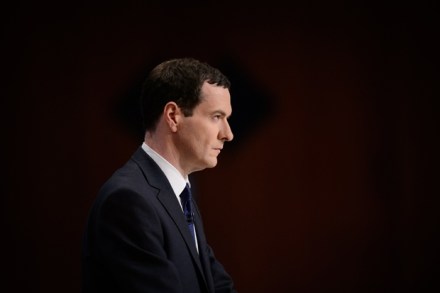
When John Prescott used to wax garrulous about a ‘superhighway’ from Hull to Liverpool, everyone assumed it was a wheeze to spray southern taxpayers’ money across the region he saw as his power base. When George Osborne decided to ‘start a conversation’ this week about a super-city along the same route, an English equivalent of Germany’s Ruhr valley connected by yet another decades-away high-speed rail project, everyone assumed it was about recapturing votes in northern conurbations where Tory MPs and councillors are an endangered species.

George Osborne’s cynical grab for northern votes (and why I’m for it)

From our UK edition

When John Prescott used to wax garrulous about a ‘superhighway’ from Hull to Liverpool, everyone assumed it was a wheeze to spray southern taxpayers’ money across the region he saw as his power base. When George Osborne decided to ‘start a conversation’ this week about a super-city along the same route, an English equivalent of Germany’s Ruhr valley connected by yet another decades-away high-speed rail project, everyone assumed it was about recapturing votes in northern conurbations where Tory MPs and councillors are an endangered species.

The return of oil price anxiety is a timely reminder to get fracking

From our UK edition

‘Iraq turmoil sends crude oil prices to nine-month high’ is the sort of headline that used to send shivers down economists’ spines, especially if it appeared on the same page as ‘Europe faces gas shortage as Russia cuts Ukraine supply’. How worried should we be at the current turn of events in the energy world? Since Iraq’s new insurgency kicked off, the price of a barrel of Brent Crude has blipped from $105 to $115 — nothing to panic about — but the more pessimistic analysts are talking of a further $30 rise if Iraqi oil flows of 3.6 million barrels a day (representing about 4 per cent of global demand) are seriously disrupted.