Martin Vander Weyer

Martin Vander Weyer

Martin Vander Weyer is business editor of The Spectator. He writes the weekly Any Other Business column.

Do Nikkei and the FT really share the same journalistic values?

From our UK edition

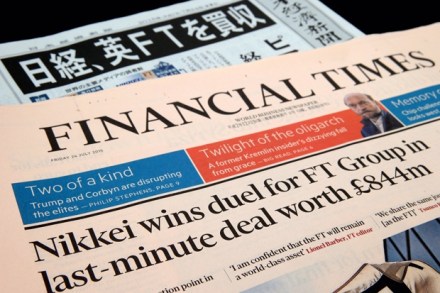
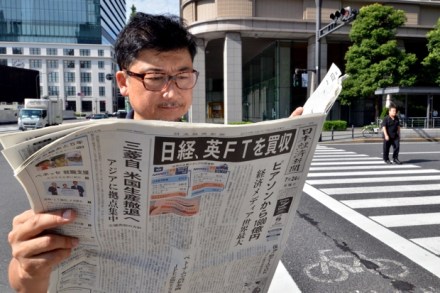
It’s nearly 30 years since I worked in Japan, but I still have a few words of the language and a certain idea of how the place worked. The role of the business press, for example, was to trumpet export successes of Japanese corporations, and not to report shenanigans in which securities firms boosted prices of selected shares by pushing them to housewife investors, to generate campaign funds for favoured politicians. So I’m curious how the Financial Times will fare under its new owner Nikkei, the very Japanese media group that has paid £844 million to acquire the world’s most prestigious business title. Has the culture changed since my day?

Do Nikkei and the FT really share the same journalistic values? | 28 July 2015

From our UK edition

It’s nearly 30 years since I worked in Japan, but I still have a few words of the language and a certain idea of how the place works. The role of the business press, for example, was to trumpet export successes of Japanese corporations, and not to report shenanigans in which securities firms boosted prices of selected shares by pushing them to housewife investors, to generate campaign funds for favoured politicians. So I’m curious how the Financial Times will fare under its new owner Nikkei, the very Japanese media group that has paid £844 million to acquire the world’s most prestigious business title. Has the culture changed since my day?

Farewell to the City’s stroppy regulator: a modest sop for the new bank tax

From our UK edition

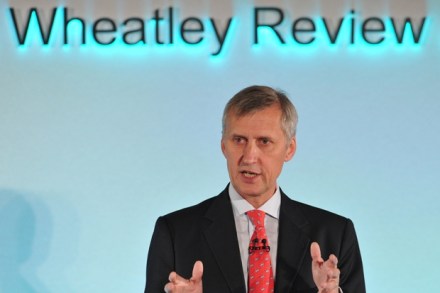
A City insider at last month’s Mansion House dinner told me the Financial Conduct Authority had become ‘a bit of an embarrassment’ — or rather, that was my bowdlerisation of what he actually whispered. So it comes as no surprise that FCA chief executive Martin Wheatley has resigned, having been told by the Chancellor that his contract would not be renewed. A former London Stock Exchange director and Hong Kong securities regulator, Wheatley has a knack of making enemies: Hong Kong investors, unhappy with his handling of alleged misselling of Lehman Brothers ‘minibonds’, once burned a funeral effigy of him outside his office.

The City might miss stroppy regulator Martin Wheatley

From our UK edition

A City insider at last month’s Mansion House dinner told me the Financial Conduct Authority had become ‘a bit of an embarrassment’ — or rather, that was my bowdlerisation of what he actually whispered. So it comes as no surprise that FCA chief executive Martin Wheatley has resigned, having been told by the Chancellor that his contract would not be renewed. A former London Stock Exchange director and Hong Kong securities regulator, Wheatley has a knack of making enemies: Hong Kong investors, unhappy with his handling of alleged misselling of Lehman Brothers ‘minibonds’, once burned a funeral effigy of him outside his office.

A deal for the good of the world, but in Vienna rather than Brussels

From our UK edition

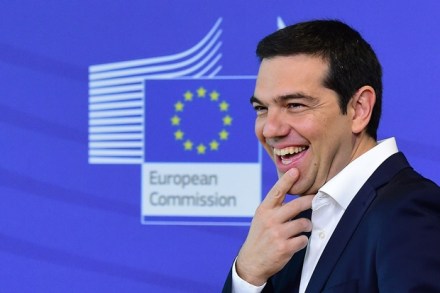
As an occasional lecturer on the abstruse topic of the efficacy of sanctions in conflict resolution, I find myself much more excited about the emergence in Vienna of a settlement of the Iranian nuclear stand-off than I am about a third Greek bailout — which left-wingers of the Syriza party regard as a vindictive form of sanctions regime designed to humiliate the government in Athens and remove its fiscal autonomy. The only thing that’s clear about the Greek crisis is that it’s not over: impossible to see how it could be ‘over’ without the debt relief Prime Minister Tspiras asked for but the Germans adamantly refused.

My hope for Uber? That something better overtakes it soon

From our UK edition

I’m as irritated by Uber as the French seem to be — though I wouldn’t go as far as they did last week in arresting the ride-sharing company’s managers. Uber has hit official resistance everywhere from Johannesburg to São Paulo; but a disruptive free-market technology so readily adopted by users that its name has entered global language is bound to win the argument in the end. The only question is whether it will be overtaken by something better. I certainly hope so. Deep in Clapham, a fellow dinner guest offered to call ‘an Uber’ to take us back north of the river. Sure enough, a scholarly-looking fellow with a clean car was there in moments. So far so good — until the driver said: ‘You go to Birmingham, yes?

Good and bad politics: the Budget against a backdrop of Greek chaos

From our UK edition

George Osborne’s Budget was good politics: not so much in terms of tactical point-scoring, though there was plenty, but in terms of striving for big objectives of fiscal rectitude and wider prosperity by incentivising sensible economic behaviour and discouraging casual reliance on the state: ‘a country that backs those that work hard and do the right thing’, in David Cameron’s phrase. Some of it will provoke rage, some of it will swiftly unravel, but it was a real attempt to steer the UK in a positive direction. How sad that it had to be presented against the backdrop of the Greek crisis, which is the most howling concatenation of bad politics so far this century.

This Greek catastrophe isn’t Lagarde’s fault but her career is starting to look like toast

From our UK edition

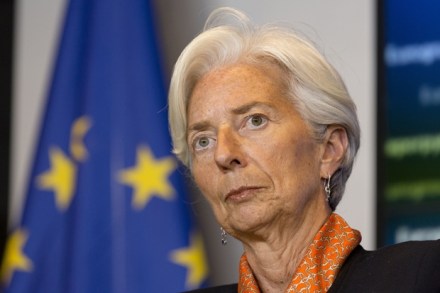
The Greek drama took a turn few of us expected last week, when the world thought compromise was imminent. What happens after Sunday’s referendum is anyone’s guess — but recrimination is already flying, much of it aimed at IMF managing director Christine Lagarde. Having inherited the Greek headache from her predecessor Dominique Strauss-Kahn after his resignation in 2011, she has always talked tough — but now stands accused of setting aside IMF rules, as well as long-established blueprints for debt relief and the views of many of the Fund’s own economists, in order to stay aligned with the European Commission and the European Central Bank in the ‘troika’ of bailout negotiators.

Contagion of a different kind as Greece wriggles off the hook

From our UK edition

The clear winner in the Greek crisis is the author of The Little Book of Negotiating Clichés, whose royalties must have been pouring in as the clock ticked towards midnight while European leaders took positive steps back from the brink and found themselves speaking the same language, perhaps because they were reading from the same page. But assuming this predictable dance results in terms that Prime Minister Tsipras can persuade his comrades to accept before the IMF’s default deadline and the moment when the Greek banking system can no longer seek life-support from the European Central Bank — which is all still quite a big assumption — who will be the loser?

Late news: what was really served at the Mansion House banquet

From our UK edition

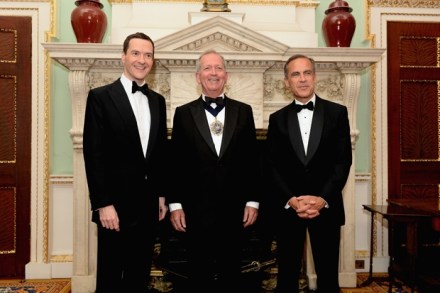
Last week’s deadline did not allow me to report from ringside at the Mansion House dinner, but there was so much to observe that I hope you’ll forgive a late dispatch. What a vivid guide to City psychology and precedence it offered. In the anteroom, Lord (Jim) O’Neill, the Treasury’s new Northern Powerhouse minister, could be seen chatting to ex-BP chief Tony Hayward, now chairman of mining giant Glencore Xstrata. At the top table, HSBC chairman Douglas Flint was carefully separated (by António Horta-Osório of Lloyds) from Governor Carney, so they could avoid discussing HSBC’s plans to move back to Hong Kong.

The surfer, the sailor and the horseman: prosperity is all about personal stories

From our UK edition

The tectonic plates of economic life rumble and shift. As ever, market watchers are obsessed by big themes — and the demand for predictions about them even though so many past predictions have turned out wrong. Right now, we’re gripped by the endgame for Greece, the timing of the first US rate rise, the future of energy prices given Opec’s decision to maintain output above demand, the slowing of Chinese industrial growth, and the unresolved destiny of the global debt bubble. Yet we also know that wealth creation is fundamentally a matter of individual risk and endeavour, often pursued in defiance of the adverse alignment of market forces.

The Fifa case: American justice at work as the world’s CCTV system

From our UK edition

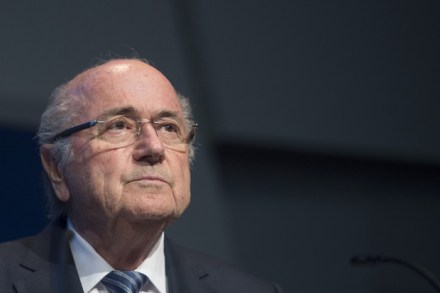
‘In matters of criminal justice,’ said NatWest Three defendant David Bermingham after a London court extradited him and his co-defendants to face Enron-related US fraud charges even though nothing they were accused of looked like a crime under UK law, Britain was becoming ‘the 51st state of America’. Many Swiss citizens must have felt they were living in the 52nd when Department of Justice agents decided, as I put it in 2013, to ‘topple a whole bowling alley of gnomes of Zurich’ in an assault on Swiss banking secrecy that forced the closure of the country’s oldest bank, Wegelin.

Sepp Blatter falls foul of the world’s CCTV system

From our UK edition

 ‘In matters of criminal justice,’ said NatWest Three defendant David Bermingham after a London court extradited him and his co-defendants to face Enron-related US fraud charges even though nothing they were accused of looked like a crime under UK law, Britain was becoming ‘the 51st state of America’. Many Swiss citizens must have felt they were living in the 52nd  when Department of Justice agents decided, as I put it in 2013, to ‘topple a whole bowling alley of gnomes of Zurich’ in an assault on Swiss banking secrecy that forced the closure of the country’s oldest bank, Wegelin.

Which behaved worse: callous Thomas Cook or cynical Barclays?

From our UK edition

Which is worse, morally and reputationally — to be Thomas Cook, shamed by its refusal to show proper human concern, for fear of being taken to admit responsibility, over the death of two children by carbon monoxide poisoning from a faulty boiler while on holiday in Corfu; or to be Barclays, fined almost $2.4 billion (heading a list of banks fined more than $9 billion between them for similar offences) for conspiring to manipulate the foreign exchange market over a five-year period? Ethicists could agonise over that one for weeks.

Full employment, Prime Minister? What exactly do you mean by that?

From our UK edition

‘Two million jobs have been created since 2010 — but there will not be a moment of rest until we have reached our goal,’ said David Cameron in a Telegraph article a fortnight before the election: ‘Two million more jobs; or full employment in Britain.’ It was a bold statement. Indeed you might think, given unemployment at 1.84 million in the winter quarter, that the target for new jobs was actually an error on the part of who-ever drafts the Prime Minister’s prose. Either way, it drew little attention amid the smoke of battle.

My nominee for politician of the year: the honourable member for Athens B

From our UK edition

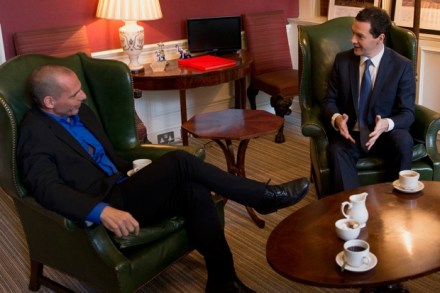
After the heat of battle: the accolades, the recriminations, the telling of history by the victors. It’s six months early for our Parliamentarian of the Year shortlist, but my nominee for this year’s top award is… the honourable member (or one of them) for the constituency of Athens B, Yanis Varoufakis. Last week, the grandstanding Greek finance minister was declared to have been ‘sidelined’ from his nation’s on-the-brink debt negotiations, following a more than usually stormy meeting with fellow European finance ministers in Riga. ‘They are unanimous in their hate for me; and I welcome their hatred,’ he tweeted, quoting Franklin Roosevelt.

Only the Tories can meet the aspirations of Ikea’s hard-working families

From our UK edition

If Ikea were a constituency, it would be a three-way marginal. That was my thought one morning last week as I walked a mile and a half round the Batley branch of the great Swedish retailer behind two keen shoppers (one wearing a pedometer) whom I had driven there as a birthday treat. Here are middle-aged parents buying nursery stuff for pregnant daughters, engaged couples fitting out first flats, Polish families bickering over bargain kitchenware, Muslim housewives chattering behind niqab facemasks, and even what I thought might be a transsexual under a blond beehive. There’s a Scandinavian sense of equality: no fast track through the labyrinth, no exclusive luxury floor. The customers all seem to belong to that floating-voter category now labelled ‘hard-working families’.

Cheap shots and uncosted bribes are drowning out vision, wisdom and optimism

From our UK edition

The interesting thing about Labour’s pledge to abolish non-dom tax status — a squib designed to trap Tories into expressing sympathy for the rich, in the knowledge on the part of Ed Miliband and Ed Balls that it might cause loss of tax revenues and inward investment — is that it has been welcomed by influential voices in the City. The Eds must be astonished to find Sir Roger Carr, chairman of BAE Systems and former deputy chairman of the Bank of England, bang on message: he told the FT that non-dom rules are ‘a relic of the past that unfairly favours the few at the expense of the many’.

Did the £20 million Norwegian’s pay row make BG cheaper for Shell?

From our UK edition

Helge Lund was widely expected to go into domestic politics when he ended his successful tenure as head of Statoil, the Norwegian state oil and gas company. Instead, he was hired to run BG Group, the troubled former exploration arm of British Gas, but on a promise of such ludicrously rich terms — up to ten times his Statoil salary — that shareholders, the media and Vince Cable howled in protest. An embarrassed BG board had to scale back the offer, though it remained pretty fat and as I wrote at the time, ‘no mention of Lund, however good he turns out to be, will ever omit a jibe at his pay’.