Martin Vander Weyer

Martin Vander Weyer

Martin Vander Weyer is business editor of The Spectator. He writes the weekly Any Other Business column.

Let’s have a dose of business sense in Downing Street before it’s too late

From our UK edition

Take no notice of the resilience of the FTSE100 index, which, having reached record pre-election highs, shed barely 100 points at its opening last Friday and recovered most of them by Monday. Dominated by multinational companies, it is being sustained by global market sentiment and the relative weakness of the pound, which makes our blue chips look good value; it is not offering a signal that investors think all is well. But do take notice of the Institute of Directors, speaking largely for mid-sized businesses, when it says that confidence among its members has crashed since polling day: from 34 per cent optimistic vs 37 per cent gloomy last month, to 20 per cent upbeat against 57 per cent ‘quite or very pessimistic’ now.

The Board of Trade won’t boost exports if business conditions aren’t right at home

From our UK edition

The last limp gambit of the Tory campaign was a promise to revive the Board of Trade. As a way of grabbing attention and diverting the ‘Corbyn’s not such a bad bloke’ tendency, you’d have to say it lacked oomph. But was it a good idea? First formally constituted in 1696, the Board itself ceased meeting long ago but the title of ‘President of the Board of Trade’ persists: Michael Heseltine relished using it when he was trade and industry secretary, and it was held before the election by the invisible Liam Fox in his role as would-be negotiator of the trade deals Britain isn’t allowed to negotiate until Brexit is complete. Now Theresa May proposes a network of nine UK trade commissioners dotted around the world.

BA’s disaster plan failed as soon as the smoke started coming out of its servers

From our UK edition

The science of ‘disaster recovery planning’, together with the related art of ‘crisis PR’, is a core discipline of 21st-century management, both in the corporate world and for agencies of the state. Business schools teach it; consultants sell it; hospitals role play it; the Cabinet Office runs a college in Yorkshire devoted to it; every company board worth its salt has a risk committee demanding bulletproof evidence of it. So a disaster on the scale of the computer breakdown that caused much distress to British Airways passengers last weekend is not just unusual: it is completely bizarre, and nothing said by BA chief executive Alex Cruz has come close to explaining it.

We’d all like to see Fred on the hook but RBS investors will be wiser to settle

From our UK edition

‘Fred Goodwin off the hook again,’ declared the Scottish Daily Record. That neatly summed up one strand of sentiment behind the RBS Shareholder Action Group’s battle for compensation for losses incurred in the bank’s £12 billion rights issue in 2008 — preceding its £45 billion taxpayer bailout, in which any remaining shareholder value was largely wiped out. Investors who believe they were misled by RBS’s directors and the rights-issue prospectus have been campaigning for their money back ever since.

Here’s who should be Mrs May’s cabinet supremo to tackle the housing shortage

From our UK edition

Who should be housing supremo in what we all assume will be Mrs May’s new administration? Brandon Lewis and Gavin Barwell, recent junior ministers with that brief, achieved nothing — if we also assume the brief was to procure an adequate supply of new homes, in the private sector or ‘social’ one, which the ‘just about managing’ could afford. The number of affordable homes built in 2015-16 was just 32,000, half that built in the previous year and the lowest since 1992. But action is coming — apparently. ‘We will fix the broken housing market,’ declares Mrs May, mustard-keen on fixing broken markets, ‘to build a new generation of council homes right across the country.

The economy isn’t all roses, but that’s no reason not to vote for Mrs May

From our UK edition

As the election campaign goes into full swing, we hear surprisingly little about the state of the UK economy — because the Tories can’t (and probably don’t need to) promise that they can make it any better in the medium term than it is now, while almost no one takes seriously what Labour has to say about it. The truth is, against the odds and for the time being, that it’s ticking along nicely enough not to be a top concern for most voters. Are we right to be so complacent? After a slowdown in growth to just 0.3 per cent in January to March, most analysts expect a pick-up in the current quarter, and the IMF now agrees with the Budget forecast of 2 per cent for 2017. The construction, services and manufacturing sectors all reported rising activity in April.

Today’s bankers don’t know how good they’ve got it

From our UK edition

‘Do you still hate bankers?’ asked an old friend whom I hadn’t seen for years, having himself made a good career in overseas banking. Not at all, I said, and I never did. It’s been my mission to shame bad ones, but there are many I have liked and admired. Among those was Julian Wathen, a Barclays overseas veteran who has died aged 93, and whose story illuminates one key fact: at least today’s bankers don’t get shot at. As manager of the Limassol branch in Cyprus in 1956, Wathen survived being shot through the neck by an Eoka gunman who, the Times reported, ‘walked into his office, fired, and then decamped without interference from anyone’. Wathen’s successor Joseph Brander was shot dead on the steps of the same branch two years later.

What Theresa May should put in her manifesto

From our UK edition

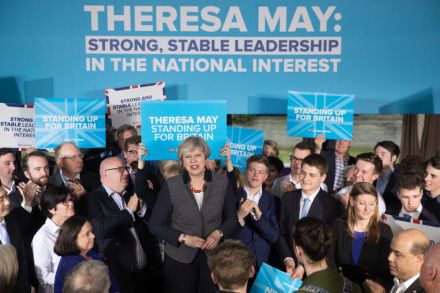
Will executive pay pop up in Theresa May’s manifesto? An objective of her snap election is to secure a larger majority on the basis of a smaller burden of manifesto promises than she inherited from David Cameron. But in her only leadership campaign speech last July, her reference to ‘an irrational, unhealthy and growing gap between what those companies pay their workers and what they pay their bosses’ was one of the phrases that caught the most attention. Back then, she was in favour of imposing annual binding shareholder votes on boardroom remuneration, as well as spotlighting the ratio between chief executives’ and average workers’ pay, and even forcing companies to accept workers’ representatives on boards.

Why binding shareholder votes on pay should be a manifesto promise

From our UK edition

Will executive pay pop up in Theresa May’s manifesto? An objective of her snap election is to secure a larger majority on the basis of a smaller burden of manifesto promises than she inherited from David Cameron. But in her only leadership campaign speech last July, her reference to ‘an irrational, unhealthy and growing gap between what those companies pay their workers and what they pay their bosses’ was one of the phrases that caught the most attention. Back then, she was in favour of imposing annual binding shareholder votes on boardroom remuneration, as well as spotlighting the ratio between chief executives’ and average workers’ pay, and even forcing companies to accept workers’ representatives on boards.

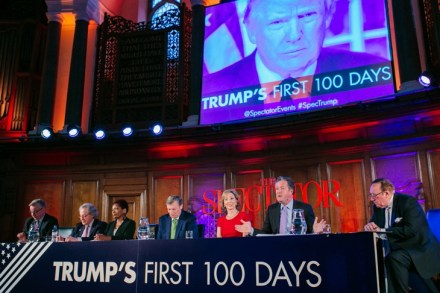
Trump’s first 100 days: triumph or disaster?

From our UK edition

One hundred days is way too short a time to assess a presidency. On this, if little else, there was unanimity among our stellar panel, facing a 1,000-strong audience in the dramatic arena of Westminster’s Emmanuel Centre. In summary, The Donald’s performance has been erratic and high-risk, but he isn’t all bad: panellist and self-proclaimed friend-of-Trump Piers Morgan recalled a New York barman saying, ‘He’ll either turn out a great president, or we’re all gonna die.’ So why try to judge him so soon? Because it is presidents themselves, starting with FDR, who have chosen to highlight this artificial milestone — and Donald Trump went larger than most by setting himself a crazily overblown list of objectives.

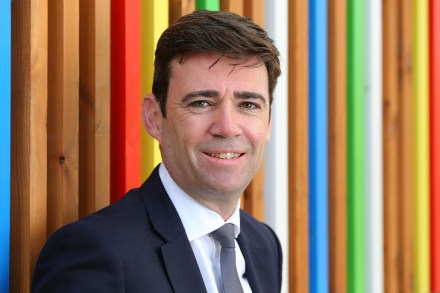
Manchester needs a new champion – and it isn’t Andy Burnham

From our UK edition

Another election that catches my business eye is the one for mayor of Greater Manchester. The winner will have a powerbase with huge potential: a city-region of 2.7 million people, an enterprise culture that has evolved over two centuries, an outstanding university science base, strong flows of inward investment, Europe’s largest industrial estate at Trafford Park, a global sports brand at Old Trafford, and a world-class airport. Yes, it also has problems of ‘entrenched worklessness’, NHS overstretch and underperforming schools — and nine of its ten local authorities are Labour-controlled. But that’s no reason to award the mayor’s job to yet another socialist opportunist.

Capping prices to win votes is no substitute for a serious energy strategy | 29 April 2017

From our UK edition

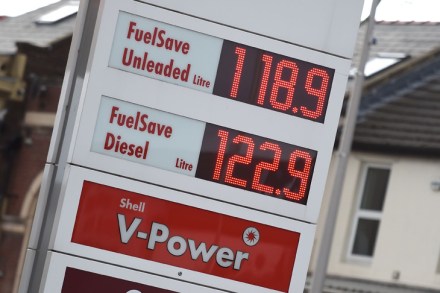
Is capping domestic energy prices an equitable way to help the ‘just about managing’, or an electoral gimmick with a whiff of anti-free-market ideology? When it was Ed Miliband’s idea, it was certainly the latter. Now it’s likely to be included in Theresa May’s manifesto, offering a potential £100 saving for millions of homes on ‘standard variable tariffs’, it is defended by the ever-plausible Sir Michael Fallon as a matter of ‘intervening to make markets work better’. And that, after all, is what the Prime Minister said she would do, wherever necessary, in the interests of fairness.

Capping prices to win votes is no substitute for a serious energy strategy

From our UK edition

Is capping domestic energy prices an equitable way to help the ‘just about managing’, or an electoral gimmick with a whiff of anti-free-market ideology? When it was Ed Miliband’s idea, it was certainly the latter. Now it’s likely to be included in Theresa May’s manifesto, offering a potential £100 saving for millions of homes on ‘standard variable tariffs’, it is defended by the ever-plausible Sir Michael Fallon as a matter of ‘intervening to make markets work better’. And that, after all, is what the Prime Minister said she would do, wherever necessary, in the interests of fairness.

Jean-Luc Mélenchon is the dark horse in the French election

From our UK edition

The lovely Dordogne village of St Pompon that is my holiday hide-away has only 350 voters, but is a perfect predictor of presidential elections. It voted heavily for Jacques Chirac against Jean-Marie Le Pen in 2002, marginally for Nicolas Sarkozy against Ségolène Royale in 2007, and 59-41 for François Hollande against Sarkozy in 2012. So I’d love to tell you who’s going to win this time on the strength of the chatter at the Good Friday market. But the only national event the locals seemed interested in was a mountain bike championship just up the road.

Disaster versus chaos for France’s economy? My village neighbours don’t seem bothered

From our UK edition

The lovely Dordogne village of St Pompon that is my holiday hide-away has only 350 voters, but is a perfect predictor of presidential elections. It voted heavily for Jacques Chirac against Jean-Marie Le Pen in 2002, marginally for Nicolas Sarkozy against Ségolène Royale in 2007, and 59-41 for François Hollande against Sarkozy in 2012. So I’d love to tell you who’s going to win this time on the strength of the chatter at the Good Friday market. But the only national event the locals seemed interested in was a mountain bike championship just up the road.

British Airways hasn’t been ‘the world’s favourite airline’ for ages

From our UK edition

Are you reading this in the departure lounge, en route to an Easter break? If like me you’ve chosen to fly with Ryanair, I suspect you will judge the experience by the ease of airport parking, the length of the security queue and whether they play that fanfare signalling ‘another on-time arrival’. Anything approaching decent cabin service will come as a bonus: you’ll hear things like ‘Gosh, these girls work hard considering they’re paid next to nothing’ or ‘Actually, this lasagne’s not bad for a fiver.

A whistleblower mystery that illuminates the inner turmoil of the banking sector

From our UK edition

What troubled places banks have become, I thought as I listened to two news stories, one concerning a formal reprimand for Barclays chief executive Jes Staley after he tried to uncover the identity of a ‘whistleblower’, the other trailing new revelations about the Libor scandal. But both, I’m afraid, were so badly explained that the majority of listeners must have been none the wiser. The Staley episode is mysterious. Anonymous letters to Barclays directors made allegations about a recently recruited senior executive: Staley felt this was an ‘unfair personal attack’, believed ‘honestly but mistakenly’ that it was permissible for him to identify the author, and tried to do so with the help of a ‘US law enforcement agency’.

Is the Bank of England a Libor-manipulating villain?

From our UK edition

The BBC made much this week of a recording, from 2008, of one Barclays manager instructing another to submit artificially low rates into the daily interbank Libor fixing because ‘we’ve had some very serious pressure from the UK government and the Bank of England about pushing our Libors lower’. How shocking is that? Well, perhaps not as shocking as it looks — even if it appears to contradict select committee evidence given by the Bank’s former deputy governor, Sir Paul Tucker. The latter part of 2008 saw a liquidity panic in the City, in which the interbank lending market all but froze.

On balance, I’d vote for a rate rise and a stronger pound

From our UK edition

Since Article 50 was triggered last week, City traders have been avidly watching the fluctuations of the pound. Analysts at Barclays, Nomura and Citigroup think sterling is undervalued against the euro and the dollar, and due for a rebound, having dived in the market tizzy that followed last June’s referendum and kept its head down through the phoney war of the past nine months. As ambiguity over Brexit terms begins to recede, says the City, it’s time for the pound to perk up. Well, maybe — as I’m often moved to observe in relation to bald economic statements. Let’s take a closer look.

How to solve the Gibraltar problem – in the style of Donald Trump

From our UK edition

Two of the top tips in Donald Trump’s The Art of the Deal, of which I wrote last week even though he allegedly didn’t write it himself, are ‘Think Big’ and ‘Maximise the Options’, also expressed as ‘I keep a lot of balls in the air’. How should Theresa May apply that advice in response to Spain’s opportunistic bid to raise the issue of sovereignty over Gibraltar as a potential Brexit hurdle? She could, of course, offer a repeat of the 2002 referendum in which Gibraltarians voted 99 per cent ‘No’ when asked whether Britain and Spain should share the Rock’s sovereignty. But the ‘balls in the air’ gambit I have in mind for her is bolder than that.