Martin Vander Weyer

Martin Vander Weyer

Martin Vander Weyer is business editor of The Spectator. He writes the weekly Any Other Business column.

There’s one common thread in all these stories about Bitcoin’s success…

From our UK edition

Over Christmas, Bitcoin has continued to generate crazy headlines — and crazy profits for those smart enough to sell at the peaks. The price tumbled from above $19,000 to below $13,000 but it did not crash out of sight, as sceptics continue to predict. Meanwhile, from Japan we hear that the ‘wealth effect’ of a million Bitcoin holders who believe themselves richer could be the turbo-boost to consumer spending that Japan’s flaccid economy has been seeking for decades. US news sources express concern about the environmental impact of global computer operations related to Bitcoin, which now consume as much electricity as three million American households or the whole of Denmark.

Is it possible to defend the Persimmon boss’s nine-digit bonus? Well, let me try

From our UK edition

New Year’s Eve was certainly a day for celebration in the household of 53-year-old Jeff Fairburn, chief executive of the housebuilder Persimmon. He was due to receive the first £50 million tranche of shares under a bonus scheme that has won him total entitlements of £110 million. He must have done a terrific job, you’ll be thinking, if shareholders value him so highly. But in fact his winnings (plus £400 million shared by 150 other Persimmon executives) are the freak outcome of a 2012 scheme that was tied to the company’s share price and dividend record but failed to include a cap on how high rewards might go.

Instead of schmoozing at City parties, this year I’m Sarah the Cook in panto

From our UK edition

Last Christmas I offered you a cruel satire about a boardroom big-shot whose career went so awry that he ended up as a pantomime dame. So perhaps there’s justice in the fact that this year, that’s what’s happened to me. Instead of schmoozing the City’s festive party round, I’m cross–dressing nightly on a Yorkshire stage as Sarah the Cook in Dick Whittington and His Cat. The original Whittington, four times Lord Mayor of London between 1397 and 1419, was a mercer who exported English cloth across the North Sea, importing silks and velvets in return. But in panto, Dick and his crew turn their backs on our European partners and sail in search of new trade deals ‘on stormy seas where rough winds blow/ to the sandy shore of Moroc-co!

2017: The best and the worst of the year that was

From our UK edition

And so to my annual awards. Best business recovery of 2017: Lloyds Banking Group, which returned from the bailout sin-bin to full membership of the private sector in May. The year’s most lamented collapse: the upmarket Swan Hellenic cruise line in January. And the least lamented? The devil’s own PR firm, Bell Pottinger, in September. The best business books, by a long chalk, were Till Time’s Last Sand, David Kynaston’s richly entertaining history of the Bank of England; and The Spider Network by David Enrich, which unravels the part played in the Libor scandal by Tom Hayes, the UBS trader who is serving a long stretch for conspiracy to defraud.

Instead of schmoozing at City parties, I’m Sarah the Cook in a Yorkshire panto

From our UK edition

Last Christmas I offered you a cruel satire about a boardroom big-shot whose career went so awry that he ended up as a pantomime dame. So perhaps there’s justice in the fact that this year, that’s what’s happened to me. Instead of schmoozing the City’s festive party round, I’m cross--dressing nightly on a Yorkshire stage as Sarah the Cook in Dick Whittington and His Cat. The original Whittington, four times Lord Mayor of London between 1397 and 1419, was a mercer who exported English cloth across the North Sea, importing silks and velvets in return. But in panto, Dick and his crew turn their backs on our European partners and sail in search of new trade deals ‘on stormy seas where rough winds blow/ to the sandy shore of Moroc-co!

Cash in your bitcoins and run

From our UK edition

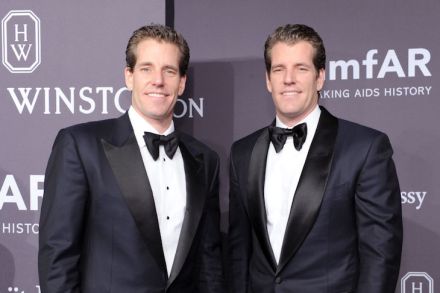
This is an excerpt from Martin Vander Weyer's 'Any Other Business' column. I don’t know which is more worrying: that the bitcoin market becomes madder by the day, or that it becomes more mainstream. The market price of a unit of the cryptocurrency has spiked above $11,800, up from $750 a year ago, for no reason other than speculative fever. The total value of bitcoins in existence (if that’s the right word) has surpassed the GDP of New Zealand. The first bitcoin billionaires have been announced as Tyler and Cameron Winklevoss, the American twins who were in at the birth of Facebook. The Chicago Mercantile Exchange is about to launch its first bitcoin futures contract and an analyst at JPMorgan says bitcoin could soon rival gold as a safe-haven holding.

The LSE’s skulking assassins are a terrible advert for the City’s global aspirations

From our UK edition

The revenge tragedy at the London Stock Exchange whose plot I outlined last month has reached its third act, but the carnage may not be over. Chief executive Xavier Rolet has left the building, rather than staying one more year as the LSE first announced, and declared that he won’t come back under any circumstances. Despite whispers that ‘aspects of his operating style’ sparked this row in the first place, Rolet is due a £13 million golden farewell — which the Daily Mail called ‘obscene’ but his fans see as fair reward for all the value he has delivered. Chief among those fans is LSE shareholder and hedge-fund princeling Sir Chris Hohn, who agitated for Rolet to stay and LSE chairman Donald Brydon to go.

A sound industrial strategy and stronger banks. What could go wrong?

From our UK edition

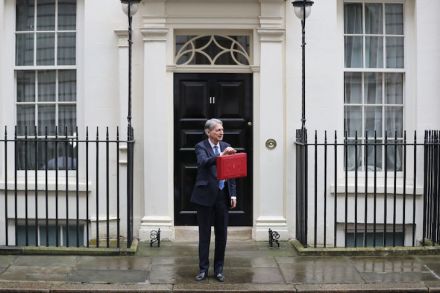
One week you’re fighting to survive the dance-off amid vicious backstage rivalries, the next you’re scoring a perfect ten from Bruno Tonioli for your shimmering tango. As it was on Strictly for Debbie McGee, so it was — well, almost — for Philip Hammond at the despatch box. Unlike many of the Budgets of his predecessors Osborne and Brown, this one did not unravel immediately or prove full of black holes and political tricks. Clear in its analysis, frank in its forecasts, limited in its objectives, it took modest steps to ease the housing crisis and encourage entrepreneurs — and not much else.

Was the record sale of Da Vinci’s Salvator Mundi a bellwether or a freak show?

From our UK edition

Now the hubbub has subsided after last week’s sale of Leonardo’s ‘Salvator Mundi’ at Christie’s New York for $450 million, we can assess whether the record-shattering price was an indicator of an impending turn in the boom-bust cycle or merely an extreme example of art market operators conspiring to ease the burden of the super-rich. Yes, the era of cheap money and asset-price inflation has gone on too long and there are signals everywhere, from the madness of Bitcoin to the nervousness of IPO markets, that a downturn is due. But my own conclusion is that the Leonardo sale was less of a bellwether and more of a freak show.

The very simple reason why Hammond’s housebuilding target is pie in the sky

From our UK edition

The Chancellor sounded purposeful when he declared that he’ll do ‘whatever it takes’ to boost the rate of housebuilding — including pushing developers and councils to use up land banks and act on existing planning permissions — with a view to hitting a politically symbolic target of 300,000 units per year. But I wonder whether the post-Budget small print will reveal any sort of plan to overcome the most basic obstacle to achieving this objective, which is a critical shortage of bricks? When housebuilding went into sharp decline after the 2008 crisis, many British brick factories closed down. To build even half of Philip Hammond’s target, the industry needs more than 2.

Armageddon is coming: how real-life employers are preparing for life under Corbyn

From our UK edition

Numerous readers told me they liked my recent tale — offered as an antidote to ‘media sniping at corporate capitalism’ — about the temporary school built by Porta-kabin after the Grenfell Tower fire. I’m on the lookout for other business stories that celebrate the positive, and I had it in mind to write about an entrepreneur I’ve known throughout his career who has built an international brand that pleases customers, creates skilled jobs and has carried him through tough times to a fortune. But when we spoke, our conversation took an unexpected turn. Did I realise, he asked, how he and his cohort are beginning to think in relation to the risk of an incoming Corbyn-McDonnell government?

Morality seems to have evolved as much in taxation as it has in flirtation

From our UK edition

What would a perfect tax system look like? For companies, profit taxes should be competitively low, to encourage inward investment, with generous reliefs for start-ups, research and capital projects; the corporate tax code should be designed to generate rising productivity and prosperity rather than to maximise short-term tax revenues, and companies should acknowledge a duty to contribute wherever their profits arise. For individuals, income tax rates should rise only to the lowest level that maximises revenue collection and thresholds should be high enough to keep low earners out of the net, while pension savers and first-time home-buyers should be incentivised.

Yes, Jay Powell is the compromise candidate for the Federal Reserve – but not a bad one at that

From our UK edition

Perhaps we should be relieved that Donald Trump has made a dull appointment to succeed Janet Yellen as chairman of the Federal Reserve, America’s central bank. He might have picked another alt-right wacko or Kremlin stooge — or his Las Vegas buddy Phil Ruffin, the casino owner he allegedly thought of sending as envoy to China. But in fact he has chosen Jerome ‘Jay’ Powell, an identikit lawyer-turned-banker who has been called the candidate of ‘continuity’ and ‘compromise’ after a late run to beat frontrunner Kevin Warsh, a former Trump adviser with more aggressive opinions on the need for monetary tightening.

Should the City be sending money into Putin’s banking system?

From our UK edition

This is an extract from Martin Vander Weyer's 'Any Other Business' column. In connection with the receding possibility of a London Stock Exchange listing for Saudi Aramco, I wrote that the City authorities’ apparent eagerness to accommodate companies ‘from places not best known for their accounting standards, business probity or general attachment to democracy and the rule of law’ smacked of Brexit-driven desperation. Russia was one of the places I had in mind. Now along comes a listing candidate that rings more alarm bells than the secretive Saudi oil giant. The company concerned is called EN+ Group, and it is the first Russian entity to come to the London market since Russia’s aggression in Ukraine and Crimea provoked US and EU sanctions in 2014.

The interest rate rise is a tiptoe back towards the economic normality we have almost forgotten

From our UK edition

There are occasions when an apparently negative economic indicator is also in some sense positive. September’s 9 per cent drop in new car registrations compared with the same month last year was no bad thing if it means fewer people are loading themselves up with debt to buy cars — and won’t hurt British car factories that are part of a global supply chain. Likewise, falling London house prices may carry a negative message about international confidence in the UK, but will help London workers to buy homes. And a quarter-point interest rate rise may look like a sign of concern at the Bank of England and a worry for mortgage borrowers, but is actually a tiptoe back towards the economic normality we have almost forgotten.

Yes, the City needs new global clients – but should they include Putin’s pal?

From our UK edition

In connection with the receding possibility of a London Stock Exchange listing for Saudi Aramco, I wrote that the City authorities’ apparent eagerness to accommodate companies ‘from places not best known for their accounting standards, business probity or general attachment to democracy and the rule of law’ smacked of Brexit-driven desperation. Russia was one of the places I had in mind. Now along comes a listing candidate that rings more alarm bells than the secretive Saudi oil giant. The company concerned is called EN+ Group, and it is the first Russian entity to come to the London market since Russia’s aggression in Ukraine and Crimea provoked US and EU sanctions in 2014.

Rio Tinto’s colossal corporate cock-up

From our UK edition

Another week, another blue-chip in the dock. The US Securities and Exchange Commission has brought fraud charges against London-based mining giant Rio Tinto and two former executives in relation to an ill-starred coal venture in Mozambique. Whatever its legalities, this was a colossal corporate cock-up. In 2010, Rio paid $3.7 billion for Riversdale, an Australian company that controlled large coal deposits in the Tete region of Mozambique. The plan was to send coal by barge 400 miles down the Zambezi river to the coast, for shipping to Chinese power stations. But the coal reserves proved disappointing, while the Mozambique government refused to permit the barge operation and a rail link proved too expensive.

Up the Zambezi: why Rio Tinto’s colossal coal cock-up is going to court

From our UK edition

Another week, another blue-chip in the dock. The US Securities and Exchange Commission has brought fraud charges against London-based mining giant Rio Tinto and two former executives in relation to an ill-starred coal venture in Mozambique. Whatever its legalities, this was a colossal corporate cock-up. In 2010, Rio paid $3.7 billion for Riversdale, an Australian company that controlled large coal deposits in the Tete region of Mozambique. The plan was to send coal by barge 400 miles down the Zambezi river to the coast, for shipping to Chinese power stations. But the coal reserves proved disappointing, while the Mozambique government refused to permit the barge operation and a rail link proved too expensive.

No, we’re not half a trillion poorer, but foreign investment looks shaky

From our UK edition

How did we mislay half a trillion pounds? Revised data from the Office for National Statistics has just reduced the UK’s ‘net international investment position’ from a surplus of £469 billion to a deficit of £22 billion. Downing Street dismissed this as ‘a technical revision’ — and in truth it’s not as bad it sounds, since what it tells us is that we own fewer foreign assets, and foreigners own more British assets, than had previously been recorded. Does national pride not attach to the idea that the rest of the world sees us as an investment safe haven? So why worry? Well, past miscounting apart, actual current trends in this respect do not encourage optimism.

Thank goodness for doses of statistical reality

From our UK edition

How did we mislay half a trillion pounds? Revised data from the Office for National Statistics has just reduced the UK’s ‘net international investment position’ from a surplus of £469 billion to a deficit of £22 billion. Downing Street dismissed this as ‘a technical revision’ — and in truth it’s not as bad it sounds, since what it tells us is that we own fewer foreign assets, and foreigners own more British assets, than had previously been recorded. Does national pride not attach to the idea that the rest of the world sees us as an investment safe haven? So why worry? Well, past miscounting apart, actual current trends in this respect do not encourage optimism.