Martin Vander Weyer

Martin Vander Weyer

Martin Vander Weyer is business editor of The Spectator. He writes the weekly Any Other Business column.

In defence of fat cats’ growing pay packets

From our UK edition

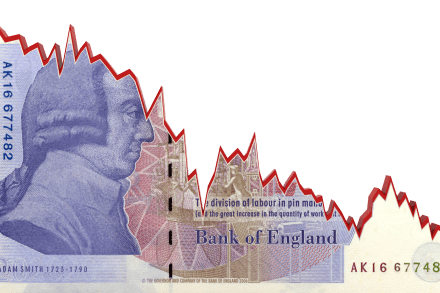
News from the High Pay Centre – the revolutionary guard of left-wing thinktanks – that average FTSE100 chief executive pay rose 16 per cent to a record £5.9 million for 2024-25 comes as a double blessing for Rachel Reeves. On the one hand, she can cite executive greed as a pretext for her forthcoming autumn tax raid, while at the same time claiming that if rewards are soaring, then business conditions under Labour can’t be as bad as boardroom whingers say. On the other, she can rejoice that each UK-domiciled boss is contributing to the Exchequer a sum roughly equal to the tax take from 440 average earners. Meanwhile, is the near-£6 million benchmark justified in itself?
This is the least business-savvy government in half a century

From our UK edition

In this season of scant corporate news – a Ryanair rant against the French here, a new BP oilfield there – it’s hard to know what business leaders are thinking about the cold months to come. Until, that is, you read a survey conducted last month for the Institute of Directors. Given that I’m writing from France this month, I’d call it an absolute croissant-dropper. The nub is that 639 UK businesses, large and small, report ‘optimism in prospects for the UK economy’ at -72, lower even than their darkest pandemic sentiment at -69 in April 2020. Export hopes and investment intentions are down, wage expectations are sharply up and, unsurprisingly, headcounts are set to fall.

Was the car finance judgment fair?

From our UK edition

I must modestly doubt that the Supreme Court justices took account of my 12 July column in their ruling on the issue of hidden car finance commissions. But the effect, limiting compensation claims to the more egregious cases of overcharging, is to do exactly what I hoped: namely to head off ‘a tsunami of claims that could cripple lenders and provoke a mini banking crisis’. Chancellor Rachel Reeves evidently hoped so too; given that up to 90 per cent of new UK car sales are financed by loans offered through car dealerships, a collapse of that market would have put another ding in an already battered economy.

Is Len McCluskey a Manchurian candidate for the Tory party?

From our UK edition

At Stansted on Monday, a currency kiosk offered me €270 for £300. ‘Wrong way round,’ I said, having swiftly figured €300 for £270 would represent an exchange rate of 1.11, close enough to the current market level of 1.14. ‘Nah, mate, airport rate, innit?’ This week’s first lesson is never buy euros at the airport; but the second lesson is that wherever you buy them – especially if you have, say, a Mediterranean superyacht charter in prospect – you’re in for a painfully expensive summer. Back in March you could have had €1.20 for your pound. Since then sentiment towards sterling has been soured by expectations of bad economic news made worse by whatever Rachel Reeves does next, necessitating successive interest rate cuts.

A new water regime must still reward private investors

From our UK edition

The weekend’s torrential Yorkshire rain amid a hosepipe ban offered a handy metaphor for the chaos that has befallen the privatised UK water industry. Sir Jon Cunliffe’s Independent Water Commission report – aiming for a ‘fundamental reset’ to restore public confidence, clean our waterways and ensure future supply – is welcome for the clarity of its central conclusion: that unfit-for-purpose Ofwat and a jumble of other regulators should be replaced by a single body with more teeth and comprehensive oversight of the sector. So far, so good. Cunliffe – a veteran of the Treasury, the Bank of England and Brussels – can also be applauded for his bureaucratic cunning in tabling no fewer than 88 recommendations, in the hope that perhaps eight of them might actually be adopted.

Why wealth taxes don’t work

From our UK edition

The nation owes the former Labour leader Neil Kinnock an eternal debt for losing the 1992 general election when he was clear favourite to win it, thereby sparing us whatever socialist folly he might have brought to Downing Street. I salute him again for popping up to propose a 2 per cent wealth tax on fortunes above £10 million that might raise a supposed £11 billion for the hard-pressed Chancellor – thereby bringing into sharp focus the vague threat that several cabinet ministers have studiously refused to rule out. Pressure is building on Rachel Reeves from backbenchers, unions and anti-poverty campaign groups to mount a raid on the rich in her autumn Budget.

Don’t compensate drivers for mis-sold car loans

From our UK edition

Surprisingly big numbers are the theme of this week’s column, several having flashed up to disturb the pleasures of a summer season of parties, music and sport. The first is the 69,000 tally of jobs shed in the UK hospitality industry since the increase in employer’s national insurance contributions in October’s Budget – the most destructive legislative measure for business in recent memory, except perhaps for the Employment Rights Bill that’s expected to receive Royal Assent before parliament’s recess this month. The UKHospitality trade association thinks losses could rise to between 150,000 and 200,000 by the autumn, as 70 per cent of member businesses cut more staff and pub closures (of which 303 were reported in the first quarter) continue apace.

What hope is there for today’s unlucky graduates?

From our UK edition

I’m fresh out of advice for those now leaving university and wondering how on earth they’re going to make a living and live their dreams. This week’s bad news (from the job search website Adzuna) was that graduate and other entry-level vacancies have fallen almost a third since the launch of the AI chatbot. Should this unlucky post-Covid cohort stay on at ‘uni’ for another degree? Or does that mean racking up student debt without enhancing employability? I used to urge everyone to go abroad in their twenties before family responsibilities overtake. But where to now? Hong Kong and mainland China are out; it’s the wrong time to go to America or the Middle East; they’ll need work permits for the EU.

The hidden costs of Angela Rayner’s Employment Rights Bill

From our UK edition

One peril of a sudden adverse turn of global events is that it provides cover for bad domestic government. If confidence is knocked by fear of war, if inflation blips because the Strait of Hormuz is blocked, if demand for defence spending sends budgets awry, voters may easily be persuaded that Middle East conflict, rather than Labour policy, has put the UK economy flat on its back. But that’s no excuse for proceeding with bad legislation as the world darkens – and one such item is Angela Rayner’s Employment Rights Bill, currently under House of Lords scrutiny, which in brief summary confers fearsome powers on trade unions and creates a ‘Fair Work Agency’ to interfere in business in all sorts of other ways.

Mark Carney, the mischief-making pin-up

From our UK edition

Well, would you look at Mark Carney. Just three months ago I described the incoming prime minister of Canada and former governor of the Bank of England as ‘a fish-out-of-water technocrat’ who made little public impact over here and was swiftly forgotten after he left in 2020. When I once came across him hunched and dark-suited in the Pret queue at King’s Cross, midway through his Bank tenure, I actually felt sorry for him. But here he is, beer-swigging in an Ottawa bar with Sir Keir Starmer; cutting Donald Trump short in a press call before the G7 meeting; shedding his eco-credentials to champion Canadian oil and gas; and generally looking the statesman at ease with his people. What happened?

The Sizewell delusion

From our UK edition

The Chancellor’s promise of £14 billion for the Sizewell C nuclear power station in Suffolk is hardly news. The project has been talked about for 15 years while the existing UK nuclear estate has gradually been shut down and the only other new station, Hinkley Point in Somerset, has stumbled to a decade-long delay and £28 billion of budget overruns. Quite some optimism – verging on Milibandian delusion – is required to embrace the idea that Sizewell will come quicker and cheaper because it will replicate Hinkley Point while avoiding its mistakes. And since Chinese money has been ruled out, it’s still a mystery as to who else will pay for the project beside HMG and the French utility company EDF.

In praise of Michael O’Leary

From our UK edition

NatWest has returned to full private-sector ownership 17 years after the £46 billion bailout that took it into state hands – and five years after the name swap which reduced the once globally trumpeted Royal Bank of Scotland to a humble north-of-the-border branch network, while promoting its English subsidiary NatWest to become the parent brand. RBS shareholders who were almost wiped out but hung on to what are now NatWest certificates have seen their shares triple in value since 2023, finally surpassing the bailout price. HM Treasury took a £10.5 billion loss on the whole rescue exercise, which required a decade-long series of placements and buybacks to filter the taxpayers’ 84 per cent holding back into the market as the bank’s performance gradually recovered.

Will Labour’s rail replacement service leave travellers stranded?

From our UK edition

By spooky coincidence, on Saturday night I watched an old episode of Slow Horses in which a passenger died mysteriously on a replacement bus between High Wycombe and Oxford Parkway – and on Sunday I woke to reports that the first service of the new era of rail renationalisation, the 5.36 from Woking to Waterloo, had also featured a replacement bus. Nobody died, but it wasn’t a good omen. Nor was it quite the ‘turning point for the future of our railways’ that Transport Secretary Heidi Alexander declared. South Western Railway’s return to state hands this week was in fact the fifth major passenger franchise to go that way – four having already failed under the previous government.

It’s time to get rid of the Rich List

From our UK edition

Here’s a takeover tale that captures the zeitgeist. It involves two FTSE 250 companies and some deep-pocketed US investors – and I’ll explain it as simply as I can. In essence, how would you feel if your GP surgery fell into the hands of American investors associated with the book title Barbarians at the Gate? The first of the two London-listed companies is Assura, which owns 600 NHS surgeries and diagnostic facilities and has accepted a cash offer of £1.6 billion from a pair of New York investment giants.

Beef farmers have been stitched up

From our UK edition

An awkward delay in the unveiling of the Mansion House Accord was, we’re told, nothing more than a Downing Street ‘timetabling issue’. It was perhaps a tenterhooks issue too, as Donald Trump’s Sharpie hovered over the UK-US trade deal which was clearly going to make bigger headlines. But the Accord also had to contend with City discord around the issue of ‘mandation’ of pension funds to invest in unlisted equity that might contribute to future UK growth. In July 2023, 11 institutions inked the first Mansion House ‘compact’, committing 5 per cent of ‘defined contribution’ pension monies to private equity by the end of the decade. Now 17 industry leaders have committed to upping the target to 10 per cent, at least half of which will back UK ventures.

Entrepreneurship matters more than ever

From our UK edition

The Spectator’s Economic Innovator of the Year Awards 2025 are open for entries. We’re excited to hear from high-growth businesses in every sector and every corner of the UK that are leading their markets and making positive contributions to society. And we’re delighted to be working with our sponsor Rathbones, one of the UK’s leading wealth management groups with an extensive regional network and a deep commitment to entrepreneurship. Now in their eighth year, these Awards are widely recognised as a prestigious salute to UK innovation which has created its own lively network of founders and investors. The number and range of entrants has grown year by year and we’ve watched many previous winners flourish nationally and internationally.

If the numbers add up, Shell should bid for BP

From our UK edition

A hangar full of analysts and investment bankers must have spent the long weekend formulating advice for Shell chief executive Wael Sawan for and against a takeover of BP. On the plus side, Shell’s strong share performance, reflecting its undiluted focus on oil and gas and boosting its market value to £150 billion, makes a bid look almost bite-sized – BP’s value having shrunk to £56 billion over the past two years as investors decried the commitment to renewables that its board has belatedly reversed. And the addition of BP’s assets in North America and the Gulf of Mexico would turn Shell into a carbon-fuel giant to challenge the likes of Exxon and Chevron in the US.

The New York deli sandwich that changed history

From our UK edition

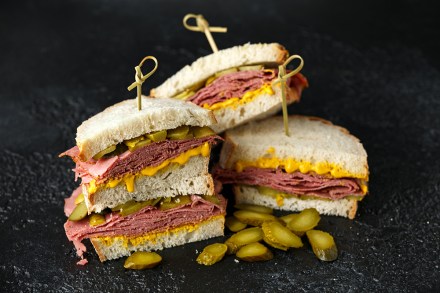
There’s nothing new about bringing maverick businesspeople into government to give the bureaucratic blob what an unnamed ‘Trump adviser’ was recently quoted as calling ‘a swift kick in the ass’. After all, it was David Cameron who in 2010 hired the now all but unmentionable retail buccaneer Sir Philip Green to find ways to cut Whitehall waste. But Donald Trump’s conferment of the role of solo global peacemaker on his real-estate buddy Steve Witkoff – who has no known foreign policy or government expertise – takes that idea to a scary new extreme. Take a look on X at a clip of him arriving alone to meet Vladimir Putin and a line-up of Kremlin heavies. When a woman, face unseen, takes the seat next to Witkoff, he turns to her and says: ‘Are you my translator?

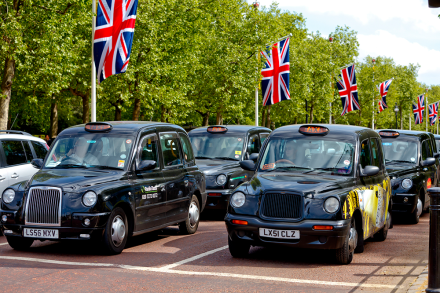
Save London’s black cabs!

From our UK edition

Donald Trump’s Soprano-like threat that the ‘termination’ of Federal Reserve chairman Jerome Powell ‘cannot come fast enough’ has been headlined as one of his wildest thrusts to date, but is actually one of his most conventional. Prickly politicians always resent unelected central bankers, though they also see them as useful scapegoats for economic trouble. Liz Truss longed to fire Andrew Bailey from the Bank of England; Gordon Brown gave Eddie George’s Bank its ‘independence’ but took away so much of its power that George nearly resigned; Margaret Thatcher never accepted the most potent modern governor, Gordon Richardson, as ‘one of us’.

No one wants American cars

From our UK edition

The weekend’s Scunthorpe drama was a distraction from endless chatter about Donald Trump and his tariffs. Perhaps Downing Street’s spinners stage-managed it with that in mind. Or perhaps the heroic tale of shop stewards confronting villainous Chinese managers while rescue teams scoured the horizon for emergency shipments of iron ore and coking coal was a different kind of smokescreen – to hide the fact that British steelmaking has been doomed for decades and what just happened is a job-saving nationalisation that will be a massive drain on public funds for as long as it takes to admit that the last British blast furnaces belong to history. I’m sorry to take such a downbeat view.