Martin Vander Weyer

Martin Vander Weyer

Martin Vander Weyer is business editor of The Spectator. He writes the weekly Any Other Business column.

What’s bad for slick estate agents is good for working Londoners

From our UK edition

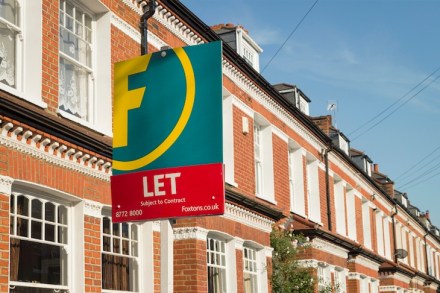
Those twice-weekly sales emails from Foxtons that the recent GDPR clean-up has failed to stop have lately been spattered with the words ‘recent price reduction’ in big red capitals. Hence no surprise that the glossy estate agent and bellwether of London residential property has just reported a first-half loss of £2.8 million, compared to £3.8 million profit in the first half of last year and reflecting a sharp drop in sales revenues. Chief executive Nic Budden says his marketplace ‘is undergoing a sustained period of very low activity levels’.
Full-fibre broadband by 2033? I wish I could believe you, minister

From our UK edition

I bought BT’s offer of an upgrade to ‘superfast’ broadband because the standard service seemed to be deteriorating just as the daily quota of sales calls from India was increasing. But the improvement is barely perceptible. The blue light that tells me the hub is working turns orange to tell me it’s not with irritating frequency, while the sales calls keep coming. Am I pleased with new service? ‘No, not really.’ But wouldn’t I like to buy an even more elaborate contract? ‘Click.

Elon Musk: Genius or jerk?

Elon Musk, the California-based entrepreneur behind the Tesla electric car, the SpaceX commercial rocket venture and several other wacky start-ups, made a fool of himself with his attempt to intervene in the Thai cave rescue and subsequent Twitter spat, but there’s no doubt he’s an original thinker and a remarkable businessman. If the futuristic Tesla is a fine feat of technology, what’s more impressive is that the company is not only still in business after 15 years without turning a profit and having lost at least $3.5 billion since 2015, but that its market capitalisation, at $52 billion, is bigger than Ford’s at $42 billion. Tesla built more than 100,000 cars last year compared with 6.6 million by Ford worldwide.

The importance of ethical banking

From our UK edition

When I first visited Canary Wharf in the early 1990s, I was struck by a set of black-and-white posters in the shopping concourse advertising the Co-op Bank’s ethical banking stance: essentially, no lending to arms, tobacco, gambling or oil companies, or to regimes that disrespected human rights. A cynic might have argued that it was all about virtue signalling (before we learned that phrase) in the sense that no landmine manufacturer or brutal Third World dictator had ever been known to pop into a Co-op branch, ask for a loan and be met with a polite refusal and a copy of the policy. But it was a smart exercise in market positioning that won many new customers at the time — and a bold statement to buy poster sites beneath Canary Wharf’s burgeoning towers of finance.

An amoral money world needs ethical campaigners more than ever

From our UK edition

When I first visited Canary Wharf in the early 1990s, I was struck by a set of black-and-white posters in the shopping concourse advertising the Co-op Bank’s ethical banking stance: essentially, no lending to arms, tobacco, gambling or oil companies, or to regimes that disrespected human rights. A cynic might have argued that it was all about virtue signalling (before we learned that phrase) in the sense that no landmine manufacturer or brutal Third World dictator had ever been known to pop into a Co-op branch, ask for a loan and be met with a polite refusal and a copy of the policy. But it was a smart exercise in market positioning that won many new customers at the time — and a bold statement to buy poster sites beneath Canary Wharf’s burgeoning towers of finance.

Has UK productivity really seen a revival?

From our UK edition

Bank of England economists Will Holman and Tim Pike claim to have spotted a productivity revival, on the basis of a ‘recent pivot towards business investment to overcome greater labour scarcity’ aided by ‘major advances in technology’. But the Office for National Statistics reports that productivity actually fell by 0.4 per cent in the first quarter, while most experts agree that UK productivity is so far below where it might have been if pre-2008 trends had continued that the gap may never be made up. And both Carolyn Fairbairn of the CBI and Adam Marshall of the British Chambers of Commerce have recently lamented the sluggishness of growth in business investment. ‘It’s running at 1 to 2 per cent,’ Fairbairn said.

Data breaches show we’re only three clicks away from anarchy

From our UK edition

An IT glitch afflicting BP petrol stations for three hours last Sunday evening might not sound like headline news. A ten-hour meltdown of Visa card payment systems in June was a bigger story — as was the notorious TSB computer upgrade cock-up that started on 20 April, which was still afflicting customers a month later and was reported this week to be causing ruptures between TSB and its Spanish parent Sabadell. Meanwhile, what do Fortnum & Mason, Dixons Carphone, Costa Coffee and its sister company Premier Inn have in common with various parts of the NHS? The answer is that they have all suffered recent large-scale ‘data breaches’ that may have put private individuals’ information at risk.

Economic Disruptor of the Year Awards 2018 – the regional finalists

From our UK edition

We are delighted to announce the finalists, region by region, for The Spectator Economic Disruptor of the Year Awards sponsored by Julius Baer. We received entries from every corner of the UK, in business sectors ranging from advanced genetics to ice cream and from musical instrument-making to cyber security. Particularly well represented were ‘Fintech’ in all its aspects — in which the UK has already established a reputation as a world leader — and healthcare, including a number of smart ideas aimed at improving patient experience in the NHS. Overall, we’ve been thrilled to learn about the creativity, enthusiasm and dedication of the entrepreneurs behind the entries.

Enjoy your feelgood summer – there may be trouble ahead

From our UK edition

I’ve been on a mini-tour, full of echoes and warnings. First, to the Grange Festival in Hampshire, where we might still have been enjoying the summer of ’87: a moneyed audience in a Barings mansion laughing at funny foreigners in John Copley’s retro Seraglio (see Richard Bratby’s crit last week). Then to Oxford, to show an American friend the gardens of my alma mater, Worcester College, and recall the sweltering heat of ’76 that distracted us from revising for finals or noticing the Labour-driven economic crisis that would blight the start of our careers that autumn. Then to London, to make light of Trump with other American friends — and back home to Helmsley, of which more in a moment.

Patience has its rewards

From our UK edition

Very few business plans survive their first interaction with the real world,’ says Luke Johnson, whose own ventures have ranged from Pizza Express to fresh fish distribution and the UK’s largest chain of dental surgeries. ‘Entrepreneurs have the advantage that they can adapt swiftly — “pivot”, as they say in Silicon Valley — to satisfy real demand, or improve their product and its distribution. Bigger companies find it much more difficult to change course in that way. ‘I’m a great believer in incubating a business quietly: pivoting it until the model works. Maybe I’m unconventional, but I believe raising money too early — through crowdfunding, for example — can be a dangerous thing.

Carmakers are an undeniable voice in the Brexit debate

From our UK edition

The voice of business has been all but silent in the Brexit debate ever since former Marks & Spencer boss Stuart Rose made such a hash of trying to lead the pre-referendum ‘Britain Stronger in Europe campaign’. Now suddenly there’s a business cacophony: Airbus, BMW, Siemens and the heads of the CBI, the Institute of Directors, the Federation of Small Businesses, the British Chambers of Commerce and the Engineering Employers’ Federation, all saying roughly the same thing: never mind the politics, all we ever asked for is clarity, preferably accompanied by ‘frictionless trade’.

We need to embrace India’s love of retro British brands

From our UK edition

Whatever happened to Horlicks? Patented in Chicago in 1883 by British-born brothers William and James Horlick, the malted milk drink was manufactured in Slough from 1908 and came to be thought of as a British product — but disappeared from most of our kitchens half a century ago. It lingered only as a figure of speech, as in foreign secretary Jack Straw’s 2003 description of Downing Street’s dossier on Iraqi weapons of mass destruction as ‘a complete Horlicks’. Meanwhile the product itself found a huge market elsewhere — in India, where it had first arrived in British troop rations during the war.  Under the ownership of Beecham, now part of GlaxoSmithKline, Horlicks became one of India’s most popular beverages, especially for children.

The path to growth — and the exit

From our UK edition

Maybe it’s a sandwich chain, or a price comparison website, or a bioscience breakthrough: but the start-up was your baby, and you’ve worked night and day to prove its potential. Now it needs capital to go to the next level — and you need liquidity for family needs, as well as a plan for long-term exit. Who do you turn to, and what questions should you ask? Earlier in this series, Julian Cooper of Julius Baer told us that entrepreneurs need to think well ahead — and ‘meet the right people, the right lawyers, the right potential investors’. Simon Ward is a lawyer with Farrer & Co who acts for businesses backed by venture capital and private equity.

The myth and menace of cryptocurrencies

From our UK edition

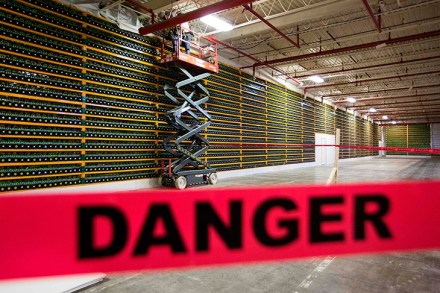
‘So, Professor Shin, tell us what you really think about cryptocurrencies.’ I’m guessing that’s the brief the Bank for International Settlements (the Basel-based central bank of central banks) gave economist Hyun-Song Shin to write a chapter for its annual report, published this week. His response delivers a serious kicking to the whole befuddled concept of ‘permissionless’ online currencies that ‘promise to replace trust in long-standing institutions such as commercial and central banks’. For a start, he argues, Bitcoin and its ilk are an environmental disaster because their systems consume enough electricity to power Switzerland.

It’s not always true that bosses should walk the plank when something goes wrong

From our UK edition

Should he stay or should he go — or will he already have gone by the time you read this? These are frequently asked questions about chief executives whose businesses hit troubled waters. It’s true that the higher you rise, the higher the risk if you don’t deliver, but it’s not always true that bosses should walk the plank whenever something major goes wrong: sometimes it makes more sense to stick around, take the flak and solve the problem. However, in the cases of Gavin Patterson of BT (ousted a week ago) and Paul Pester of TSB (still in post as we go to press), it would be fair to say the only way is exit.

For Pester of TSB, like Patterson of BT, the only way is exit

From our UK edition

Should he stay or should he go — or will he already have gone by the time you read this? These are frequently asked questions about chief executives whose businesses hit troubled waters. It’s true that the higher you rise, the higher the risk if you don’t deliver, but it’s not always true that bosses should walk the plank whenever something major goes wrong: sometimes it makes more sense to stick around, take the flak and solve the problem. However, in the cases of Gavin Patterson of BT (ousted a week ago) and Paul Pester of TSB (still in post as we go to press), it would be fair to say the only way is exit.

Let’s hope RBS emerges as something worth owning shares in

From our UK edition

At last the government has restarted the process of selling its stake in Royal Bank of Scotland. A first £2 billion sale in 2015 (of 5 per cent of the bank’s shares) took place at 330 pence per share, against a purchase price of 502 pence in the 2008 bailout. Those numbers looked so embarrassing for George Osborne that the sell-off file was consigned sine die to a Treasury basement; but now that RBS has returned to a slim profit after nine years of losses, Philip Hammond sold another £2.5 billion tranche on Monday, ahead of what his advisers evidently think will be a weaker stock market after the European summit, but at an even worse price of 271 pence.

Let’s hope we get a better RBS when it’s finally back in the private sector

From our UK edition

At last the government has restarted the process of selling its stake in Royal Bank of Scotland. A first £2 billion sale in 2015 (of 5 per cent of the bank’s shares) took place at 330 pence per share, against a purchase price of 502 pence in the 2008 bailout. Those numbers looked so embarrassing for George Osborne that the sell-off file was consigned sine die to a Treasury basement; but now that RBS has returned to a slim profit after nine years of losses, Philip Hammond sold another £2.5 billion tranche on Monday, ahead of what his advisers evidently think will be a weaker stock market after the European summit, but at an even worse price of 271 pence.

In praise of Pret

From our UK edition

I shop at WH Smith with gritted teeth but I positively salivate when I spot a Pret A Manger. Some serious investors think likewise: the sandwich chain has just been sold for more than £1.5 billion by the US investment firm Bridgepoint to JAB Holdings, the vehicle of the German billionaire Reimann family who also own Krispy Kreme doughnuts and Kenco coffee. Though recently criticised by the Advertising Standards Authority for describing its sandwiches as ‘natural’ when there are E-numbers in its bread, Pret has sustained the authenticity of its brand while expanding globally with the hand of high finance on its shoulder.

Entrepreneurship is a way of life

From our UK edition

James Espey was born in Zambia and educated in South Africa before moving to London in 1977. For many years he worked for international drinks companies, developing brands such as Malibu, Baileys and Johnnie Walker Blue Label. For the past two decades he has been an entrepreneur in his own right, as well as a mentor to others. He is a client of Julius Baer, which is also a sponsor of The Shaw Mind Foundation, a charity founded by Adam Shaw and James to support mental health sufferers and their families.  James is the author of Making Your Marque, subtitled ‘100 tips to Build your Personal Brand and Succeed in Business’ — and he has an aphorism for every aspect of starting and building a business.