Martin Vander Weyer

Martin Vander Weyer

Martin Vander Weyer is business editor of The Spectator. He writes the weekly Any Other Business column.

If Tories are ‘the party of business’, the PM should listen before it’s too late

From our UK edition

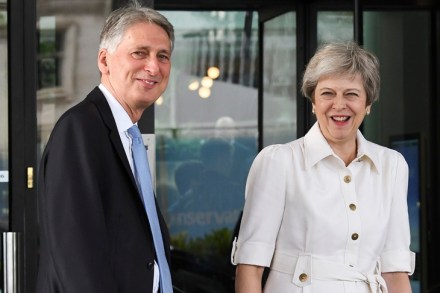
‘Let me say it, loud and clear: the Conservative party is, and always will be, the party of business,’ declared Philip Hammond at Birmingham — a few hours after City tycoon and former Tory treasurer Michael Spencer told the BBC that the Prime Minister had ‘let herself down personally by not being a champion of business’. Were Spencer’s doubts assuaged by the Chancellor’s reassurance? I doubt it: the truth is Spencer was right. Theresa May signalled her non--championship of business in her 2016 leadership bid when, ahead of John McDonnell, she spoke of forcing companies to accept worker representatives on boards and of the ‘irrational, unhealthy’ pay gap between top executives and average workers.

2018 finalists lunch – Midlands

From our UK edition

Today we’re in the baronial setting of Hampton Manor Hotel in Warwickshire — a long iron shot from Birmingham Airport, but happily out of earshot of the fractious Tory Party conference up the road. We’re here to meet the Midlands regional finalists for The Spectator’s Economic Disruptor of the Year Awards: our host is Mark Embley, regional manager for our sponsor, the private bank Julius Baer, and our guests are Dr David Jehring, chief executive of Black Pear Software, Ian Firth, vice president for products at Speechmatics, and Steven Greenall, founder of Warwick Music Group. I’ve met or talked to some 16 of our 22 disruptor finalists so far, listened to their presentations, and peppered them with questions.

John McDonnell is on a mission to destroy the free-market economy as fast as he can

From our UK edition

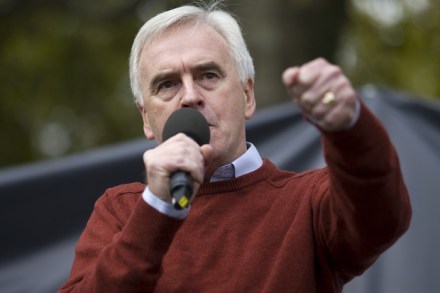
The least convincing thing said by Labour shadow chancellor John McDonnell at the Labour party conference in Liverpool was ‘I believe we’ll be elected for a second term.’ In all his other remarks about plans for compulsory employee share schemes, workers on boards, higher corporate taxes, extended employment rights, attacks on the rich and below-market renationalisation of water utilities whose bosses he would fire, he talked about getting the programme done ‘within the life of a Labour government’ — with the clear implication that he thinks Tory turmoil might be about to give him a once-in-a-lifetime, one-term-only chance to make a reality of the recreation he lists in Who’s Who: ‘fermenting the overthrow of capitalism.

2018 finalists lunch – London and The South

From our UK edition

This week we gathered in the elegant dining room of our sponsor, the private bank Julius Baer, to meet the regional finalists from London and the South for The Spectator’s Economic Disruptor of the Year Award. Our host was David Durlacher, chief executive of Julius Baer International, and with him were Tracey Reddings, the bank’s head of front office, and half a dozen colleagues. Our guests represented seven of the ten regional finalists. Each was asked to talk informally, for five minutes, about their business’s potential for disruption and growth. Here’s some of what we learned. Carwow is an online platform that ‘takes the hassle out of new-car buying’ from franchise dealerships.

McDonnell’s one-term mission to turn Britain into the new Venezuela

From our UK edition

The least convincing thing said by Labour shadow chancellor John McDonnell at the Labour party conference in Liverpool was ‘I believe we’ll be elected for a second term.’ In all his other remarks about plans for compulsory employee share schemes, workers on boards, higher corporate taxes, extended employment rights, attacks on the rich and below-market renationalisation of water utilities whose bosses he would fire, he talked about getting the programme done ‘within the life of a Labour government’ — with the clear implication that he thinks Tory turmoil might be about to give him a once-in-a-lifetime, one-term-only chance to make a reality of the recreation he lists in Who’s Who: ‘fermenting the overthrow of capitalism.

Jaguar’s boss isn’t scaremongering: the UK car industry is in big trouble

From our UK edition

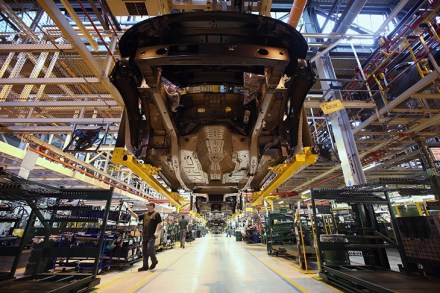
‘I’m afraid I think he’s making it up,’ was the retort of Tory MP Sir Bernard Jenkin on Monday’s Today programme to the claim by Ralf Speth, boss of Jaguar Land Rover, that a bad Brexit deal could put tens of thousands of jobs at risk in JLR and its suppliers, and cost his company £1.2 billion a year. In the same speech last week, Speth pointed out that the lack of any sort of Brexit clarity means he has no idea whether his UK factories will be able to operate on 30 March next year — or whether even the ‘tiny’ border delays Jenkin concedes are likely will cripple the just-in-time systems on which the likes of JLR and the BMW Mini factory at Cowley depend.

Ten years after Lehman’s fall, how close is the next crash?

From our UK edition

Our cinema is showing Mamma Mia! Here We Go Again and I’m reminded of a remark attributed to Mark Twain, that ‘history doesn’t repeat itself but it often rhymes’. On 3 October 2008, three weeks after the bankruptcy of Lehman Brothers, treasury secretary Hank Paulson’s $700 billion bailout for the US banking system was passed into law at the very hour when I was watching the original Mamma Mia! movie and observing the impact of a mass inoculation of feelgood on a crowd battered by frightening financial news. And it was early the following Wednesday that I heard of chancellor Alistair Darling’s de facto nationalisation of RBS and Lloyds-HBOS and his emergency liquidity scheme to keep the nation’s cash machines working. ‘See Mamma Mia!

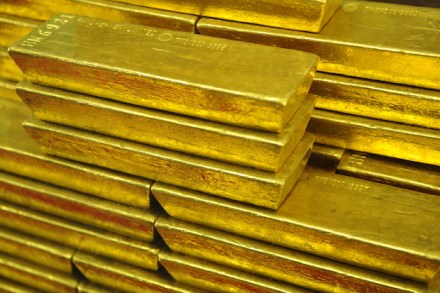
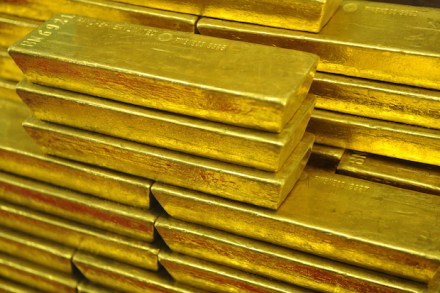
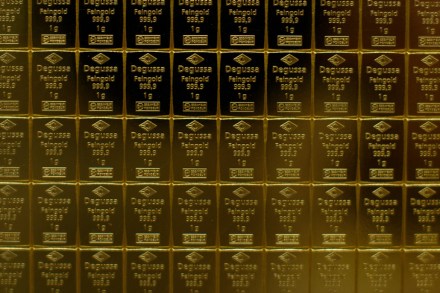
Should we be returning to the safe haven of gold?

From our UK edition

All good things must come to an end, including summer holidays and bull markets. The bull run in US shares that began in the aftermath of the financial crisis in March 2009 has now officially passed the previous record of 3,452 more-up-than-down days from October 1990 to March 2000. This time round, the S&P500 index of US stocks has risen by more than 300 per cent — and that rise has continued throughout Donald Trump’s reign, despite his trade war threats and other follies. But it has not been reflected in major European markets, which have drifted sideways, and has been increasingly sustained by a small number of top tech stocks that have outperformed everything else on the planet.

Why can’t Britain hang on to its best new companies?

From our UK edition

Costa, in my opinion, sells a decent cup of coffee. It employs polite youngsters who seem happy in their work. If you’re desperate for caffeine, even its petrol-station vending machines are not too bad. And unlike the UK operation of Starbucks, whose coffee is vile, it pays tax on its profits at close to the full rate of corporation tax. Founded by two Italian brothers in London’s Vauxhall Bridge Road in 1971, it’s a triumph of brand development — and a credit to its current owner Whitbread, which acquired Costa as a diversification from its own traditional brewing business in 1995. Now Costa has been sold to Coca-Cola for a handsome £3.9 billion: no wonder Whitbread chief Alison Brittain called the deal ‘absolutely stonking’.

Was Wonga all bad?

From our UK edition

The wonder of Wonga is that it lasted so long. The arch-villain of the payday loan sector, which grew like a mutant fungus out of the wreckage of the financial crisis, once clocked up a record Representative Annual Percentage Rate (APR) on its loans to gullible and desperate cash-seekers of 5,853 per cent, and was ordered in 2014 to write off the debts of 330,000 delinquent borrowers who could never have passed proper ‘affordability’ checks. The imposition by the Financial Conduct Authority of a cap of 0.8 per cent per day on lending rates, plus limits on default charges, knocked out many smaller competitors, but Wonga (with a 30 per cent market share) carried on — accumulating trading losses and compensation claims as it did so.

Business is suffering from Britain’s poor broadband

From our UK edition

As to public subsidy for broadband, the conclusion to be drawn from the DCMS report, though it may not please some readers, is that it should be heavily tilted towards business premises. The report comes up with a benefit-to-cost ratio per pound of subsidy of £1.18 for residential superfast connections but £12.28 for non-residential. The ‘wellbeing’ effects of more movie choices from the sofa and everything else home broadband brings are worth having and we now see them as an entitlement. But the effects on productivity, job creation, small-business viability and export potential are vital for future prosperity — and the competitive disadvantage of having poorer broadband than our trading rivals is plain.

The record bull run must end soon. So is it time for a return to gold?

From our UK edition

All good things must come to an end, including summer holidays and bull markets. The bull run in US shares that began in the aftermath of the financial crisis in March 2009 has now officially passed the previous record of 3,452 more-up-than-down days from October 1990 to March 2000. This time round, the S&P500 index of US stocks has risen by more than 300 per cent — and that rise has continued throughout Donald Trump’s reign, despite his trade war threats and other follies. But it has not been reflected in major European markets, which have drifted sideways, and has been increasingly sustained by a small number of top tech stocks that have outperformed everything else on the planet.

Decent broadband is a public right. Get on and kick BT, minister

From our UK edition

As I set to compiling your email responses into our ‘broadband dossier’ to send to BT chairman Jan du Plessis, the government issued its own evaluation of the ‘economic impact and public value’ of the superfast broadband roll-out programme launched in 2010. Compiled by outside experts, this document from the Department for Digital, Culture, Media and Sport (DCMS) estimates that the additional economic activity and ‘wellbeing’ generated by spending public money to subsidise connections for remote and difficult locations: 5.3 million customers will eventually benefit at an estimated unit cost of £211, creating a total bill for the taxpayer of just over £1 billion.

The Roundup case could have hidden consequences

From our UK edition

The award by a Californian court of $289 million in damages to Dewayne Johnson, a groundsman who claimed the weedkiller Roundup caused his cancer, has the makings of what investment pessimists call a ‘black swan’: an unforeseen event with extreme consequences. Roundup is made by Monsanto, the US company that leads the world in genetic modification of seeds and is regarded by the green movement as Satan. Monsanto was recently acquired by the German pharma giant Bayer for $66 billion; Bayer’s shares plunged on news of the Californian award and — with thousands of similar claims pending — could fall a lot further if the jury’s decision is not overturned.

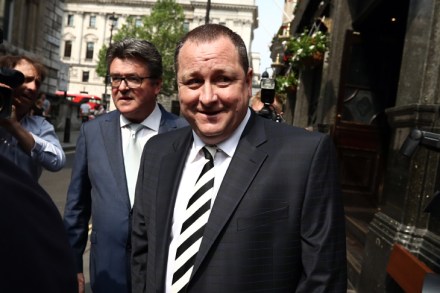
A peerage for Mike Ashley if he can bring House of Fraser back to life

From our UK edition

This column has consistently stood up for Mike Ashley, even when the lonesome billionaire’s notions of corporate governance at Sports Direct and staff welfare at its Shirebrook warehouse made that a challenging position to sustain — not to mention his troubled ownership of Newcastle United. Ashley has grown his core business over 35 years from one outlet in Maidenhead to a remarkably robust retail empire by doing the detail, taking shrewd bets and swallowing competitors.

What the range of entries for the Economic Disruptor of the Year Award tells us about British entrepreneurial talent

From our UK edition

Let’s remind ourselves what we mean by ‘disruptor’. A truly disruptive business revolutionises its marketplace by delivering radical improvements in choice, price and accessibility. A disruptor may be a boffin or a bold lateral thinker: Henry Ford did not invent the motorcar any more than Airbnb invented the ‘homestay’, but both created systems that made the product cheaper and more available than ever before — and both count as great disruptors. But these days ‘disruptor’ status is claimed by all manner of ventures. So in choosing our shortlist for the Award sponsored by Julius Baer, we had to sort the original from the derivative and distinguish those that are already delighting customers from those that are still testing concepts.

A nation of original thinkers

From our UK edition

Let’s remind ourselves what we mean by ‘disruptor’. A truly disruptive business revolutionises its marketplace by delivering radical improvements in choice, price and accessibility. A disruptor may be a boffin or a bold lateral thinker: Henry Ford did not invent the motorcar any more than Airbnb invented the ‘homestay’, but both created systems that made the product cheaper and more available than ever before — and both count as great disruptors. But these days ‘disruptor’ status is claimed by all manner of ventures. So in choosing our shortlist for the Award sponsored by Julius Baer, we had to sort the original from the derivative and distinguish those that are already delighting customers from those that are still testing concepts.

We fume at Amazon’s tax trickery as we marvel at its one-click convenience

From our UK edition

‘There has to be a level playing field so that… Amazon cannot undercut domestic booksellers by using the tax advantage of booking in Luxembourg a sale to a UK customer that is fulfilled from a UK warehouse.’ I wrote that five years ago: since then, no government anywhere has effectively addressed the issue of global tax minimisation by online giants and multinational consumer brands. As Amazon’s merchandise range has expanded, it has gone on undercutting not just our last surviving bookshops but every other business-rate-burdened local retailer. Meanwhile, as its market capitalisation soars towards $900 billion, its founder Jeff Bezos has become the richest man ever, with a $150 billion hoard. And now we learn that Amazon paid just £1.

Valuations of tech stocks have become insanely high

From our UK edition

What are we to make of a 19 per cent fall in both Facebook and Twitter shares at the end of last week, with Facebook shedding a barely imaginable $120 billion of value in a single day? Of course there are factors relating to performance: Twitter user numbers have been declining and Facebook’s profitability is under threat as it strives to clean up after the Cambridge Analytica scandal. But in short, what the sudden reversal tells us is that valuations of America’s leading tech stocks have become insanely high.

Tell us your broadband woes

From our UK edition

My anecdote last week about upgrading to BT’s ‘superfast’ broadband provoked several readers, unasked, to tell me their own unsatisfactory experiences. So I thought we should compile a Spectator dossier on the subject — as we did to good effect on the issue of high street bank branch closures, on which your combined report reached the desks of a selection of banking’s top dogs. We did not persuade them to reverse the trend but I know we made them think about how to make it less irritating for customers. In the same spirit, feel free (if your wifi connection is working) to tell me how good or bad the broadband service is where you live.