Martin Vander Weyer

Martin Vander Weyer

Martin Vander Weyer is business editor of The Spectator. He writes the weekly Any Other Business column.

What can Monday’s Budget do to make business feel better?

From our UK edition

‘Uncertainty is draining investment from the UK, with Brexit having a negative impact on eight in ten businesses,’ says Carolyn Fairbairn of the CBI. OK, let’s pause for a chorus of ‘She would say that, wouldn’t she?’ But even if we shade off for ‘scaremongering’, her survey (of 236 firms) is bleak: ‘44 per cent
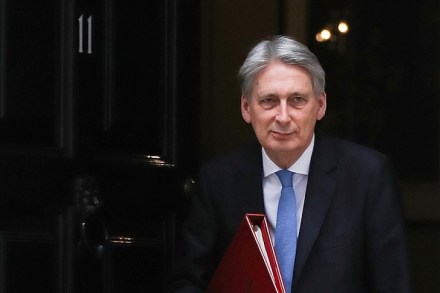
Can Hammond’s Budget make business feel better about Brexit?

From our UK edition

‘Uncertainty is draining investment from the UK, with Brexit having a negative impact on eight in ten businesses,’ says Carolyn Fairbairn of the CBI. OK, let’s pause for a chorus of ‘She would say that, wouldn’t she?’ But even if we shade off for ‘scaremongering’, her survey (of 236 firms) is bleak: ‘44 per cent

Why I’m boycotting ‘Davos in the Desert’

From our UK edition

The current stock-market correction has been steaming down the track since August and I claim no wisdom for having predicted it: the FTSE100 dipped below 7,000 at the start of the week, having shed all of the 10 per cent it had gained since it began to surge in April. Weaker UK growth forecasts from

2018 finalists lunch – Midlands

From our UK edition

Today we’re in the baronial setting of Hampton Manor Hotel in Warwickshire — a long iron shot from Birmingham Airport, but happily out of earshot of the fractious Tory Party conference up the road. We’re here to meet the Midlands regional finalists for The Spectator’s Economic Disruptor of the Year Awards: our host is Mark

2018 finalists lunch – London and The South

From our UK edition

This week we gathered in the elegant dining room of our sponsor, the private bank Julius Baer, to meet the regional finalists from London and the South for The Spectator’s Economic Disruptor of the Year Award. Our host was David Durlacher, chief executive of Julius Baer International, and with him were Tracey Reddings, the bank’s

McDonnell’s one-term mission to turn Britain into the new Venezuela

From our UK edition

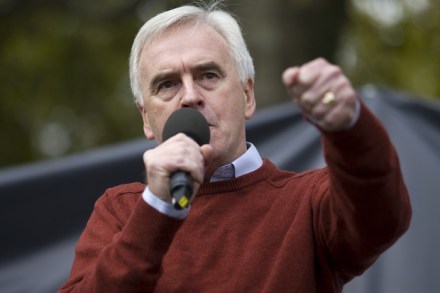
The least convincing thing said by Labour shadow chancellor John McDonnell at the Labour party conference in Liverpool was ‘I believe we’ll be elected for a second term.’ In all his other remarks about plans for compulsory employee share schemes, workers on boards, higher corporate taxes, extended employment rights, attacks on the rich and below-market

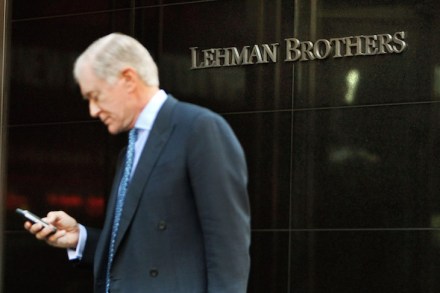
Ten years after Lehman’s fall, how close is the next crash?

From our UK edition

Our cinema is showing Mamma Mia! Here We Go Again and I’m reminded of a remark attributed to Mark Twain, that ‘history doesn’t repeat itself but it often rhymes’. On 3 October 2008, three weeks after the bankruptcy of Lehman Brothers, treasury secretary Hank Paulson’s $700 billion bailout for the US banking system was passed

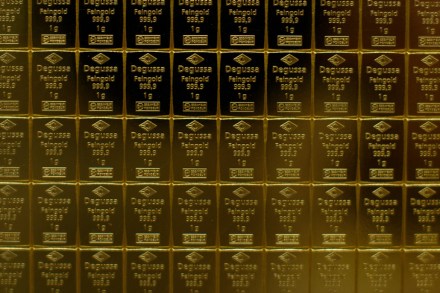
Should we be returning to the safe haven of gold?

From our UK edition

All good things must come to an end, including summer holidays and bull markets. The bull run in US shares that began in the aftermath of the financial crisis in March 2009 has now officially passed the previous record of 3,452 more-up-than-down days from October 1990 to March 2000. This time round, the S&P500 index

Why can’t Britain hang on to its best new companies?

From our UK edition

Costa, in my opinion, sells a decent cup of coffee. It employs polite youngsters who seem happy in their work. If you’re desperate for caffeine, even its petrol-station vending machines are not too bad. And unlike the UK operation of Starbucks, whose coffee is vile, it pays tax on its profits at close to the

Was Wonga all bad?

From our UK edition

The wonder of Wonga is that it lasted so long. The arch-villain of the payday loan sector, which grew like a mutant fungus out of the wreckage of the financial crisis, once clocked up a record Representative Annual Percentage Rate (APR) on its loans to gullible and desperate cash-seekers of 5,853 per cent, and was

Business is suffering from Britain’s poor broadband

From our UK edition

As to public subsidy for broadband, the conclusion to be drawn from the DCMS report, though it may not please some readers, is that it should be heavily tilted towards business premises. The report comes up with a benefit-to-cost ratio per pound of subsidy of £1.18 for residential superfast connections but £12.28 for non-residential. The

Decent broadband is a public right. Get on and kick BT, minister

From our UK edition

As I set to compiling your email responses into our ‘broadband dossier’ to send to BT chairman Jan du Plessis, the government issued its own evaluation of the ‘economic impact and public value’ of the superfast broadband roll-out programme launched in 2010. Compiled by outside experts, this document from the Department for Digital, Culture, Media

The Roundup case could have hidden consequences

From our UK edition

The award by a Californian court of $289 million in damages to Dewayne Johnson, a groundsman who claimed the weedkiller Roundup caused his cancer, has the makings of what investment pessimists call a ‘black swan’: an unforeseen event with extreme consequences. Roundup is made by Monsanto, the US company that leads the world in genetic modification