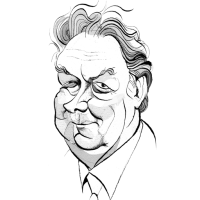
Martin Vander Weyer

Martin Vander Weyer

Martin Vander Weyer is business editor of The Spectator. He writes the weekly Any Other Business column.

Creativity at the cutting edge of science

From our UK edition

The Spectator’s Economic Disruptor of the Year Awards 2019, sponsored by Julius Baer, are now open: the entry form is at spectator.com/disruptor. We’re looking for innovators from across the UK who are disrupting their marketplace in terms of price, choice and accessibility — and have the potential to scale up, nationally and internationally. Meanwhile, in the second of our series of inspirational stories about the entrepreneurs behind some of Britain’s fastest-growing ventures, Martin Vander Weyer talks to Jonny Ohlson of Touchlight Genetics, a London regional finalist in last year’s awards.

Reassurance today, excitement tomorrow: your UK Optimist Fund portfolio

From our UK edition

The nation certainly needs optimism this week, so what better moment to start building our ‘UK Optimist Fund’ of shares with exciting prospects for the post-Brexit era, for which I invited suggestions last week? I’m grateful to all  respondents but was particularly glad to hear from former minister Edwina Currie — whose stock picks show a penchant for high dividend yields — and this column’s very own veteran investor Robin Andrews, whose market eye has stood Spectator readers in such good stead over the years. Our underlying quest is a serious one. We’re heading into new territory in which businesses will clearly suffer if they previously depended on tariff-free access to European markets.

Don’t vilify housebuilders for profiting from Help to Buy

From our UK edition

Was Help to Buy a timely market intervention with a valid social purpose or a political gimmick that unintentionally showered housebuilders with taxpayers’ cash? Or both: this isn’t a straightforward question. ‘This government supports those who dream of owning their own home,’ said a statement from Philip Hammond last week. So far the ‘equity loan scheme’ launched by George Osborne in 2013 and now extended until 2023 has underpinned 194,000 home sales, the great majority to first-time buyers in the provinces, while another 300,000 have been supported by a £3,000 savings top-up.

What’s the worst business to be in right now? Sheep farming

From our UK edition

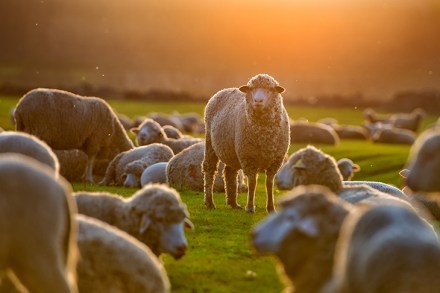
What’s the very worst line of business you could be in, if we’re heading for a no-deal Brexit? Not finance, for sure: there’s a noticeable absence of squealing from the City, which has evidently made all the contingency plans it needs to continue making numbers dance on screens and booking the proceeds in convenient domiciles. Car manufacturing, on which I’ve written so much in recent weeks, clearly has its challenges — but the impediments of Brexit are no more than a tiresome sideshow compared to the industry’s wider technological and market issues. Fishing has been a bad career choice ever since we joined the Common Market and probably can’t get much worse.

It’s perverse to celebrate the cancellation of Amazon’s ‘HQ2’

From our UK edition

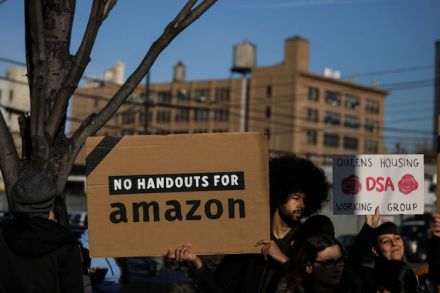
My hopes of an invite from Jeff Bezos to the opening of Amazon’s proposed but now cancelled ‘HQ2’ at Long Island City in New York were slim, since I was thrown out of his existing Seattle HQ on the orders of the online giant’s PR police. But I disagree with rising-star Democrat congresswoman Alexandria Ocasio-Cortez, who hailed the scrapping of the project as a victory for ‘everyday New Yorkers’ over ‘Amazon’s corporate greed, its worker exploitation, and the power of the richest man in the world’.

A drive to change lives

From our UK edition

Welcome to The Spectator’s Economic Disruptor of the Year Awards 2019, sponsored by Julius Baer. We’re waiting to hear from entrepreneurs in every business sector across the UK who are eager to tell us how their products are bringing radical benefits to consumers in terms of price and choice. We’re looking for disruptors who can make an impact nationally and globally. Meanwhile, we’ll be presenting inspirational stories about the people behind the UK’s fastest-growing entrepreneurial ventures. In the first of the series, Martin Vander Weyer meets Virraj Jatania, whose low-cost banking app Pockit was the overall winner of our 2018 awards.  Virraj Jatania doesn’t need to be an entrepreneur.

The UK car industry is reversing back to the 1970s

From our UK edition

When I wrote a fortnight ago, in the context of Nissan’s decision not to build its new X-Trail model at Sunderland, that ‘British carmaking as a whole is on course to shrink back to the 1970s’, I was expecting the next bulletin of doom from US-owned Ford, whose bosses — I’d heard from an insider — were ‘hair-on-fire apoplectic’ at the government’s failure to provide Brexit clarity. Subsequent indications that Ford may shift some production out of the UK were taken by industry watchers as a mild warning of serious cutbacks to come — but meanwhile, news of Honda’s factory closure at Swindon knocked everything else off the headlines.

The cautionary tale of Andrea Orcel

From our UK edition

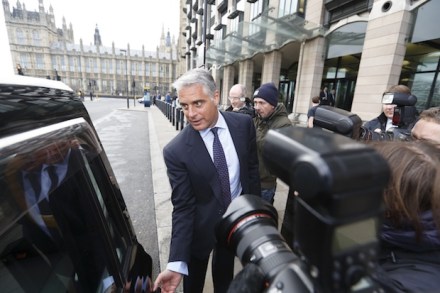
There’s a lesson for all boardrooms — and an echo of the lost era of big-bucks, big-ego banking — in the story of Santander’s withdrawal of its job offer to Andrea Orcel. The Italian-born former UBS and Merrill Lynch investment banker was named last September as the next chief executive of the Spanish giant that is Europe’s fifth-largest commercial banking group; but during his ‘gardening leave’ between employers, the deal fell apart. The amount Orcel was demanding in compensation for deferred rewards at UBS — some reports say €50 million — turned out to be way over the top for the Spaniards.

Why Keynesian theory can’t dig us out of Brexit uncertainty

From our UK edition

‘It is seldom wise to sacrifice a present evil for a doubtful advantage in the future,’ wrote John Maynard Keynes as a precocious undergraduate in 1904. As we contemplate what no deal might be about to bring, those words seem to confirm the view of his living followers that the sage who died in 1946 (though usually labelled a free-trader) would have voted Remain.      But he was also well known as a pragmatist, so it’s worth asking what he would be telling us to do now, as the cliff-edge looms while UK GDP growth has already fallen to its slowest rate since 2012, at 1.4 per cent last year, according to the ONS.

Welcome to the Year of the Pig

From our UK edition

Happy Chinese New Year, or at least let’s hope so. The chubby pig of 2019 is an obvious symbol of wealth; but being both pragmatists and optimists where money is concerned, the Chinese easily find reasons to associate all 12 of their zodiac creatures, (including 2018’s dog) with rising prosperity. This year, however, the amount spent by their shoppers and tourists during the New Year festivities will be compared against last year’s figure of $190 billion for signs of a weakening economy. We already know that trade tensions with the US and other negative factors have been afflicting Chinese sales of western imports, from iPhones to Land Rovers, and that property and shares have been afflicted too, with the Shanghai stock market down by half from its 2015 peak.

Is the Fed caving to the demands of the market?

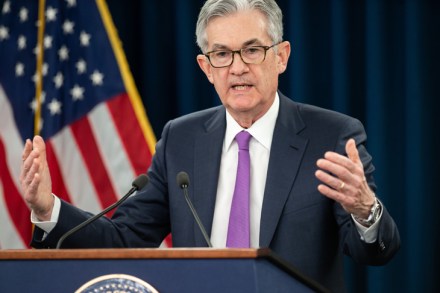
Has ‘Jay’ Powell gone wobbly, or does he know something we don’t? That was the question being asked after the US Federal Reserve, of which Powell is chairman, kept dollar interest rates on hold last week — rather than continuing to notch them upwards as it has been doing for two years — and hinted that the next move might actually be downwards. Trade tension with China, the impact of Donald Trump’s government shutdown and the risk of a no-deal Brexit were all cited as ‘cross-currents’ affecting the decision, but pundits led by Wall Street ‘bond king’ Jeffrey Gundlach declared the Fed to be ‘caving in’ to the demands of the stock market and the President.

fed jerome powell

The Fed’s U-turn on rates is a reality check, not a sop to Trump

From our UK edition

Has ‘Jay’ Powell gone wobbly, or does he know something we don’t? That was the question being asked after the US Federal Reserve, of which Powell is chairman, kept dollar interest rates on hold last week — rather than continuing to notch them upwards as it has been doing for two years — and hinted that the next move might actually be downwards. Trade tension with China, the impact of Donald Trump’s government shutdown and the risk of a no-deal Brexit were all cited as ‘cross-currents’ affecting the decision, but pundits led by Wall Street ‘bond king’ Jeffrey Gundlach declared the Fed to be ‘caving in’ to the demands of the stock market and the President.

We should salute the very rich who stay onshore and pay their taxes

From our UK edition

Paying tax — which many of us have been doing this week before HMRC’s 31 January deadline — is a citizen’s duty, not an act of virtue. But for the very rich it is also a choice, since with the help of expensive advisers they can duck it or pay very little of it by using complex avoidance devices and offshore havens. So if they stay onshore and pay up, we should salute their good citizenship — if only to encourage others like them who might lighten the tax burden for the rest of us. In that context I was pleased to see two of this column’s controversial heroes of modern capitalism in the Sunday Times list of the UK’s 50 highest taxpayers.

Salute the rich who choose to pay their taxes

From our UK edition

Paying tax — which many of us have been doing this week before HMRC’s 31 January deadline — is a citizen’s duty, not an act of virtue. But for the very rich it is also a choice, since with the help of expensive advisers they can duck it or pay very little of it by using complex avoidance devices and offshore havens. So if they stay onshore and pay up, we should salute their good citizenship — if only to encourage others like them who might lighten the tax burden for the rest of us. In that context I was pleased to see two of this column’s controversial heroes of modern capitalism in the Sunday Times list of the UK’s 50 highest taxpayers.

A quiet week in Davos should be a warning to the global elite

From our UK edition

Nobody who’s anybody is in Davos this week and, as usual, neither am I. World leaders from Donald Trump to Narendra Modi declined to attend the annual super-elite World Economic Forum in the Swiss Alps, while the UK was represented chiefly by Sir David Attenborough and a giant Union-Flag banner across the front of the Belvedere Hotel proclaiming — incongruously, you might think, given IMF warnings about what a no-deal Brexit might do to global growth — ‘Free trade is great’. My own excuse was that I’m too busy at home rehearsing the role of a wickedly exploitative landlord in a spoof Victorian melodrama called Her Honour for Tenpence.

The mystery behind Patisserie Valerie’s collapse

From our UK edition

Patisserie Valerie, the cake-shop chain that found a potentially fraudulent £40 million black hole in its finances last October, fell into administration today after failing to persuade its bankers not to pull the plug. Chairman Luke Johnson, having lent the company £10 million plus last-minute cash to help pay this month’s wages for 3,000 staff, joins the creditors’ queue. Investors who put £15 million into his attempted rescue late last year are disgruntled, while investigations into the role of auditors Grant Thornton and former finance director Chris Marsh have yet to throw light on what went wrong in the first place. What’s curious about this mystery story is that it could not have happened to a more genteel brand.

Is the UK auto industry only struggling because of Brexit?

From our UK edition

The popular new narrative for the UK auto industry is that its troubles are only temporarily to do with Brexit and much more to do with misguided policies, wrong decisions and economic swings. There’s a sharp decline in demand for luxury models from pinched Chinese consumers, while diesel sales have slumped because regulators continue to penalise them despite cleaner engines, leaving manufacturers regretting model-range investments. The EU’s new emissions testing regime has caused production problems across the continent; electric vehicle sales won’t take off until governments provide more charging points; and as interest rates begin to rise, motorists are losing the appetite for buying new cars on credit.

Darkness looms as distracted ministers fail to address the widening energy gap

From our UK edition

Transfixed as you were by Westminster chaos, did you also spot the news that Hitachi is about to cancel or suspend construction of the Wylfa nuclear power station in North Wales? The Japanese engineering giant has evidently failed to reach agreement on a guaranteed electricity price and terms for a UK government stake in the project; its decision follows that of its compatriot Toshiba, which in November pulled out of building a nuclear station at Moorside in Cumbria, largely because it disliked the Treasury’s favoured financing model that loads risk on to the contractor. These two projects between them were intended to keep the lights on in 11 million UK homes, factories and offices.

Has the single currency proved its worth?

From our UK edition

Against a background of drooping eurozone growth (the consensus forecast is 1.6 per cent this year) I met no one in France who was celebrating the 20th birthday of the euro, despite European Commission president Jean-Claude Juncker’s imaginative toast to it as ‘a symbol of unity, sovereignty and stability [that] has delivered prosperity and protection for our citizens’. The French associate the euro with the inflation that is stoking unrest, but only the very old feel nostalgic for the franc (and they tend to mean the pre-1960 ‘old franc’, of which there were 100 to the new one).

Why Macron is happy to leave Ghosn shivering in his Tokyo cell

From our UK edition

In France after New Year, the only gilets jaunes I spotted were a rather dejected bunch near an autoroute exit. I was ready to give them a cheery thumbs-up rather than risk having my path blocked, but they took no notice of me — and no one I met expressed support for them. The novelty has worn off and sensible French citizens are horrified that the protests have led to deaths in car and lorry accidents at the barricades.