Martin Vander Weyer

Martin Vander Weyer

Martin Vander Weyer is business editor of The Spectator. He writes the weekly Any Other Business column.

Entrepreneurs can help solve this crisis

From our UK edition

In times of crisis, we need innovators more than ever. In the Covid-19 pandemic, we’re experiencing the most disruptive force the modern world has ever seen. So much so that ‘Disruptor’ no longer feels the right word to use in our search for the UK’s brightest entrepreneurs — which we’ve renamed The Spectator’s Economic Innovator of the Year Awards. With our sponsor Julius Baer, we’re looking for ventures across the UK that are changing their markets in terms of price, choice, access or technology, have potential for global success, and are making valuable social impacts — especially in the current circumstances.


Have you been invited to a Zoom cocktail party yet?

From our UK edition

The CBI’s guidelines on ‘best practice for business’ during the pandemic tell the 1,500 larger companies that make up the lobby group’s core membership to prioritise employee welfare while also asking ‘how can we help’ government and society to manage the crisis. So far so good. But the notes don’t say ‘Consider a temporary cut in senior executive salaries’. And that is what I think they should all be doing, sooner rather than later, both as a gesture of immediate solidarity and as a move to avert a longer-term backlash against wealth, privilege and the pillars of capitalism. The trend has already begun in the all-but-grounded airline sector.

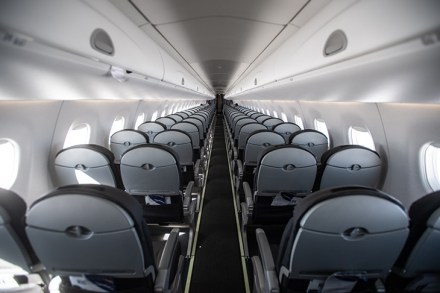
Airlines are no special case when we all need a bailout

From our UK edition

The world needs airlines — and, barring Armageddon, will still have some when this crisis is over. It will also still have aircraft, pilots and airports. The aviation industry, accustomed to volatility as it is, should be well capable of restructuring and regrowing in response to renewed demand, even if bankruptcies are left behind. I know that sounds glib, but airlines on both sides of the Atlantic have been loud in calling for state aid as traffic has collapsed — and in the cruel process of deciding how governments can equitably relieve the virus’s financial impact on every business and family, all such claims demand scrutiny.

The antidote to virus panic is in the hands of entrepreneurs

From our UK edition

‘It’s a ghost town,’ said the officer manning the body scanner at Manchester airport — Manchester, New Hampshire, that is, a city of some 112,000 citizens. I don’t know how many of them would normally be passing through its departure hall on a Sunday morning, but today there are no more than 50, plus me and a bottle of hand sanitiser to remind us why it’s so quiet. A spokesman for the global airline industry says carriers collectively foresee worst-case revenue shortfalls of $113 billion as a result of virus fears and travel restrictions, similar to what hit them after the 2008 financial crash.

Britain’s economic fate doesn’t depend on Heathrow

From our UK edition

Hit-and-miss, heavy-handed, but a necessary use of justice to deter repetition. That was my summing-up, last year, of the Serious Fraud Office’s probe into the Libor and Euribor scandal, in which just nine low-ranking traders from four banks were convicted, despite evidence that rate-fixing malpractice had been endemic throughout the money markets for years. In the case of the SFO’s inquiry into the controversial capital--raising that enabled Barclays to escape a taxpayer bailout in 2008, the summary has to be ‘miss-and-miss, heavier-handed than ever’. But still I ask: was it worthwhile as a warning to others?

Ventures that can change the world

From our UK edition

The Spectator’s Economic Disruptor of the Year Awards 2020, sponsored by Julius Baer, opens for entries on Thursday 5 March. We’re excited to hear from entrepreneurs in every sector and region of the UK whose products are changing their markets in terms of price, choice or technology, and have potential for international growth. And in this third year of these high-profile Awards, we’re also looking for outstanding examples of social impact. Meanwhile, we’ll present a series of inspirational stories behind 2019’s Disruptor finalists. First, Martin Vander Weyer meets Brendan Hyland, of WFS Technologies, the subsea wireless communications venture that was the winning entry for Scotland and Northern Ireland.

Coronavirus is a chance to buy cheaper – but it comes with a health warning

From our UK edition

If anything, stock markets have been slow to respond to the spreading coronavirus outbreak. Stories of Chinese supply interruptions, from JCB digger components to plastic toys, have been circulating since mid-February, while hedge funds have been hard at work short-selling cruise-operator shares: Royal Caribbean and Carnival are both down 30 per cent. Now airlines have taken a pasting too, with easyJet and Ryanair among the big fallers in Monday’s sell-off of European stocks, following news of a cluster of virus cases in northern Italy. Meanwhile, a turning point may or may not have been reached in the rate of -reported cases in Wuhan, where the outbreak began.

Coronavirus is a chance to buy cheaper — but it comes with a health warning

If anything, stock markets have been slow to respond to the spreading coronavirus outbreak. Stories of Chinese supply interruptions, from JCB digger components to plastic toys, have been circulating since mid-February, while hedge funds have been hard at work short-selling cruise-operator shares: Royal Caribbean and Carnival are both down 30 percent. Now airlines have taken a pasting too, with easyJet and Ryanair among the big fallers in Monday’s sell-off of European stocks, following news of a cluster of virus cases in northern Italy. Meanwhile, a turning point may or may not have been reached in the rate of reported cases in Wuhan, where the outbreak began.

coronavirus

Time for new leadership at Barclays and HSBC – and a new name at RBS

From our UK edition

After a dull interlude, the big banks in their annual results season look a bit more interesting again. First to report was Barclays, where pre-tax profits were up 25 per cent to £4.4 billion but attention focused, yet again, on Chief Executive Jes Staley, whose name rarely appears in print without ‘accident-prone’ attached to it. The trouble this time is his link to the late billionaire sex offender Jeffrey Epstein, who was Staley’s client at JP Morgan in his earlier career: under investigation is whether Staley was sufficiently ‘transparent’ with his board and regulators in declaring that relationship.

Never mind the numbers – the boardroom gender battle has barely begun

From our UK edition

It’s the way the world’s going, but still it looks quite impressive that the number of women directors of FTSE100 companies has risen from 135 in 2011 (when Vince Cable, as Business Secretary, began agitating on the subject) to 349 today — representing a third of all blue-chip boardroom seats. It’s not long since that proportion was below 10 per cent. But is the corporate patriarchy truly in retreat, or is this still a matter of reluctant window-dressing by the old boys’ network who have prime responsibility for populating boards?

Is it worse to be an environmental polluter or a moral one?

From our UK edition

So farewell Bernie Ebbers, former chief executive of WorldCom, the long--distance phone operator that became America’s biggest-ever bankruptcy case in 2002. Ebbers has died aged 78, having been released on health grounds in December from a 25-year jail sentence for his part in an accounting fraud that concealed the perilous state of WorldCom’s finances, misleading investors after a series of high-risk acquisitions by the bejewelled ‘telecom cowboy’ Ebbers during the dotcom boom. By repute, US justice aims to make examples of high-profile corporate miscreants, starting with the humiliating ‘perp walk’ into court and concluding with harsh sentences and scant hope of parole.

Positive-thinking entrepreneurs bring relief from politics

From our UK edition

For the grand finale of the second year of our Economic Disruptor Awards, sponsored by Julius Baer, we returned to the same atmospheric science-fiction venue: London’s Postal Museum at Mountpleasant, with its still-working Mail Rail miniature underground train that, until 2003, shuttled sacks of letters between the capital’s major sorting offices. Imagine it as a scale model of HS2 and tell us what you think of that whole blighted project, said Spectator chairman Andrew Neil in his prize-giving speech.

2019 finalists lunch – North West and Wales

From our UK edition

Readers of my weekly ‘Any Other Business’ column know I occasionally find reason or excuse to slip a restaurant tip in amongst the financial commentary. In that spirit, let me start by saluting the venue for our encounter with North-West & Wales finalists for The Spectator’s Economic Disruptor of the Year Awards 2019. This was 20 Stories, a penthouse restaurant in Manchester’s Spinningfields district, which gave us everything we needed, including fine food, service that never cut across our conversation and a view that encouraged us to think in panoramic terms about the markets our entrants are seeking to disrupt.

2019 finalists lunch – Scotland & Northern Ireland

From our UK edition

Another fine lunch and a particularly fine Edinburgh venue for our encounter with finalists for the Scotland & Northern Ireland region of The Spectator’s Economic Disruptor Awards 2019. We’re in the Register Club, inside the Edinburgh Grand Hotel on St Andrew’s Square – a building which happens to have been the headquarters of Royal Bank of Scotland before its chief executive Fred Goodwin commissioned an extravagant new campus on the city outskirts. Fred’s name will forever be associated with RBS’s 2008 collapse, and guess what: we’re lunching in a handsome room that actually used to be his office.

Is it worse to be an environmental polluter or a moral one?

So farewell Bernie Ebbers, former chief executive of WorldCom, the long-distance phone operator that became America’s biggest-ever bankruptcy case in 2002. Ebbers has died aged 78, having been released on health grounds in December from a 25-year jail sentence for his part in an accounting fraud that concealed the perilous state of WorldCom’s finances, misleading investors after a series of high-risk acquisitions by the bejeweled ‘telecom cowboy’ Ebbers during the dotcom boom. By repute, US justice aims to make examples of high-profile corporate miscreants, starting with the humiliating ‘perp walk’ into court and concluding with harsh sentences and scant hope of parole.

polluter

The most sinister thing about Huawei may be how clean it is

From our UK edition

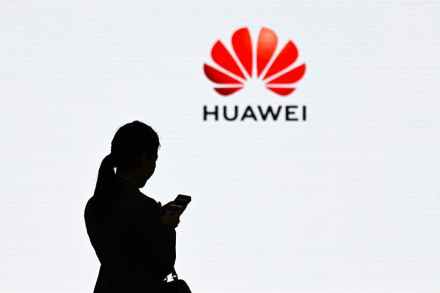
I first wrote about the risks and rumours around Huawei — and made bad jokes about its name — in September 2012. That was seven years after BT started ordering cheap equipment from the Chinese telecoms giant without, apparently, delving into stories about its military-connected origins. But 2012 was the year when Huawei was reported to be working with GCHQ via a ‘Cyber-Security Evaluation Centre’ in Banbury to prove its kit was not open to hackers and did not contain ‘backdoor’ listening devices. Since then, no direct evidence of espionage has been reported, only potential vulnerabilities; but the Trump regime has become strident in denouncing Huawei as a conduit for Chinese spying and data theft, and demanding that allies toe the US line.

HS2’s completion is as likely as King Harry’s coronation

From our UK edition

Seven years ago, when HS2 was still officially costed at £33 billion, I wrote that I was looking forward to using my pensioner’s rail pass on it ‘early in the reign of hugely popular, three-times-married King Harry, in whose favour his elder brother will abdicate after his 50th birthday’. Now HS2’s upper cost estimate has reached £106 billionand the northern spur of the track may not reach Leeds until 2040, when my pass and I will surely have expired. There’s still a possibility all this will happen — high-speed rail and Harry’s coronation, that is — but both look less likely by the day. And after a decade of defending HS2 against all-comers, I fear I must review my position.

Never mind the royals – the real national crisis is at John Lewis

From our UK edition

Asked to name British institutions they’d rather not see shaken to the foundations, many consumers would list the John Lewis Partnership and its Waitrose supermarket subsidiary just behind the House of Windsor. Indeed some might rank the employee-owned retail group ahead, on the grounds that Her Majesty’s family doesn’t sell Egyptian cotton sheets and organic celery juice. A fall into losses, a management bloodbath and a threat to John Lewis’s distinctive business model really is, in its way, a national crisis. As you flick from one online retailer to the next, pondering how to spend the saving you just made on a load of Lidl groceries, you may ask why John Lewis still matters.

All forecasts are off if Iran shuts the Strait of Hormuz

Just when you thought it was safe to go back in the water…late last year, a range of forecasts suggested that the likelihood of recession in the US, with knock-on effects for the rest of the developed world, had significantly diminished. Last summer, many economists were putting the chance of a substantial downturn at 50 percent but by November, Goldman Sachs had marked it down to 24 percent and Morgan Stanley to ‘around 20 percent’. Underlying this shift were strong corporate earnings and consumer spending, plus rising hopes of a settlement of US-China trade tensions. Last month saw a sell-off of safety-first government bonds reflecting the mood, and the FT’s end-of-year forecasts included a confident ‘No’ to ‘Will the US go into recession?

hormuz

All forecasts are off if Iran shuts the Strait of Hormuz

From our UK edition

Just when you thought it was safe to go back in the water… Late last year, a range of forecasts suggested that the likelihood of recession in the US, with knock-on effects for the rest of the developed world, had significantly diminished. Last summer, many economists were putting the chance of a substantial downturn at 50 per cent but by November, Goldman Sachs had marked it down to 24 per cent and Morgan Stanley to ‘around 20 per cent’. Underlying this shift were strong corporate earnings and consumer spending, plus rising hopes of a settlement of US-China trade tensions. Last month saw a sell-off of safety-first government bonds reflecting the mood, and the FT’s end-of-year forecasts included a confident ‘No’ to ‘Will the US go into recession?