Mark Mason

Mark Mason talks about trivia via books, articles, guided walks and the pub.

The mechanics of writing

From our UK edition

On Desert Island Discs the other day, Peter Ackroyd chose a pen and some paper as his luxury. ‘Do you write longhand?’ asked Kirsty Young. Ackroyd’s reply was really intriguing: yes, he does write longhand – but only his fiction. To write one genre by hand but another on computer might seem bizarre, including to Ackroyd himself, who responds to my enquiry about why he works this way with an admission that he doesn’t know. He is, though, far from unique in having a strange approach to his craft. Many writers have been very … how can we put this … ‘particular’ in the way they turn words in their head into words on the page.

Audiobooks: the insomniac’s dream

From our UK edition

I’ve recently been going to bed with Alan Bennett. He’s a very comforting presence as I drift off to sleep, his gentle voice soothing me with tales of what he’s been up to that day, or sometimes anecdotes from his long and successful past. It’s a real treat, the last thing I hear before nodding off being his mellifluous Yorkshire tones relating a Peter Cook one-liner from 1963. I’m talking audiobooks, of course. There’s a nebulous point somewhere sleeping and wakefulness, a state where insomnia still reigns but you’re too tired actually to turn the light on and read. The solution? An audiobook. You get the hypnotic effect of a book without the hassle of reading it yourself.

The perfect non-fiction book

From our UK edition

I’ve realised what the perfect non-fiction book is. You’d think that as someone who writes non-fiction books for a living I’d be excited by this discovery, and would even now be scribbling feverishly away so as to hit the top of the bestseller lists before anyone else has the same idea. Trouble is, the perfect non-fiction book has already been written. In 1955. And once a year ever since then, for that matter. And yes, every year it does hit the top of the bestseller lists. It’s the Guinness Book of Records. When I wrote novels, publishers used to assuage my worries about a lack of reviews by pointing out that it was always harder to get fiction reviewed than non-fiction.

Get a grip, chaps

From our UK edition

There’s too much male blubbing in public life Last Sunday’s London Marathon had me in tears. Not as I battled agonisingly through the wall at 20 miles. No, I was at home on the sofa, with the digestives. And yet again — it happens every year — I blubbed softly at the inspirational tales, the people running in memory of friends who’d died, the sheer personal achievement of everyone involved. This year, though, another thought entered my reckoning. It was the memory of another male who confessed to crying at the television: Ed Balls. A couple of months ago he told how he often cries at the Antiques Roadshow, when someone says that a family heirloom means more to them than any amount of money. ‘Incredibly emotional,’ he called it.

Celebrating the Tube …

From our UK edition

The London Underground is methadone for people with nerd habits. Were it not for its twisty, multi-coloured map, its place in the capital’s history, its tendency to throw up facts such as ‘the QE2 would fit inside North Greenwich station’, we’d be on the hard stuff. The smack of nerd-dom. We’d be on the platform at Crewe with notebooks, taking down numbers, ruining our marriages. As it is we maintain social respectability by obsessing about the Tube. The Tube is sexy in a way that mainline trains aren’t. Even young people, proper trendy young people who know the names of bands, get excited by the Tube.

Every writer’s nightmare

From our UK edition

It’s every writer’s nightmare – losing the only existing copy of your current book. Doesn’t happen that often these days, what with the mantra of the modern world being ‘Thou Shalst Back Up’. What’s particularly galling for Francis Wheen is that he had backed up, in the surest way possible, namely printing out a copy of the his latest novel. But even that isn’t enough when you suffer the fate that befell Wheen last Friday: his garden shed, which acted as his office, burned to the ground.

Only connect | 5 April 2012

From our UK edition

Most of the time life is messy. But sometimes — just occasionally — it all comes together. I’d been reading Howards End. One of the classics I’d never got round to. Hadn’t even seen the film starring Emma Thompson, on account of it being a film starring Emma Thompson. By two-thirds of the way through I was still undecided; novels from over a century ago can be hard work, largely because of the wordiness. (Many of Dickens’s champions admitted that in the recent Charles-fest.) You know there must be something there — books don’t become classics for nothing — but it can take a bit, often a big bit, of finding. Fiction led by its characters rather than its plot often has this problem.

BOB will triumph

From our UK edition

Every time I do a ‘CTRL F’ search, allowing my computer to achieve in milliseconds what it took the schoolboy me hours to do (find a particular word among pages and pages of text), I think of a small business centre in Sheffield, and imagine its occupants to be shaking in fear at the onward march of e-books. For it’s in this business centre that the Society of Indexers is to be found. (I know — you think they’d have a dusty garret somewhere in St James’s.) With Kindles and iPads able to instantly locate every occurrence in a book of whichever word or phrase you’re looking for, surely the days of the index are (please forgive this, it really isn’t deliberate) numbered?

Bookends: Down on the farm

From our UK edition

Can we please have an inquiry into why already talented people are allowed to go off and be brilliant at something else too? As a quarter of Blur, Alex James (above), spent a decade creating critically acclaimed yet commercially successful pop anthems, thereby earning himself access to more drink, drugs and Doris than you could shake a Fender Precision bass at. Fair enough, say the rest of us (through gritted teeth). What isn’t on is the fact that it now seems James, having retired to a farm in the Cotswolds, can also write like a god. This won’t come as a total surprise to readers of The Spectator, where the ex-pop star used to detail his cheese-making, barn-building, sow-sourcing adventures.

The glory of the loo book

From our UK edition

Which books (if any) have you got in the loo at the moment? The term ‘loo book’ has come to mean ‘lightweight/undemanding humour book’ – but does it have to mean that? The three titles currently gracing my own cistern have made me consider the question. They’re Collected Poems by Philip Larkin, The Magic of Reality by Richard Dawkins and Londoners by Craig Taylor. None of them, you’d have to say, particularly lightweight. It’s not that there isn’t a place in the nation’s smallest rooms for conventional toilet tomes. The best of these can be great books, from theDaily Telegraph’s unpublished letters through Schott’s Original Miscellany to Why Don’t Penguins’ Feet Freeze?

An astronaut at 80

From our UK edition

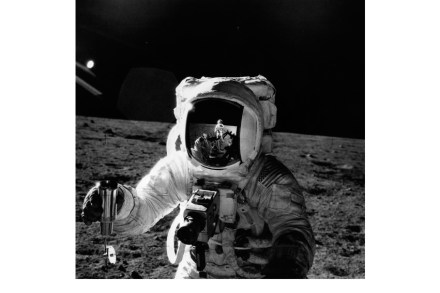
In a couple of weeks, Alan Bean will turn 80. He’s not planning any special celebration. If he does go out, it will probably be to a local restaurant in Houston, Texas. ‘I’ve eaten barbecue at this restaurant once a week, have done for 15 years,’ he tells me. ‘Nobody there has any idea that I’m anyone other than this old guy who likes barbecue.’ Few people even recognise his name. This is probably because Alan Bean was the fourth man to do something. His late colleague Pete Conrad was the third man to do the same thing — and no one used to recognise him either. The first two were Neil Armstrong and Buzz Aldrin. Apollo 12, sandwiched between the epic first of Apollo 11 and the famous disaster of Apollo 13, has been largely forgotten.

It’s all in a name

From our UK edition

Are you awed by an autograph? Swayed by a signature? As you peruse the shelves and tables of a bookshop, is your eye drawn more readily to a cover if it bears one of those little stickers announcing that the copy in question has been signed by the author? Plenty of people’s eyes are, apparently. Publishers always encourage their authors to get out there in the shops, pen in hand, offering to sign whichever copies of their latest work happen to be in stock. I did this with my first book, and felt a little silly walking up to the counter in Waterstones, carrying half a dozen copies of the novel lifted from a nearby table. But the assistant didn’t bat an eyelid. In fact she was very pleasant, asking me about the book and how it was going.

Robot on the loose

From our UK edition

In December 2005, a passenger on an early-morning flight from Dallas to Las Vegas fell asleep. Woken by a steward when the plane touched down, the man wearily disembarked and took a connecting flight to San Francisco. It was only there that he realised he’d forgotten an item of hand luggage on the first flight. Despite heroic attempts to retrieve it, the item was never seen again. This is a pity. The item was the head of Philip K. Dick. Not his real head, of course. That had been cremated, along with the rest of the science fiction writer, in 1982, shortly before the release of Blade Runner, the film based on his novel Do Androids Dream of Electric Sheep? The head was part of a robotic replica of Dick (and yes, its creators did toy, briefly, with calling it the Dick Head).

Buried treasure | 9 February 2012

From our UK edition

I've spotted a subtle side-effect of the fact that e-Books don't actually exist. The ‘not being able to lend a book to your husband/friend/etc when you've finished it' problem is well-known. But less obvious is the fact that when you read a book on a Kindle or an iPad, you can't accidentally leave things between the pages for subsequent owners to find. Because, of course, there won't be any subsequent owners. One of the joys of a secondhand book is unexpectedly chancing upon someone's makeshift bookmark trapped between pages 118 and 119. A friend recently gave me, as a present, a copy of More Manners for Men, one of those bum-clenchingly snobbish etiquette guides from yesteryear. The specific ‘yester' in this case was 1908.

Male ambition

From our UK edition

Women, I am sometimes forced to conclude, just don’t get it. A cold, sunny day in early January, and I am following a footpath across some fields. This is because I have finally got round to a biography of Captain Lawrence Oates which has been sitting in my ‘to read’ pile for at least four years. The spur is the fast-approaching 100th anniversary of Oates’s death — the least I can do is pay him the courtesy of getting it read by then. Inevitably called I Am Just Going Outside, Michael Smith’s book has proved to be a corker. One of the many things I never knew about Oates was that he was from Gestingthorpe, an Essex village just over the border from my home in Suffolk.

“Page 99” and quiz

From our UK edition

‘Open the book to page ninety-nine and the quality of the whole will be revealed to you.’ So said Ford Madox Ford. Whether that applies to any of his own books I don’t know (my shelves seem to be a Ford-free zone — anyone?). But at least one blog applies the test to various tomes, so I thought I’d scan some of my past reading and see whether the rule holds true. Page 99 of Nick Hornby’s About A Boy is a conversation between the two main characters (adult Will and schoolboy Marcus), which features a brilliant example of Hornby getting you straight inside Marcus’s head:  ‘Do people give you a hard time?’  Marcus looked at him. How did he know that?

Tales from the greatest city on earth

From our UK edition

Quiz question: which famous 12-word quotation is followed by the phrase ‘for there is in London all that life can afford?’ Clue: two of the words are ‘tired’. If you need any more clues ... well, I might as well warn you now that this probably isn’t the blog post for you. Because it’s about London books. It’s struck me that our capital city is the perfect example of a gift that keeps on giving, at least when it comes to writers and their inspiration. It seems Dr Johnson was correct: 350 years on and there’s still all that life can afford in London. It’s fascinating the different ways authors find of slicing up that life and putting it between the covers of a book.

Bookends: A metropolitan menagerie

From our UK edition

London has always loved its animals. James I kept elephants in St James’s Park (allowed a gallon of wine per day each to get through the English winter), while as recently as Live Aid an urban myth arose that the revolving stage was pulled by horses. The capital’s no different from the rest of the country; if the British showed as much concern for their fellow humans as they do for their dogs, life would be easier. The latest book tapping this market is Animal London (Square Peg, £9.99). Not that the photographer Ianthe Ruthven has gone for fluffy or cute. Her animals are inanimate, either because they’re statues, monuments, carvings, bits of graffiti or dead (pet cemetery, Hyde Park).

Giving up on a book

From our UK edition

Hate to get all Peter Mandelson on you, but I’ve decided I’m a fighter not a quitter. When it comes to books, that is. I hate giving up on them. No matter how dense the prose, how teakish the characters, how convoluted the structure, I have to plough on to the bitter endpage. And sometime it is bitter; you finish the book as unimpressed as you were at page 20, thinking ‘there go a few hours of my life I’ll never get back’. But often you warm to the book, feeling glad you persisted. Those are the experiences that inspire, that make you a plougher. Is it the right way to be, though? A friend of mine has a ‘page 80’ rule. If the book hasn’t gripped him by then, off to Oxfam it goes.

The Ritz in the Blitz

From our UK edition

‘It was like a drug, a disease,’ said the legendary Ritz employee Victor Legg of the institution he served for half a century. There’s something magical about London’s grand hotels. Even those of us who usually experience them only when we nip in for a five-star pee know that. Matthew Sweet has tapped this glamour to tell tales of the human dramas the hotels hosted during the second world war. It’s surely the variety of people gathered together in one place that explains the fascination held by the Ritz, the Savoy, Claridge’s et al. The good, the bad and the clinically barking all share the same address for a night, then tomorrow the cast-list changes.