Mark Mason

Mark Mason talks about trivia via books, articles, guided walks and the pub.

Did anyone ever really love Bob Hope?

From our UK edition

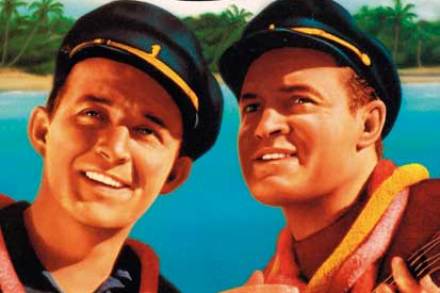
Why does everything these days have to be a superlative? Why must writers scream for our attention, yelling that the guy in their book blows everyone else out of the water? Bob Hope, claims Richard Zoglin in this biography, was the most important entertainer of the 20th century. In fact, he adds, you could argue that Hope was ‘the only important entertainer’. Can Zoglin really believe this? Is he really telling Chaplin, Sinatra, Elvis, Monroe et al to roll over? Even if you made the ‘only important …’ boast about one of those people it would sound absurd. Making it about Bob Hope sets you up for a 486-page fall. It isn’t that Hope’s story lacks importance.
The deep Britishness of fish and chips

From our UK edition

During the D-day landings, members of the parachute regiment, finding themselves behind enemy lines at night, needed a way of telling whether someone nearby was friend or foe. Their solution was a pair of codewords: one man would call out ‘fish’, the other replied ‘chips’. Brits seem to reach for the words as easily as we reach for the food itself. My Latin teacher used them to illustrate how the alternative to ‘et’ works (‘fish chipsque’), while people impersonating the Kiwi accent need only say ‘fush and chups’. The meal is deeply embedded in our national psyche. John Simpson, we learn in this book, pined for it during the siege of Sarajevo. When George W.

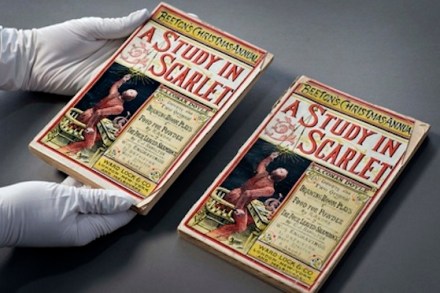
This new Sherlock Holmes exhibition will have Cumberbitches salivating

From our UK edition

Have you ever experienced the joys of Jawohl, meine Herr’n? If not I strongly advise an appointment with YouTube. The song features in the 1954 film Der Mann, der Sherlock Holmes war (‘The Man who was Sherlock Holmes’), and is performed by Hans Albers and Heinz Ruhmann, mainly while soaping themselves in the bath (one each – it’s not that kind of film). Albers and Ruhmann do not, as you might expect, play Sherlock Holmes and Dr Watson, but rather men pretending to be Holmes and Watson in order to solve a crime. At one point they’re prosecuted for the impersonation, with Sir Arthur Conan Doyle (an actor, not the real one) appearing in court to claim the characters as his own.

A compendium to match Radio 4: boring, but somehow gripping

From our UK edition

When you think about it, Radio 4 is mostly a pile of old toss. Money Box qualifies as an anaesthetic, the dramas couldn’t act their way to the nearest street corner and Sheila Dillon from The Food Programme just needs a slap. That’s even before we reach the five most depressing words in the English language: ‘And now, You and Yours.’ Yet we love it. The bits of the station’s output we do like, we worship. Forget Magna Carta and the NHS, when the barricades go up then I, along with all the other Four Whores, will be fighting myself to a bloody stump in defence of Corrie Corfield and Today. This book, a lists-and-break-out-boxes tribute to the station, is very like Radio 4 itself: much of it I found boring, yet I couldn’t resist sticking with it.

The images from the Apollo missions will reduce you to tears

From our UK edition

When people ask why I’m obsessed with the Apollo moon missions, I always want to reply using the same phrase: ‘Because they were out of this world.’ I never do, because it happens to sound like a very bad joke. But it’s the truth. For the first time ever, mankind left its home turf and discovered somewhere new. It was qualitatively the greatest journey in human history. Not — and this is the point — that it was mankind rejecting that home turf; leaving the Earth made us value it all the more. That’s where the greatness lay. It’s also the charm of a new exhibition in London.

Good riddance to rhetoric

From our UK edition

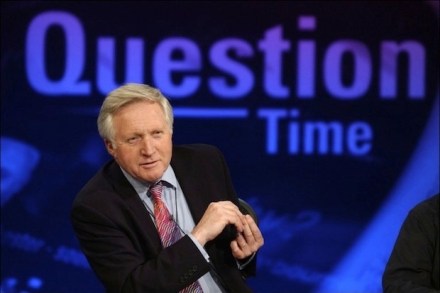
Autumn is here, and so the political classes celebrate the return of Any Questions and Question Time. (The Dimbleby is the only species that hibernates during the summer.) This year, though, listen out for the one thing missing from both programmes: rhetoric. Over recent series politicians and pundits have shrugged off the oratory. Instead they talk normally, like normal people in a normal setting. And thank God for that. In the bad old days, discussion programmes were full of panellists giving it the full Winston.

Switching on to a new generation gap

From our UK edition

[audioplayer src="http://traffic.libsyn.com/spectator/TheViewFrom22_28_August_2014_v4.mp3" title="Mark Mason and Alex Owen discuss the cultural generation gap" startat=1603] Listen [/audioplayer]I was recently talking to an intelligent 24-year-old Cambridge graduate. The conversation turned to TV comedy, and I mentioned Vic Reeves. The graduate had never heard of him. Nor had she heard of Bob Mortimer. This would have surprised me, but it’s happening a lot. Not Vic’n’Bob specifically — anyone who was on TV more than five minutes ago. We now have the first generation to be culturally cut off from its elders.

Nira Alpina, St Moritz: A cool Alpine hotel that’s perfect for the under-tens

From our UK edition

It’s a terrible moment, the realisation that you’ve spawned a monster. Parenthood, it becomes clear, has wiped stylish holidays off the agenda for a good few years. Somewhere like St Moritz, for instance, won’t thank you for polluting its elegant slopes with Bratbot 5.1. Then you stumble across Nira Alpina, and your desperation disappears. The hotel, its website claims, puts ‘fun before formality’. My partner and I took great delight in tiring out our young son (and ourselves) with the various activities on offer. The ‘high ropes’ course involved walking, wobbling and zip-wiring our way through the Alpine treetops, learning en route that vertigo hits the over-forties far worse than the under-tens.

What’s wrong with sunglasses

From our UK edition

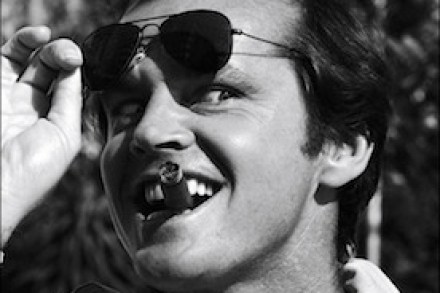
[audioplayer src="http://traffic.libsyn.com/spectator/TheViewFrom22_24_July_2014_v4.mp3" title="Mark Mason and Ed Cumming discuss whether wearing sunglasses 24/7 should be the preserve of the mafia" startat=1392] Listen [/audioplayer]A question to ask yourself on sunny days: are you, as you conduct your conversations with people, trying to convince them that you are Laurence Fishburne in The Matrix? You’re not? Then will you please take off your sunglasses? Hardly anyone does these days. For whatever reason, it seems to have become acceptable over the past couple of years to engage in social intercourse with the upper half of your face entirely concealed behind several hundred quid’s worth of metal and glass.

Hacking Trial: the movie

From our UK edition

We may have had the verdicts and the sentences in the hacking trial, but the biggest question remains unanswered: who’s going to play everyone in the movie? There’s one clear and obvious frontrunner for the part of Rebekah Brooks: Bonnie Langford. Sadly, however, Ms Langford has heavy panto commitments and cannot be released for filming. So we’ll have to make do with a B-list purveyor of ginge instead – Nicole Kidman, perhaps, or Julianne Moore. (Cate Blanchett might have got a look-in if we’d avoided the temptation to base everything on the hair, but Brooks herself never did so why should we?) Andy Coulson should be played by Ewan McGregor, though only if he promises not to repeat his God-awful ‘estuary’ accent from The Ghost.

A novel for men who don’t read novels

From our UK edition

Are you the sort of man - or is your man the sort of man - who’s always meaning to read more novels but never gets round to it? Proper novels, I mean, rather than your John Grisham/Andy McNab stuff. Well the book you’ve been waiting for is soon to be published: A Man Called Ove by the Swedish writer Fredrik Backman. Ove (pronounced ‘Oover’) was born on Backman’s blog, whose readers then demanded he write a novel about the character. Backman obliged, the result sold like hot smorgastartas in his native land and now it’s going to conquer the world. The reason it’s the perfect book for weaning men back onto literary fiction is that Ove is just like us. He’s a grumpy old pedant.

From prisons to offices to police stations – London’s turning everything into hotels

From our UK edition

The test of a truly great city is reinvention. Does it have the courage to change? London holds a PhD in meta-morphosis — just look at the buildings it converts into hotels. Hazlitt’s in Soho is named after William, whose house it once was. Round the corner, the Courthouse occupies what used to be Great Marlborough Street Magistrates’ Court, where Michael Caine was ordered to pay palimony, Oscar Wilde foolishly sued for libel and I was done for busking. (I keep meaning to go back and have dinner on the exact same spot.) Bow Street Magistrates’ Court is also being converted — four of the hotel’s bedrooms will occupy the old cells.

When Geoff Boycott was a DJ in a Sydney nightclub

From our UK edition

Sport isn’t about putting a ball into a net or over a bar or into a hole. It’s about the people who are trying to do those things. Frank Keating, late of this and several other parishes and now just late, understood that truth, which is what made him such a great sports writer. Matthew Engel explains in the introduction to this anthology that his old colleague ‘liked sportsmen and made lasting friendships with them. This would be impossible nowadays.’ Most of the pieces report on those friendships rather than on matches: by portraying sportsmen as they were off the pitch Keating revealed what made them succeed on it.

Kindles will kill off the bookish loner (thank God)

From our UK edition

The Kindle has changed reading in so many ways. A library in your pocket rather than the hulk of a hardback. Uniform pixels where once dust motes rose from an ancient page. But the biggest change, the most fundamental one, is emotional rather than physical. Reading, which used to be the most private of activities, is now an increasingly public one. The same internet that lets you download a book’s content also lets you upload your reaction to that content. As well as allowing you to mark passages in a book, Kindle’s highlighting feature shows you which passages other readers have marked. What’s more, Amazon ranks the results. Of the 25 most highlighted passages, all but six come from the Hunger Games trilogy.

When the English cricket team toured Nazi Germany – and got smashed

From our UK edition

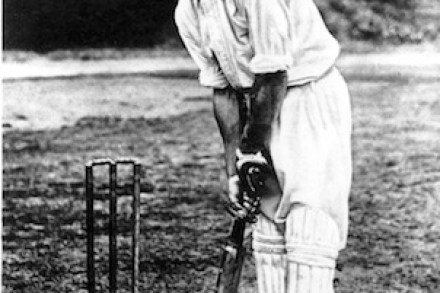
Why have the Germans never been any good at cricket? This entertaining account of the MCC’s 1937 tour to the Fatherland gives some clues. Any country po-faced enough to have a ‘Society for the Encouragement of Playing Ball’ will struggle from the start. Certainly the Germans back then seemed to understand neither cricket’s equipment (‘why so much luggage?’ asked one reporter of the tourists) nor its terminology — later, during the war, letters home from British PoWs about games at their camp were censored because ‘OMWR&A’ was thought to be code. It actually stood for ‘overs, maidens, wickets, runs and average’.

Did we know TV was crap in the old days?

From our UK edition

Here’s a question for those of you old enough to remember 1980s television: did we realise at the time how crap it was, or did we simply not know any better? I’ve been struggling with my own answer to this, ever since watching Danny Baker’s World Cup Brush Up on BBC4 the other night. Yet again the fabulous Baker boy proved that the ‘clip show’ doesn’t have to be an insult. Among the many choice morsels was an early-80s side-splitter from Blue Peter, in which Kevin Keegan was shown a 3D model of himself made by artist Silvia Gardner. (That’s a guessed spelling by the way – inexplicably Google doesn’t seem to have heard of her.

Subterranea is sexy

From our UK edition

‘Sometimes when I’m down here,’ says Harry, ‘I get them to stop the train in the middle of a tunnel. Just for a minute or two, so I can savour the peace.’ Harry Huskisson is press officer for the British Postal Museum and Archive. He’s showing me the ‘Mail Rail’, the GPO’s underground train system, which until 2003 carried letters across London. The museum plans to reopen it as a tourist attraction. Subject to funding, by 2016 you could be mooching around the train depot underneath Mount Pleasant sorting office, and later on maybe even riding one of the mini-trains which defeated the capital’s traffic jams by whisking letters and parcels from Whitechapel to Paddington via Oxford Street.

The train stations that don’t really exist

From our UK edition

In 1964, as part of his railway cuts, Dr Beeching ordered the closure of Duncraig, a small, little-used station in the Scottish Highlands. The train drivers working the line simply ignored him. They continued to stop there, and the station remains open to this day. A world where nothing ever changes, or indeed happens — this is just the sort of world that appeals to Dixe Wills. His latest travelogue takes in 38 of the 150 or so remaining ‘request’ stops on Britain’s railway network. I didn’t know such things existed at all, but apparently there they are (including Duncraig), only seeing action as and when a passenger informs the guard accordingly.

Mortar fire, weddings, camels, the French revolution: all kind of things get in the way of cricket

From our UK edition

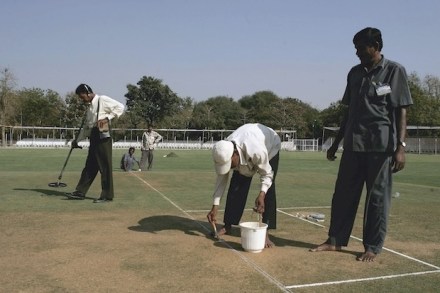
It isn’t just the elk, either. Also bringing proceedings to a halt in this wonderful anthology are camels (Bahrain), cows and donkeys (Botswana), unexploded landmines (Rwanda, silly mid-on), people learning to drive (East Timor), punch-ups (Bermuda), low cloud (Christmas Island, 300 metres above sea-level), mortars (Iraq, though not during the game held by coalition forces in the ballroom-sized anteroom of Saddam’s abandoned North Palace) and weddings (the ground on Ascension Island has a church inside its boundary). For the record, the elk (Finland) was twice the size of a horse. Even when play is possible, life can still be tricky.

Whistling is a bloody nuisance

From our UK edition

Paul McCartney says he can remember the exact moment he knew the Beatles had made it. Early one morning, getting home from a night on the tiles, he heard the milkman whistling ‘From Me to You’. This incident isn’t recounted in A Brief History of Whistling. The record in question was a huge pop hit, and these authors prefer to concentrate on working-class culture, folk songs, music hall and the like. They also cover whistling at work (two blasts to your sheepdog for ‘go left’, one for ‘go right’), whistling in science fiction (it’s the one human skill that stumps an android in Star Trek) and whistling as language (the messages of the Guanch people of La Gomera in the Canary Islands can be heard five miles away).