Mark Galeotti

Mark Galeotti

Mark Galeotti heads the consultancy Mayak Intelligence and is honorary professor at the UCL School of Slavonic and East European Studies and the author of some 30 books on Russia. His latest, Forged in War: a military history of Russia from its beginnings to today, is out now.

ATACMS missiles alone won’t change the game in Ukraine

From our UK edition

America’s ATACMS long-range missiles were a potential ‘game changer’ to the war in Ukraine to some, a potential source of escalation to others. Now, with no real sense that either has proved true following Zelensky's confirmation this week they were used for the first time, what does that tell us? The MGM-140 Army Tactical Missile System (ATACMS) undoubtedly offers Kyiv new capabilities. It can deliver a 500-pound warhead or hundreds of cluster bomblets very accurately to a range of up to 190 miles. Unlike the Anglo-French Storm Shadows already in use, the two-ton missile is fired from a tracked HIMARS launcher rather than an aircraft and thus can respond very quickly to strike even mobile targets.

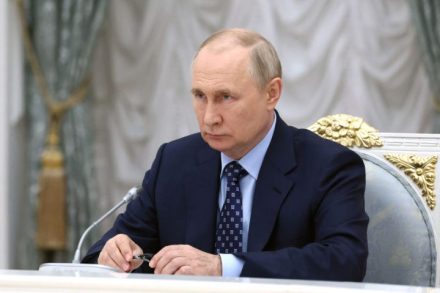
Putin has been blindsided by the Israel attack

From our UK edition

Inevitably, some have tried to suggest the terrorist invasion of Israel was in some ways orchestrated by Moscow. 'Russia is interested in igniting a war in the Middle East so that a new source of pain and suffering will weaken world unity,' said Ukraine's president Volodymyr Zelensky in the aftermath of the attack. But if Russia was involved, why has its response been so weak and uncertain? In fact, the Kremlin seems near-paralysed by the unfolding conflict. Of course, Moscow hopes that this crisis will distract the West from Ukraine and undermine its ability to continue to fuel its war effort. It is also trying to spin useful narratives, such as the unproven assertion that Western weapons donated to Ukraine have turned up in the hands of Hamas.

Why a gangster’s death in Central Asia matters

From our UK edition

Such is the globalisation of the modern underworld, that the fate of a gangster you may never have heard of, in a country of which you may know little, may actually matter to you. I’d suggest this is true of the Kyrgyz godfather Kamchy Kolbayev, who was killed on Wednesday by a bullet in the head, during a police operation to arrest him in the capital, Bishkek. Kolbaev was widely recognised as the most powerful gangster in the Central Asian nation of Kyrgyzstan. Born in 1974, he took fullest advantage of the political and economic disruption that followed the collapse of the Soviet Union in the 1990s to establish a criminal empire that spanned smuggling drugs (notably heroin from Afghanistan), protection racketeering and money laundering.

Ukraine’s Crimea strike is a warning shot to Putin

From our UK edition

Admiral Viktor Sokolov, commander of Russia’s Black Sea Fleet, appears to be Schrodinger’s admiral, alive according to Moscow, dead according to Kyiv, with no clarity as to who may be right. The real significance of the missile strike on his headquarters, though, is not so much whether it did kill him, but what it says about Ukrainian goals and capabilities. On Friday, Su-24M bombers of Ukraine’s 7th Tactical Aviation Brigade launched British-supplied storm shadow cruise missiles at the headquarters of the Black Sea Fleet in the Crimean port city of Sevastopol. Some were apparently jammed or shot down, but two slammed into the building, leaving it in flames.

The EU needs a coherent strategy on Russian sanctions

From our UK edition

This week, the European Union opted to extend sanctions on some 1,800 Russian companies and individuals for another six months, but it also lifted sanctions on three wealthy individuals. Alongside this, a recodification of the rights of member states which means that, in the name of preventing 'exports', individual Russian travellers' cars, phones and even toiletries can be seized on entry. These decisions have raised a predictable storm. The three lucky Russians whose sanctions were lifted are the billionaire Farkhad Akhmedov and businessmen Grigory Berezkin and Alexander Shulgin, all of whom had been put under restrictions for their links to the Kremlin.

Putin’s North Korea summit was pure theatre

From our UK edition

If a little tyrant theatre is your goal, then rumbling across the border in an armoured train decked out like a palace (if your palace was decorated in the 1970s) is hard to beat. As North Korea's Kim Jong Un and Russia's Vladimir Putin met at the Vostochny spaceport, the Bond villain vibes were strong – and one might suspect that was the point.  As of writing, we don’t yet know the precise terms of whatever deal has been thrashed out. Even though his factories are running 24/7, Putin clearly wants more munitions for his war in Ukraine. North Korea's are reportedly of stunningly poor quality, but something is better than nothing, and at least they are built to Russian calibres.

Why Putin is pointing the finger at Britain

From our UK edition

Perfidious Albion is, we are told, at it again. In the course of a wide-ranging and often quite surreal speech at the Eastern Economic Forum in Vladivostok, Vladimir Putin accused Britain of being behind attempted nuclear terrorism, rhetorically asking whether the government was ‘trying to provoke us into retaliating against Ukrainian atomic power stations’ or whether the British Prime Minister even ‘knows what his secret services are doing in Ukraine?’ Needless to say, no evidence is forthcoming to support Putin’s claims that a number of Ukrainian ‘saboteurs’ had been intercepted and detailed by Russia’s Federal Security Service on their way to break the power lines at an unnamed Russian nuclear power station.

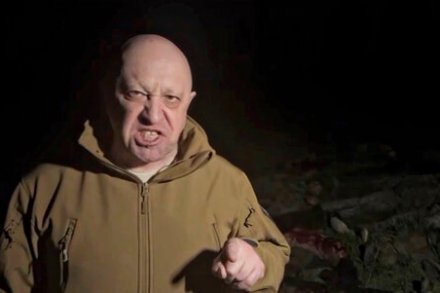
Prigozhin’s death has exposed Putin’s weakness

From our UK edition

So much is still unclear about the fate of Wagner group head Yevgeny Prigozhin, from whether he really did die in the private jet that plummeted to the ground in Russia's Tver region to what caused the crash. In today's Russia, after all, 'mechanical problems' could be anything from maintenance issues to the difficulty in flying when a bomb has blown a hole in your fuselage. The odds are, though, that he is indeed dead. Putin himself offered lukewarm praise to the ‘talented businessman’ who nonetheless ‘made serious mistakes in his life’ (one of which may have been reassuring Putin’s guarantees). Three things would follow from this. First of all, that Wagner's fate is sealed.

Sanctions are failing to turn Putin’s oligarchs against him

From our UK edition

When personal sanctions on Russian oligarchs and officials were imposed by the UK, US and EU after Putin’s invasion, the rationale was that this would undermine the Kremlin. In the main, this has failed – and there is still no coherent strategy to encourage those Russians willing to turn against the regime. Wider economic sanctions are slowly grinding away at the economic base of Putin's regime and its war machine. The case for personal sanctions is much less clear. It is absolutely right and proper that those directly involved in the war, conducting repressions or justifying aggression ought to be punished.

Why the Kremlin sees Britain as the ultimate bogeyman

From our UK edition

Perfidious Albion is at it again. The Kremlin’s increasingly unhinged obsession with seeing a British hand behind its various upsets has now manifested itself in a claim that the UK is behind the establishment of a death squad operating in Africa. The claim, trumpeted across Russia's state-run media, is that MI6 is behind a ‘punitive saboteur unit consisting of Ukrainian nationalists and neo-Nazis’ being trained for operations in Africa. According to an unnamed ‘military-diplomatic source,’ London requested in July that the Ukrainian government help it recruit this force.

Was Putin behind the Electoral Commission hack?

From our UK edition

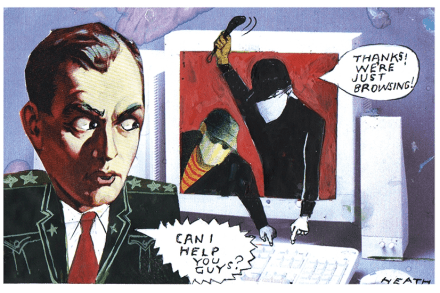
The hacking of the Electoral Commission’s databases highlights the way that in the interconnected modern world, ‘warfare’ can be as much about undermining faith in a country’s institutions and disrupting its political processes as anything else. The Electoral Commission has admitted that ‘hostile actors’ penetrated their systems in August 2021, in a ‘complex cyberattack’ that was only detected in October 2022. In those 14 months, the hackers accessed the details (most, admittedly, openly available) of up to 40 million voters, as well as the commission’s email system. One former Russian spook from the SVR once admitted to me that ‘MI6, CIA and the rest are the opposition: it’s the FSB who are the enemy’ Was it the Russians?

Will MI6’s Russian recruitment drive work?

From our UK edition

Sir Richard Moore, head of the Secret Intelligence Service – MI6 – follows the tradition of only giving one public address a year, so it is inevitably scrutinised carefully for signs and portents. His speech at the UK embassy in Prague, inviting Russians to spy for Britain, required no particular reading between the lines. After a suitable preamble noting Britain’s strong relationship with the Czech Republic, he pivoted from Moscow’s brutal suppression of the liberal Prague Spring in 1968 to Soviets, the bravest of whom, seeing ‘the moral travesty of what was being done...acted on their convictions by throwing in their lot with us, as partners for freedom.

Moscow’s pyrrhic Nato victory

From our UK edition

Despite the inevitable and performative expressions of anger, regret and dismay following this week’s Nato summit, Moscow feels it has reason to be moderately content with its outcome. It has seen Ukraine frustrated in its failure to secure Nato membership – and fractures emerge between Kyiv and the West. Moscow’s contentment, however, may well be misplaced. In fact, the summit’s inconclusiveness when it comes to Ukrainian membership has ensured a range of other initiatives which are rather less comfortable for the Kremlin.  The notion ahead of the summit that Ukraine would be invited to join the alliance before peace had been concluded – essentially forcing the rest of Nato into war – was always a non-starter.

Putin is struggling to solve his Prigozhin problem

From our UK edition

It’s satisfying when a jigsaw piece slots into place. Today we heard that Wagner leader Evgeny Prigozhin met Vladimir Putin in the Kremlin just a few days after his abortive mutiny of 23-24 June. That detail helps clear up some of the confusion of this past week. How come Prigozhin has been at liberty in Russia? We were told he would be going directly into exile in Belarus. Why is the Federal Security Service (FSB) apparently no longer seeking to arrest him? Is his Wagner mercenary army being disbanded or not?  Putin’s spokesman Dmitry Peskov has now acknowledged that, on 29 June, Prigozhin was among 35 people invited to a three-hour meeting in Moscow held to discuss the war.

The Kremlin is trying to humiliate Prigozhin

From our UK edition

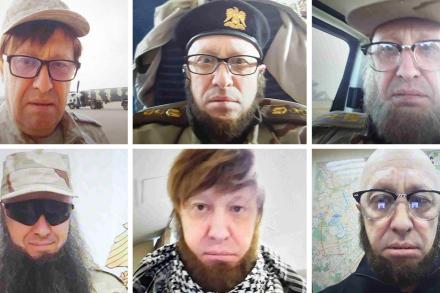
When corrupt Ukrainian President Viktor Yanukovych was toppled in 2014, his private estate at Mezhyhirya turned out to contain an ostrich farm, chandeliers worth thousands and and a two-kilo gold loaf of bread. When Wagner mercenary chief Yevgeny Prigozhin’s St Petersburg estate was raided, investigators found cash, guns – and a bizarre collection of wigs. But what does the eager ‘through the keyhole’ leak of footage from the raid tell us about the state of play in the Putin-Prigozhin grudge match? A giant sledgehammer in one room was inscribed, ‘For use in important negotiations’  Prigozhin himself is still at large.

Yevgeny Prigozhin

After Putin: how nervous should we be?

From our UK edition

The brief mutiny by Yevgeny Prigozhin and his Wagner mercenaries represented the most serious shock yet to Vladimir Putin’s 23-year reign. No wonder alarmed western governments are considering nightmare scenarios. Yet the outlook may actually be rather more optimistic. When news of the mutiny broke, there were fears of mass defections to the side of Prigozhin, a man who has sanctioned the murder of prisoners and even suggested that Russia ‘needs to live like North Korea’ to win its war with Ukraine. Rishi Sunak convened a Cobra meeting to consider possibilities apparently including a Russian collapse and nuclear proliferation. The concern is that a serious challenge to Putin risks pushing Russia into anarchy and so poses an even more intractable security challenge to the West.

Why did Wagner get so far?

From our UK edition

13 min listen

Fraser Nelson is joined by Svitlana Morenets and Mark Galeotti as Vladimir Putin faces an armed insurrection from the Wagner mercenary group – what could happen next?

Putin faces challenge from his own creation

From our UK edition

It took a characteristically long time for Vladimir Putin to respond to the coup-that-dare-not-speak-its-name launched by Yevgeny Prigozhin, but when his statement came, it was steeped in bitterness. And no wonder, for Prigozhin was essentially Putin’s creation, and we know that Putin’s greatest venom is reserved for those he considers traitors. An ex-con who moved into the hot dog business and then finer dining options, Prigozhin’s early restaurant business in 1990s St Petersburg was given a dramatic boost by the patronage of the deputy mayor, one Vladimir Putin.

The Kremlin is still afraid of Alexei Navalny

From our UK edition

As Russian opposition leader Alexei Navalny is once again in court, facing charges that could extend his time in prison by 30 or more years, he is showing that he is not giving up his uneven but unyielding challenge to the Putin regime. When Navalny returned to Russia in January 2021 after recovering from a government attempt to poison him, it was to no one’s surprise that he was immediately arrested and sent to prison for nine years on spurious parole violation charges (which included the surreal accusation that he was in breach for not reporting to the police while he was in a coma). Since then, he has faced an escalating campaign of pressure, being repeatedly sent into solitary and punishment cells, sometimes simply for not buttoning his prison uniform correctly.

Putin is lining up a lengthy list of scapegoats for his war

From our UK edition

Lately Vladimir Putin has been strikingly unwilling to subject himself to any serious debate about his war in Ukraine. On Tuesday, he came the closest yet, spending more than two hours talking to war correspondents working for either the state media or nationalist social media channels. It was hardly an inquisition, but there were some interesting insights into his thinking to be gleaned. Despite the clear evidence of a steady contraction in the Kremlin's aspirations and expectations from the original intent to conquer the whole of Ukraine, he refused to accept that the goals of the 'special military operation' had changed in any way.