Mark Galeotti

Mark Galeotti

Mark Galeotti heads the consultancy Mayak Intelligence and is honorary professor at the UCL School of Slavonic and East European Studies and the author of some 30 books on Russia. His latest, Forged in War: a military history of Russia from its beginnings to today, is out now.

Good riddance to Vladimir Zhirinovsky, Russia’s clown prince

From our UK edition

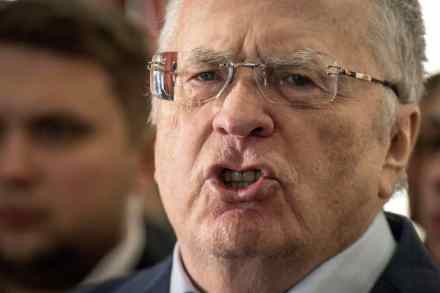
He wanted to see the Baltic States bombarded with toxic waste. He brawled in parliament. He encouraged Vladimir Putin to declare himself tsar. Vladimir Zhirinovsky, one of the most grotesque fixtures in Russian politics for over thirty years, is dead. It is the end of an era – and good riddance. The 75-year-old died in a Moscow hospital of Covid, despite by his own account, having had eight vaccinations. Even in death, he is surrounded by a cloud of hyperbole and mythology. Although never personally close to Putin, he nonetheless played a crucial role in the emergence of the debauched pseudo-democracy that has characterised the past twenty years.

Even Putin’s Praetorian Guard is turning against him

From our UK edition

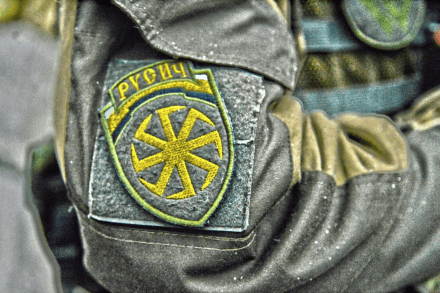
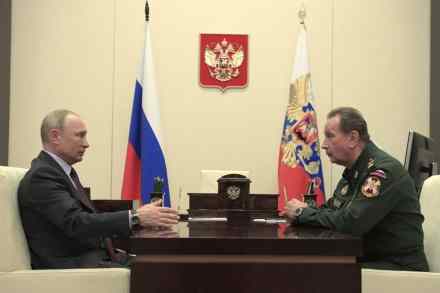
You’d think a ruthless autocrat who believes he faces a West that wants to unseat him with people power would make damn sure he keeps his Praetorian Guard on side. You’d think. After all, it has long been one of the Kremlin's tenets that the West is committed to first isolating and then reshaping Russia using a 'colour revolution' or 'Trojan Horse' strategy. The idea is that popular revolutions and street protests are mobilised and weaponised by the dark arts of Western 'political technologists', with military force only deployed as a last resort. Rising against post-Soviet authoritarians? The protests against rigged elections in Russia and Putin's return to the presidency in 2011-13? The Syrian Civil War? The Ukrainian 'EuroMaidan' revolution of 2014?

Russia’s best and brightest are fleeing Putin

From our UK edition

News that Putin’s climate envoy Anatoly Chubais has quit his position and left the country is no great surprise and, to many Russians, not that great a loss. However his departure is still significant as it illustrates a growing haemorrhage of the talents in the wake of Putin's invasion of Ukraine. Those Russians with the resources and, above all, skills to make it abroad are fleeing while they can. Chubais himself is still remembered by most Russians as one of the so-called ‘boys in pink shorts’ under former finance minister Yegor Gaidar. These men were responsible for implementing the ‘shock therapy’ transition to the market in the 1990s that left most Russians impoverished, while a handful became ultra-rich oligarchs.

Why is Putin firing a hypersonic missile in Ukraine?

From our UK edition

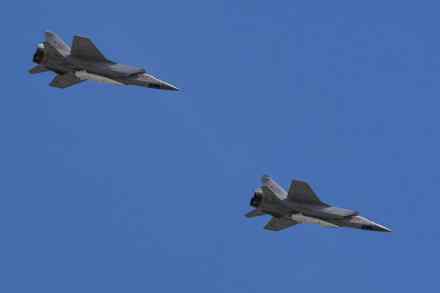
Putin, like many other belligerent autocrats, does like his Wunderwaffen, or ‘wonder weapons.’ Now it appears he’s even used one in an act of wasteful overkill in Ukraine: using the hypersonic Kh-47M2 Kinzhal (Dagger) missile to apparently destroy an arms depot in western Ukraine. The Kinzhal was one of the six ‘magic weapons’ Putin unveiled in a moderately-deranged section of his 2018 state-of-the-nation address, which was memorably enlivened by a computer animation of what looked like a nuclear attack on Donald Trump’s Mar-a-Lago resort in Florida.

Putin’s totalitarian turn

From our UK edition

Putin, of course, can never be wrong. Hence the desperate struggle, familiar to other personalised authoritarianisms, to find suitable scapegoats, because if the monarch is infallible, then anything that goes badly must be someone else’s fault, whether because they misled the boss or simply failed to follow orders. What is especially alarming is when the blame comes to fall on a whole country for failing to live up to his notion of their destiny. Colonel General Sergei Beseda, head of the Fifth Service of the infamous Federal Security Service (FSB), is reportedly under house arrest, accused of embezzling funds intended for the subversion of Ukraine.

The West needs to prepare for guerrilla war in Ukraine

From our UK edition

Russia's deputy foreign minister Sergei Ryabkov warned this week that convoys of weapons being sent to Ukraine would be considered legitimate military targets by Russia. It was a deliberately ambiguous and political statement more than anything else, but it is also a useful reminder of the need to think about the potential next phase in the war. It is still unclear whether the Russians will be able to recover from their unimpressive initial onslaught, but one way or another it seems likely that at least part of Ukraine will end up under Moscow’s control. It also seems pretty certain that Ukrainians behind the lines will not quietly submit, but instead wage a partisan war against the occupiers.

Is Russia becoming a dictatorship?

From our UK edition

Is Russia heading for dictatorship? Some would think it is already there, but even today there are still some remnants of a civil society and constitutionalism. It is harder to believe they will last for long though. For a long time, Vladimir Putin’s regime was something of a post-modern authoritarianism that in the main relied not so much on fear and force as control of the narrative and occasional, measured applications of prophylactic repression. Back in the 2000s and even 2010s the elections were rigged, but the real trick was to allow opposition parties and candidates who were, in the main, so personally unsavoury and politically unattractive that while the scale of Putin’s victories was exaggerated, they were not wholly fictitious.

Putin’s propaganda machine is breaking down

From our UK edition

As protests continue against the war in Ukraine, and as Russian casualties mount, the Kremlin has launched the predictable two-prong propaganda campaign. This is made up of a barrage of nonsensical rationalisations of Russia's invasion and legal and technological measures to try and keep honest reporting at bay. Much like the soldiers engaged in the invasion, Putin’s propagandists are looking as committed or competent as might have been expected. Although the state has a firm grip on TV and most other media outlets, this is not a totalitarianism and there are still some independent outlets. Hosts and ordinary citizens calling in to the Silver Rain radio station were barely holding back the tears as they talked about the war.

War in Ukraine has divided Putin’s court

From our UK edition

It is striking how little enthusiasm there is in Russia for Vladimir Putin’s war in Ukraine – but for some, it has become an opportunity to steal a march and curry favour with the boss. Thousands of Russians have been out on the streets protesting against the conflict, despite the heavy-handed and unstinting response of the security forces. Journalists and experts, sports stars and cultural icons have been making their opposition clear as well. Even those within the system, including senior diplomats and businesspeople, aren’t trying to hide how far they were blindsided by Putin’s decision to invade, and how little they appreciated it.

Putin is deluded if he thinks Ukraine will quickly fold

From our UK edition

So it’s war. For all Vladimir Putin may want to call it a ‘special military operation,’ as missiles rain down on targets all across Ukraine and tanks pour across its borders, this is nothing less than a full-scale act of unprovoked aggression, recognised as such everywhere except in one place: Putin’s head. Can Putin honestly believe that any quisling could rule in Kiev from anything other than a throne of Russian bayonets? His pre-recorded announcement of the invasion was a case study in emotive button-pressing, claiming that Ukraine was a hotbed of Nazism, and that Russia was simply intervening ‘to protect people who have been subjected to bullying and genocide by the Kiev regime for eight years.

Has Putin outplayed Macron in Africa?

From our UK edition

While the world is focused on Ukraine, Emmanuel Macron has withdrawn all French forces from Mali. Last weekend, thousands of soldiers were flown out of the former French colony after nine years of fighting Islamist insurgents in the Sahel. Malian protesters bid the French soldiers farewell by shouting ‘Shit to France’ at the departing planes. Following a military coup in May, Mali’s ‘interim President’ Colonel Assimi Goïta began to tire of the French and their calls for free elections. There were also lingering doubts over France’s motivation, stoked by a Russian disinformation campaign. So Goïta began looking for allies who could provide him with muscle to fight the Islamist insurgency without any lectures about democracy.

Russia’s Ukraine invasion is an own goal for Putin

From our UK edition

Vladimir Putin does like to keep us guessing. While western governments were warning in increasingly apocalyptic terms of a full-scale invasion of Ukraine, instead he has chosen to recognise the Donbas and Lugansk pseudo-states and to send in Russian ‘peacekeepers’. Is this a step back, forward, or sideways? Only Vladimir Vladimirovich knows for sure. The very theatricality of this conflict — already highlighted by James Forsyth — was given a new twist by a surreal meeting of the Security Council, nationally televised in which Putin forced his most powerful underlings to incriminate themselves.

Putin has created a Schrödinger’s war in Ukraine

From our UK edition

In his famous thought experiment, Schrödinger’s cat was both dead and alive in potential, until its box was opened to find out. Likewise, it seems the much-heralded war in Ukraine is at once imminent and unthinkable, and we don’t know which. The date and indeed time of a massive invasion of Ukraine asserted with such confidence in certain newspapers seems, mercifully, to have come and gone. Vladimir Putin is saying that he wants talks to continue, and the Russian military is claiming it is moving some of its forces away from the border area. But where does that leave us? In many ways, exactly where we were before.

Putin and Xi’s Potemkin alliance

From our UK edition

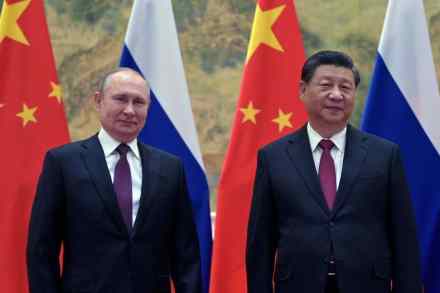
Vladimir Putin very rarely travels abroad these days – and Xi Jinping has not met a foreign leader in person for almost two years. Yet there they were together, just before the opening of the Beijing Olympics, hailing their and their nations’ friendship and concluding $117 billion in oil and gas deals. Although they themselves avoid the word, can we yet talk of a Sino-Russian alliance? Not quite: there’s more here than meets the eye. Certainly the focus was on amity and common interests. This had been signalled in the lead-up to the summit. Chinese foreign minister Wang Yi said that Moscow’s security concerns about Nato were ‘legitimate’ and needed to be ‘taken seriously and addressed.

Britain’s fiery relationship with Russia could help Ukraine

From our UK edition

Britain last night sent soldiers and hi-tech kit to bolster up Ukraine's defences amidst the threat of a Russian invasion. But as well as preparing for war, the UK is also opting for jaw jaw with the Kremlin. For some, this is grounds for apoplexy, as – in the midst of arguably the most dangerous European security crisis since the end of the Cold War – Defence Secretary Ben Wallace invites his Russian counterpart, Sergei Shoigu, to visit Britain. But he’s absolutely right to do so. No one is going to mistake Wallace for some closet Putinist, what the Germans call a Putinversteher, or ‘Putin understander.

No, Putin isn’t trying to bring the Soviet Union back

From our UK edition

On Christmas Day 1991, in his last act as president, Mikhail Gorbachev signed away the existence of the Union of Soviet Socialist Republics. A 74-year experiment that began with the ‘Great October Revolution’ of 1917 (although the USSR was formally constituted in 1922) was over. Or was it? Thirty years on, Stalin regularly tops the Levada Centre’s survey of ‘the most outstanding personality in history’, while half of Muscovites favour the return to Lubyanka Square of the statue of ‘Iron Felix’ Dzerzhinsky, founder of the Bolshevik political police. Russian troops are massing on Ukraine’s borders. Moscow demands that Nato should stay out of the countries of the former USSR. The control of the media and public conversation tightens.

Is Vladimir Putin really willing to invade Ukraine?

From our UK edition

Is Putin preparing to invade Ukraine? It certainly looks that way, with western intelligence agencies estimating this week that around 100,000 troops are now massing at the country’s eastern border. To some, this build-up is proof enough that the Kremlin plans to invade. This week the US president Joe Biden even made significant diplomatic concessions to Moscow to prevent a looming conflict. But the US president should keep in mind that capability does not prove intent: and Putin may well decide that the cost of invasion is too hard to justify. His recent Ukrainian mobilisation could still be a piece of ‘heavy-metal diplomacy’ – a show of force intended to bully and bluff Kyiv and the West into concessions.

Britain’s duty to the Black Sea

From our UK edition

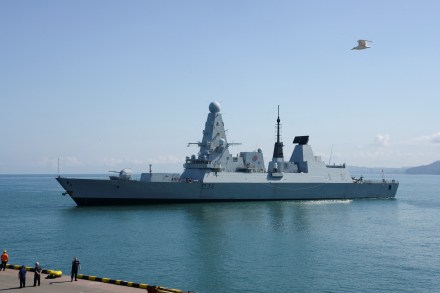
With Russian troops massing on Ukraine’s borders, the Black Sea is looking choppy. While that may seem to have little significance for us, in an age of globalised supply chains, international security commitments and Britain’s ‘tilt to the Indo-Pacific,’ that matters more than we might think. However, there is also an opportunity for the UK. In a report for the Council on Geostrategy that was published this week, I, James Rogers and Alexander Lanoszka, suggest that the Black Sea region is at risk of becoming an anarchic environment where insecurity reigns amid Russian domination. This matters.

There is no Russia-China axis

From our UK edition

You should be careful what you wish for, because you might just get it, so the old cliché goes. In diplomacy at the moment, it seems you should be careful of the threats you prepare for, because you may end up producing them. There is a growing trend in the West towards treating Russia and China as some single, threatening ‘Dragonbear’ (a reference to the two countries' national animals). This underrates the very real tensions between Moscow and Beijing, but risks pushing them even closer together. The most recent case in point was Nato secretary-general Jens Stoltenberg’s interview in the Financial Times, in which he criticised ‘this whole idea that we either look Russia, or to China… because it goes together.

Is Russia ready for a Romanov restoration?

From our UK edition

Hail the tsar! Georgy Romanov, great-grandson of Grand Duke Kirill, cousin to Nicholas II, the ill-fated final Emperor of Russia, is Grand Duke and Sovereign Heir to the throne — at least according to some. He has just wed Italian consultant and author Rebecca Bettarini in the first royal wedding in St Petersburg for over a century. It was an over-the-top, three day event that brought together not only the scattered scions of Europe’s intermarried royal families, from Queen Sofia of Spain to Simeon II of Bulgaria, but also figures from the new Russian elite.