Mark Galeotti

Mark Galeotti

Mark Galeotti heads the consultancy Mayak Intelligence and is honorary professor at the UCL School of Slavonic and East European Studies and the author of some 30 books on Russia. His latest, Forged in War: a military history of Russia from its beginnings to today, is out now.

No, Russia is not on the verge of a coup

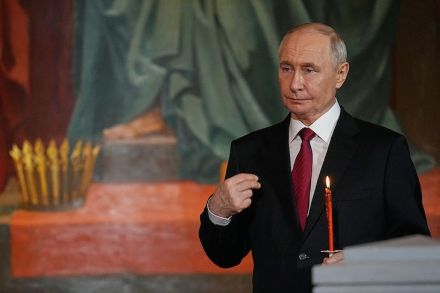
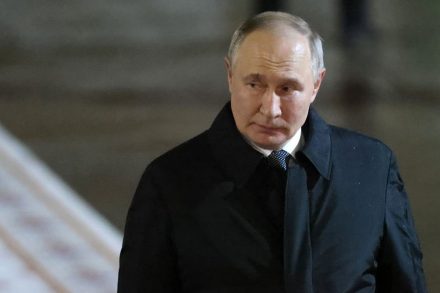
However much Western leaders inveigh against Russian disinformation (which, yes, is a real issue), we should never pretend this is not a two-way street. The sudden spate of news stories reporting that a conveniently anonymous ‘European intelligence agency’ claims that the Kremlin fears a coup looks suspiciously more like a psyop meant to generate paranoia in the Russian elite than a serious assessment. The claim is that Putin’s personal security has been dramatically stepped up, not simply to protect him from increasingly frequent and far-ranging Ukrainian drone strikes but, in particular, because since the beginning of March, the Kremlin and Vladimir Putin himself have been concerned about the risk of a plot or coup attempt targeting the Russian president.

Russia’s nationalists are falling out of love with Putin

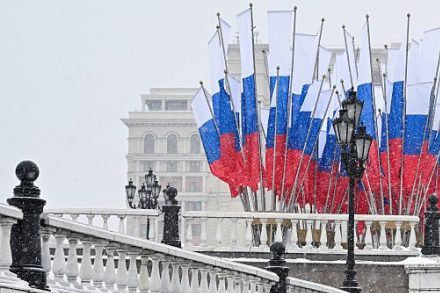
Moscow's Manezh exhibition hall is playing host to a celebration of the life and politics of Vladimir Zhirinovsky, the outspoken, unfiltered and unrepentantly toxic founder of the nationalist Liberal Democratic Party of Russia (LDPR), who died in 2022. What is meant to memorialise Zhirinovsky's career, though, also highlights the degree to which the Kremlin is losing control of the nationalist right. The neatly-choreographed simulation of party politics that has worked for so long is getting harder to sustain The LDPR – which was neither liberal nor democratic – was established in 1992 and from the first was a populist force that was more a vehicle for the bombastic Zhirinovsky than the expression of a coherent ideology.

The problem with John Healey’s tough talk on Russia

From our UK edition

What are the odds that Vladimir Putin is going to be cowed when British Defence Secretary John Healey warns him 'we see you. We see your activity over our cables and our pipelines, and you should know that any attempt to damage them will not be tolerated and will have serious consequences'? Pretty poor, it is safe to say. Yet what might seem like a harmless piece of political grandstanding actually carries serious risks for the UK. Healey was briefing on a recent operation to monitor two submarines from GUGI, the Russian Navy’s Main Directorate of Deep-Sea Research, which spent a month surveying undersea cables in and near Britain's Exclusive Economic Zone (EEZ).

The chaotic truth about Russia’s internet blackouts

From the modern metropolises of Moscow and St Petersburg to Arkhangelsk on the permafrosted northern coast and Khabarovsk on the Chinese border, for over a week now, Russian cities have been experiencing unprecedented interruptions to mobile internet coverage. Ostensibly for security reasons, the rumour mill has inevitably cranked out all kinds of alternative explanations, from fear of a coup to preparations for a comprehensive imposition of state control on the 'runet', Russia's online world. Notions that Vladimir Putin fears some imminent coup can most quickly be laid to rest. There is dissatisfaction with the continuing war and its economic consequences, but nothing to suggest anything more serious.

No, Zelensky: World War Three hasn’t started

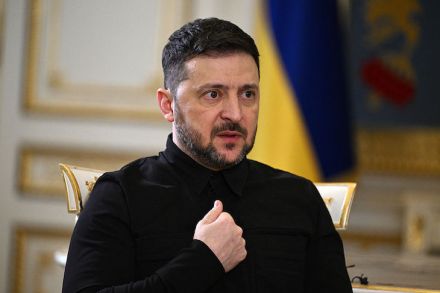
Ukrainian president Volodymyr Zelensky says that World War Three has already started. Speaking to the BBC on the eve of the fourth anniversary of the Russian invasion, it’s understandable why he would want to take this line, but he's wrong. What is striking about Putin is the lack of a messianic ideology On an emotional level, Zelensky has seen millions of his citizens flee within and out of his country, its cities and infrastructure shattered, and Vladimir Putin's propagandists denounce him variously as a Nazi apologist, drug addict and western puppet. Of course he will frame this in the most apocalyptic of terms. More to the point, Ukraine is now dependent on European aid. It is European money that keeps the government solvent, and arms the troops.

Only one person knows what Vladimir Putin really wants

From our UK edition

Another round of trilateral Ukraine peace talks has wrapped up in Geneva with the ritual claims that they were 'businesslike' and 'productive'. Meanwhile, Ukraine's president Zelensky took to social media to announce that he doesn't 'need historical shit to end this war' and accused the Russians of doing nothing but engaging in delaying tactics. So is there any point to the talks? Central to this question is quite what Vladimir Putin really wants. If granted the remaining, unconquered portion of the Donetsk region that he is demanding – itself potentially a concession too far for Kyiv – will he be willing to call it quits and allow the rest of Ukraine to go its own way, subject to constraints on Nato membership and the presence of foreign troops in peacetime?

Why Russia used poison to kill Navalny

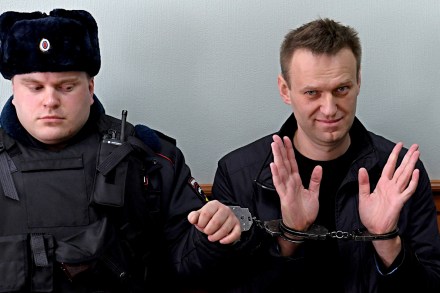
When leading Russian opposition figure Alexei Navalny died two years ago, the only real question was not whodunnit, but howdunnit?  His widow, Yulia Navalnaya, quickly blamed poison and said that his partisans had taken tissue samples from his corpse for examination. Yesterday, the UK, France, Germany, Sweden and the Netherlands announced that a combined intelligence operation had demonstrated that he was killed with epibatidine, a nerve toxin only found on the skin of Ecuadorian dart frogs. The announcement was followed by the inevitable stream of (not always unjustified) scepticism, trollish derision, and official denial.

Is Putin paving the way for a crackdown?

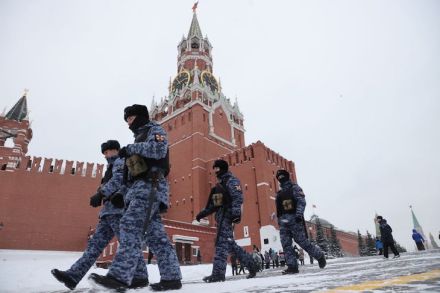
It may sound like a rather arcane development, but a change in the command structure of the Rosgvardiya, Russia's National Guard, offers some clues about both the state of the country and the Ukraine war – and the Kremlin's fears for the future. Zolotov has been lobbying for some time for the Rosgvardiya to have its own General Staff. This week, he got it The Rosgvardiya is an internal security force of some 180,000 personnel, ranging from the blue-camouflaged OMON riot police who patrol the streets alongside the regular police, through to the Interior Troops, a virtual parallel army with its own tanks and artillery. (There are also at least as many in FGUP Okhrana, its private security firm.

Can Russia trust its old ‘little brother’ China?

From our UK edition

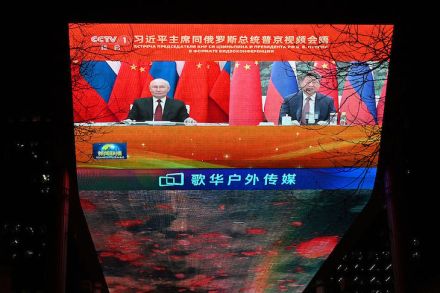
The lovefest between Xi Jinping and Vladimir Putin continued this week. A video call on Wednesday saw the Russian president cooing that, “for Russian-Chinese relations, it’s safe to say that any time of year is spring” and his Chinese counterpart telling his “old, dear friend” that their two countries needed a “grand plan” further to deepen ties between them. Of course, the realities are a little less harmonious. Beijing is supplanting Moscow in regions where it once held sway Russia’s need for energy sales, industrial machinery and dual-use equipment (in other words, things that are not weapons, but still of value in war, such as trucks and bandages) has made it increasingly dependent on its erstwhile “little brother.

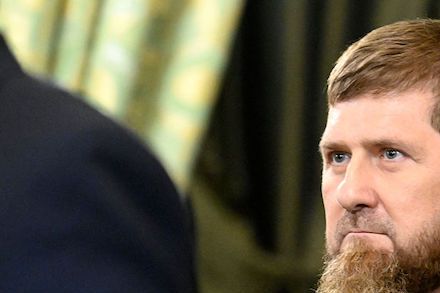
Ramzan Kadyrov is dying. This spells trouble for Vladimir Putin

For years, we have heard rumours that Ramzan Kadyrov, dictator of Chechnya, is mortally ill. Unlike the lurid tales about Vladimir Putin, these rumours appear to be true, and the Kremlin is bracing itself for a potential succession crisis at the very worst time. This week, one of the official news agencies even quietly updated their canned obituary of him, just in case. This means Putin may soon face a fearsome dilemma: risk losing Chechnya or lose what momentum he has in Ukraine?

Who is the spook leading Russia’s negotiations with Ukraine?

From our UK edition

At the trilateral talks being held in Abu Dhabi, both Kyiv and Moscow are being led by military intelligence officers. These are the newly appointed presidential chief of staff, Kyrylo Budanov, formerly the head of HUR – Ukrainian military intelligence, and Admiral Igor Kostyukov, head of Russia's GU – the Main Directorate of the General Staff. On one level, this should not be a surprise. Quiet negotiations between HUR and GU (still widely known by its old acronym, GRU) have been behind a number of practical agreements throughout the conflict, such as the swaps of prisoners and the bodies of the fallen.

Will Starmer go after more of Putin’s shadow oil tankers?

From our UK edition

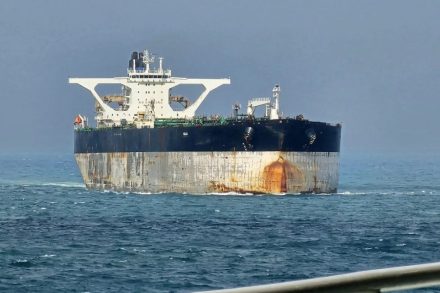
It seems to be criminal cosplay season for Donald Trump, as he successively takes on the roles first of kidnapper, then pirate. There is a case, albeit disputed, to be made under the laws of the sea for the legality of the seizure of the tanker Marinera. There is none under international law for the seizure of the admittedly odious Nicolás Maduro. But none of that matters in Trumpworld, where might makes right and American laws and interests override all else. Now, suddenly, commentators have woken up to the presence of more tankers from the 'shadow fleet' – which is both an inaccurate label and also an inadvertently cool way to describe a collection of superannuated rust buckets – in the seas off Britain. Calls for more seizures are the inevitable breast-beating result.

Do Putin’s New Year platitudes suggest he is tiring of ruling Russia?

From our UK edition

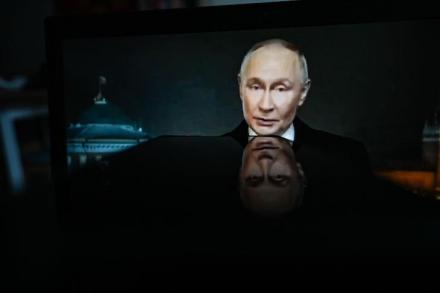
Russia is still known for a great deal of innovative programming, but one area where there is concern it is falling behind is in AI. Judging by Vladimir Putin’s New Year’s Eve address, there are no grounds to worry, as this year’s was of a such blandness that it could have been generated by a large language model. Everything felt much more low-energy in Putin's address than previous years, from rhetoric to delivery In his 1999 New Year’s speech, former president Boris Yeltsin made the shock announcement that he was standing down, and his recently-appointed prime minister, the relatively unknown Vladimir Putin, would become acting head of state.

Macron is right: Europe should talk to Putin

From our UK edition

'Macron is right' is not one of those statements I honestly expected to find myself writing, but when the French president said, 'I think it will become useful again to talk to Vladimir Putin,' after the cup-half-full negotiations in Brussels over continued financial aid to Ukraine, he was spot on. 'I believe that it's in our interest as Europeans and Ukrainians to find the right framework to re-engage this discussion' with Moscow, he said, and that this should be done 'in coming weeks'. Of course, there are some who equate talking to Putin as somehow legitimising him, or meaning the same thing as negotiations. EU foreign policy chief Kaja Kallas has, for example, boasted that she has in the past been able to browbeat countries into not talking to the Russians.

Are we really preparing for war with Russia?

From our UK edition

Are we really on the cusp of a real, shooting war with Russia? If you believe some of the rhetoric, it would seem so – but does anyone really think it? The war drums are certainly beating. Last night, Air Chief Marshal Sir Richard Knighton, the Chief of the Defence Staff, called for 'our defence and resilience [to be] a higher national priority for all of us. An "all-in" mentality' because 'the situation is more dangerous than I have known during my career'. Armed Forces minister Al Carns warned more picturesquely that 'the shadow of war is knocking on Europe’s door once more'.

How Russia’s National Guard may stymie the latest Ukraine plan

From our UK edition

One of the crucial obstacles to a Ukraine peace deal appears to be Vladimir Putin’s demand for the remaining fifth of Donetsk region not in Russian hands. Kyiv not only resents the idea of surrendering hard-defended land, it also fears this could be use it as a springboard for future attacks deeper into Ukraine. One potential workaround under debate is apparently allowing Moscow to claim it, but also making it a demilitarised zone (DMZ) to ensure Russian troops stay out. But it’s not so cut and dried.

Is a Ukraine peace deal inching closer?

From our UK edition

13 min listen

This week Keir Starmer hosted the French President and the German Chancellor in Downing Street as the E3 moved closer to a landmark agreement: seizing around €100 billion in frozen Russian assets to fund Ukraine’s war effort. It’s a dramatic shift that has soothed some fears in Kyiv – but it has also reopened long-running arguments in Europe about property rights, sanctions and how far the West is willing to go. What does this bold move mean for the conflict, for Ukraine’s future and for Europe’s relationship with Washington? Meanwhile, as US–Russia shuttle diplomacy intensifies, Donald Trump’s oscillating positions continue to unsettle allies. Are we inching closer to a peace deal – or stuck in yet another cycle of drafts, red lines and diplomatic back-tracking?

Inside the mind of Putin’s real hatchet man

As Moscow and Washington prepare for talks on the latest version of Donald Trump’s peace plan next week, leaked recordings of a conversation with US envoy Steve Witkoff have thrown a spotlight on to senior diplomat Yuri Ushakov. It seems he, not Foreign Minister Sergei Lavrov, is the prime mover behind Russia’s negotiating position. The stature of Lavrov, once a legend in the diplomatic community, has steadily diminished since 2014, when he wasn’t even consulted before Vladimir Putin decided to annex Crimea. Every year since then, the now-75-year-old minister has petitioned Putin to be allowed to retire; every year this is denied. Instead, Lavrov remains confined to a role of repeating threadbare talking points to audiences who frequently and openly disbelieve him.

Russia is willing to keep on fighting in Ukraine

At a time when Western commentators are tying themselves in knots trying to parse the ongoing Ukraine peace discussions, the Russian media is suddenly strikingly united in its coverage. There is a common misperception that, like their Soviet forebears, the Russian press simply reproduces some standard party line, day in, day out. In fact, there is often surprising pluralism, with different newspapers having their own interests and angles. However, the Kremlin does impose its will when it comes to especially important or sensitive matters, with editors receiving tyomniki, informal but authoritative guidance from the presidential administration on lines to take and topics to avoid. When the press is speaking in one voice, that voice is Putin’s.

Why is Putin obsessed with nuclear ‘wonder weapons’?

From our UK edition

I don’t think it’s accurate or helpful to think of Vladimir Putin as some Bond villain figure – but he certainly does make it harder to hold this line sometimes. In particular, his enthusiasm for ‘wonder weapons’ – often of questionable strategic value – does suggest a certain grandiose vanity. Some have genuine military utility, but others seem more useful in psychological than actual warfare. Last week, the Russians announced a successful test of the 9M730 Burevestnik (‘Storm Petrel’), a nuclear-armed and -powered cruise missile. Its reactor allows it to travel further than any regular cruise missile, manoeuvring at altitudes as low as 50 metres.