Malcolm Rifkind

Why we must not forget about Hong Kong

From our UK edition

China’s decision to make its own ruling over the legislative council oath-taking controversy in Hong Kong is something that is of great concern to the United Kingdom. Beijing becoming involved in what has – until now – been purely a matter for Hong Kong is questionable and is far more likely to inflame matters than settle them. Now more than ever, the UK must take note of what is happening in the Special Administrative Region (SAR) and ensure that China upholds its side of the 1984 Sino-British Joint Declaration. The UK’s relationship with Hong Kong is one of the most important we have in Asia. The links with London date to the first opium war (1839-1842), and over the subsequent centuries they grew, primarily over shared values.

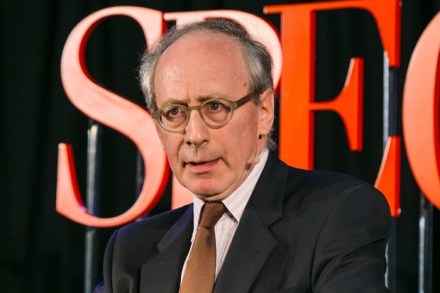
Sir Malcolm Rifkind: Brexit would be Project Risk

From our UK edition

When I was Foreign Secretary, a French newspaper described me on one occasion as a "eurosceptic moderate" and of course those two words tell you what my position is.  I strongly opposed the single currency and was part of many other people who were opposing that at that time.  But I don't believe that it is one-size-fits-all: already, we have two kinds of European Union – those who are in the eurozone and those who are not, there are 15 who are in and 13 who are not, some who don’t want to be, some who used to want to be then changed their minds and some who will never be.

There’s no substitute for human intelligence

From our UK edition

Spying may be one of the two oldest professions, but unlike the other one it has changed quite a lot over the years, and continues to do so. During the quarter-century since the end of the Cold War, the main preoccupation of our intelligence agencies has not been with classic espionage by the Soviet Union, or with identifying new Philbys operating on their behalf. Espionage still goes on, but it is small beer compared to the terrorist threat that commands no less than 75 per cent of our agencies’ time and resources. Stephen Grey takes us through the transformation in the recent past experienced by MI6, MI5 and GCHQ, as well as their counterparts in the United States.

Syria: We must arm the moderate opposition to keep out extremists

From our UK edition

On 31st March 1854, the radical leader John Bright made the first of his great speeches opposing the Crimean War. “I am told indeed that the war is popular”, he proclaimed, “and that it is foolish and eccentric to oppose it”. A considerable number of my colleagues take a quite contrary view regarding the provision of arms to Syria’s insurgency.  Military assistance to the Syrian opposition is not popular, and it is regarded by many as foolish and eccentric to support it. Many of these reservations are sincere and well-founded.

Brown has set a trap into which Tory Eurosceptics must not march

From our UK edition

Gordon Brown looks like a moth-eaten Prime Minister nowadays. His botched handling of a general election and his help in unifying the Conservatives have been the unexpected hallmarks of an amateur, not a consummate professional. If one adds to this his unpopular protestations that the European Treaty does not require the promised referendum, it would seem that never again will it be glad confident morn for his tenure in Downing Street. But with Gordon Brown one should always read the small print before getting too excited. He has promised more than 20 days’ debate in the House of Commons before the Treaty is ratified.

That’s enough grovelling, PM

From our UK edition

Why is Tony Blair regularly lampooned as George Bush's poodle? It is a fate that Margaret Thatcher never suffered, despite her long and intimate alliance with Ronald Reagan. The reason is not that difficult to find. Thatcher was perfectly willing to swing her handbag at the Americans if she judged that British interests required it. There is, as yet, no evidence that Blair would even wag his finger in that direction. Few of us would disagree with any British prime minister who makes the relationship with Washington and the White House a central part of his foreign policy. The British are more interested in power than in philosophy, more concerned with influence than with ideology. The Americans have that power. We want to have the influence.