Magnus Linklater

Fleet Street’s ‘wild Irish girl’

From our UK edition

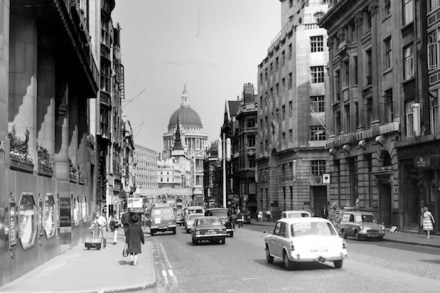
In her early days on Fleet Street, Mary Kenny, as she herself admits, was cast as ‘the wild Irish girl’, and did her best to live up to it. She held her own with the drinkers at El Vino’s, gave new meaning to the phrase ‘talking about Uganda’ when discovered in flagrante with an African lawyer,  and later rode the ‘condom train’ to flout Ireland’s contraception laws. Some of these stories surface in her memoir, Something of Myself and Others; others she draws a veil over, with a Catholic reticence of which her mother would doubtless have approved. Or perhaps she simply cannot remember them all. ‘Like much of my misspent youth I have no recollection whatsoever of where we went or what we did,’ she says at one point.
Making the running

From our UK edition

Journalists’ memoirs tend to be as transitory as the great stories they so lovingly recall. Journalists’ memoirs tend to be as transitory as the great stories they so lovingly recall. Even the best of them — Arthur Christiansen’s Headlines All My Life, Otto Friedrich’s Decline and Fall, about the death of the Saturday Evening Post, Murray Sayle’s A Crooked Sixpence, recalling Soho gangs and press corruption — seem dated now, the scoops forgotten, the scandals long past. Few of them impart much of value, except perhaps for a fleeting sense of nostalgia. Harold Evans must surely be counted an exception, because, for more than a decade, he ran the best newspaper in the world.

Challenging perceptions

From our UK edition

Mrs Noyce kept on being prosecuted, appearing immaculately clad on her many court appearances. But she carried on, keeping her thoughts to herself. She probably echoed the complaint of another madam, Margaret Sempill, in the 19th Century: when she was accused by the Kirk of keeping prostitutes — in particular the very pretty Katherine Lenton, who slept with the French Amabassador — she commented: ‘I get the name, but others the profit.’ She was whipped for her cheek. The French Ambassador was not troubled. Over recent years, Fry’s series of Scottish histories have built a splendid track record of overturning cherished myths. Edinburgh’s fabled respectability is just one of them.

The hammer of the Scots

From our UK edition

This is a book from beyond the grave — the last that Hugh Trevor-Roper wrote, and though it is unfinished, there is no mistaking the sting in the tale. There was nothing the Regius Professor of History at Oxford enjoyed more during his lifetime than annoying the Scots.

Raw skin over bone

From our UK edition

At the Edinburgh Book Festival this year, Dr David Starkey, the television historian and iconoclast, pronounced that history was elitist - it was about kings and queens and power-brokers rather than the marginal or the dispossessed. He liked big and important subjects. He was uninterested in peasants. Neal Ascherson, by contrast, is deeply interested in peasants. Indeed, he believes that it is only by studying the character of the peasant class, those who are conditioned by the land on which they live and work, that we can reach an understanding of the character of a nation - in this case, Scotland.