M R-D-Foot

The grandest of old men

From our UK edition

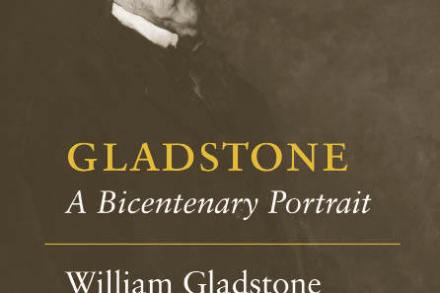
Mr Gladstone’s career in politics was titanic. Mr Gladstone’s career in politics was titanic. He sat for over 60 years in the Commons, was in the cabinet before he was 35, was four times prime minister, almost solved the Irish question, set new standards for the conduct of public business and of foreign policy, and took a leading part in the disruptions both of the Conservative and of the Liberal Party. The post office did get round to issuing a commemorative stamp for his bicentenary, which fell on 29 December; but the press, which used to publish every day in the 1880s a note of his doings, close to the court circular about the Queen’s, has taken it more quietly.
Macabre success story

From our UK edition

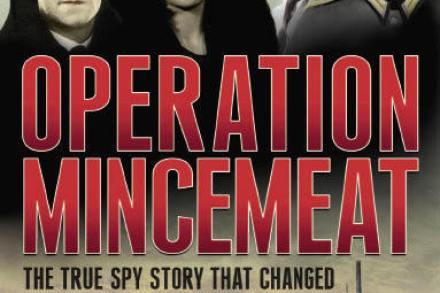
Any bright schoolchild could tell, from a glance at his or her atlas, where the Allies were going to land next, after they had conquered Tunis in 1943: it would have to be Sicily. The deception service persuaded the German highest command that Sicily was only the cover for an attack on southern Greece, after which the Balkans could be rolled up. Hitler was always nervous about the Balkans, from which his armaments industry got the bulk of its chrome and, more importantly, his armed forces half their oil; the trick worked.

An unlikely hero

From our UK edition

This sparkling biography of a small-part actor who did two missions into Nazi-occupied France as a radio operator for the Special Operations Executive (SOE) begins with a rather iffy 60 pages on his identity and pre-war stage career; much of what the agent said about himself was contradictory, much was exaggerated, and little of it was reliable. Almost everybody who met him agreed that he was tremendous fun to be with; anyone who knew him at all well realised that he was homosexual — in an age when homosexuality was illegal. Who his father was remains in some doubt; his mother was an opera singer, under the stage name of Emma Luart.

Stage-effects in earnest

From our UK edition

Churchill’s Wizards, by Nicholas Rankin Deception plays a large part in war, just as feinting plays a large part in sport. The British excel at it, and used it with much success in both the 20th century’s world wars, particularly in the second. That war’s conspiracy theorists are fond of suggesting even more deceptions than did in fact take place; luckily, there are now two sound history books by which they can be confuted. If a wartime deception is not mentioned either in Michael Howard’s Strategic Deception of 1990 or in Thaddeus Holt’s The Deceivers of 2004, it is hardly likely that it happened: useful sticks with which to beat scaremongers.

The Marlborough touch

From our UK edition

Geoffrey Best has written a formidably good book about Churchill’s military core. He begins with the hussar sub- altern, as well as the great Duke of Marlborough his ancestor, before he goes near politics. He reconstructs the standards of conduct that were common form among the aristocracy and the officer class with whom the young Winston Churchill grew up, and explains how they continued to guide him all through his military and political life. There were things one did not do; no gentleman would do them. There were accepted laws and customs of war, universally respected by civilised states, even if they were not yet enshrined in print. Churchill went on record himself that he would never wish to do anything that was dishonourable.

Letters from the Front

From our UK edition

A wide gap has opened up between British military historians who work on the world war of 1914-18 and the mass of British schoolteachers who take it in school history classes. The teachers, impressed by the poetry of Sassoon and Owen, follow what may be called the ‘Lions led by Donkeys’ school of Alan Clark, and regard the war as a colossal waste of men and effort. More and more of the military historians, led by Brian Bond, now appreciate that British commanders in those years contended well with the unprecedented difficulties of industrial war, and deserve credit rather than contempt.

Our deadliest secret

From our UK edition

This book shows how successive cabinets have handled the deadliest secret of modern times, what to do about nuclear bombs, since the first ones went off in 1945. As the subject was so secret, not much has ever been allowed out into the public domain; but Hennessy’s scholarly skills have been such that he has unearthed all of that, and here lays it out in scores of documents in facsimile. This gives the reader an engaging sense of being himself involved in actual research; and his commentaries illuminate each paper. He begins with the now famous memorandum by Frisch and Peierls, of March 1940, from which the whole ghastly project derived.

Jealous neighbourhood watch

From our UK edition

M. R. D. Foot on the new, English translation of Simon Kitson's book  This short, telling book — it has barely 160 pages of actual text — first came out two years ago in French. It takes a fresh look at Pétain’s French state, which tried to govern defeated France from Vichy from 1940 to 1944; the unfamiliar angle of sight reveals several surprises. Those of us who do not live under authoritarian regimes are always curious about what life in them is like; here is fresh fuel for our curiosity, neatly set out by an expert. The French intelligence services had a visceral dislike both of Great Britain (which they usually called ‘Angleterre’) and of Germany.

Decryption and deception

From our UK edition

Two books just out from small publishers throw interesting light on the more secret corners of the British handling of the world war against Hitler’s Germany. Each covers a subject that was deadly secret at the time, but of critical importance for winning the war. Joan Bright Astley’s war autobiography, published to much less acclaim than it deserved in 1971, is now reprinted for a fresh generation to read; Robin Denniston describes his father’s life’s work in decipher. The Reverend Robin Denniston, publisher turned country priest, has written a work of filial piety — a charming, even old-fashioned gesture, but one that deals with a subject of both topical and historical weight. A. G.

The supreme double-crosser

From our UK edition

The formidable Colonel ‘Tin Eye’ Stephens, who ran MI5’s inmost interrogation centre, once recorded that ‘fiction has not, and probably never will, produce an espionage story to rival in fascination and improbability the true story of Edward Chapman, whom only war could invest with virtue, and that only for its duration’. If Ben Macintyre had presented this story as a novel, it would have been denounced as far too unlikely; yet every word of it is true. Moreover he has that enviable gift, the inability to write a dull sentence. An enthralling book results from the opening up of once deadly secret files. Chapman was a professional burglar, who thought himself right at the top of the criminal tree. He was born in a slum village in Co.

Triumph and tragedy

From our UK edition

The 90th anniversary of the start of the battle of the Somme falls on 1 July. Several books mark it; it made a scar on the nation’s memory that is still severe, and it is still often called the day when the army suffered its worst casualties. Strictly, this is not true, for General Perceval in Singapore surrendered 80,000 men to a smaller force of Japanese on 15 February 1942. But on 1 July 1916 the army did suffer its worst total of dead on a single day: 19,240, and nearly 40,000 more were wounded or went missing. It was the first major action in which Kitchener’s new armies fought; whole battalions of ‘Pals’ from northern industrial towns were almost wiped out.

One who got away

From our UK edition

Listing page content here Rather late, we have here the recollections of a then young German army staff officer, who saw Hitler almost daily for the last nine months of the second world war. As Guderian’s ADC, it was Freytag von Loringhoven’s duty to attend the daily Leader’s Conferences at which Hitler continued to direct his war in minute detail, shifting flags on maps without taking in that the flags stood for formations that had long dwindled in reality almost to nothingness. Having only set eyes on the Führer once before, at a big army review some years earlier, the ADC was shocked when confronted in late July 1944 at Rastenburg with a quavering and wizened figure who nevertheless retained mesmeric power over his entourage.

The Drang nach Osten

From our UK edition

Listing page content here Two good books both cover the fighting between Germany and Russia in 1941, a brief historian’s summary of the strategic issues involved and a much longer ex-diplomat’s account of the tactics of the greatest land battle ever fought. Each author is used to explaining himself clearly, one in lectures, the other in dispatches; the reader is never in doubt about what either means. Professor Lukacs’s many books include studies of The Last European War, 1939-1941, now 30 years old, and more recently of the duel between Churchill and Hitler in the summer of 1940. He turns now to examining the motives both of Hitler and of Stalin towards each other as their temporary alliance of August 1939 began to unravel.

One of Vichy’s vilest

From our UK edition

This is a ghastly story, powerfully well told. Lives of criminals form an accepted part of biography; within it, lives of con men are more difficult, because conmen cover and confuse their tracks so carefully. Carmen Callil triumphs over innumerable difficulties to make clear the career of Louis Darquier, one of the villains of the Vichy regime in France. His father was a notable at Cahors, doctor, mayor, radical deputy, with a devoutly Catholic wife of superior lineage who bore him three sons; Louis, born in 1897, was the second. He survived the war as an artillery subaltern, and then went to the bad: a tremendous womaniser, a heavy drinker, a sponger and a cad. Wherever he went, he left a trail of debts.

After such knowledge, what forgiveness?

From our UK edition

Most of this powerful book was written nearly 60 years ago. It was then rejected by two London publishers as too anti-Soviet in tone, and a few years later by two more as too anti-German. It consists of the war recollections of a Polish countess of notable ancestry and equally notable courage, who describes exactly what it felt like to live under Soviet and then under German military occupation.

A man in a million

From our UK edition

Of the making of books about Churchill there seems to be no end. His own output was large, and largely self-centred. We already have an official life in eight volumes, with several volumes of supplementary papers, a number of single-volume lives, long and short, books by supporters, books by opponents, books by those interested in Churchill’s attachment to their own special subject, books by his personal attendants, books by those who never saw him. Here are two more: a study by a notable historian, who has applied his scholarship to one important corner of Churchill’s life as an imperial statesman, and one by a cousin, who has written a lavish book about the family home for 11 generations, Blenheim Palace.

The still unwithered laurel wreath

From our UK edition

In the reviewer’s childhood, Scott was a national hero, almost as revered as Nelson. Revisionists did what they could in the 1960s and 1970s to cut him down to size; generations have been brought up to despise him. David Crane’s new life seeks to restore the balance, to show the man as he was and to explain why he behaved as he did. He emerges a hero after all, even if a limited one. He was trained as a naval officer in the rigid school of the old Britannia, under stiff discipline, with the watchwords of conformity and obedience. No one was encouraged to think for himself; but it was a help to have a patron.

A woman in a million

From our UK edition

Of all the extraordinary secret careers that have gone public since the end of the world war against Hitler, one of the most dashing and farthest out of the ordinary was that of the woman the SOE called Christine Granville. Her father, the Polish Count Jerzy Skarbek, died when she was a child; her mother was the daughter of a Jewish banker. Krystyna grew up an unmanageable tomboy. She had been born in 1915, and spent her babyhood under German occupation; that did not make her pro-German. She adored skiing and knew well most of the skiing instructors on the mountainous Hungarian border, with whose help she organised several astounding escapes from newly occupied Poland in the winter of 1939-40.

Recording secrets under orders

From our UK edition

This book is a goldmine of once highly secret intelligence material: the diary kept, night by night, by the head of the counter-espionage branch of the security service, MI5. Diaries were forbidden to British combatants (though, luckily for historians, the chief of the general staff, among others, broke his own rule, and kept a long one). A special exception was made for Guy Liddell, who was ordered to keep one by his director-general. Here is the result as dictated nightly in the office, and kept for over 50 years in successive director- generals’ office safes, codenamed ‘Wall-flower’; now released to the national archives at Kew.

Far beyond the call of duty

From our UK edition

On the 150th anniversary of the first deed for which a Victoria Cross was awarded, this admirable book recounts some of the tales of those who have won it. The earliest, a young naval officer called Charles Lucas, ran forward instead of taking cover when a bomb landed, sizzling, on the deck of HMS Hecla in the Baltic, and tossed it overboard before it burst. Even in that heroic band, now 1,354 strong, some were still more heroic than others. Sir Peter de la Billière has picked out a few of the very bravest, from all three armed services and from several continents. Queen Victoria laid down, when she instituted the award, that it was to be open to every rank and condition; her wish has been faithfully reflected.