Lucy Vickery

Decalogue

From our UK edition

In Competition 2515 you were invited to supply Ten Commandments for a belief system, real or invented, of your choice. As traditional authority figures and sources of identity crumble round our ears, people (who, when it comes down to it, quite like to be told what to do) are casting around for new rule books. Take, for example, Pastafarianism, or the Church of the Flying Spaghetti Monster, which was drawn to my attention by Brian Murdoch. Founded in the US by physics graduate Bobby Henderson in protest at the teaching of Intelligent Design in schools (religion masquerading as science, as Henderson saw it), it has eight ‘I’d really rather you didn’ts’, known as the Loose Canon. Or maybe one of this week’s winning entries ‘speaks to you’.
Going for a song | 12 October 2007

From our UK edition

Twenty years ago when I worked at Our Price Records the thing we shop assistants dreaded most were customers who would march up to the counter and announce that they’d heard this song on the radio by [insert artist’s name] before launching into a toe-curling rendition which we were expected to identify. Today’s Virgin Megastore employees are presumably spared such agonising encounters thanks to Web 2.0, which has spawned countless resources for tracking down a snippet of music that has tickled your fancy. My favourite is foxytunes.com which allows you to search for an artist and brings together, on a single page, relevant elements from all corners of the web: videos from YouTube, Google search results, similar artists from last.

Taking the rap

From our UK edition

In Competition No. 2514 you were invited to recast a fairy tale as a rap. I thought that fairy tales might translate well into the language of rap. After all, violence is a dominant theme in both genres (especially in the Grimms’ original x-rated versions, which featured scenes of murder, mutilation, cannibalism, infanticide and incest that would make Stephen King blanch). The winners this week, printed below, were outstanding. Convincing raps, like successful Mills & Boon romances, are not easy to pull off. So it’s a well-deserved £30 each. Natural-born rapper Bill Greenwell nets the bonus fiver.

Dream date

From our UK edition

In Competition No. 2513 you were invited to submit a Spectator Love Bug ad for a well-known literary character. I was hoping for such comic gems as grace the compellingly quirky lonely-hearts column in the London Review of Books: ‘Eager-to-please woman, 36, seeks domineering man to take advantage of her flagging confidence. Tell me I’m pretty and watch me cling’. This potentially suicidal self-deprecation produces ads that are both hilarious and touching — and apparently successful from time to time. What woman could fail to be won over by Quasimodo’s honesty, courtesy of John Plowman: ‘You say personality matters more than looks? Well, I’m your man.

It’s folk music but not as we know it

From our UK edition

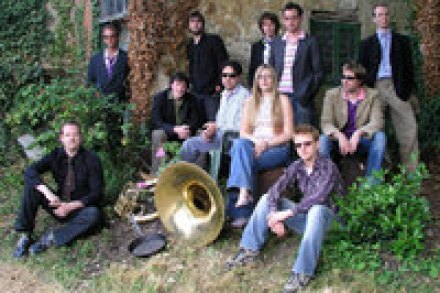
There's more to folk these days than dodgy beards and cable-knit sweaters and it’s clear why Bellowhead, instigators of an outbreak of frenzied folkish foot-stomping at Shepherd’s Bush Empire on Wednesday, picked up Best Live Act in this year’s BBC Radio Two Folk Awards. Fronted by the charismatic Jon Boden, and underpinned by a riotous brass section, the 11-piece big band’s quirky, contemporary take on ballads, sea shanties, and traditional dance tunes had an ecstatic cross-generational audience singing along and jigging wildly, inhibitions cast asunder.

Sobering thoughts | 22 September 2007

From our UK edition

In Competition No. 2512 you were invited to submit a description of a hangover in heroic couplets. I judged the comp after a night’s carousing and your couplets, which were clearly informed by bitter experience, elicited shudders of queasy recognition and the inevitable doomed resolution never again to touch a drop. Simon Machin’s reference to being beaten up by secret police recalls Kingsley Amis’s unforgettable, wince-inducing description of Jim Dixon’s hangover: ‘And body sprawled as if in pained release,/ From being beaten by the secret police’. And thanks to Virginia Price Evans for a vivid description of drunkenness rather than its consequences. The winners, printed below, get £25 each and the extra fiver goes to Basil Ransome-Davies.

Dark Thoughts

From our UK edition

If you ever roll your eyes to heaven in despair at the pretentious nonsense spouted by some rock journalists you might enjoy Graeme’s Thomson’s post on Guardian Unlimited’s music blog, where he calls for an immediate ban on the use of ‘brave’, ‘dark’ and ‘edgy’ in any album review. Although I’m 100% with Graeme on this one I should point out that this link was sent to me by a well-wisher after I’d used the d-word with reference to Serafina Steer, the foul-mouthed harpist from Hackney who we’d just seen in action (I did grapple briefly for an alternative adjective, honest, but I couldn’t think of one).

School daze

From our UK edition

In Competition No. 2511 you were invited to describe, in prose or verse, Christopher Robin’s first day at a comprehensive school. In Competition No. 2511 you were invited to describe, in prose or verse, Christopher Robin’s first day at a comprehensive school. The idea was to wrench Pooh’s chum from a cosy world of Nanny, Hornby train-sets and bedtime prayers and plunge him into the lawless pandemonium of an inner-city comprehensive, where presumably the only ‘hoppity hopping’ he’d be doing would be to dodge the bullets, and his fellow pupils would more likely have a dose of the clap than sneezles and wheezles. How did he fare? Over to you. The comp was a pleasure to judge; commendations to Mike Morrison and Paul Griffin.

Lawrence of Ambridge

From our UK edition

In Competition No. 2510 you were asked to submit a scene from The Archers written in the style of D.H. Lawrence. Entries were thin on the ground this week. Perhaps you just couldn’t face Lawrence and his much-mocked florid excesses — or maybe it was The Archers that put you off. Fewer didn’t mean worse, though, and there were some fine Lawrentian flourishes. Alanna Blake exploits parallels between Clarrie Grundy’s current tight-lipped disapproval of William’s new girlfriend Nic, and Paul Morel’s mother’s smouldering resentment towards Miriam Leivers in Sons and Lovers. A normally affable Eddie metamorphoses into the volatile and violent Walter Morel.

Past caring

From our UK edition

In Competition No. 2509 you were asked to provide an extract from a Victorian self-help book. Self-help by Samuel Smiles was a hit when it was published in 1859. Almost 150 years later it is described on Amazon.com as ‘the precursor of today’s motivational and self-help literature’. This strikes me as a rather desperate attempt by marketing people to tap into the seemingly insatiable appetite of modern self-help addicts. They may be in for disappointment, though. There are no quick fixes from Smiles, who preaches hard work, thrift and perseverance, a message that won’t go down well with today’s debt-laden, I-want-it-and-I-want-it-now generation.

Blond ambition

From our UK edition

In Competition No. 2508 you were invited to submit an acrostic poem in support of Boris Johnson’s bid to become Mayor of London, in which the first letters of each line spell out BORIS FOR MAYOR. In Competition No. 2508 you were invited to submit an acrostic poem in support of Boris Johnson’s bid to become Mayor of London, in which the first letters of each line spell out BORIS FOR MAYOR. There was an avalanche of entries of a variable standard. Predictably, Boris’s flaxen locks featured strongly — as did his mighty intellect. Equally celebrated were his plain speaking and joie de vivre, many of you echoing D.J. Taylor, writing in ES Magazine: ‘If I had a vote in the mayoral elections, I think I’d cast it for Boris on the Gaiety of Nations principle.

Seven seas

From our UK edition

My selection of words was harsh in that there wasn’t much in the way of alternative meanings to play with. You rose to the challenge admirably, though, and submissions were impressively varied and convincing. As Jaspistos has observed before, this type of comp tends to produce a bumper crop of entries, and this week was no exception. It was tough, once again, to whittle it down to six. An ingenious few managed to coax a non-plant sense out of celery. Here’s Nicholas Poole-Wilson: ‘He was from Sydney, and I didn’t immediately recognise what he meant when he said he was on a six-figure celery.’ John Plowman strayed from the brief, but I liked his haiku all the same. The winners, printed below, scoop £25 each. Alan Millard pockets the bonus fiver.

Hole hearted

From our UK edition

In Competition No. 2506 you were invited to submit a short story entitled ‘A Life With a Hole In It’. In Competition No. 2506 you were invited to submit a short story entitled ‘A Life With a Hole In It’.This is the title of a poem written by Philip Larkin in 1974, shortly after a move that plunged him into a black depression. It reeks of fury and disappointment: ‘Life is an immobile, locked/ Three-handed struggle between/ Your wants, the world’s for you, and (worse)/ The unbeatable slow machine/ That brings what you’ll get...’.The entry this week was impressive, which cheered me up after Larkin’s doom and gloom. Top marks to you all for inventiveness, with special mentions to Bill Greenwell and Adrian Fry.

Ode worthy

From our UK edition

When I set this assignment I was thinking of Pablo Neruda and his odes to subjects as apparently mundane as a lemon, a tomato and ‘a large tuna in the market’.You didn’t go in for food, but animals featured strongly in the entry, as did buildings — Sixties architecture, in particular. Some strayed into unsavoury territory, musing on pubic hair and other unmentionables. Martin Parker made me smile with his meditation on the marvels of the she-baboon’s bum, which might not be everybody’s cup of tea but is clearly a thing of beauty to the amorous male of the species: ‘So, here’s to the she-baboon’s Technicolor bum,/ and its promise of the amatory action that’s to come...

Modern muses

From our UK edition

In Competition No. 2504 you were invited to invent nine muses for the 21st century.It was left to you to decide which form to use, so variety was the order of the day. Some went for straightforward lists; others for verse. D.A. Prince kindly provided her line-up with symbols, but most didn’t. While the lion’s share of entrants had fun coming up with 21st-century names, William Danes-Volkov went out on a limb, sticking to the designations of the original nine but giving them new jobs, more fitting to the modern age.Bill Greenwell hit the spot with ‘Proactiviope, the muse of business memoranda and blue sky thinking’ as did Michael Saxby’s ‘Portia, the muse of fast motoring’. A commendation goes to Frank McDonald.

Two Bobs

From our UK edition

In Competition No. 2502 you were invited to submit a review by a critic identifying the literary precursor(s) to a popular music star of your choice. I was originally going to stipulate that the entry be in the style of a rock critic to winkle out the hipsters among you (although Christopher Ricks, whom I pegged the comp. to, was coming at Dylan from the perspective of an academic). But unsure how much of a crossover there would be between the readership of The Spectator and that of the NME, I lost my nerve and plumped instead for ‘critic’, which seemed to cover all bases.

Pet sounds

From our UK edition

In Competition No. 2499 you were invited to submit a poem eulogising a pet.It was not only Dr Johnson’s Hodge who inspired this assignment; credit, too, goes to Jeoffry, immortalised by Christopher Smart in ‘For I Will Consider My Cat Jeoffry’ from ‘Jubilate Agno’: ‘...For he is the quickest to his mark of any creature./ For he is tenacious of his point./ For he is a misture of gravity and waggery./...’A rather more unusual pet, belonging to the bohemian poet Gérard de Nerval, was brought to life by Bill Greenwell.

Psychobabble

From our UK edition

In Competition No. 2498 you were invited to submit a speech by one of our newly ‘emotional literate’ politicians unveiling a piece of legislation and incorporating the following words: ‘dysfunctional’, ‘narrative’, ‘empower’, ‘co-dependent’, ‘holistic’, ‘self-actualisation’, ‘closure’. The traditional ministerial waffle of government policy documents now has a new ingredient as politicians vie with each other to feel our pain, threatening to drown us in an ocean of empathy. David Cameron’s much-mocked ‘Hug a hoodie’ slogan is but one example.

Romance rekindled

From our UK edition

As a teenager I devoured, in private and with a tinge of shame, my local library’s entire collection of Mills & Boon, so it was a relief to discover that, according to a recent survey conducted on behalf of the Costa Book Awards, 85 per cent of us have a guilty-secret author whose work we read avidly but never in public. Perhaps there are some closet Jilly Cooper fans out there; some of you made a mightily convincing stab at taking off the queen of the racy romp. I liked Tom Durrheim’s Violet Elizabeth swooning over William’s ‘hard magnetism: the square shoulders, the tousled hair, the glittering eyes that twinkled with eternal mischief’, and J. Seery’s saucy Romeo. The winners, printed below, get £25 each. W.J.

Short story | 2 June 2007

From our UK edition

In Competition no. 2496 you were invited to submit a short story whose final line is ‘Sir, when I heard of him last he was running about town shooting cats.’ The challenge was to make this extract — from a passage in Boswell’s Life of Samuel Johnson about the Doctor’s beloved cat Hodge — follow on convincingly from the rest of the story rather than appearing to be tacked awkwardly on to the end. The standard was disappointing; a lot of entries stormed along promisingly only to falter badly at the final hurdle. Liz Childs played a blinder, though, and is a worthy recipient of the bonus fiver. I’m reliably informed that her story is packed with in-jokes for physicists. The other prizewinners, printed below, get £30 each.