Lucy Vickery

Spectator competition winners: Jeeves, Godot and The Lady of Shalott on the psychiatrist’s couch

From our UK edition

The call for psychiatric reports on a well-known figure in literature pulled in a large and entertaining entry. Shakespearean characters featured strongly, but it was children’s books that provided the most fertile hunting ground. Pretty much all of the inhabitants of Hundred Acre Wood — and of Wonderland — found themselves on the shrink’s couch, as did Mr Toad (bipolar); William Brown (ADHD; gender/body dysmorphia); and Rupert Bear (Asperger’s). Honourable mentions go to Amanda Nicholson, Julia Pickles, Alan Millard and Alanna Blake, but D.A. Prince is star performer this week and is rewarded with the bonus fiver. Her fellow winners earn £30. D.A. Prince A.M.

Going mental

From our UK edition

In Competition No. 2931 you were invited to submit a psychiatric report on a well-known figure in literature. Shakespearean characters featured strongly in the entry, but it was children’s books that provided the most fertile hunting ground. Pretty much all of the inhabitants of Hundred Acre Wood — and of Wonderland — found themselves on the shrink’s couch, as did Mr Toad (bipolar); William Brown (ADHD; gender/body dysmorphia); and Rupert Bear (Asperger’s). Honourable mentions go to Amanda Nicholson, Julia Pickles, Alan Millard and Alanna Blake, but D.A. Prince is star performer this week and is rewarded with the bonus fiver. Her fellow winners earn £30.

Spectator competition winners: macaronic poetry

From our UK edition

The latest challenge was to compose up to 16 lines of macaronic verse. A dictionary of poetic terms will tell you that macaronic is a verse form popularised by Teofilo Folengo, a Mantuan monk, which uses a mixture of languages, normally with a comic or satirical intent. I prefer E.O. Parrott’s elegant definition: ‘a school of poetry which originated in the polyglot eating houses of Trieste’. French was the most popular second language; Latin and German followed closely behind. Polish, Greek, Russian and Swahili also made fleeting appearances (hallelujah for Google Translate). It was a smallish field but there was much to admire.

Macaronic

From our UK edition

In Competition No. 2930 you were invited to submit up to 16 lines of macaronic verse. A dictionary of poetic terms will tell you that macaronic is a verse form popularised by Teofilo Folengo, a Mantuan monk, which uses a mixture of languages, normally with a comic or satirical intent. I prefer E.O. Parrott’s elegant definition: ‘a school of poetry which originated in the polyglot eating houses of Trieste’. French was the most popular second language; Latin and German followed closely behind. Polish, Greek, Russian and Swahili also made fleeting appearances (hallelujah for Google Translate). It was a smallish field but there was much to admire. Frederick Robinson, Frank Upton, Jerome Betts, Frank -McDonald and Bill Greenwell all deserve a round of applause.

Spectator competition: acrostic predictions for the next decade

From our UK edition

The latest competition was a technical challenge with a bit of soothsaying thrown in. You were asked for an acrostic poem containing some predictions for the next decade, in which the first letters of the lines read NOSTRADAMUS. Although the forecast was bleak — no surprise there — a welcome smattering of more leftfield prophecies made me sit up and take notice: Richard Dawkins finds God; A and Z amicably switch places; Durham’s new bishop wins Miss UK; the Chilcot report is met with universal approval. Commiserations to near-winners Sam Gwynn, G.M. Southgate, Brian Allgar, Katie Mallett and Alan Millard. Those that just beat them to it are printed below and earn £15 each; the bonus fiver belongs to Bill Greenwell.

Nostradamus

From our UK edition

In Competition No. 2929 you were invited to submit an acrostic poem containing some predictions for the next decade, in which the first letters of the lines read NOSTRADAMUS. Although the forecast was bleak — no surprise there — a welcome smattering of more left-field prophecies made me sit up and take notice: Richard Dawkins finds God; A and Z amicably switch; Durham’s new bishop wins Miss UK; the Chilcot report is met with universal approval. Commiserations to near-winners Sam Gwynn, G.M. Southgate, Brian Allgar, Katie Mallett and Alan Millard. Those that just beat them to it are printed below and earn £15 each; the bonus fiver belongs to Bill Greenwell. Neuter genders are declared at birth; Oceans empty, seasides are extended;   Skinny’s out.

Spectator competition: Tips for writing ‘thanks, but no thanks’ letters

From our UK edition

The new year challenge was to compose a thank-you letter for a particularly unenjoyable Christmas visit to relatives that manages to be diplomatic but deters them from ever inviting you again. This one obviously struck a chord. You produced a catalogue of seasonal torture that had me squirming in my judging throne: uncomfortable blow-up beds; minimal central heating; lecherous uncles; interminable Trivial Pursuit sessions; 2,000-piece jigsaws (‘all week spent on that dried-up riverbed from central Africa’ — Jeremy Carlisle); unpalatable vegan food; home-made celery, nettle and parsnip (mulled!) wine. And so it went on. There was nice work all round, but high fives in particular to William Casement, J.C.H.

No thanks

From our UK edition

In Competition No. 2928 you were invited to submit a thank-you letter for a particularly unenjoyable Christmas visit to relatives that manages to be diplomatic but deters them from ever inviting you again. You produced a catalogue of seasonal torture that had me squirming in my judging throne: uncomfortable blow-up beds; minimal central heating; lecherous uncles; interminable Trivial Pursuit sessions; 2,000-piece jigsaws (‘all week spent on that dried-up river-bed from central Africa’ — Jeremy Carlisle); unpalatable vegan food; homemade celery, nettle and parsnip (mulled!) wine. And so it went on. There was nice work all round, but high fives in particular to William Casement, J.C.H. Mounsey, Andrew Currie and Frances Hawxwell, who were unlucky losers.

A Christmas carol

From our UK edition

In Competition No. 2927 you were invited to submit a Christmas carol written in the style of a writer of your choice. Albert Black’s ‘Once in Royal David’s City’ by way of Will Self raised a seasonal smile: ‘Erstwhile in posh Dave’s municipality/ Upraised a plebeian bovid shack…’ As did George Simmers, who imagined Allen Ginsberg’s ‘Christmas Howl’: ‘Ommm … I have seen ecstatic visions of Noddy Holder, and of King Wenceslas riding naked upon a reindeer…’ The winners take £35 and Sylvia Fairley nabs the festive fiver. Merry Christmas, and thank you, veterans and newcomers alike, for all your inventive, witty and well-made entries. Keep ’em coming.

Spectator competition winners: poems about HS2

From our UK edition

The idea to ask for poems about HS2 came to me as I was listening on YouTube to W.H. Auden’s poem ‘Night Mail’, which he wrote to accompany a section of the terrific 1936 documentary about the London to Glasgow Postal Special directed by Basil Wright and Harry Watt (who described Auden as looking like a ‘half-witted Swedish deckhand’). Not altogether surprisingly, the tone of the entry was less celebratory than Auden’s, with the notable exception of Carolyn Thomas-Coxhead’s prize-winning submission, written in the finest MacGonagallese. Her fellow victors are rewarded with £30 apiece and George Simmers snaffles the extra fiver.

Railway rhythms

From our UK edition

In Competition No. 2926 you were invited to submit a poem about HS2. The idea for this challenge came to me as I was listening on YouTube to W.H. Auden’s poem ‘Night Mail’, which he wrote to accompany a section of the terrific 1936 documentary about the London to Glasgow Postal Special directed by Basil Wright and Harry Watt (who described Auden as looking like a ‘half-witted Swedish deckhand’). Not altogether surprisingly, the tone of the entry was less celebratory than Auden’s, with the notable exception of Carolyn Thomas-Coxhead’s prize-winning submission, written in MacGonagallese. Her fellow victors are rewarded with £30 apiece and George Simmers snaffles the extra fiver.

The Winter’s Tale

From our UK edition

In Competition No. 2925 you were invited to submit a short story entitled ‘The Winter’s Tale’. There were lots of references to Shakespeare’s play in the entry and to judge by its somewhat sombre mood most of you agree with Mamillius’ assertion that ‘A sad tale’s best for winter…’. Those printed below earn their authors £25. Frank McDonald takes the bonus fiver. Herding sheep is boring, so when a party of rich folk pass it is big news. Jude, the world’s best joker, cheekily enquired where they were headed and was given a courteous and surprising reply. They had presents for the new prince and wanted directions to the palace.

Revealed: winners of the Spectator’s bad sex awards

From our UK edition

In a challenge inspired by the Literary Review’s Bad Sex in Fiction award, competitors were invited to submit a libido-dampening ‘love scene’ from a novel. Rhoda Koenig and Auberon Waugh set up the award to shine a spotlight of shame on poorly written, perfunctory or redundant passages of sexual description and poor old Morrissey’s already much-mocked List of the Lost is hotly tipped to scoop this year’s gong. You certainly gave Mozzer a run for his money.

Bad sex award

From our UK edition

In Competition No. 2924 you were invited to submit a ‘love scene’ from a novel that dampens rather than boosts the reader’s libido. It was a cracking entry, so I’ll keep it brief to make space for as many winners as possible. Dishonourable mentions go to Peter Goulding, Sergio Michael Petro, Margaret Timbrell and Ann Drysdale. The winners take £25 each. George Simmers nabs the bonus fiver. Their gazes met longingly above their mugs of Freetrade herbal tea. Shyly, he offered a proforma document affirming consent to sexual intercourse. She signed it with an eager flourish. Quickly, they both undressed, taking care not to make any remarks that might be taken as objectifying the other’s body. They embraced.

Spectator competition: poems from Mars (plus: verses on HS2)

From our UK edition

The latest challenge was to describe an everyday object, in verse, from the point of view of a Martian. James Fenton coined the term Martian to describe the work of poets such as Craig Raine and Christopher Reid, whose poems cast familiar objects in an unfamiliar light. In his 1979 poem ‘A Martian Sends a Postcard Home’ Raine describes books, or ‘caxtons’ as he calls them, as ‘mechanical birds with many wings/ and some are treasured for their markings —/ they cause the eyes to melt/or the body to shriek without pain...’ This was a challenging comp. Children are well suited to writing Martian but it’s trickier for adults with their more fully formed view of the world.

Martian poetry

From our UK edition

In Competition No. 2923 you were invited to describe an everyday object, in verse, from the point of view of a Martian. James Fenton coined the term Martian to describe the work of poets such as Craig Raine and Christopher Reid, whose poems cast familiar objects in an unfamiliar light. In his 1979 poem ‘A Martian Sends a Postcard Home’ Raine describes books, or ‘caxtons’ as he calls them, as ‘mechanical birds with many wings/ and some are treasured for their markings —/ they cause the eyes to melt/ or the body to shriek without pain...’ This was a challenging comp. Children are well suited to writing Martian but it’s trickier for adults with their more fully formed view of the world.

Spectator competition: new garments and their definitions, plus: write a wintry short story

From our UK edition

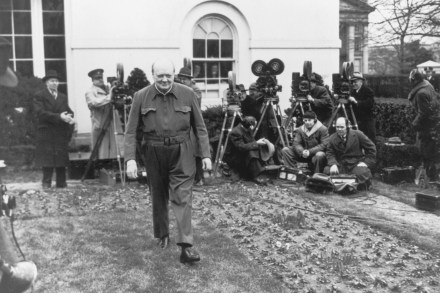
The idea for the latest challenge was sent in by a reader who, inspired by the emergence of the ‘slanket’, the ‘cardigown’ and the ‘onesie’, suggested inviting competitors to invent new garments and provide definitions. It made for an excellent comp. It has been claimed that we have Sir Winston Churchill to thank for the onesie. Britain’s wartime leader designed his ‘siren’ suit all-in-one with practical considerations in mind, but ended up with quite a collection in a variety of colours, patterns and fabrics. He once wore one to the White House, and so impressed the president’s wife that she announced she was having one made for her husband. Both Brian Murdoch and W.J.

Fashion

From our UK edition

In Competition No. 2922 you were invited to invent new garments and provide definitions. Thanks to the reader who, inspired by the emergence of the ‘slanket’, the ‘cardi-gown’ and the ‘onesie’, suggested this excellent comp. It has been claimed that we have Sir Winston Churchill to thank for the onesie, which can be traced back to his siren suit. Britain’s wartime leader designed this all-in-one with practical considerations in mind, but ended up with quite a collection in a variety of colours, patterns and fabrics. He once wore one to the White House, and so impressed the president’s wife that she said she was having one made for her husband. Both Brian Murdoch and W.J.

Spectator competition: clerihews about fictional characters (plus: bad sex award)

From our UK edition

The clerihew is a comic four-line (AABB) biographical poem characterised by metrical irregularity and awkward rhyme. The first line is often the subject’s name. Or, to put it another way: E.C. Bentley Quite accidently Invented this form of wit, And this is it. (Anon) Here is another clerihew inspired by the form’s inventor, this one written by Michael Curl: E.C. Bentley Mused while he ought to have studied intently; It was this muse That inspired clerihews. The call for clerihews about fictional characters attracted a sizeable postbag and there was much to applaud in an entry full of wit and whimsy. The winners below fought off stiff opposition to bag £8 per clerihew. D.A. Prince Crow didn’t want it so.

Fictihew

From our UK edition

In Competition No. 2921 you were invited to write a clerihew about a fictional character. The clerihew is a comic four-line (AABB) biographical poem characterised by metrical irregularity and awkward rhyme. The first line is often the subject’s name. Or, to put it another way: E.C. Bentley Quite accidently Invented this form of wit, And this is it. (Anon) Here is another Bentley-inspired clerihew, this one written by Michael Curl: E.C. Bentley Mused while he ought to have studied intently; It was this muse That inspired clerihews. There was much to applaud in an entry full of wit and whimsy. Those printed below fought off stiff opposition to bag £8 per clerihew. Crow didn’t want it so. Given another chance he wouldn’t choose to be muse to Ted Hughes. D.A.