Lucy Vickery

Spectator competition winners: unlikely forecasts for the year ahead

From our UK edition

In Competition No. 3330 you were invited to submit some improbable forecasts, in verse, for the year ahead. Things you deemed unlikely to happen this year ranged from the predictable – peace in Ukraine, a reversal of climate change – to the whimsical: Donald Trump as the next Pope and Snoop Dogg eloping with Penny Mordaunt. The winners earn £25. Around the UK coast he’ll steerHis rusty, overladen barge,locating homes for refugees…What are you up to now, Farage? If punishment that’s capitalCan find itself again restored,There’ll be a chance for Penny M,To demonstrate her massive sword. Incompetently, CleverlyCalled Stockton some disgusting names,But, in this topsy-turvy world,The New Year holds great hopes for James.


Festive villanelle

From our UK edition

In Competition No. 3329 you were invited to submit a villanelle on a festive theme.    Artistry and variety abounded in a most enjoyable entry. Hats off, everyone, and thank you for your brilliance and versatility over the year. The winners below earn £30. Happy Christmas, one and all. It seems it was a century ago That we had dreams of Christmas being white, When winter kissed our cheeks with flakes of snow. Magic there was that childhood could bestow When wonder closed our eyes on Christmas night. It seems it was a century ago. Peace and goodwill for everyone would flow With midnight presents sent for our delight, When winter kissed our cheeks with flakes of snow.

Double time

From our UK edition

In Competition No. 3328 you were invited to submit a poem on a topical theme in which the last two words of each line rhyme. Some competitors were unsure whetherI meant that the last two words in each line should rhyme with each other, or with the next line. I meant the former, but given the ambiguous rubric either approach was acceptable. My foggy thinking didn’t stop you from producing a cracking entry and, in an especially fiercely contested week, a prize of £25 is awarded to the winners below and honourable mentions go to Alan Millard, Max Ross and Brian Murdoch. Statement done – ‘Who wins?’ begins; ‘Who gets an untoward reward?’ That pensioner’s a well-off toff, This claimant does – with scorn – shirk work.

Spectator competition winners: Mrs Malaprop’s Julius Caesar

From our UK edition

In Competition No. 3327 you were invited to submit a rough resumé of the plot of a Shakespeare play such as might have been attemptedby a well-known fictional character of your choice. Literary sleuths featured prominently in the entry, with Poirot, Miss Marple and Sherlock Holmes all making eye-catching appearances. A commendation to George Simmers for Professor McGonagall’s take on Macbeth and to John O’Byrne, who also gave us the Scottish Play, but through the eyes of Molly Bloom. The winners nab £25. Prince Hamlet is a melankoly dane who rite his girlfrend soppy poetry, chiz. He hav been played by many grate british actors from shaxpeere’s time to the modern da. When his father’s ghost apear to him and sa, ‘I hav been murdered.

Spectator competition winners: John Milton’s ‘Three Blind Mice’

From our UK edition

In Competition No. 3326 you were invited to submit a nursery rhyme recast in the style of a well-known poet. One of my favourite twists on a nursery rhyme is Lewis Carroll’s ‘Twinkle, Twinkle, Little Bat’, the Mad Hatter’s party piece in Alice’s Adventures in Wonderland. Twinkle, twinkle, little bat!How I wonder what you’re at!Up above the world you fly,Like a teatray in the sky.   But ‘Twinkle, Twinkle’ popped up only occasionally in the entry, outflanked by ‘Humpty Dumpty’, ‘Jack and Jill’ and, star of the show, ‘Three Blind Mice’. David Silverman leads the way with Milton’s version. He and his fellow winners take £25.

Spectator competition winners: Bertie Wooster meets 007

From our UK edition

In Competition No. 3325 you were invited to describe an encounter between Bertie Wooster and James Bond in the style of P.G. Wodehouse. The seed for this popular challenge was Ben Schott’s much-praised 2018 homage to P.G. Wodehouse, Jeeves and the King of Clubs, in which Jeeves and Wooster enter into the world of international espionage. A second instalment, Jeeves and the Leap of Faith, was labelled ‘pastiche-perfect’ by the TLS. As well as being a testament to Schott’s skill, their success bears out what Evelyn Waugh said about Wodehouse: ‘Mr Wodehouse’s idyllic world can never stale. He will continue to release future generations from captivity that may be more irksome than our own.’ Commendations, in a hotly contested week, go to Sarah Drury, D.A.

Spectator competition: autumnal nonsense poems

From our UK edition

In Competition No. 3324 you were in-vited to submit nonsense verse on an autumnal theme. W.J. Webster confessed that ‘sense kept breaking in’ to his entry, but the line between sense and nonsense is not always clear. As Anthony Burgess observed, in a review of Geoffrey Grigson’s Faber Anthology of Nonsense Verse, Mr Grigson ‘wisely evades, in his preface, anything like a definition of nonsense. He knows that we will only know what nonsense is when we know the nature of sense. Nonsense is something we think we can recognise, just as we think we can recognise poetry, but there has to be an overlap with what we think we can recognise as sense.’ The winners below earn £25.

Spectator competition winners: Charles Dickens pours scorn on Pride & Prejudice

From our UK edition

In Competition No. 3323 you were invited to submit an extract from a book review written by a well-known author which trashes a work by another well-known author that is generally deemed to be a classic. Virginia Woolf took a dim view of Ulysses. In a 1922 diary entry, she wrote: ‘I finished Ulysses and think it a misfire… The book is diffuse. It is brackish. It is pretentious.’ Graham Greene was no fan either, judging it to be ‘a big bore… really one of the most overrated classics’. Then there is H.L. Mencken’s characteristically pithy verdict on The Great Gatsby: ‘A glorified anecdote.

Spectator competitions: poems about the Sycamore Gap tree

From our UK edition

In Competition No. 3322 you were invited to submit a poem reflecting on the fate of the Sycamore Gap tree, planted in the late 19th century by Newcastle lawyer John Clayton. Antony Gormley, who has a studio in Hexham near the site of the felled tree, has described it as ‘a marker in the lie of the land’. Talk of replacing it with a sculpture is wrongheaded, he said, quoting fellow artist Mark Wallinger: ‘A sculpture and a tree are very different, and in most cases a tree is always preferable.’ Several competitors drew to great effect on Manley Hopkins’s 1879 ‘Binsey Poplars’, inspired by the felling of a row of poplar trees on the bank of the River Thames. David Shields earns a commendation. The winners below scoop £25.

Spectator competition winners: finding love in unlikely locations

From our UK edition

In Competition No. 3321 you were invited to provide a love scene from a novel set in a location that might not be considered conducive to romance. There was a distinctly scatological flavour to this week’s postbag. Rubbing shoulders with the abattoirs and morgues were sewage treatment plants and waste-contaminated waters. Adrian Fry’s description of romance blossoming in a post-thermonuclear apocalypse government bunker earns an honourable mention: ‘Their past as local authority officials retreated to irrelevance, their future as irradiated cannibals above ground proved literally unimaginable…’. As does Nick MacKinnon’s glue factory tryst: ‘Julianna had been warned about the men in Industrial Adhesives.

Spectator competition winners: Epicureanism vs Stoicism

From our UK edition

In Competition No. 3320 you were invited to submit a poem extolling Epicureanism over Stoicism or the other way round. Stoicism is enjoying something of a revival, embraced by everyone from billionaire tech bros to self-help devotees. But Mary Beard is no fan of Marcus Aurelius and has said that she finds it ‘mystifying’ that people could be interested in ‘a philosophy that, if you looked at it really hard, was nasty, fatalistic, bordering on fascist’. The philosopher Catherine Wilson, author of How to Be an Epicurean: the Ancient Art of Living Well, doesn’t rate Stoicism either, arguing that, in the modern age, we should be looking to Epicurus and his followers for guidance on how to live a good life.

Spectator competition winners: what Elon Musk’s home says about him

From our UK edition

In Competition No. 3319 you were invited to supply a description of the house of a well-known figure from the field of fact or fiction that provides clues to their personality. This assignment was prompted by Laura Freeman’s reference in a Spectator articleto ‘Great Men’s Houses’, an essay Virginia Woolf wrote for Good Housekeeping in 1932. In it she describes a visit to the Chelsea house of Thomas and Jane Carlyle, observing: ‘One hour spent in 5 Cheyne Row will tell us more about them and their lives than we can learn from all the biographies.’ Entries that impressed and amused me included Nick MacKinnon’s J.G.

Spectator competition winners: pen portraits of Seamus Heaney

From our UK edition

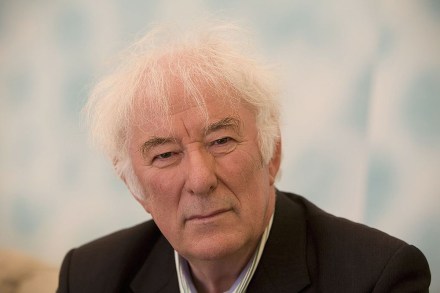
In Competition No. 3318 you were invited to provide a verse portrait of Seamus Heaney by any other poet, living or dead. This challenge marks the tenth anniversary, last month, of Heaney’s death. Once asked if anything in his work struck him as appropriate as an epitaph, the Nobel Laureate quoted from his translation of Oedipus at Colonus by Sophocles. Talking of the old king who dies and vanishes into the earth, the play’s Messenger says: ‘Wherever that man went, he went gratefully.’ Your portraits, in a modest-sized but affecting entry, touched on many themes of Heaney’s work: love, loss, family, nature, memory, politics. Those below take £25. They cut with shovels, dad and dad. He digs in with his pen instead.

Spectator competition winners: why you should never open a novel with the weather

From our UK edition

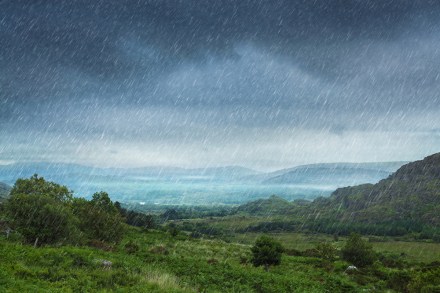
In Competition No. 3317 you were invited to provide an opening to a novel that bears out Elmore Leonard’s tip to writers: ‘Never open a book with weather.’ Leonard’s other bêtes noires, outlined in his 2007 10 Rules of Writing, include prologues, exclamation marks and the modification of the word ‘said’ with an adverb. But his most important rule, he said, the one that sums up the ten was: ‘If it sounds like writing, I rewrite it.’ On which note, over to your laboured, florid, banal offerings. They were a hoot to judge and earn their authors £25. The winds perform their lucubrations, crossing the silent furze, shifting hither and thither like shadowy thieves intent on looting the moorland, lifting the vegetation leaf by leaf, prickle by vicious prickle.

Spectator competition winners: Rishi’s five pledges in verse

From our UK edition

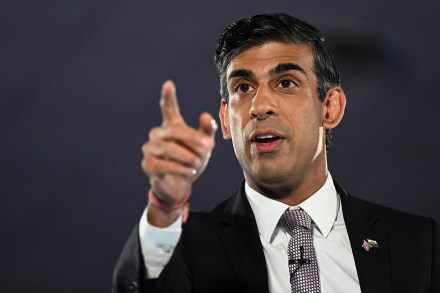
In Competition No. 3316, you were invited to recast Rishi Sunak’s five pledges in verse form. The tone this week was one of acerbic mischief. A nod to Ann Drysdale, who earns a commendation, and to Elizabeth Bishop, John Masefield and W.S. Gilbert, to whom entries below owe a debt. Prizes of £30 land in the laps of the winners. Five promises I pledge to save our nation And just like Half a Sixpence, Half a Crown, By halves I do things, so I’ll halve inflation And keep demands for higher wages down. Our economic record is appalling But, like Jack’s beanstalk, soon you’ll see it grow. I’ll make sure that our national debt keeps falling, And with the magic gold pay all we owe.

Spectator competition winners: how the poinsettia became – origin stories of flowers

From our UK edition

In Competition No. 3315, you were invited to invent a legend that explains the origin and nature of a flower other than a sunflower or narcissus, whose well-known origin story tells of Narcissus, the beautiful youth who draws the vengeance of the gods, falls in love with his own reflection in the waters of a spring and, in Ovid’s version, wastes away, the flower that bears his name springing up where he died. The winners below take £25. ‘I will come to you,’ said the young man, ‘under cover of darkness. Wait by the sea-cliff’s rocky edge, where I will surprise you.’ ‘But come to me in folds of silk, a tapestry on your tongue,’ said the nymph. ‘For your beautiful robes catch everyone’s eye. I am half in love with the way they cling.

Spectator competition winners: Clerihews on well-known philosophers

From our UK edition

In Competition No. 3314, you were invited to submit clerihews (two couplets, AABB, metrically clunky, humorous in tone) on well-known philosophers. Eric Idle’s ‘Bruces’ Philosophers Song’ cast a long shadow over a large and jolly postbag. ‘Extraordinarily hard to avoid couplets from the Monty Python song!’ wrote A.H. Harker in a note accompanying his entry.Brian Murdoch was thinking along the same lines, as were R.M. Goddard and Nick MacKinnon: ‘We petty clerihewers can only peep about beneath the huge legs of Eric Idle…’ An honourable mention, nonetheless, to Matt Quinn, Donald Mack and Anthony Stadlen, and £8 each to the winners below. Friedrich Nietzsche, Emerging glumly from a monster movie double feature, Said, ‘Godzilla is dead.

Spectator competition winners: the worm who came back to life after 46,000 years

From our UK edition

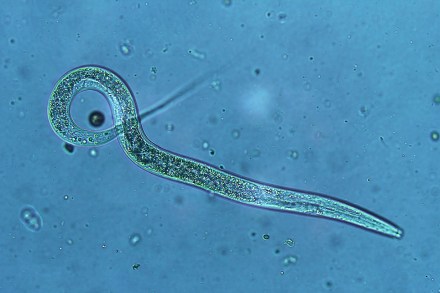
In Competition No. 3313, you were invited to supply a poem about the worms that were resurrected by scientists after being frozen in the Siberian permafrost for 46,000 years. The tiny roundworms, buried deep underground since the late Pleistocene, were brought back to life by being immersed in water and transported to Germany – in a scientist’s pocket – to see what lessons the creatures might yield for 21st-century humanity. (They were, it was discovered, able to survive extreme low temperatures by entering a dormant state called cryptobiosis.) Their remarkable story produced a smart, lively and varied entry. A commendation to W.J.

Spectator competition winners: Miss Havisham’s wedding cake and other recipes by fictional characters

From our UK edition

In Competition No. 3312, you were invited to supply a contribution to a book of recipes invented by fictional characters, entries being for the Carrollean, Dickensian or Shakespearean sections. Commendations to Martyn Hurst and Jon Robins, both of whom provided Uriah Heep’s recipe for humble pie, and to Mike Morrison’s Hamlet (‘Sous-vide or not sous-vide, that is the question…’); a dishonourable mention to Joe Houlihan’s Fagin (‘in a pilfery pie the ingredients is never the same, being, as I like to say, bestowed by the Almighty… some carrots from the parson’s garden, lifted of a black night; a pound of beefsteak, vanished from beneath the very beak of old Butcher Barnes…’); and a chef’s kiss to the winners below who earn £25.

Spectator competition winners: songs for a parliamentary songbook

From our UK edition

In Competition No. 3311, you were invited to submit a song suitable for inclusion in a parliamentary songbook. In an entry in which most scored pleasingly high on singability, W.S. Gilbert rubbed shoulders with Simon & Garfunkel and the Kinks. An honourable mention to Emily Matthews, but leading the winners below, who take £30 each, is Bill Greenwell’s twist on ‘Dedicated Follower of Fashion’.