Lucy Vickery

Spectator competition winners: #MeToo lit

From our UK edition

Anthony Horowitz’s reflections on creating female characters for his latest Bond novel prompted me to invite you to provide an extract from a well-known work that might be considered sexist by today’s standards and rework it for the #MeToo age. Highlights in a thoroughly enjoyable entry included Brian Allgar’s Constance Chatterley instructing Mellors in the importance of foreplay, Paul Freeman’s recasting of Orwell’s antihero as Weinstein Smith and Hugh King addressing the gender stereotyping in The Tale of Peter Rabbit. The worthy winners, printed below, earn £20 each. Sylvia Smith/Sonnet 18 ‘Shall I compare thee to a summer’s day?’; Well, frankly, Will, I’d rather you did NOT.

#MeToo lit

From our UK edition

In Competition No. 3053, an assignment prompted by Anthony Horowitz’s reflections on creating female characters for his latest Bond novel, you were invited to provide an extract from a well-known work that might be considered sexist by today’s standards and rework it for the #MeToo age. Highlights in a thoroughly enjoyable entry included Brian Allgar’s Constance Chatterley instructing Mellors in the importance of foreplay, Paul Freeman’s recasting of Orwell’s antihero as Weinstein Smith and Hugh King addressing the gender stereo-typing in The Tale of Peter Rabbit. The worthy winners, printed below, earn £20 each.   ‘Shall I compare thee to a summer’s day?’; Well, frankly, Will, I’d rather you did NOT.

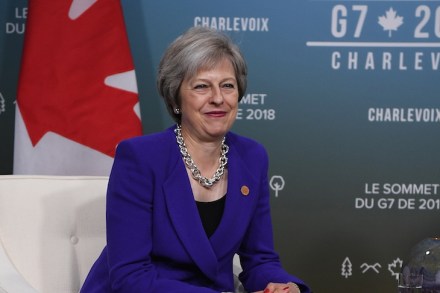
Spectator competition winners: a sonnet on Theresa May’s rictus

From our UK edition

The request for sonnets inspired by a well-known contemporary figure’s characteristic feature went down a storm. Entries ranged far and wide, from Victoria Beckham’s pout via Gorbachev’s birthmark to the rise – and fall – of Anthony Weiner’s penis. But both John O’Byrne and Barrie Godwin used Sonnet 18 to hymn hairstyles – Donald Trump’s and Boris Johnson’s respectively (Shall I compare thee to a bale of hay?/ Thou art more windblown and intemperate…’) There was a spot of preposition-related confusion this week – my fault entirely – and sonnets either ‘to’ or ‘on’ were acceptable. Honourable mentions go to Mike Morrison, Jonathan Pettman, Douglas G.

A sonnet on it

From our UK edition

In Competition No. 3052 you were invited to supply a sonnet inspired by a well-known contemporary figure’s characteristic feature. There was a spot of preposition-related confusion this week — my fault entirely — and sonnets either ‘to’ or ‘on’ were acceptable.   Entries ranged far and wide, from Victoria Beckham’s pout via Gorbachev’s birthmark to the rise — and fall — of Anthony Weiner’s penis. But both John O’Byrne and Barrie Godwin used Sonnet 18 to hymn hairstyles — Donald Trump’s and Boris Johnson’s respectively (Shall I compare thee to a bale of hay?/ Thou art more windblown and intemperate…’).   Honourable mentions go to Mike Morrison, Jonathan Pettman, Douglas G.

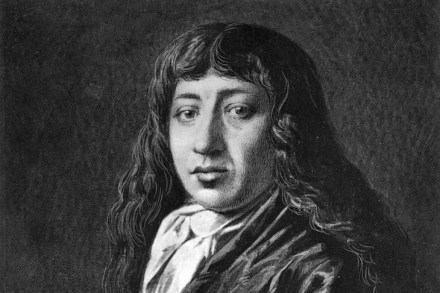
Spectator competition winners: a Pepys’-eye view on the royal wedding

From our UK edition

The latest challenge, to supply an entry by a well-known diarist describing the wedding day of Prince Harry and Meghan Markle, saw you at your waspish best. Here’s Noël Coward’s verdict on the groom: ‘Massively butch but far too hairy, when he wasn’t even in the Navy. Are beards de rigueur these days?…’ And Alan Clark on Meghan Markle (though he spares us a reference to her ‘juggling globes’): ‘Harry initially appeared to have done equally well with the succulent Miss Markle, but a glance at this morning’s Telegraph informed me not only that she is of below-stairs stock but a bloody yank…’ Honourable mentions go to Basil Ransome-Davies and Rob Stuart for those contributions. Sylvia O.

Royal treatment | 7 June 2018

From our UK edition

In Competition No. 3051 you were invited to supply an entry by a well-known diarist describing the wedding day of Prince Harry and Meghan Markle.   There was a bracingly waspish streak running through your contributions. Here’s Noël Coward’s verdict on the groom: ‘Massively butch but far too hairy, when he wasn’t even in the Navy. Are beards de rigueur these days?

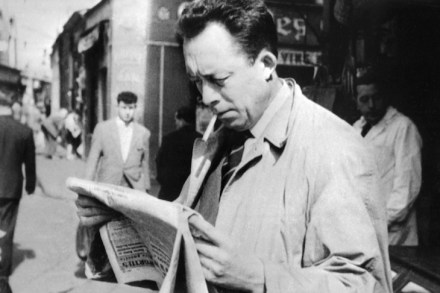
Spectator competition winners: Camus on Camus

From our UK edition

The germ of the latest challenge, to submit a school essay written by a well-known author about one of their works, was the revelation that the novelist Ian McEwan helped his son to write an A-level essay about one of his books (Enduring Love), only to be awarded a less than stellar ‘C+’. Strong performers among the runners-up included Douglas G. Brown’s Mario Puzo, who clearly thinks that only fools pursue a good grade by bothering to engage with the text: ‘I expect an “A” on this report,’ he writes. ‘We wouldn’t want a fire here in St. Vitus’ School, would we?’ Commendations also go to John Morrison and Frank Upton but the winners, below, shoot straight to the top of the class, scooping £25 each.

Self appraisal

From our UK edition

In Competition No. 3050 you were invited to submit a school essay written by a well-known author, living or dead, about one of their works. The germ of this challenge was the revelation that the novelist Ian McEwan helped his son to write an A-level essay about one of his books (Enduring Love), only to be awarded a less than stellar ‘C+’. The winners below did rather better, and shoot straight to the top of the class, scooping £25 each. Teacher’s pet Alison Zucker gets a well-done sticker and the bonus fiver.   I read The Outsider today. Or maybe it was yesterday, I can’t remember. I don’t think very much happened in it, though there may have been a murder at some point. Or not. I don’t care either way. I struggle to understand why M.

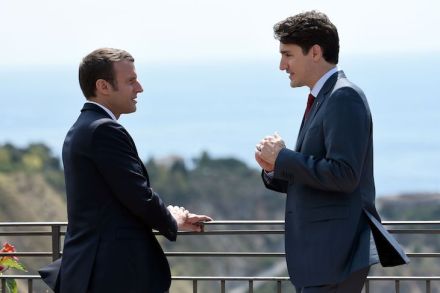
Spectator competition winners: playing Cluedo with Trudeau, getting it on with Macron…

From our UK edition

This time round, competitors were asked to provide poems about a bromance. Pairings including Friedrich and Karl, Laurel and Hardy, Nigel and Donald lit up an entry that was witty, touching and generally pleasingly varied. I liked Chris O’Carroll’s ‘Boris and Donnie’, a twist on Jimmie Rodgers’s ‘Frankie and Johnny’. And Bill Greenwell had the same idea, only with David and Jonathan from the Book of Samuel as the loved-up duo. Commendations also go to Shirley Curran, Jonathan Pettman, A.C. Smith and John Morrison. Basil Ransome-Davies’s entry transported me back to the 1970s, when real men wore chunky cream-and-brown hand-knit cardigans. He and his fellow winners, printed below, are rewarded with £25 each.

A fine bromance

From our UK edition

In Competition No. 3049 you were invited to submit a poem about a bromance.   Pairings including Friedrich and Karl, Laurel and Hardy, Nigel and Donald lit up an entry that was witty, touching and generally pleasingly varied. I liked Chris O’Carroll’s ‘Boris and Donnie’, a twist on Jimmie Rodgers’s ‘Frankie and Johnny’. And Bill Greenwell had the same idea, only with David and Jonathan from the Book of Samuel as the loved-up duo. Commendations also go to Shirley Curran, Jonathan Pettman, A.C. Smith and John Morrison.   Basil Ransome-Davies’s entry transported me back to the 1970s, when real men wore chunky cream-and-brown hand-knit cardigans. He and his fellow winners, printed below, are rewarded with £25 each.

Spectator competition winners: Brectitude, huwbris, posteritoys – new ways with old words

From our UK edition

Inspiration for the latest challenge came from across the pond, courtesy of the Washington Post’s Style Invitational column, whose regular neologism-themed contests are always a blast. You were asked to take an existing word and alter it by a) adding a letter, b) changing a letter, and c) deleting a letter — and to supply definitions for all three new words. Though many entries were partially successful, few competitors managed to score a bull’s-eye in all three sections of the challenge. A fiver per definition goes to those below who hit the spot with just one or two.

New word order | 17 May 2018

From our UK edition

In Competition No. 3048 you were invited to take an existing word and alter it by a) adding a letter, b) changing a letter, and c) deleting a letter — and to supply definitions for all three new words.   Inspiration for this challenge came from across the pond, courtesy of the Washington Post’s Style Invitational column, whose regular neologism-themed contests are always a blast.   Though many entries were partially successful, few competitors managed to score a bull’s-eye in all three sections of the challenge. A fiver per definition goes to those printed below who hit the spot with just one or two.

Spectator competition winners: would you give Oliver Cromwell a job?

From our UK edition

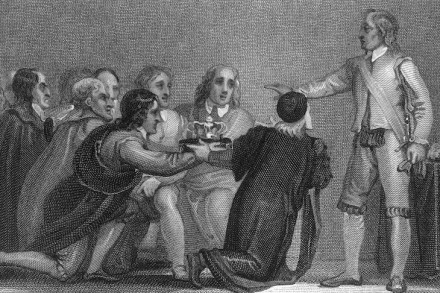
The latest challenge asked competitors to supply an imaginary testimonial for a high-profile figure that is superficially positive but contains hidden warnings to a potential employer. This was an exercise in the artful deployment of ambiguity, as displayed in Robert J. Thornton’s L.I.A.R. The Lexicon of Intentionally Ambiguous Recommendations, a handbook for those who, whether out of kindness or fear of litigation, wish the precise meaning of their ‘recommendations’ to remain opaque.

Between the lines | 10 May 2018

From our UK edition

In Competition No. 3047 you were invited to supply an imaginary testimonial for a high-profile figure that is superficially positive but contains hidden warnings to a potential employer.   This was an exercise in the artful deployment of ambiguity, as displayed in Robert J. Thornton’s L.I.A.R. The Lexicon of Intentionally Ambiguous Recommendations, a handbook for those who, whether out of kindness or fear of litigation, wish the precise meaning of their ‘recommendations’ to remain opaque.

Spectator competition winners: poems back to front, and gutted

From our UK edition

The latest challenge asked you to compose a poem beginning with the last line of any well-known poem and ending with its first line, the new poem being on a different subject from the original. This was a wildly popular comp, which elicited a witty and wide-ranging entry. The effort of extracting six winners from such a palmary bunch meant that I felt more than usually sorry for those who narrowly missed out. Step forward and take a bow, Paul Freeman, Jan Snook, Joseph Conlon, D.A. Prince and James Bench-Capon, who used both ends of the Divine Comedy for a poem about the hell of traffic jams. The winners below, chosen only after much humming and hawing, earn £30 each.

First and last

From our UK edition

In Competition No. 3046 you were invited to supply a poem beginning with the last line of any well-known poem and ending with its first line, the new poem being on a different subject all together.   This was a wildly popular comp, which elicited a witty and wide-ranging entry that was both pleasurable and painful to judge. The winners below, chosen only after much humming and hawing, earn £30 each.     I am the captain of my soul: Scant comfort when I’m six feet under Inside a crude and loamy hole. Has someone slipped up here, I wonder?   I thought that I would hob and nob With angels, all their wings aquiver, But I lie, stripped of pulse and throb, Inside some plywood, doomed to shiver.

Spectator competition winners: euphemistically speaking

From our UK edition

The latest challenge asked for poems about euphemisms. You avoided politics and sex (mostly), preferring, like Monty Python’s Dead Parrot sketch, to focus on the language of dying and the words and expressions we call on to avoid the D-word. And there are plenty of them — David Crystal has written that there are more than 1,000 words for death categorised in the Historical Thesaurus. I much admired Alanna Blake’s twist on Keats’s sonnet (‘Much have I dabbled in linguistic lore/ And many inexactitudes have used…’) and Max Ross’s neat acrostic. Hamish Wilson, Max Gutmann, Ann Drysdale and David Silverman also deserve a special mention. The prizewinners printed below earn £30 each. The extra fiver belongs to Bill Greenwell.

Mind your language | 26 April 2018

From our UK edition

In Competition No. 3045 you were invited to provide a poem about euphemisms.   You avoided politics and sex (mostly), preferring instead to focus on the language of dying and the words and expressions that enable us to sidestep the D-word (according to David Crystal, there are more than 1,000 words for death categorised in the Historical Thesaurus). I much admired Alanna Blake’s twist on Keats’s sonnet (‘Much have I dabbled in linguistic lore/ And many inexactitudes have used…’) and Max Ross’s neat acrostic. Hamish Wilson, Max Gutmann, Ann Drysdale and David Silverman also deserve a special mention. The prizewinners printed below earn £30 each. The extra fiver belongs to Bill Greenwell.

Spectator competition winners: the facts of life according to Dumbledore

From our UK edition

The call for lessons in the facts of life courtesy of a well-known character in fiction sent many of you running to children’s stories for inspiration. While Jayne Osborn recruited Dr Seuss — ‘Doing sex is good fun, and it’s easy to do./ Let me demonstrate, using Thing One and Thing Two…’ — Ted Harrison imagined know-all Owl’s attempt to enlighten his fellow inhabitants of Hundred Acre Wood: “‘The procrastination of the species is achieved through sectional hypocaust between contenting members….” Pooh’s attention began to wander. He started to think of lunch, and then tea and of honey sandwiches at bed-time and began dreaming of being sticky and happy.

Let’s talk about sex | 19 April 2018

From our UK edition

In Competition No. 3044 you were invited to provide a lesson in the facts of life courtesy of a well-known character in fiction.   There is space only for me to commend Jayne Osborn, who recruited Dr Seuss: ‘Doing sex is good fun, and it’s easy to do./ Let me demonstrate, using Thing One and Thing Two…’ and salute the prizewinners below, who each receive £25. As any fule kno, gurls are utterly wet and weedy and no boy in his rite mind wish to speke or pla with them. This is why they are kept in there own skools with names lik gingham hall, where they will not hav to witness the savige antiks of boys and we will not be driven madd by there silvery giggles.