Lucy Vickery

Spectator competition winners: Halloween/ Occurs between/ The end of October/ And the start of not being sober: calendrical clerihews

From our UK edition

Your latest challenge was to compose clerihews about any date in the calendar. I was very grateful recently to eagle-eyed John O’Byrne, who drew my attention to the fact that the closing date for Competition No. 3125 was not 20 November, as printed in the magazine, but 13 November. Even better, he did it in clerihew form: The 20 November, Now that I remember, Is the closing date not for 3125 but 3126 — So herewith my quick fix! Clerihews always go down well and this challenge netted a whopping entry.

It’s a date!

From our UK edition

In Competition No. 3124 you were invited to compose clerihews about any date in the calendar. I was very grateful recently to eagle-eyed John O’Byrne, who drew my attention to the fact that the closing date for Competition No. 3125 was not 20 November, as printed in the magazine, but 13 November. Even better, he did it in clerihew form:   The 20 November, Now that I remember, Is the closing date not for 3125 but 3126 — So herewith my quick fix!   Clerihews always go down well and this challenge netted a whopping entry.
Spectator competition winners: ‘By Waterloo Station I sat down and…’

From our UK edition

The latest challenge called for a poem that begins ‘By Waterloo Station I sat down and…’. Some of you begged, some swore, others slept. But most, in a pleasingly sizable entry, took their lead from weeping Elizabeth Smart. There was a welcome influx of newcomers this week, alongside the familiar names, and the tone ranged from the comic to the poignant. Honourable mentions go to Paul Freeman, Gloria Brown, Ian Barker, Tim Raikes and Alan Mil-lard. The winners below pocket £30 each and include George Simmers’s natty twist on Matthew Arnold’s friend Arthur Hugh Clough’s ‘Dipsychus’ (‘How Pleasant It Is to Have Money...’). Nick MacKinnon By Waterloo Station I sat down and prayed that the 2.

Station to station

From our UK edition

In Competition No. 3123 you were invited to submit a poem that begins ‘By Waterloo Station I sat down and …’.   Some of you begged, some swore, others slept. But most, in a pleasingly sizable entry, took their lead from weeping Elizabeth Smart. There was a welcome influx of newcomers this week, alongside the familiar names, and the tone ranged from the comic to the poignant.   Honourable mentions go to Paul Freeman, Gloria Brown, Ian Barker, Tim Raikes and Alan Millard. The winners below pocket £30 each and include George Simmers’s natty twist on Matthew Arnold’s friend Arthur Hugh Clough’s ‘Dipsychus’ (‘How Pleasant It Is to Have Money…’).   By Waterloo Station I sat down and prayed that the 2.

Spectator competition winners: ‘It’s no go the continent, it’s no go the Riviera…’ Poems about Thomas Cook

From our UK edition

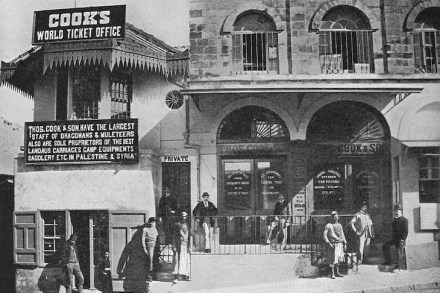
The latest challenge, a mournful nod to the recently defunct 178-year-old travel company, called for poems about Thomas Cook. The firm may have hit the buffers, but many entries featured its eponymous founder’s original offering — railway travel and Temperance tours — which would be just the job in our clean-living, climate change-challenged times. In a large and excellent crop, which had echoes of Keats, Kipling, MacNeice and Thomas Hood, the six below stood out and earn their authors £25. Basil Ransome-Davies James Cook explored, and met the end Lèse-majesté procures, But Thomas Cook began the trend For organising tours. He was dynamic, fired with hope, And thus the business boomed, Though nonetheless its moral scope Was tragically foredoomed.

Much have I travelled

From our UK edition

In Competition No. 3122, to mark the demise of the 178-year-old travel company, you were invited to submit a poem about Thomas Cook. The firm may have hit the buffers, but many entries featured its eponymous founder’s original offering — railway travel and Temperance tours — which would be just the job in our clean-living, climate-change-challenged times.   In a large and excellent crop, the six below stood out and earn their authors £25.   James Cook explored, and met the end Lèse-majesté procures, But Thomas Cook began the trend For organising tours.   He was dynamic, fired with hope, And thus the business boomed, Though nonetheless its moral scope Was tragically foredoomed.

Spectator competition winners: 50 ways to leave the White House

From our UK edition

This week’s assignment was to write the lyrics to a song entitled ‘50 Ways to Leave the White House’. While the brief steered you in the direction of Paul Simon’s 1975 hit (the inspira-tion for whose distinctive chorus was a rhyming game played with his infant son), I didn’t specify that you had to use that as your template and competitors drew inspi-ration from a variety of other well-known songs. Honourable mentions go to David Shields, Katie Mallett and Rachael Churchill. The winners below earn £30 each. Ian Barker The problem is all about having a legacy. You need to be sure they will remember you, you       see. When it comes down to it I think you will agree, There must be 50 ways to leave the White House.

Going concern

From our UK edition

In Competition No. 3121 you were invited to submit a song entitled ‘50 Ways to Leave the White House’.   While the brief steered you in the direction of Paul Simon’s 1975 hit (the inspiration for whose distinctive chorus was a rhyming game played with his infant son), I didn’t specify that you had to use that as your template, and some competitors drew inspiration from other well-known songs.   Over to the winners, who win £30 each. The problem is all about having a legacy. You need to be sure they will remember you, you see. When it comes down to it I think you will agree, There must be 50 ways to leave the White House.

Spectator competition winners: ‘Bloody men are like bloody rockets’: famous poets on the Apollo 11 moon landing

From our UK edition

For the latest competition you were invited to step into the shoes of well-known poets and give their reflections on the Apollo 11 moon landing, 50 years on. Cath Nichols’s enjoyable entry looked back on the lot of the Apollo wives through Wendy Cope’s acerbic eye. Nick MacKinnon was also an accomplished Cope impersonator: Bloody men are like bloody rockets, you wait nearly five billion years and as soon as one feels up your craters another Apollo appears... Rufus Rutherford, channelling Basho, submitted a charming haiku. And Robert Schechter, as Ogden Nash, also kept it brief: To the marvellous event that happened fifty        years ago I dedicate this ode. The first man on the moon, you say?

Back space

From our UK edition

In Competition No. 3120 you were invited to submit a poem reflecting on the Apollo 11 moon landing written in the style of the poet of your choice.   Cath Nichols’s enjoyable entry looked back on the lot of the Apollo wives through Wendy Cope’s acerbic eye. Nick MacKinnon was also an accomplished Cope impersonator:   Bloody men are like bloody rockets, you wait nearly five billion years and as soon as one feels up your craters another Apollo appears…   Rufus Rutherford, channelling Basho, submitted a charming haiku. And Robert Schechter, as Ogden Nash, also kept it brief: To the marvellous event that happened fifty years ago I dedicate this ode. The first man on the moon, you say? That was pretty good, but what I had in mind was Abbey Road.

Spectator competition winners: poems about the yellowhammer

From our UK edition

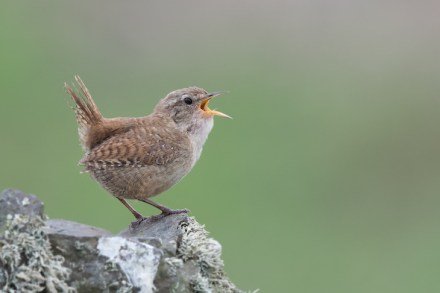
For the latest competition you were invited to submit a poem about yellowhammers. This sparrow-sized songbird has inspired poetry from John Clare’s lovely ‘The Yellowhammer’s Nest’ to Robert Burns’s unlovely ‘The Yellow, Yellow Yorlin’ (‘But I took her by the waist, an’ laid her down in haste/, For a’ her squakin’ an’ squalin…’ and you took up this challenge with gusto. Strong performers, in a top-notch and wide-ranging entry, included Bill Greenwell and David Shields. The winners, below, earn £25 each. W.J. Webster A certain subtle, govian fellow, When asked what code name he preferred, Chose ‘hammer’ as a striking word Then made his point by adding ‘yellow’.

Watch the birdie

From our UK edition

In Competition No. 3119 you were invited to submit a poem about yellowhammers. This sparrow-sized songbird has inspired poetry from John Clare’s lovely ‘The Yellowhammer’s Nest’ to Robert Burns’s unlovely ‘The Yellow, Yellow Yorlin’ (‘But I took her by the waist, an’ laid her down in haste/, For a’ her squakin’ an’ squalin…’) You took up this challenge with gusto and delivered a top-notch and wide-ranging entry. The winners earn £25 each.   A certain subtle, govian fellow, When asked what code name he preferred, Chose ‘hammer’ as a striking word Then made his point by adding ‘yellow’.

Spectator competition winners: monstrous short stories

From our UK edition

Your latest challenge, inspired by Joan Didion’s wonderful essay of that title, was to write a short story with the last line ‘I can’t get that monster out of my mind’. Another notable American female essayist, Susan Sontag, has come in for a bit of stick in these pages over the past few weeks, and she popped up again, in Hugh King’s short story: ‘Susan Sontag, naked, terrifying, had come to him in the night, pinned him down with hawser-like arms, and demanded to know his views on post-structuralism.’ Other memorable ‘monsters’ included Beowulf, the Minotaur and Jacob Rees-Mogg. The winners earn £25 each.

Here be monsters | 3 October 2019

From our UK edition

In Competition No. 3118, which was inspired by Joan Didion’s wonderful essay of that title, you were invited to submit a short story whose last line is ‘I can’t get that monster out of my mind’. Another notable American female essayist, Susan Sontag, has come in for a bit of stick in these pages over the past few weeks, and she popped up again, in Hugh King’s short story: ‘Susan Sontag, naked, terrifying, had come to him in the night, pinned him down with hawser-like arms, and demanded to know his views on post-structuralism.’ Other memorable ‘monsters’ included Beowulf, the Minotaur and Jacob Rees-Mogg. The winners earn £25 each.

Spectator competition winners: Speeches as sonnets

From our UK edition

Your latest challenge was to recast a famous political speech as a sonnet. Lots of you opted for Elizabeth I’s address to the troops at Tilbury, but James Aske got there first in 1588, the year she gave it, with a verse reworking that appeared in Elizabetha Triumphans, his celebration of the Armada victory. You were on mischievous form this week and clearly gave careful thought to your choice of speech. The winners, who each pocket £20, are printed below. First up is Ann Drysdale’s version of Cromwell’s dissolution of the rump parliament. Ann Drysdale/Cromwell’s speech to the Commons, 1653 Its time to close the curtain on this farce, Your petty squabblings and your rotten cores. You call yourselves a Parliament? My arse!

Speeches as sonnets

From our UK edition

In Competition No. 3117 you were invited to recast a famous political speech as a sonnet.   Lots of you went for Elizabeth I’s address to the troops at Tilbury, but James Aske got there first in 1588, with a verse reworking  that appeared in Elizabetha Triumphans, his celebration of the Armada victory.   Well done: you were on mischievous form this week and clearly gave careful thought to your choice of speech. The winners, who each pocket £20, are printed below. First up is Ann Drysdale’s version of Cromwell’s dissolution of the rump parliament. It’s time to close the curtain on this farce, Your petty squabblings and your rotten cores. You call yourselves a Parliament? My arse! You’re just a gathering of thieves and whores.

Spectator competition winners: Mogg-friendly memos

From our UK edition

Your latest challenge was to submit an extract from a government memo whose language would meet with the approval of Jacob Rees-Mogg. The Leader of the House recently sent his departmental staff a list of rules regarding grammar and vocabulary. The words ‘ongoing’ and ‘hopefully’ are out; imperial measurements are in. All non-titled males are henceforth to be referred to as ‘esquire’. Although Mr Rees-Mogg takes a dim view of words such as ‘very’, ‘got’ and ‘lot’, mischief-makers at the Guardian have pointed out that, according to Hansard, the honourable member himself has used one or other of the proscribed words or phrases on more than 700 occasions.

Moggisms

From our UK edition

In Competition No. 3116 you were invited to submit an extract from a government memo whose language would meet with the approval of Jacob Rees-Mogg. The Leader of the House recently sent his departmental staff a list of rules regarding grammar and vocabulary. The words ‘ongoing’ and ‘hopefully’ are out; imperial measurements are in. All non-titled males are henceforth to be referred to as ‘esquire’. Although Mr Rees-Mogg takes a dim view of words such as ‘very’, ‘got’ and ‘lot’, mischief-makers at the Guardian have pointed out that, according to Hansard, the honourable member himself has used one or other of the proscribed words or phrases on more than 700 occasions.

Spectator competition winners: ‘If you don’t whistle the correct tune, you may get maltweeted’: 21st-century fables

From our UK edition

Your latest challenge was to come up with a fable for the 21st century, complete with moral. James Michie, my predecessor in the judge’s seat, was a celebrated translator of fables and if you were looking for inspiration, and don’t speak French, his 1973 rendering of a selection by La Fontaine serves as a shining example (they were described by the exacting Geoffrey Grigson as ‘earthier and sharper than Marianne Moore’s’). Though this challenge didn’t see you at your sharpest — some entries tended towards the heavy-handed — those that stood out are printed below and earn their authors £25 apiece. W.J. Webster One day a man was strolling through a wood when he heard a bird singing.

Fabulous | 12 September 2019

From our UK edition

In Competition No. 3115 you were invited to submit a fable for the 21st century, complete with moral. James Michie, my predecessor in the judge’s seat, was a celebrated translator of fables and if you were looking for inspiration, and don’t speak French, his 1973 rendering of a selection by La Fontaine were described by the exacting Geoffrey Grigson as ‘earthier and sharper than Marianne Moore’s’. Though this challenge didn’t see you at your sharpest — some entries tended towards the heavy-handed — those that stood out earn their authors £25 apiece.   One day a man was strolling through a wood when he heard a bird singing. It was a beguiling little song so he stopped to listen more closely.