Lucy Vickery

3135: Just the job

From our UK edition

In Competition No. 3135 you were invited to submit an application letter for a job at No. 10 from a fictional character of your choice. This challenge was inspired by the PM’s chief special adviser Dominic Cummings’s suggestion, in a recruitment ad, that the ideal candidate for one of the positions on offer might resemble ‘weirdos from William Gibson novels like that girl hired by Bigend as a brand “diviner” who feels sick at the sight of Tommy Hilfiger’.   The parade of hopeful candidates included George Smiley, Gregor Samsa, Bertie Wooster and Toad of Toad Hall, all of whom were pipped to the post by the winners below who snaffle £25 each. All resumes are phoney.
Spectator competition winners: T.S. Eliot’s cats get to grips with the 21st century

From our UK edition

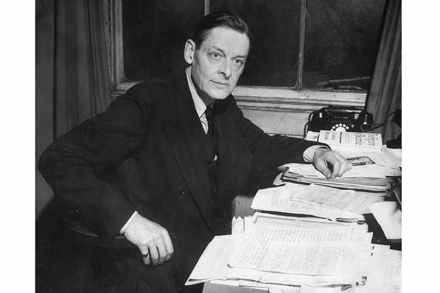
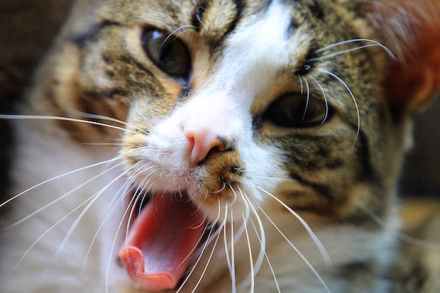
The latest competition asked for poems featuring one of T.S. Eliot’s practical cats getting to grips with the modern world. Your 21st-century reincarnations of Eliot’s felines (the poems were originally published in 1939 and inspired by the poet’s four-year-old godson, who invented the words ‘pollicle’ for dogs and ‘jellicle’ for cats) were terrific, making it especially difficult to decide on the winners. Some fine Macavitys narrowly missed the cut (take a bow, Nick Syrett, David Shields and Hamish Wilson), as did Bill Greenwell’s Jellicles and Brian Allgar’s Growltiger, the Tory Cat. This week’s top cats are printed below and pocket £35 each.

Cat call

From our UK edition

In Competition No. 3134 you were invited to submit a poem featuring one of T.S. Eliot’s practical cats getting to grips with the modern world.   Your 21st-century reincarnations of Eliot’s felines (the poems were originally published in 1939 and inspired by the poet’s four-year-old godson, who invented the words ‘pollicle’ for dogs and ‘jellicle’ for cats) were terrific. Alas long lines mean space for fewer winners and some fine Macavitys narrowly missed the cut (take a bow, Nick Syrett, David Shields and Hamish Wilson). I was sorry, too, not to have had room for Bill Greenwell’s Jellicles and Brian Allgar’s Growltiger, the Tory Cat.   This week’s top cats are printed below and pocket £35 each.

Spectator competition winners: ‘It was the best of pies, it was the worst of pies’: famous authors on food

From our UK edition

Your latest challenge was to provide a passage about food written in the style of a well-known author. One of my favourite literary meals is in John Kennedy Toole’s A Confederacy of Dunces. Here is the novel’s protagonist, the Falstaffian Ignatius J. Reilly, sizing up a mid-afternoon snack: ‘In the boiling water the hot dogs swished and lashed like artificially coloured and magnified paramecia. Ignatius filled his lungs with the pungent, sour aroma. “I shall pretend that I am in a smart restaurant and that this is the lobster pond.”’ In a large and wide-ranging entry, Douglas G.

Competition: Food glorious food

From our UK edition

In Competition No. 3133 you were invited to provide a passage about food written in the style of a well-known author. Douglas G. Brown’s ‘Observation on a Vegetable That Was Probably Unknown to Ogden Nash’ struck a chord: ‘Kale consumed raw/ Gets stuck in one’s craw;/ But kale, marinated,/ Is still overrated’. Nick Syrett and Martyn Hurst also stood out, as did Nick MacKinnon’s Shelley on molecular gastronomy — ‘My name is Heston Blumenthal, chef of chefs./ Look on my pud, ye hungry, and despair!’ — and Katie Mallett’s updating of Betjeman’s ‘Vers de Sociéte’. They were only narrowly outflanked by the winners, printed below, who each snaffle £25. ‘A peach just beautifully is!

Spectator competition winners: The Joy of Waterboiling and Noah Gets Naked

From our UK edition

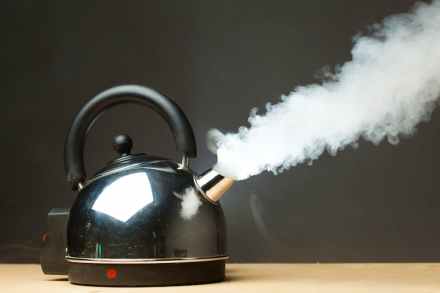
Your latest challenge was to submit an extract from one of the following books: Noah Gets Naked: Bible Stories They Didn’t Teach You at Sunday School; Ending the War on Artisan Cheese; The Joy of Waterboiling; Versailles: The View from Sweden. These genuine titles have all been contenders for the annual Bookseller/Diagram Prize for Oddest Book Title of the Year, an award invented in 1978 by Bruce Robinson and Trevor Bounford to relieve the tedium of the Frankfurt Book Fair. The Joy of Waterboiling — a German-language guide to cooking meals in a kettle — scooped the gong in 2018 and proved to be top choice with competitors too, followed closely by Versailles: The View from Sweden. David Silverman, Martyn Hurst, Katie Mallett and Rebecca Pyne earn honourable mentions.

3132: Bizarre books

From our UK edition

In Competition No. 3132 you were invited to submit an extract from one of the following books: Noah Gets Naked: Bible Stories They Didn’t Teach You at Sunday School; Ending the War on Artisan Cheese; The Joy of Waterboiling; Versailles: The View from Sweden.   These genuine titles have all been contenders for the annual Bookseller/Diagram Prize for Oddest Book Title of the Year, an award invented in 1978 by Bruce Robinson and Trevor Bounford to relieve the tedium of the Frankfurt Book Fair. The Joy of Waterboiling — a German-language guide to cooking meals in a kettle — scooped the gong in 2018 and was top choice with competitors too, followed closely by Versailles: The View from Sweden.

Spectator competition winners: Adlestrop revisited (Yes. I remember Germolene…)

From our UK edition

The latest challenge, to submit a poem beginning ‘Yes. I remember…’, was suggested by a reader who was very taken with Adrian Bailey’s poem ‘First Love’, a clever riff on Edward Thomas’s much-loved ‘Adlestrop’, published recently in this magazine. The winners, in an entry that provided a bracing blast of new year nostalgia, earn £25 each. D.A. Prince Yes, I remember Germolene — the densely-pink tinned-salmon hue, its smell, round tin, unwonted gloss like warm and antiseptic glue. It soothed each graze from roller skates. Those tumbles from the playground swings? — anaesthetised. It smelt of care, did Germolene. And other things.

You must remember this

From our UK edition

In Competition No. 3131 you were invited to submit a poem beginning ‘Yes. I remember…’ This challenge was suggested by a reader who was very taken with Adrian Bailey’s poem ‘First Love’, a riff on Edward Thomas’s much-loved ‘Adlestrop’, published recently in this magazine. The winners, in an entry that provided a bracing blast of new year nostalgia, earn £25 each. Yes, I remember Germolene — the densely-pink tinned-salmon hue, its smell, round tin, unwonted gloss like warm and antiseptic glue. It soothed each graze from roller skates. Those tumbles from the playground swings? — anaesthetised. It smelt of care, did Germolene. And other things.

Spectator competition winners: Boris Johnson in trochaic tetrameter

From our UK edition

The latest challenge invited you to add to Sam Leith’s lines about Boris Johnson, written in the metre of Longfellow’s ‘The Song of Hiawatha’: ‘Mayor of London Boris Johnson/ Much admired the lady’s pole-dance/ Mentored well her start-up business…’ Though Longfellow has long fallen out of fashion, in his day he was a poet celebrity, imitated by Baudelaire, parodied by Lewis Carroll and outselling Browning and Tennyson (he was also the first American to be honoured with a marble bust in Poet’s Corner at Westminster Abbey). The poet J.D.

Trochaics | 9 January 2020

From our UK edition

In Competition No. 3130 you were invited to add to Sam Leith’s lines about Boris Johnson, written in the metre of Longfellow’s ‘The Song of Hiawatha’: ‘Mayor of London Boris Johnson/ Much admired the lady’s pole-dance/ Mentored well her start-up business…’ Though Longfellow has long fallen out of fashion, in his day he was a poet celebrity, imitated by Baudelaire, parodied by Lewis Carroll and outselling Browning and Tennyson (he was also the first American to be honoured with a marble bust in Poet’s Corner at Westminster Abbey). The poet J.D.

Spectator competition winners: ’Twas the night before Brexit…

From our UK edition

This year’s Christmas challenge was to compose a poem entitled ‘’Twas the Night Before Brexit’. That seasonal classic ‘A Visit From St Nicholas’, more usually known as ‘The Night Before Christmas’, was published anonymously in 1823 and written by Clement Clarke Moore — or at least he claimed it was. The family of gentleman-poet Henry Livingston Jr later contended that he was the author, and the controversy rumbles on. Despite the potentially uncheery theme, you came up with some pleasingly diverse crackers, which are printed below and earn their authors £30 each. All that remains is to thank you all, veterans and newcomers alike, for your terrifically witty and well made entries over the past 12 months.

The night before

From our UK edition

In Competition No. 3129 you were invited to submit a poem entitled ‘’Twas the Night Before Brexit’. That seasonal classic ‘A Visit From St Nicholas’, more usually known as ‘The Night Before Christmas’, was published anonymously in 1823 and written by Clement Clarke Moore — or at least he claimed it was. The family of the gentleman-poet Henry Livingston Jr later contended that he was the author, and the controversy rumbles on. Space is short so I will use what remains to thank you all, veterans and newcomers alike, for your terrifically witty and well-made entries over the past 12 months. I look forward to many more in the year ahead.   This week’s prizewinners, printed below, earn £30 apiece. Merry Christmas!

Spectator competition winners: Alan Bennett writes to Santa Claus

From our UK edition

The first festively themed challenge of this year was to compose letters to Santa in the style of the author of your choice. I failed to track down examples of real letters from well-known writers to Old Nick (although both Mark Twain and Tolkien penned letters to their children from Father Christmas). But this was more than compensated for by the terrific standard of entries: step for-ward, David Silverman, channelling Dan Brown: ‘Dear Santa, I know who you are, buddy! And I can prove it! You’re an anagram of SATAN!...’; John Samson as Irvine Welsh: ‘Dear San’a, Gonny gi’e us back ma literary credentials…’; and Adrian Fry’s Harold Pinter: ‘I’ll be here when you come, wide awake... Expect no brandy, no pie: alms patronise.

Dear Santa | 12 December 2019

From our UK edition

In Competition No. 3128 you were invited to submit letters to Santa written in the style of the author of your choice.   I failed to track down examples of real letters from well-known writers to Old Nick (although both Mark Twain and Tolkien penned letters to their children from Father Christmas). But this was more than compensated for by the terrific standard of entries: step forward, David Silverman, channelling Dan Brown: ‘Dear Santa, I know who you are, buddy! And I can prove it! You’re an anagram of SATAN!

Spectator competition winners: Shakespeare on eyebrows

From our UK edition

This time round you were asked to submit Shakespeare’s newly discovered ‘Woeful ballad to his mistress’ eyebrows’, as referred to by Jaques in As You Like It (‘…And then the lover,/ Sighing like furnace, with a woeful ballad/ Made to his mistress’ eyebrow…’). For the purposes of this challenge, a ballad could be any sort of poem (most of you wrote sonnets) and anachronisms were allowed. The prizewinners, in another fiercely contested week, take £20. Basil Ransome-Davies What blessing crowns thy outward loveliness? A coiffed, enrapturing head of sable hair That blazes rank above the common press. Yet there is hair invisible elsewhere.

Brow lines

From our UK edition

In Competition No. 3127 you were invited to submit Shakespeare’s newly discovered ‘Woeful ballad to his mistress’ eyebrows’, as referred to by Jaques in As You Like It (‘And then the lover,/ Sighing like furnace, with a woeful ballad/ Made to his mistress’ eyebrow…’). For the purposes of this challenge, a ballad could be any sort of poem (most of you wrote sonnets) and anachronisms were allowed. The prizewinners, in another fiercely contested week, take £20.   What blessing crowns thy outward loveliness? A coiffed, enrapturing head of sable hair That blazes rank above the common press. Yet there is hair invisible elsewhere.

Spectator competition winners: ‘Toilets’ by T.S. Eliot (anagrammatic poems)

From our UK edition

The inspiration for the latest challenge — to rearrange the letters of the names of poets (e.g. Basho: ‘has B.O.’) and submit a poem of that title in the style of the poet concerned — was puzzle writer and editor Francis Heaney’s wonderful Holy Tango of Literature, which includes such delights as William Shakespeare’s ‘Is a sperm like a whale?’, Dorothy Parker’s ‘Dreary Hot Pork’ and William Carlos Williams’s ‘I will alarm Islamic owls’. The anagrammatic titles that caught my eye in a vast and stellar entry included ‘Naughty Nude Wash’ by Wystan Hugh Auden (David Shields) and Samuel Taylor Coleridge’s ‘Ode to a Large, Slimy Ulcer’ (Max Gutmann).

What’s in a name? | 28 November 2019

From our UK edition

In Competition No. 3126 you were invited to rearrange the letters of the names of poets (e.g. Basho: ‘has B.O.’) and submit a poem of that title in the style of the poet concerned.   The inspiration for this challenge was the puzzle writer and editor Francis Heaney’s wonderful Holy Tango of Literature, which includes such delights as William Shakespeare’s ‘Is a sperm like a whale?’, Dorothy Parker’s ‘Dreary Hot Pork’ and William Carlos Williams’s ‘I will alarm Islamic owls’.

Spectator competition winners: Jeremy Corbyn – the early years

From our UK edition

The call for the comically appalling first or final paragraph of the memoir of a well-known figure was one of those challenges where we raise a glass in memory of Edward Bulwer-Lytton, Victorian novelist and patron saint of purple prose. The oft-cited example of his florid style is the opening to the 1830 novel Paul Clifford — ‘It was a dark and stormy night’ — which was used by Charles Schulz as the first line of Snoopy’s novel, and by Brian Murdoch in his winning entry below. You didn’t quite hit the spot this week and the standard was patchy. Some creditable entries were disqualified because they didn’t strike me as plausible beginnings or endings.