Lucy Dunn

Lucy Dunn

Lucy Dunn is The Spectator's political correspondent. She is a qualified doctor from Glasgow.

How will the parties judge success at the local elections?

From our UK edition

14 min listen

With just over two weeks to go until the May elections, the latest national polling suggests an almost three-way split between Reform, Labour and the Conservatives. But will this translate to the locals? And, given these particular seats were last contested in 2021 amidst the 'Boris wave', how will the parties judge success?  The Spectator's deputy political editor James Heale and More in Common's Luke Tryl join Lucy Dunn to discuss. Will the story of the night be Tory losses and Reform  gains? Or will it be about the government's performance against opposition parties? Produced by Patrick Gibbons.

Parliament recalled to nationalise British Steel

From our UK edition

MPs didn’t manage to enjoy even a week of recess before being ordered back to Westminster. The Speaker announced this afternoon that both houses of parliament will be recalled on Saturday for a vote to nationalise British Steel after talks with the company’s Chinese owner appear to have hit a dead end. The UK government has spent much of this week in discussions with the Jingye group in a bid to prevent the closure of the company’s steel plant in Scunthorpe – which would put as many as 3,000 jobs at risk.  Sir Keir Starmer’s government had initially remained vague about the conversations taking place, with Whitehall insiders noting that ‘all options are on the table’.

The economy is growing!

From our UK edition

11 min listen

Finally, some good news for your Friday: the economy is growing! Just when everyone seems to be revising down expectations of growth, the Office for National Statistics (ONS) estimates that GDP grew by 0.5 per cent in February. It also revised January’s figures upwards to give growth for the last quarter of 0.6 per cent, and annual growth of 1.4 per cent. It looks – for now – that the Reeves recession has been put on hold and that Labour's growth agenda could be working. That said, Labour cannot afford to celebrate just yet. There is reason to believe the figures could be overstated, and there are some trust issues with the ONS – the government last week announced a review of its ‘performance and culture’.

Could resident doctors go on strike again?

From our UK edition

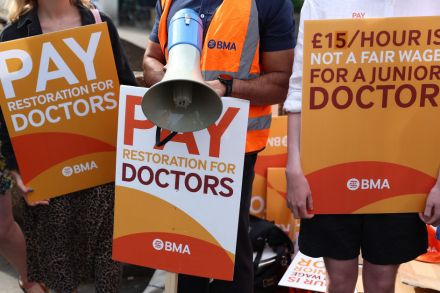
As if Prime Minister Keir Starmer didn’t have enough to worry about overseas with Donald Trump’s tariffs, now old tensions are also threatening to cause problems closer to home. The British Medical Association has announced today that its junior doctors – now referred to as ‘residents’ – have re-entered a dispute with the government over delays to pay recommendations for the next financial year. What exactly does this mean? It means that more strikes could be on the horizon.

Is Trump the new Truss?

From our UK edition

15 min listen

The fallout from Trump’s tariffs continues. Last week, Donald Trump ended the free-trade era that has underpinned growth for decades (and potentially also heralded the end of globalisation). Markets around the world have taken a nosedive, prompting fears of a global recession. The only (brief) reprieve was when stock markets rallied because of a misunderstanding regarding comments made by Trump’s economic adviser. Once these had been clarified, the Nasdaq dipped once again. Republicans are starting to turn on Trump – including Elon Musk, who has been sending out some coded tweets. The strength of the reaction from the markets has drawn comparisons between Trump and Liz Truss, whose mini-Budget spooked the markets so comprehensively that she had to backtrack after just ten days.

Five years on, who is Keir Starmer?

From our UK edition

13 min listen

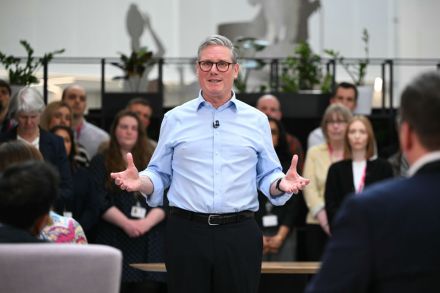
Today marks five years since Keir Starmer became leader of the Labour party. In that time, he has gradually purged Labour of its leftist wing and wrestled the party back to the centre, winning a historic majority in 2024. But, five years on, the question remains: what does Keir Starmer stand for? He came in as the acceptable face of Corbynism but looks more and more like a Conservative with each passing domestic policy announcement (take your pick: winter fuel, waging war with the size of the state, welfare cuts etc.). Internationally, it is a different story. Despite saying little on foreign policy in the build-up to the general election, he has been widely praised for his foreign policy and his steady hand when dealing with Trump.

Are the Scottish Tories becoming irrelevant?

From our UK edition

Another day, another poll that shows Reform could, from a standing start, pick up at least 14 seats at the 2026 Holyrood election. Nigel Farage's party is attracting supporters from all of Scotland’s main parties – 5 per cent of SNP voters are backing Reform while only six in ten Labour voters would get behind the reds again next year – but the Scottish Tories have the most to lose. As Farage’s lot witness a further surge in support north of the border, the Scottish Tories appear set to lose almost 50 per cent of their seats. In short, Scottish voters are opting to support a group with no parliamentary experience – or leader – over Scotland’s official opposition – and the Scottish Tories don’t seem to know what to do about it.

Why Labour are abolishing NHS England

From our UK edition

10 min listen

It was widely briefed that the main focus of Sir Keir Starmer’s speech in Yorkshire today was his plan to do away with Whitehall red tape. What was kept under wraps was the Prime Minister’s plans for the NHS – specifically to scrap NHS England. In a bid to tackle bureaucracy in the health service, the PM this morning told reporters that the ‘arms-length NHS’ needed to go – adding that the move will ‘shift money to the front line’ and free the health service to ‘focus on patients’. What's the point of abolishing NHS England? And are Labour 'doing the things that the Tories only dreamed of'?  Lucy Dunn speaks James Heale and Michael Gove.  Produced by Oscar Edmondson and Megan McElroy.

Starmer scraps NHS England

From our UK edition

It was widely briefed that the main focus of Sir Keir Starmer’s speech in Yorkshire today was his plan to do away with Whitehall red tape. What was kept under wraps was the Prime Minister’s plans for the NHS – specifically to scrap NHS England. In a bid to tackle bureaucracy in the health service, the PM this morning told reporters that the ‘arms-length NHS’ needed to go – adding that the move will ‘shift money to the front line’ and free the health service to ‘focus on patients’. The move – which will see NHS England taken back under the control of the Department of Health in a re-politicising of the health service – is another step forward in Labour’s war on NHS management.

The ‘physician associate’ will see you now…

From our UK edition

There is a war being waged in NHS hospitals. On one side are overstretched junior doctors in understaffed wards. On the other: physician associates (PAs) or, to use the more disparaging term, ‘noctors’.   Since 2003, non-medical graduates have been able to gain entry to hospital wards and GP practices if they complete a two-year clinical course that leaves them a ‘physician associate’ or ‘anaesthesia associate’. At first, PAs were rare – ten years ago there were fewer than 150 in England. Since the pandemic, however, the numbers have exploded. There are now approximately 4,000 PAs working in England and Wales.  PAs are supposed to help doctors with the time-consuming administrative work.

What will Nicola Sturgeon’s legacy be?

From our UK edition

12 min listen

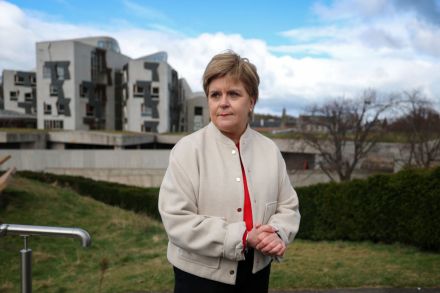
Nicola Sturgeon has announced her intention to step down at the next Scottish Parliament election in May 2026. One of the original MSPs elected to Holyrood in 1999, Sturgeon has dominated Scottish and UK politics over the past two decades. The Salmond-Sturgeon era began in 2004 and she went on to serve as First Minister for the best part of a decade. Stewart McDonald, former SNP MP for Glasgow South 2015-24, and Lucy Dunn join James Heale on this special Coffee House Scots to discuss Sturgeon's legacy. She brought Scotland the closest to independence for 300 years, yet resigned in 2023 under a cloud over party management. Attention turns to next year's election, could the SNP's winning streak continue without her? Produced by Patrick Gibbons and Natasha Feroze.

What does the SNP exodus mean for the party’s 2026 line-up?

From our UK edition

There is little over a year to go until the 2026 Holyrood election and Scottish party selection processes are underway. This morning, two of the biggest names yet have said they will stand down at next year’s election: Finance Secretary Shona Robison and Transport Secretary Fiona Hyslop have announced they’re off. ‘The decision to retire is entirely personal and I do it for positive reasons,’ Hyslop insisted to reporters today. It is unlikely that will convince cynics who suggest the pair have jumped before they were pushed. The Holyrood selection process is a chance for the SNP to sort the wheat from the chaff The duo joins a long list of nationalist politicians who have declared their intention to step down next year.

Can Reform land a knockout blow in Hull?

From our UK edition

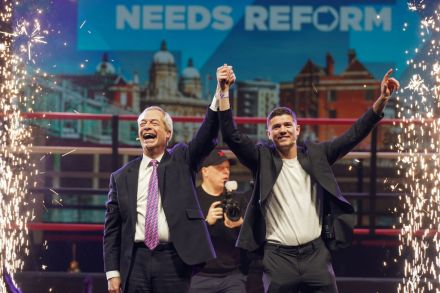
It was to a packed-out auditorium that Nigel Farage announced his party’s mayoral candidate for Hull and East Yorkshire on Thursday night. Reform pulled out all the stops for its reveal of former Olympic boxer and gold medallist Luke Campbell, from sparkler firework lights to a mocked-up boxing ring. ‘The set up is immense,’ one aide boasted. And judging by the crowd’s roars at the big unveiling, they thought so too.  Campbell is, in many ways, a perfect candidate for Reform. The 37-year-old Hull-born international boxer is an inspiration for other young men who have grown up without much, and is standing for office in an area he knows well. His selection marks a clear deviation from the party’s choice of paper candidates it fielded at the general election.

Medical students are being let down

From our UK edition

It’s allocation day for junior doctor jobs. Soon-to-be medical graduates across the UK find out what deanery they will work in upon finishing university. While it should be an exciting time for Britain’s future medics, recent changes to the system have sparked outrage as students hoping to work close to friends and family find out they have been sent halfway across the country instead. Criticism has long been directed at the way in which foundation programme jobs have been dished out. Foundation years 1 and 2 provide compulsory training to graduating doctors, completion of which leaves one a fully registered medic and able to progress further into training.

Scotland’s education stats pose a problem for the SNP

From our UK edition

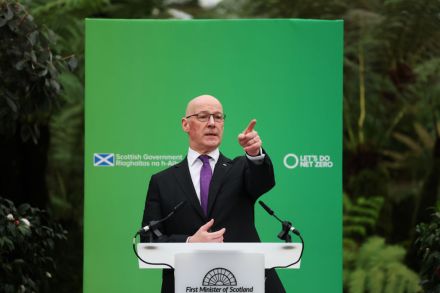
The SNP may be outperforming Scottish Labour in the polls, but the party of government still faces tough questions on its record as it approaches the 2026 Holyrood election. Today’s education attainment figures won’t help the nationalists’ argument that they deserve another chance in power – as the stats show the attainment gap between Scotland’s most and least deprived students has widened once again. The figures reveal that the number of school leavers heading to work, college or university in 2023/24 decreased from the previous year to 95.7 per cent. Despite John Swinney’s SNP government insisting it wants to eradicate child poverty and improve living conditions for the country’s poorest, the deprivation gap has widened from 3.7 percentage points in 2022/23 to 4.

Reform declares war on renewables

From our UK edition

It was in a plush central London office space lined with leafy wall plants that Reform UK chose to make its big economic announcement today. Attendees were warmly welcomed with a lavish spread of wraps, canapés and even beer on tap – before Nigel Farage and Richard Tice cut to their news: ‘We will scrap net stupid zero.’ Farage was quick to trumpet his party’s anti-establishment credentials, noting Westminster’s cross-party consensus on the environment. Not Reform – whose politicians are insistent they can ‘right some of the wrongs’ of the renewable sector. ‘Reform is serving notice on the industry,’ Tice told attendees. ‘We are going to win the next general election and things are going to change.

Why we should heed warnings about weight loss jabs

From our UK edition

Embarking on the quest to lose weight can be a risky business. Yo-yo dieting, compulsive binging, muscle wasting and brain fog are just some of the many challenges that have waylaid dieters over the years. But now, thanks to the arrival of seductive weight loss drugs promising a quick fix, calorie counters are facing more contemporary health problems – from extreme discomfort, organ dysfunction and even death. Just this week, an inquest heard that Breeda O’Donoghue, a 66-year-old grandmother from Cork, Ireland passed away from multiple organ failure after taking Ozempic for diabetes and weight loss. But she’s far from the only person who has experienced devastating – and fatal – complications from the drug.

John Prescott’s legacy, plus Labour & the Tories grapple with migration

From our UK edition

15 min listen

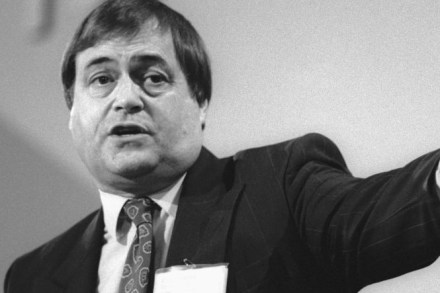
Labour heavyweight John Prescott's funeral took place yesterday with former Prime Ministers Tony Blair and Gordon Brown leading the tributes. What is Prescott's legacy? And does the current Labour Party have politicians that emulate his appeal? Lucy Dunn speaks to James Heale and former Blair adviser John McTernan about how Prescott was the glue that held Labour together during the Blair-Brown years. Also on the podcast, they discuss the borders and migration bill which Labour published this week. The bill sees the government adopt many measures that they voted against when in opposition. Does this show that Labour have what it takes to tackle immigration?

Can the Treasury get the public onside with its spending cuts?

From our UK edition

As Rachel Reeves attempts to woo investors at Davos, the Chief Secretary to the Treasury has stayed behind in London as work gets underway on Labour's comprehensive spending review. Darren Jones also found time to set out his thinking in a keynote speech at the Institute for Government’s 2025 conference, where he laid out stricter funding requirements for government departments and plans for Treasury reform in a bid to impose tighter controls over spending.  Jones batted off attempts to pin him down on government controversies playing out elsewhere – using, as Keir Starmer did in PMQs on Wednesday, the ‘speculation’ excuse to avoid commenting on plans to install a third runway at Heathrow Airport, a move that he had previously labelled ‘unconscionable’.

What’s behind Reform’s surge in Scotland?

From our UK edition

Five years ago, Reform UK had no presence in Scotland. Its Facebook and Twitter pages emerged during the latter half of the pandemic and despite briefly experiencing four months in Holyrood courtesy of a Tory defector, the group has since then remained very much out of sight and mind. Nigel Farage neglected Scotland during last year’s general election campaign, his deputy Richard Tice visited just once and the group still lacks a Scottish leader. Despite all that, however, Reform is shaping up to become kingmaker in the 2026 Holyrood election.  ‘Everywhere I went, people were talking about Reform. And I thought: there’s something really going on here.