Lloyd Evans

Lloyd Evans

Lloyd Evans is The Spectator's sketch-writer and theatre critic

Has Keir Starmer forgotten that he’s prime minister?

From our UK edition

Shortly before noon, Sir Keir Starmer and his closest chums peeped out from behind the Speaker’s chair to see if it was safe to enter the chamber. Led by their boss, the furtive cabal of Granny-chillers sidled forward and tiptoed to their seats like naughty teenagers late for a geography class. What had they been doing backstage? Knitting cardigans for hypothermia victims perhaps. A few perfunctory chirrups greeted their arrival but most Labour MPs kept quiet. They were too scared to cheer the man who wants to raise cash by mugging pensioners this winter. Rishi Sunak went straight for Sir Keir’s weak spot and asked about an ‘impact assessment’ into his plan to fleece the elderly.  ‘The fact of the matter is,’ said Sir Keir, ‘they left a £22 billion black-hole.

Nothing gives Keir Starmer joy like banning things

From our UK edition

Power hasn’t altered Sir Keir Starmer. His frosty and unamused demeanour remains. No hint of warmth or joy has penetrated his defensive outer rind. He still looks like a mourner-for-hire at an oligarch’s funeral.  Today at PMQs he was faced by a quick-witted and forceful Rishi Sunak who clearly relishes the role of battering ram. The Tories may start to question the wisdom of replacing him. Which of their leadership candidates could match this masterclass in how to grill an incumbent PM? Rishi selected a single issue and hammered away at it until he got a useless reply. Then, having described how useless it was, he moved onto a new question. Today he managed to prohibit just one activity.

Dazzling: Stoppard’s The Real Thing, at the Old Vic, reviewed

From our UK edition

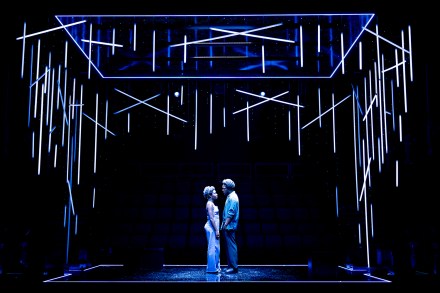
The Real Thing at the Old Vic is a puzzling beast. And well worth seeing. Director Max Webster sets the action in a vast sitting room painted electric blue with a white sofa in the centre. A lovely use of empty space. But the preview trailer on the theatre’s website shows the actors seated in a scruffy bomb site where they discuss similarities between Tom Stoppard’s 1982 play and the lyrics of Taylor Swift. Perhaps the Old Vic hopes to attract a younger audience, but this show will appeal most to Stoppard’s lifelong fans. The play marks a major shift in his development. The exuberant and frothy cleverness of his earlier work has acquired emotional weight and a tougher outer shell. There’s a lot of jealousy and anger smouldering beneath the surface.

Artistically embarrassing but a hit: Shifters, at Duke of York’s Theatre, reviewed

From our UK edition

Shifters has transferred to the West End from the Bush Theatre. It opens at a granny’s funeral attended by the grief-stricken Dre, aged 32. Dre was raised by his ‘Nana’ as he calls her – rhyming it with ‘spanner’ – and he weeps when he realises that his mother has failed to show up. A beautiful young woman arrives unexpectedly. This is Dre’s teenage sweetheart and they exchange gossip over a glass of whisky while rummaging through Nana’s belongings. The press night crowd adored these flawless yuppies. An artistic embarrassment but a sure-fire hit The lovebirds met at school where they studied philosophy and outshone all their rivals in the class.

How I lost my faith

From our UK edition

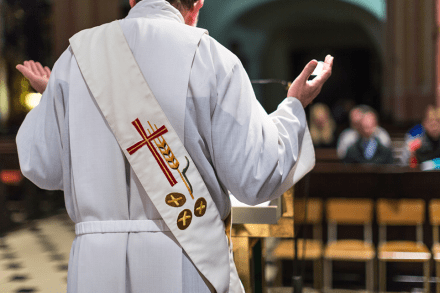
God used to exist. He doesn’t any more, but back in the early 1970s he was a major presence in my life. The world at that time was run by President Nixon and his adviser Ted Heath, but their power was limited, and even they had to defer to God’s authority. That’s how it seemed to me. A howling spirit or a weeping martyr might burst forth, dripping blood or swathed in tongues of fire I was encouraged by the adults to converse with God and to ask for his guidance and I spoke to him often, in class when we prayed, at night in my bedroom, and at Mass on Sunday. God listened to everyone, regardless of their wealth or status, and even great leaders had no better claim to his attention than I did. This made me feel special and powerful.

The cast mistake screaming for comedy: Cockfosters, at Turbine Theatre, reviewed

From our UK edition

The Turbine Theatre is a newish venue beneath the railway arches of Grosvenor Bridge in Battersea. The comfy auditorium is furnished with 94 cinema seats and the only snag is the scent of mildew clinging to the plasterwork. Overhead, the rumbling commuter trains create the perfect soundscape for Cockfosters, a zany rom-com set on the Tube. Two travellers meet by accident on a Piccadilly line service departing from Heathrow Terminal 3. James is a nerdy public-school reject who spots a fellow traveller, Victoria, struggling to shift three monster suitcases onto the train. Obeying Tube etiquette, he makes no attempt to help her and they sit in adjoining seats without acknowledging each other. Beside them are two passengers engrossed in royal biographies.

This Edinburgh Fringe comedian is headed for stardom

From our UK edition

Dr Phil Hammond is a hilarious and wildly successful comedian whose career is built on the ruins of the NHS. His act has spawned a host of imitators on the stand up-circuit and they share Dr Phil’s confused adoration for the NHS. All of them love the idea of universal healthcare but they dislike the messy practical details. And they’re convinced that extra cash will save the system. The evidence suggests otherwise; handing more money to the NHS is like giving a gambling addict the keys to a bullion van. The gallows humour is delightful if you’re not stuck in an NHS queue Dr Phil claims that he would gladly pay higher taxes because the NHS has to scrape by on ‘third-world funding’. This is part of the difficulty.

What Liz Truss must learn from Humza Yousaf

From our UK edition

Hats off to Humza Yousaf. He knows how give a straight answer. At the Edinburgh fringe, he was quizzed by Matthew Stadlen who asked if he took responsibility for the chaos that led to his resignation as Scotland’s first minister.  ‘I frankly f***ed up,’ admits Yousaf. Warm applause greeted this confession, and Stadlen compared his honesty with the more equivocal approach of Liz Truss. ‘It upsets a lot of people,’ said Yousaf, ‘that she’s unable to utter a syllable of contrition. She blames the markets, the Bank of England, and the deep state. We need fewer Liz Truss’s.

Being mugged changes you forever

From our UK edition

Being mugged changes you forever. My encounter with highwaymen occurred three decades ago in a south London street, in the early evening as I emerged from a corner-shop. I was transferring some coins from one hand to the other when four men pounced on me from behind, tipped me over and dragged me down a lane between a derelict pub and a car park. I lay there surrounded, waiting for the inevitable violence, but my attackers grabbed the cash that had fallen from my hands and melted away into the night. I always avoid high-risk areas: towpaths, churchyards, parks at dusk – anywhere without cameras I was left feeling shocked, humiliated and grateful I’d escaped with my life. Sadism was part of their motive, I expect.

Edinburgh has turned into a therapy session

From our UK edition

Therapy seems to be the defining theme of this year’s Edinburgh festival. Many performers are saddled with personal demons or anxieties which they want to alleviate by yelling about them in front of a paying audience. Professor Tanya Byron puts it like this in the Pleasance brochure: ‘Therapy is where art and story-telling combine.’ This show crashes and burns like the stock market on a bad day. A cheerier ending might help. At the Pleasance, Joe Sellman-Leava is seeking catharsis through his show It’s The Economy, Stupid! (Jack Dome, until 26 August). He begins by delivering a friendly lecture about credit, interest rates, retail banks, Adam Smith and so on. After 40 minutes, he loses his cool and starts to rant and swear at the crowd about his personal lack of funds.

Does Wes Streeting know what he’s doing?

From our UK edition

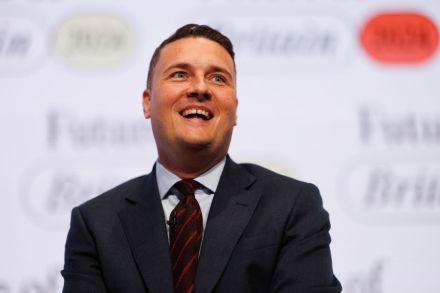
Wes Streeting bounds onto the stage for a conversation with Matthew Stadlen (deputising for Iain Dale) at the Edinburgh festival. Labour’s new health secretary wears grey slacks, white trainers and an open-necked shirt. He hasn’t found time to put on a jacket or tie. ‘I came literally from the airport in my holiday get-up,’ he says. Stadlen opens with a softball question about Streeting’s emotional response to Labour’s victory. ‘Walking up Downing Street, it was all I could do not to burst into tears,’ says Streeting. The cosy atmosphere continues throughout their chat. ‘In your letter to GPs,’ says Stadlen, ‘there was real respect in your tone.’  ‘Do you dance?’ asks Stadlen, ‘Do you go clubbing?

Reinforces the caricatures it sets out to diminish: Slave Play, at the Noël Coward Theatre, reviewed

From our UK edition

Slave Play is a series of hoaxes. The producers announced that ‘Black Out’ performances would be reserved for ‘black-identifying’ playgoers but the ticketing system is colour-blind and these so-called ‘segregated’ shows were attended by audiences of all ethnicities. The PR gambit generated lots of free publicity, but these stunts don’t always translate into ticket sales. The second hour involves screeds of impenetrable psychobabble as the couples bicker and moan The show appears to be a drama set in the Deep South before the American civil war. It opens with a white farmer humiliating his black cleaner, who easily outsmarts him. When he forces her to eat fruit from the dirty floor she tells him how delicious it tastes.

Shapeless and facile: The Hot Wing King, at the Dorfman Theatre, reviewed

From our UK edition

Our subsidised theatres often import shows from the US without asking whether our theatrical tastes align with America’s. The latest arrival, The Hot Wing King, is a Pulitzer Prize-winning play about unhealthy eating. The production opens in a luxury house in Memphis, occupied, rather strangely, by four gay men who dress gracelessly in cheap, flashy designer gear. They behave like overgrown babies and spend their time leaping about the place, bickering and bantering, singing songs, performing dance moves and exchanging cuddles. This cameo repeats the caricature of the foolish African crook. Why is the Globe perpetuating racial bigotry? One of the four man-babies wears a business suit and calls himself ‘a manager’ but the others appear to be unemployable. Yet they’re affluent.

Keir Starmer will never have it so good at PMQs

From our UK edition

Are we going to war? The first PMQs since the election was like a military briefing between the Tory chief and the new prime minister. Rishi Sunak, now opposition leader, began with a few standard noises about Ukraine’s need for more weapons. He urged Sir Keir Starmer to ask the Germans to send ‘long-range missiles’ in addition to those already pledged by the Americans and by us. To strike where, exactly? The rest of the session was a doddle for Sir Keir Sunak then mentioned a fancy new jet-fighter and parroted a phrase from the armourer’s brochure. ‘A crucial sovereign jet capability,’ he called it. He added that Saudi Arabia ‘has a desire to join the programme.’ Labour politicians are usually shy of arming the Saudis but Sir Keir showed no signs of bashfulness.

Vapid and pretentious: Visit From An Unknown Woman, at Hampstead Theatre, reviewed

From our UK edition

Visit From An Unknown Woman, adapted by Christopher Hampton from a short story by Stefan Zweig, opens like an episode of Seinfeld. A playboy writer enjoys a fling with a black-clad beauty – but when he kisses her goodbye, he can’t remember her name. It feels like a set-up for a gag, but the script is very short of jokes. A year passes and the mysterious beauty, named Marianne, returns to the playboy’s pad and delivers a series of astonishing revelations. At this point, the show turns into a memory play as Marianne starts to yammer about her childhood, her family struggles and a mass of other details which sound like an over-emotional shopping list. Not everyone found this show vapid and pretentious.

Next time, I’m swimming to Calais

From our UK edition

Friends in Calais invited me to their baby’s birthday party. He’s a year old. They suggested an overnight stay and I planned to reach France by about mid-afternoon and have a stroll, visit the sights, buy a bit of tat for the nipper and a litre of plonk for the proud parents. Clouds of sweet diesel vapour enveloped me. My pulse quickened. In the 1970s, it all smelt like this The morning express sped me south and I was entertained on board by the Bing-Bong Pixie who referred to the train as ‘this 10.02 service from London Victoria to Dover Priory’. She recited the name of every stop on the line and repeated it twice each time we reached a new station. Her chirpy tone concealed a rather malevolent side.

Unmissable – for professors of gender studies: Alma Mater, at the Almeida Theatre, reviewed

From our UK edition

Alma Mater is a topical melodrama set on a university campus. The new principal, Jo, (amusingly played by Justine Mitchell) is a radical feminist who recalls the bitter struggles of the 1980s when she strove to put women on an equal footing with men. Her task now is to address the college’s reputation for ‘binge-drinking, partying and casual sex’. To ingratiate herself with the students she makes a speech full of swear words which greatly impresses the first years, apparently. Then a nightmare unfolds. A naive Welsh fresher, Paige, attends a fancy dress party where she’s sexually assaulted by a handsome older student. Drink was involved. Paige admits that she blacked out during the incident and the accused has no recollection of what happened.

Morally repugnant: Boys From the Blackstuff, at the Garrick Theatre, reviewed

From our UK edition

Yosser Hughes is regarded as a national treasure. He first appeared in 1982 in Alan Bleasdale’s TV drama, Boys from the Blackstuff, which followed a crew of Liverpool workers who lay tarmac (‘black stuff’) for a living. When their contract expires the lads are left shocked and helpless even though job security is not a perk of their profession. The atmosphere of the show, adapted by James Graham, may come as a surprise to those who know Yosser by reputation only. Far from being a worker’s champion, Yosser is a crook, a hypocrite and a class-traitor. He and his friends moonlight for cash while claiming state benefits, which are, of course, levied on the wages of honest workers. And they pilfer from Liverpool docks which increases the prices paid by customers who aren’t cheats.

‘Punishingly dull – but the crowd loved it’: Next to Normal, at Wyndham’s Theatre, reviewed

From our UK edition

The Constituent is a larky show about violence against female politicians. A strange subject for a comedy. Anna Maxwell Martin plays a vapid but well-meaning MP, Monica, who receives unwelcome attention from a sinister dropout, named Alec (played by James Corden). Alec’s backstory is quite a puzzle. He used to work as an MI6 spymaster in Afghanistan, where he persuaded senior Taliban commanders to operate as double agents. While off-duty he seduced an NHS ward sister who happened to be nursing soldiers on the battlefield in Kandahar. If you want a celebration of spineless masculinity, look no further That, at least, is the story he gives Monica. Alec says he married the nurse but they split up after having kids. Then he started job-hunting.

Riveting and exhilarating: Miss Julie, at Park90, reviewed

From our UK edition

Some Demon by Laura Waldren is a gem of a play that examines the techniques of manipulation and bullying practised by shrinks on anorexics. The setting is an NHS referral unit where Sam, an 18-year-old philosophy student, arrives with a minor eating disorder. Like every patient, Sam is told that her personality is immersed in a civil war and that two implacable forces – the ‘diseased self’ and the ‘whole self’ – are fighting for control of her destiny. It’s a brilliantly simple trick that any bully can learn in a few minutes. If the patient says something unwelcome, the shrink ascribes the statement to the ‘diseased self’ and adds: ‘I don’t negotiate with the disease.