Lloyd Evans

Lloyd Evans

Lloyd Evans is The Spectator's sketch-writer and theatre critic

Promises, promises

From our UK edition

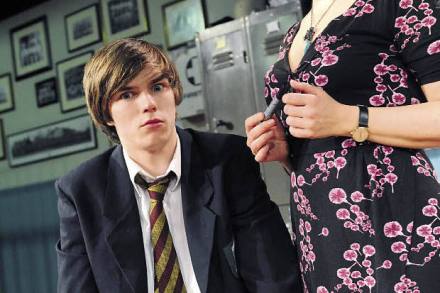
Parlour Song Almeida Tusk Tusk Royal Court Back in 1995 Jez Butterworth got tagged with the ‘Most Promising Playwright’ beeper and he still hasn’t shaken it off. Butterworth is an excellent second-rate writer, he has a wonderful knack for quirky comic dialogue but he wants to be a Great Artist too. A pity. All a playwright should aim to be is an entertainer. Butterworth’s new play, Parlour Song, is set in an estate full of suburban semis and it opens with two male pals joshing aggressively in a sitting-room. Andrew Lincoln’s sleek young Dale runs a car-wash business and complains of ‘pruney fingers’. Toby Jones’s squat, balding Ned works in demolition and wields Zeus-like powers of life and death over huge industrial buildings.

Thwarted desire

From our UK edition

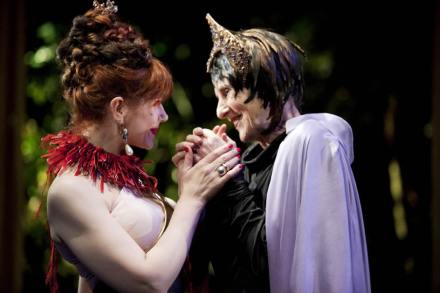
Dido, Queen of Carthage Cottesloe The Overcoat Lyric Hammersmith Simple plays can be the hardest to get right. James Macdonald has made a dogged assault on the earliest work of Christopher Marlowe. The story is lifted wholesale from Virgil. After Troy’s fall Aeneas arrives in Carthage where Dido promptly falls in love with him. When destiny compels Aeneas to leave for Italy the despairing queen sets fire to herself, and her palace, in a humungous health-and-safety fiasco. Marlowe’s underdeveloped grasp of personality weakens the script.

Brown revels in it

From our UK edition

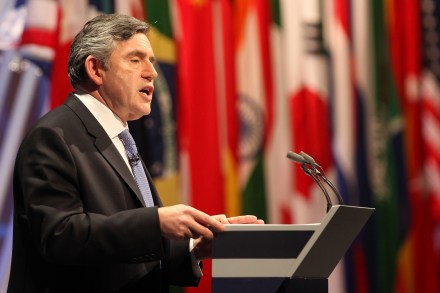
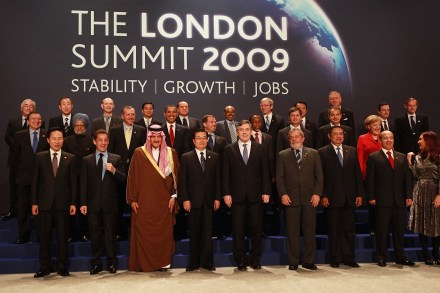
It looked the final victory of International Socialism as Brown wrapped up the G20 summit. Lenin himself couldn’t have been happier. The world’s banks have now effectively been merged into a global collective. There’ll be subsidies for the poor provided by the wealthy. Bonuses will be monitored. Salaries for top bankers may well be capped. Tax havens for fatcats will be squeezed into extinction. Colleges of supervisors will be trained and sent out to patrol the international bourses, like bean-counting beach attendants, to ensure that the world economy never again surfs onto the rocks of fiscal oblivion. The costs are so vast they vanish into the clouds. Their sheer scale obviates all scrutiny or criticism. A billion may be a blunder. A trillion is an act of God.

The spectacle gets under way

From our UK edition

‘Eat Bankers For Breakfast’. At 7 am this morning the great pin-stripe banquet was due to start as protestors gathered outside the London Stock Exchange intent on disrupting the day’s business. After four hours, only a handful of hungry suit-scoffers had gathered under the slogan and their meagre buffet was being supervised by hundreds of idle cops. Meanwhile, the market delivered its verdict on the prandial protest and yesterday’s quiet riot: the FTSE surged through 4000 and the Bank of England’s three-monthly report confirmed that credit conditions were easing and that mortgage approvals were up. Over at docklands, the Excel Centre had been sealed off and sealed off again.

Mishima’s behemoth

From our UK edition

Madame de Sade Wyndhams New Boy Trafalgar Studio In the 1960s Mishima wrote a play about the Marquis de Sade. What’s it like? It’s like this. A Greek tragedy consisting entirely of choral speeches performed on the radio. The naughty nobleman’s wife and her family are assembled on stage, along with a pair of sidekicks, one a tart, the other a nun, and through the testimony of these blushing womenfolk we hear the details of his rapacious career. Static, word-heavy and often boring, the play is far from a disaster. That de Sade never appears barely matters. He’s in prison, in court, in hiding, in Sardinia, in a hay-loft, in prison again. Finally, after two decades of blood-soaked fornication, he’s at the front porch. Will he come in?

Harman lays out Labour’s election strategy in PMQs

From our UK edition

The B-team were back today. With Gordon Brown abroad on Superman duty it was left to Hague and Harman to slug it out. Harman was as useless as ever, unsteady, inarticulate, hectoring, self-satisfied. Rather than engage with the debate she ducks incoming fire and replies with a prepared weapon. Yet again we heard that the Tories would ‘do nothing’, that they opposed the fiscal stimulus, they fought the VAT cut and so forth. Her killjoy mannerisms suggest a head-girl scolding trouble-makers for  pillow-fighting after lights out. But she looked less obviously uncomfortable at the despatch box today. Hague, by contrast, seemed too relaxed, almost detached. Instead of taking his Lamborghini wit out for a spin he just parked it in the garage.

No questions asked

From our UK edition

Berlin Hanover Express Hampstead Invasion! Soho When TV writers turn to the stage there’s often a suspicion of fly-tipping, of rejected ideas being dumped in the hope that others will tidy them away. Ian Kennedy Martin, creator of The Sweeney, has come up with a cracking theme. Berlin, 1942. Two Irish diplomats grapple with the conflict between their country’s neutrality and the emerging evidence of the holocaust. To compound the dilemma, the beautiful cook at the Irish embassy is a covert Jewess being investigated by the Gestapo. But it all goes wrong in the details. The diplomats are unlovable misfits. O’Kane, played by Owen McDonnell, is a debt-ridden loudmouth who drinks claret for breakfast and boasts endlessly about his father’s friendship with de Valera.

Cameron scores a direct hit with his “phoney” jibe

From our UK edition

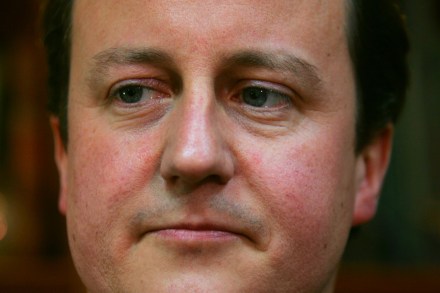
A good old-fashioned punch-up at PMQs today. Much dust was raised, much smoke emitted and our old friend, the Truth, barely got a look in. Brown was ready and waiting for Cameron when he led on the surge in unemployment to 2 million. His note of piety was well received, at least by his fellow Labour penitents. ‘I came into politics to tackle unemployment and poverty,’ said a sorry-sounding Prime Minister. Cameron asked him to admit he’d been talking ‘nonsense’ when he claimed Britain was better placed than other economies to survive the recession. Brown quoted investment figures at him, millions here, billions there. Cameron disregarded this and turned to the IMF’s analysis that our recession would be deeper and longer than elsewhere.

‘Keep the spark’

From our UK edition

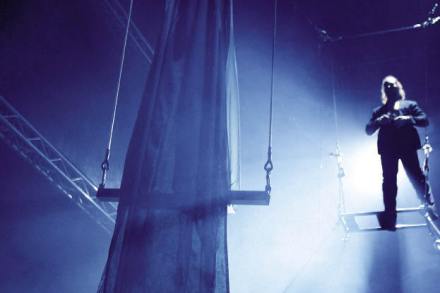
Lloyd Evans visits the NoFit State Circus in Wales and watches an unusual rehearsal T here are lots of things you can’t do any more. Smoke in a pub. Buy a video recorder. Trust the bloke who runs your bank. And you can’t run away to the circus either. These days the wannabe stilt-walker or trapeze artiste needs to study at college for three years and gain a BA (Hons) in Circus Arts. It can’t be long before the gypsyish traditions of the ring are welcomed into the Olympic family and acknowledged by the Nobel committee. As it becomes more middle class, the circus has modified its bill to suit the prejudices of fashionable morality. The cages and whips have gone. The leotards have been recycled.

Irish stew

From our UK edition

Dancing at Lughnasa Old Vic Burnt by the Sun Lyttelton It’s almost physically painful to see the vandalism wrought at the Old Vic by the new stage configuration. It’s like looking at some doomed Darwinian experiment, a cloven-hoofed butterfly, a spaniel with a trunk, a winged slug. Worse still is the fussy, over-ambitious set for Anna Mackmin’s production of Dancing at Lughnasa. Apparently, no one realised that bolting a sycamore tree, yes an entire tree, to the upright of the proscenium arch and then dumping a big old stove next to it would look a bit weird. Arch, tree, stove, all in a line. Strangest thing I’ve seen all year. The play is a classic Irish wrist-slasher from the Frank McCourt school of rural suicidalism. Take cover, everyone. Blarney attack.

State of the nation

From our UK edition

England People Very Nice Olivier Toyer Arts It’s been a busy year for offence-junkies. Richard Bean’s new play has prompted anti-racism protests at the National. What for? The play is certainly racist in the narrow sense that it mocks the distinctions between races (or regions, for the most part, since Bean belongs to the same Aryan race as the Irish, French, eastern Europeans and Indians he mocks in this play). And he uses a strange device to pre-empt the outrage-vendors. We open in a detention centre where a group of asylum-seekers are, rather improbably, rehearsing a pageant that tells the history of migration to Britain. Cut to the play. The scene is Spitalfields, east London.

Harman’s rivals will have relished her inept PMQs performance

From our UK edition

Vintage PMQs today. A decent debate, good jokes and a clear winner. With Brown in America practising his lecture-circuit speech on Congress, his beloved colleague and would-be assassin, Hattie Harman stepped up. She made a sloppy start and forgot to mention yesterday’s massacre in Lahore. A sleek, well-briefed Hague used his first question to remind her, and Harman was forced to offer belated condolences. Hague then loaded his crossbow with a shaft about lending agreements. The government had promised to ‘help businesses now’ so why hadn’t a single loan been guaranteed? Harman floundered and murmured, ‘Provisions under that scheme are being finalised.’ Squalls of jeers greeted this defensive shimmy.

Building blocks

From our UK edition

Three Days of Rain Apollo This Isn’t Romance Soho Richly sophisticated and over-contrived. This is the glory and the failing of Richard Greenberg’s Three Days of Rain. But, first, hats off to a writer who expects his audience to be smart, clued-in and intellectually curious. Dimwits, stay in the bar, we’ll join you later. The play opens in a disused office space in 1995 where three young adults who grew up together are tussling over their dead father’s will. Dad ran a hugely successful architectural practice and the plot turns on the ownership of an award-winning, postmodern house, built in the early Sixties, whose innovative design launched the careers of its creators but whose true authorship is in doubt.

Clinical analysis

From our UK edition

Woman in Mind Vaudeville On the Waterfront Theatre Royal, Haymarket The Stone; Seven Jewish Children Royal Court Blistering, searing, cracking, scorching. I’m describing the performances of Janie Dee and Stuart Fox in Woman in Mind, Alan Ayckbourn’s comedy about senile dementia. Smouldering, blazing, torrid, incandescent. There’s a few more. But a show can only take so much heat before it buckles and breaks. Janie Dee’s Susan is a frustrated upper-class sex-pot whose grip on reality is weakening and whose marriage to Gerald, a chortling musty vicar, has all but expired. Outstanding as the performances are they make the relationship seem pretty incredible.

HMS Brown is sinking

From our UK edition

A commanding performance from Cameron today. There were large cheers, and larger expectations, on the Tories benches as he stood up. His first words were an improvised response to the opening question, placed by Labour poodle Khalid Mahmood, demanding that ‘the allegations against Sir James Crosby must be investigated.’ ‘So,’ said Cameron, ‘they can even plant questions at short notice.’ He invited the Prime Minister to admit ‘a serious error of judgement’ in appointing James Crosby to the FSA. Brown waffled about awaiting the outcome of various investigations and Cameron came back forcefully calling Crosby ‘the man who was going to sort out mortgage market’.

Indefinable charm

From our UK edition

Enjoy Gielgud Entertaining Mr Sloane Trafalgar Studio A View from the Bridge Duke of York’s How does he get away with it? The main target of Alan Bennett’s 1980 comedy Enjoy is disability. Ageing Connie has pre-senile dementia and her husband Wilf is partially paralysed and prone to blackouts. Their condemned terraced house is about to be flattened by their progressive council who’ve sent in a sociologist to record the slum-dwellers’ behaviour for posterity. Shaken from their habitual indolence, Connie and Wilf blunder about the house bickering ignorantly while the mute observer takes notes.

‘Basically, I’m a spineless wimp’

From our UK edition

Steven Berkoff admits to Lloyd Evans that, despite his reputation, he’s not tough at all On the waterfront. This, literally, is where I meet Steven Berkoff to discuss his stage adaptation of the classic Fifties movie. Berkoff’s east London office is a sumptuous, spotlessly clean apartment with wraparound views of the grey-green Thames. He strolls in, direct from rehearsals, wearing dark loose baggy clothes. I’d expected a brash, superconfident whirlwind but Berkoff is softly spoken, pensive, hesitantly friendly. He even asks if I mind him smoking a roll-up. ‘Of course not.’ But he doesn’t have one. Instead we sip coffee at a vast polished black table.

Brown gets through PMQs smiling

From our UK edition

After a nifty performance last week, Dave displayed lots of sluggish footwork today. Everyone was desperate for him to nail Brown over his ‘British jobs for British workers’ gaffe but instead Dave opened by asking the PM to condemn international protectionism. An easy shot, safely dealt with by Brown. What was Dave playing at? The TV news is teeming with ‘winter of discontent’ style images showing crowds of indignant workers braving the blizzards to demonstrate their anger against the PM. And the Tory leader doesn’t mention it? Eventually, on his third question, Dave finally stirred himself to ask Brown to admit that BJ4BW had been a mistake and to apologise. Brown wriggled and squirmed.

Caledonian whimsy

From our UK edition

Be Near Me Donmar Complicit Old Vic Here’s the odd thing about the Donmar, the country’s pre-eminent theatrical power-house. Its productions are nearly always stunning and rarely (very rarely) atrocious. They don’t do so-so. But here we have it, an OK sort of show done with tremendous affection and commitment but with numerous elementary flaws. Be Near Me, adapted by Ian McDiarmid from the novel by Andrew O’Hagan, passes the first test of art. It has integrity and sincerity. Everyone involved in the production clearly gave it their best shot. So what’s wrong? Well, the storyline advances with all the pace and vigour of a snail having a heart attack.

Smoky notes of the islands: a Burns Night dinner

From our UK edition

A wintry London night and the haunting note of the bagpipes summoned us to Burns supper at Boisdale of Belgravia. In the doorway Pipe Major Willie Cochrane paused for breath and shook my hand. ‘Are they giving you a nip of something later?’ I asked. ‘I’ve got one right there,’ he said, pointing to a glass of Johnny Walker tucked beneath the Boisdale pavement sign. ‘It’s good stuff. But don’t tell anyone.’ ‘Hey,’ I said, ‘my lips are sealed.’ Taxis arrived and a succession of notorious characters appeared. Lorraine Kelly, Kirsty Wark, Dougray Scott, Duncan Bannatyne and others, all nominees for Boisdale’s inaugural ‘Great Scot’ award.