Lloyd Evans

Lloyd Evans

Lloyd Evans is The Spectator's sketch-writer and theatre critic

Lost in space | 7 May 2011

From our UK edition

The RSC isn’t limited to Shakespeare. The RSC isn’t limited to Shakespeare. It’s also one of the richest and most prolific fringe operations in the country. ‘We have between 30 and 40 writers working on plays for us at any one time.’ Golly. Some Stratford bigwig wants to tell the tale of the Russian space programme so a Casualty writer, Rona Munro, has been hired to knock out a script. The programme note is an act of contrition. ‘I have had to take some glaring liberties with time and space and imagined events,’ Munro confesses. A strange approach to scientific history. ‘I ask forgiveness of the dead,’ she goes on, ‘and the indulgence of the living, some of whom have been fictionalised.’ OK, love.

A session of Dickens, Ernie the Milkman and Jack Dromey

From our UK edition

There was an eerie, eve-of-battle calm about today’s PMQs. The real bust-up isn’t due till Friday. The votes will be in, AV will be out, Clegg will be down and Huhne will be calculating his next move. Before today’s session everyone expected Labour to co-ordinate an ambush and try to light Cameron’s ever-combustible fuse. But the chamber was under-populated and the opposition hadn’t troubled to devise a battle-plan. Miliband carried the fight to the PM. With an assured forensic performance he methodically built up the case against Cameron as a promise-breaker, a question-dodger and a budget-slasher. Cameron dealt with the assault by absorbing rather than repulsing it.

What a carve up | 27 April 2011

From our UK edition

Blimey. That was a weird one. PMQs was trundling merrily away when the house was suddenly engulfed in a whirlwind of insults and accusations. Even now the row rumbles on across the blogosphere. Cameron arrived at PMQs looking genial and well-sunned. Quite a contrast with his sallow-faced opponent. Perhaps Ed Miliband’s bookish ways have kept him in the reading-room during the heat-wave while Cameron was roaming his herbaceous borders uprooting dandelions and other troublesome yellow-heads. The session began with the usual blend of opportunism and hypocrisy. Miliband demanded to know why economic growth has flat-lined in the last six months.

Pinter’s self-vandalising

From our UK edition

Let’s think about it. How did Harold Pinter write his masterpieces? And why are they praised so much more lavishly than the scribbles of his contemporaries? Let’s think about it. How did Harold Pinter write his masterpieces? And why are they praised so much more lavishly than the scribbles of his contemporaries? Moonlight, his 1993 play, has been slickly revived at the Donmar and it opens with a dying pensioner sprawling luxuriously in a double-bed and ranting at his wife. Across stage his sons engage in madcap vaudevillian banter. Other characters wander in and speak fluent nonsense. A girl, who is also a ghost, articulates charming drivel about moonshine and memory. The characters fail to communicate and the dramatist fails to communicate why they fail to communicate.

Love joust

From our UK edition

Throughout his career Clifford Odets was overshadowed by Arthur Miller. Nowadays, his plays tend to be classified on a topsy-turvy scale beginning with the least completely forgotten. One of the lesser forgotten, A Rocket to the Moon, is a flawed, steamy, bourgeois melodrama. At first it seems crammed with gestures that don’t quite gel. The setting, a New York dental practice, seems to symbolise the American dream with the handbrake on. The characters’ names hint at their function. Belle is a flouncing beauty, Mr Prince is jolly rich, Willy Wax is a slippery, priapic seducer. There’s an earnest deadbeat dentist, Ben Stark, whose name vividly evokes the lead in his boots.

‘The global warming concern is over. Time for a return to sanity’: a Spectator debate

From our UK edition

Lord Lawson, the former chancellor, proposed the motion by addressing various myths promoted by the ‘relics’ of the opposition. The average temperature rise since fossil fuels were first used had been barely one degree Celsius, he said, and no warming had been observed this century. The cost of ‘decarbonising’ the economy, he added, would be catastrophic. Oil was not about to run out and ‘winnable gas’ was available in ever greater abundance. Yet schoolchildren were being deliberately scared to death about global warming by their teachers. ‘This is not just outrageous but wicked.

Cheating the noose

From our UK edition

Incredibly boring. That’s how a cracking courtroom drama seems at first. Case closed. We know whodunnit already. Alma Rattenbury, a luscious middle-aged nympho, has bashed in the skull of her deaf old husband with the help of a teenage builder, George, who shares her bed. Incredibly boring. That’s how a cracking courtroom drama seems at first. Case closed. We know whodunnit already. Alma Rattenbury, a luscious middle-aged nympho, has bashed in the skull of her deaf old husband with the help of a teenage builder, George, who shares her bed. Newspapers carry lurid reports of a drunken Alma dancing in her husband’s blood and trying to seduce the policemen who came to arrest her.

A pair of shockers

From our UK edition

Michael Attenborough, the spirited maverick who runs the Almeida, has lavished a first-rate production on David Eldridge’s new play. Michael Attenborough, the spirited maverick who runs the Almeida, has lavished a first-rate production on David Eldridge’s new play. All that’s missing from this slick, visually pleasing show is any thought or utterance worthy of adult scrutiny. The script introduces us to a TV presenter, Lucy, recently dismissed for smoking heroin in her dressing-room. Skint, hooked on drugs and profoundly depressed, she follows a predictable downward spiral into theft, prostitution and homelessness and from there to counselling and the delusional ‘contentment’ of abstinence.

Mundane duties interrupt Field Marshal Cameron

From our UK edition

Cameron was at pains to disguise it, but his impatience finally gave way at PMQs today. What a contrast with the last 24 hours. The nemesis of Gaddafi, the terror of Tripoli, the champion of the rebels, the moral conscience of the West, the world’s latest and greatest international tyrant-buster had to return to earth, and to the House of Commons, to deal with enterprise zones, disability benefits, carbon trading price structures and all the belly-aches of the provincial grockles who put him where he is. What a chore. Ed Miliband had a pop at him on police numbers. The Labour leader asked a clear and simple question. ‘Will there be fewer front-line police officers in future or not?

Following in the family footsteps

From our UK edition

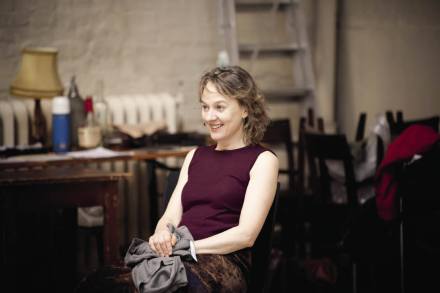
Lloyd Evans meets Niamh Cusack, who ‘absolutely wasn’t going to be an actress’ She doesn’t usually do it this way. When Niamh Cusack heard that the Old Vic was planning to stage Terence Rattigan’s final play, Cause Célèbre, she read a synopsis, found a part that excited her, and asked her agent to get her an audition. ‘I’ve never approached a production like that,’ she tells me. ‘But it’s a cracking play, really, well written — a rollicking courtroom drama with great characters and fascinating relationships.’ We meet in a dressing-room at the Old Vic and make ourselves comfortable amid the higgledy-piggledy apparatus of a Feydeau farce whose run is drawing to a close.

Sibling opposition

From our UK edition

Hard to like, impossible to discount. Neil LaBute delivers another of his exquisitely sordid insights into the damaged terrain of the privileged bourgeoisie with his new melodrama, In a Forest Dark and Deep. The setting is a small house near an American university. College lecturer Betty is being helped by her trailer-trash brother Bobby to clear out the detritus left by a departing tenant. LaBute’s storyline adheres very strictly to the timetable laid down by screenplay seminars: every 20 minutes a new revelation flips the plot entirely on its head. This tick-tock regularity gives the play an unwelcome air of artifice. First we learn that Betty is more a sugar mummy than a landlady to her absent tenant.

Dave’s rave

From our UK edition

Friskier than a spaniel. That’s how Cameron seemed at today’s PMQs. The Gadaffi debacle has given him a Falklands bounce – prematurely one senses - and he was glowing like freshly made toast from the praise lavished on his performance on Monday. He seemed to want to share the good cheer with everyone else, even his opponents, and he offered thanks to Ed Miliband for his contribution, ‘which I thought was extremely powerful.’ Miliband sensed that attacking Cameron today would be like serving a writ on a man at his birthday party. He tried to pester the PM for ‘removing the mobility element from DLA’ but Cameron cut him down glibly. ‘The short answer is we haven’t,’ he said.

Day tripper

From our UK edition

Like a lot of classics, Blithe Spirit doesn’t quite deserve its exalted reputation. Like a lot of classics, Blithe Spirit doesn’t quite deserve its exalted reputation. Every time I see it I discover a little bit less. Catty, slight, charming, clever and a touch too pleased with itself, the play shapes up as nothing more than an ingeniously plotted sitcom. It’s no surprise to learn that it was written in six days. The Blitz and the threat of sudden death had fostered a mood of defiant merriment in the British people which the play, dashed off in 1941, captures very skilfully. Thea Sharrock’s production is competent, slick and faintly heartless. Robert Bathurst brings a nice blend of suavity and huffiness to the role of Charles.

An alternative PMQs

From our UK edition

With Libya in metaphorical meltdown and with Japan close to the real thing, it was remarkable how little foreign affairs impinged on PMQs today. Ed Miliband led on the NHS and facetiously asked if Cameron planned any amendments to his health bill following the LibDem spring conference. Cameron replied by accusing Labour of wasting £250m on phantom operations. Would he apologise for this scandalous blunder? Miliband, unsurprisingly, declined even to acknowledge the invitation. The session developed on these familiar, solipsistic lines. Keen to harry the PM on bureaucracy Miliband stumbled on a Cameron quote decrying ‘pointless topdown re-organisations’ of the NHS. He pulled it up by the roots, shook off the mud and flourished it in Cameron’s face.

Under the rainbow

From our UK edition

The pantomime, we’re often told, exists in no culture but Britain’s. Maybe we should look a bit harder. The Wizard of Oz is a children’s fantasy, epic in form, comic in idiom, populated by folksy stereotypes, which uses the metaphor of a journey to present a mythical clash between good and evil. It ends with order restored and virtue triumphant, and with the characters discovering that self-knowledge and wisdom are more valuable than the illusory contentments of wealth or power. All that’s missing is some bad acting and a few painfully ribald puns. The pantomime, we’re often told, exists in no culture but Britain’s. Maybe we should look a bit harder.

A tasty contest

From our UK edition

Today’s PMQs was full of verve and bite. A welcome change after last week’s washout. It’s all getting a bit tasty between Ed and Dave. The Labour leader opened with Libya and after making ritual noises about wanting to support the government’s foreign policy he admitted he found it hard not to voice his ‘concern about incompetence’. Nice tactics there. Pose as a statesman and stick the blade in under the table. But Cameron wasn’t standing for it. ‘I don’t want to take a lecture from Labour about dealing with Libya and Gadaffi,’ he said furiously. And the cheers from the Tory benches redoubled when he called for Labour to apologise for its part in the release of the still-not-dead Al Megrahi.

Literary junkyard

From our UK edition

We critics know everything about the theatre. We see the best shows, we get the finest seats in the house and we’re occasionally treated to a fuming glass of vin ordinaire to lubricate our ruminations. And yet what do we really know? We critics know everything about the theatre. We see the best shows, we get the finest seats in the house and we’re occasionally treated to a fuming glass of vin ordinaire to lubricate our ruminations. And yet what do we really know? Last week a family funeral forced me to miss the press night of Frankenstein and when I logged on to the NT website I found it proudly boasting that the entire run was a slam-dunk sell-out.

Dave ‘n’ Ed’s Flying Circus

From our UK edition

It was Monty Python without the jokes. The focus of PMQs today veered surreally between crisis in north Africa and early swimming pool closures in Leeds. The session opened in Security Council mode with Ed Miliband politely asking the PM to brief us on the humanitarian disaster evolving in Libya’s border-zone. Cameron went into his statesman-of-the-year routine and announced that HMS York had docked in Benghazi with medical supplies.   At such moments the imperial ghosts of the Commons seem momentarily reawakened. Ed Miliband sounds like some Victorian stooge asking the Foreign Secretary to reassure the nation that an uprising in a far-flung oriental possession is being energetically suppressed. Having dealt with Libya, Ed Miliband moved to Bromley.

Flavour of freedom

From our UK edition

Richard Bean is a creative nomad, a pix-and-mix sort of playwright who lights on subjects seemingly at random. He’s written about Brussels, racism, agriculture, social mobility and trawlermen. Now he’s taken on climate change and he’s hit the mark with delicious accuracy. This is his best play so far. The Heretic is set in a university earth-sciences faculty where Diane, a paleogeophysicist, has found incontestable proof that sea levels aren’t rising. A decade ago she planted a betel nut tree on a beach in the allegedly drowning Maldives. But instead of sinking, the tree is thriving. Her departmental head, Kevin, tells her that her findings may damage the faculty’s ‘business model’ and endanger a juicy contract with a top firm of eco-insurers.

The messiah is betrayed

From our UK edition

A monsoon of literature will eventually be written about the WikiLeaks story. Here are two of the first droplets. David Leigh and Luke Harding have delivered an enjoyable account of the Guardian’s fraught dealings with Julian Assange and the publication of the secret US cables. The WikiLeaks founder comes across as a shadowy, manipulative character with the habits of a tramp and the brain of a chess grandmaster. When it suited him he displayed an absurdly possessive attitude towards documents he couldn’t possibly claim legal title to. The story is blown dramatically off course by the assault charges filed against Assange by two Swedish women last year. In Leigh and Harding’s account the allegations amount to very little.