Lloyd Evans

Lloyd Evans

Lloyd Evans is The Spectator's sketch-writer and theatre critic

Miliband fails to connect

From our UK edition

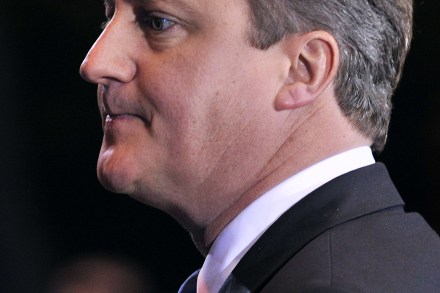
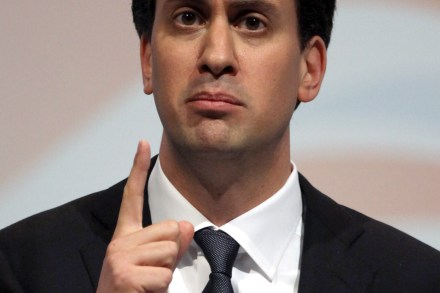
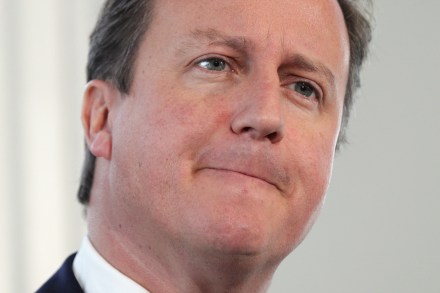
Easy-peasy at PMQs today. All Ed Miliband had to do was slice open the Coalition's wounds on Europe and dibble his claws in the spouts of blood. But his attack had no sense of bite or surprise. And his phraseology was lumpen. He used all six questions gently stroking the issue of Europe rather than driving a nail through it.  He asked about growth. He asked about the '22 committee. He asked about Nick Clegg's "smash-and-grab" phrase to describe the repatriation of powers. He asked about the social chapter. He asked about everything he could think of, and it was clear he couldn’t think of the right thing to ask. At the climax he sounded like a nursery-assistant scolding Cameron for "pleading not leading" on Europe. Desperately flaccid oratory.

The Pitmen Painters; Honeypot

From our UK edition

At last, it’s reached the West End. Lee Hall’s hit play, The Pitmen Painters, tells the heartening tale of some talented Geordie colliers who won national acclaim as artists during the 1930s. Hall, who wrote Billy Elliot, has done extremely well from a pretty limited set of dramatic techniques. He draws each of his coal miners from a couple of opposed attributes: youthful but jobless; single-minded but foolish; erudite but insensitive; unhealthy but idealistic. His dialogue consists of gentle interrogations and nothing else. It’s like a cop show for kids. Every scene involves a misunderstanding — caused by ignorance, stubbornness or some cultural confusion — which has to be resolved by characters cross-examining each other.

Cameron outfoxed in PMQs

From our UK edition

Alive or dead? At PMQs today we discovered whether Dr Fox is still an active toxin within Cameron’s government. Ed Miliband, using that special quiet voice he likes to try when he’s got a deadly question, described the affair as ‘deeply worrying’, and asked how on earth the prime minister could have let it all happen. Cameron, evidently relieved that Fox is already a stuffed and mounted exhibit in the Museum of Former Big Beasts, pointed out that his minister had resigned. ‘Not something that always happened under Labour.’  It turned very tetchy all of a sudden. Miliband, apparently miffed, struck out with this hoity-toity harangue. ‘Some advice for the Prime Minister,’ he said. ‘In this week of all weeks.

False expectations

From our UK edition

Here’s an idea from the heyday of radio comedy. A soap star about to get the chop improvises an unscripted deathbed recovery during a live broadcast in order to save his career. I think it was Tony Hancock who starred in that sketch. To expand it into a full-length play would be quite a challenge. And in the 1960s Frank Marcus, a showbiz journalist, took on the job. And he struck gold. The Killing of Sister George triumphed in London and on Broadway. Now it’s back with a cast of starry comediennes. Sister George, a district nurse, is the leading character in a popular Radio 4 soap opera. One day, on a whim, the BBC execs decide to bump off the character.

Exclusive: Michael Boyd to quit the RSC

From our UK edition

The theatre world is abuzz with rumours that Michael Boyd, director of the Royal Shakespeare Company, has quit this afternoon. He was appointed in July 2002 and was expected to complete at least a decade in charge. His colleague Vikki Heywood is also expected to resign. Boyd will probably be best remembered for overseeing the enormous refit of the main theatre in Stratford. The renovated space, with its thrust stage, opened its doors in November 2010 and has been judged a huge success. Boyd has also shown himself adept at the do-gooding jargon of top public officials. He talks of the Bard’s new home in Stratford as if it were a drop-in centre for junkies. He describes it as ‘a chance to build a contingent, optimistic community.

The leprechaun factor

From our UK edition

Riots at theatres, commonplace before the Great War, have mysteriously gone out of fashion. J.M. Synge’s classic, The Playboy of the Western World, was disrupted many times during its opening week in 1907 by Dubliners who objected to its portrayal of the rural poor in the west of Ireland. Strange that, feigning outrage on behalf of an alien caste. It’s like insider trading with an ethical twist. You borrow someone else’s moral identity and sell it at a value which has been inflated by your act of adoption. Even today this peculiar mechanism keeps the grievance industry going. The protesters in Dublin, many belonging to Sinn Fein, gave up when they realised that the protests were effectively advertising the show.

Down to earth

From our UK edition

Lloyd Evans talks to the warm, vibrant, vegetable-growing actor, teacher and director Caroline Quentin Terminal fear. Rising nausea. And possibly vomiting. That’s what Caroline Quentin expects to go through on the opening night of her new play, Terrible Advice, at the Menier Chocolate Factory. ‘I’m really pretending it’s not happening at the moment,’ she tells me when we meet in the theatre bar. With two weeks to go before the first performance, she confesses, ‘I get dry-mouth at the very bloody thought of it. Mind you, I’m always like this halfway through rehearsals, I think, agh! I can’t bear it, perhaps I can run away. Or feign injury. Or I start booking flights mentally and all that.

Unrequited love

From our UK edition

It’s a record breaker. The Trafalgar Studio is staging a rare revival of Christopher Hampton’s breakthrough play, written when he was 18, which made him in 1966 the youngest writer ever to have his work staged in the West End. This record has now stood for so long that it could probably do with a lie-down. The plot, meticulously fashionable and youth-orientated, focuses on an unrequited affair between Ian and his flatmate Jimmy. Hampton’s conception of personality is underdeveloped. And overdeveloped, too. Most of his characters are handsome, vague, middle-class numbskulls, posh little tadpoles wriggling around a cosy pond. But the central character, Ian, is a brilliant study of brooding, adolescent misogyny.

Compelling revelations

From our UK edition

Even the cover is a mystery. Julian Assange’s memoir carries a contradictory, if eye-catching, title: the unauthorised autobiography. On his WikiLeaks site the author disclaims authorship altogether. ‘I am not “the writer” of this book. I own the copyright of the manuscript which was written by Andrew O’Hagan.’ He claims that the text was ‘distributed secretly’ in the final week of September. Well I wonder. My copy was delivered by a helmeted courier who handed me the book only after a pre-arranged password had been exchanged between us: my name. This was hardly secret.

Losing the plot | 24 September 2011

From our UK edition

A world première at the Almeida. My City written and directed by Stephen Poliakoff. Is it any good? Well, let’s see. Plot, first. It’s not that Poliakoff can’t write a plot; he can’t even think one up. Instead he sets himself a high-minded riddle and examines its possibilities. Take an archetype, ‘the kid-fearful-of-the-dark’, turn it inside-out and you get ‘the adult-fearful-of-the-light’. That’ll do for starters. Bung in a few extra brushstrokes and you’re off. An insomniac teacher (Tracey Ullman with too much grey hair) bumps into two former pupils and tells them about her odd little secret. Every night she trudges London’s streets encountering weirdos and listening to their offbeat chitchat.

Spectator debate: Is it time to leave the EU?

From our UK edition

 Christopher Booker, of the Sunday Telegraph, proposed the motion by taking a blast at his own side. Christopher Booker, of the Sunday Telegraph, proposed the motion by taking a blast at his own side. The present Euro crisis had inspired Tory Eurosceptics to talk of "a re-negotiation" and a "repatriation of powers". This, he said, utterly misconstrued the EU project and its "sacred aim" to strip nations of their rights and "never to give back a power once ceded." He called the EU "a 40-year-long slow-motion coup d’etat" and "a crazy make-believe project" whose hubristic ambitions were now facing nemesis. He heaped scorn on Herman van Rompuy for claiming that the best remedy for the Euro was "more Europe".

The triumph of humility

From our UK edition

‘John Smith is dead.’ These four blunt syllables, as elemental and atmospheric as the first line of a classic novel, form the opening of Chris Mullin’s new collection of diaries. This is a fascinating read, crammed with gossip, jokes, insights and anecdotes, not all of them political. Mullin’s first disclosure is that the ‘decent interval’ between a leader’s death and the tussle to succeed him lasts about three seconds. The ‘Stop Blair Camp’ formed as soon as Smith was buried. They try to court Mullin and he brushes them off. ‘I’m in the Win the Next Election Camp.’ He considers backing John Prescott, but ‘I can’t bear the thought of another phoney-left leader. Give me an honest right-winger any day.

Essay in off-beat grief

From our UK edition

Well done, the Royal Court. It’s got the art of audience abuse down to a tee. The queue for the tiny studio theatre snakes up an airless flight of stairs and bottlenecks into a doorway where each play-goer receives a personalised earbashing from an usherette. ‘Hello, did you hear all that? It’s one hour straight through. No readmission. No recording. No photography. No mobile phones. No sitting on the reserved chairs. No treading on the floor on the way to your seat. Enjoy the show. Hello, did you hear all that...?’ and so on. The floor we mustn’t tread on is strewn with a layer of sacred grit which the director insists will remain untouched by human sole before the show begins.

A good man in a crisis

From our UK edition

It’s debatable whether politicians of the Left or the Right are better at handling the public finances. But we do seem to learn more about economics under a Labour government. Alistair Darling’s memoir chronicles his turbulent years at the Treasury as he watched the world slithering into a financial volcano. Though the material is extremely dramatic, Darling’s sober, measured prose doesn’t quite suit the story’s explosive theatricality. He was haunted by the Northern Rock crisis of 2007 and the global impact of TV images showing panicking investors queuing up to withdraw all their cash. That, he determined, must never happen again.

Out of this world | 10 September 2011

From our UK edition

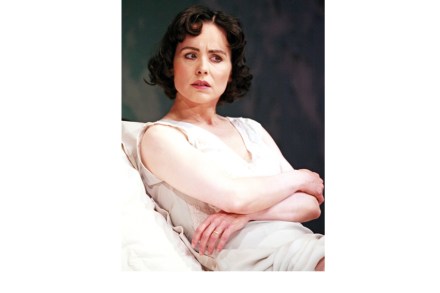
Lloyd Evans meets Tara FitzGerald and is struck by her uncanny beauty and her desire to hear what he thinks Tara FitzGerald’s beauty is fabulous. Literally, there’s something unworldly about the surfaces and contours of her face. It’s as if the codes of her biology had been transmitted to earth from a higher realm, from alien beings. The wide cheekbones are angular yet softly curvaceous. Her eyes have a luminous purity, a revelatory greenness. Her dark hair glows, and her immaculate skin is invitation-card white. She speaks in a low, smokily textured voice that occasionally surges into a throaty giggle. I meet her at the Tricycle theatre in Kilburn where she’s currently starring alongside Antony Sher in Arthur Miller’s Broken Glass.

Divine punishment

From our UK edition

Once or twice a season Shakespeare gets booted out of the Globe. In his place a modern author is given a chance to shine. The Scottish writer Chris Hannan’s new play, The God of Soho, opens with a frolicsome nod to classicism. We are in heaven where two demotic deities, Mr and Mrs God, engage in caustic marital banter. Mrs God wears a colostomy bag and her affliction triggers many a harrumphing sound of flatulence from an on-stage tuba. This is hilarious, of course, and even more hilarious if you happen to be six years old. Hannan’s carping immortals turn out to be very hard to engage with. Perhaps he assumed that divinities would be fun to write. But they’re devilishly hard, bordering on the impossible. Nothing is at stake in heaven.

The horror movie experience

From our UK edition

Mark Kermode is not happy. And his discontent is a joy to witness. The centrepiece of his new book about Hollywood blockbusters is a brutally hilarious account of his attempt to see The Life and Death of Charlie St Cloud with his teenage daughter. First he books two tickets online. At the multiplex, the machine denies all knowledge of his purchase. He joins the queue and attempts to buy the seats he’s already reserved. ‘They’re taken,’ says the ‘zombie’ attendant. (‘He was conclusive proof that Darwin had been full of shit, and we were all heading back to the swamp’). Kermode buys two new tickets (for the price of four) and is then asked for a tub of popcorn by his hungry daughter. Costing a few pence to produce, and on sale for £4.

Speech impediment

From our UK edition

Anna Christie, an early Eugene O’Neill play, has brought Jude Law to the tiny Donmar Warehouse. Set in New York among migrant longshoremen, the script takes ages to get to the point. Mat Burke, a randy Oirish loon, wants to marry Anna, a winsome worldly blonde, but faces opposition from her narky, knife-wielding dad, Chris. But never mind the drama, listen to the accents. Jarring phonetics dominate the stage. David Hayman’s Chris spits out gnarled Scandinavian curses. ‘I svair to Gott, Anna, I don’t font hear it.’ Ruth Wilson’s Anna has a hard-to-place American accent which harbours many a stowaway syllable. And Law, playing de Oirishman, speaks a dialect that’s packed with extra fruity flavours.

Down and out in Edinburgh

From our UK edition

Lloyd Evans mingles with sozzled Scots, benumbed punters and performers with nothing to lose at this year’s Fringe It’s for losers, Edinburgh. The world’s down-and-outs come here in droves every August. This year I was one of them. Having failed to secure my usual lodging, a spartan cell on the university campus, I had to book a backpackers’ refuge on the Royal Mile. It was better than a park bench. Just about. The website promised ‘fitted sheets’ and ‘lounge with real fire (gas/coal effect)’ as tokens of its commitment to luxury. I rented a towel (20p, no deposit), which turned out to be fairly clean on one side. The accommodation was rammed. Six rooms, eight bunks each. Nearly 50 of us sharing four showers. No soap.

Fringe round-up – Mixed blessings

From our UK edition

Hit and miss at Edinburgh. It always is. Random impulses drive you to select one show from the thousands on offer. Coffin Up (10 Dome) contained the hint of a macabre pun (‘coughing up’?), so along I went. It begins in a mortician’s office. There’s a coffin centre stage. The lid springs open and a masked clown sits bolt upright. He waves. Surprise! On comes the undertaker, also masked, and we learn through wordless gestures that he’s bankrupt and has embarked on a killing spree to save his business. It’s charming enough in a cheesy kind of way. The best thing is the soundtrack, a sequence of pub tunes and orchestral favourites that lends subtle emphasis to the dramatic mood.