Lloyd Evans

Lloyd Evans

Lloyd Evans is The Spectator's sketch-writer and theatre critic

Northern lights | 4 August 2012

From our UK edition

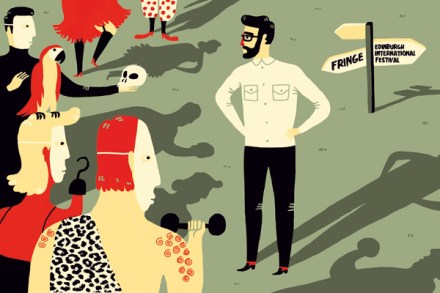
No one knows quite why we go. It’s not for the whisky (which is like drinking liquefied peppercorns), or for the shortbread (like eating undercooked biscuit-mix), or for the weather (like walking through a car-wash). Nor does the moaning falsetto of the bagpipes draw us north. But every year, without fail, the London media colony sets off for the Scottish capital to watch a gang of wackos and wannabes (mostly from the London media colony) making a bid for fame and glory. This is my tenth visit and here are my tips for maximising the fun. Big question first. How to avoid being engulfed in an avalanche of pretentious tripe put on by waffling preeners and self-adoring garbage-smiths? That’s easy. Don’t see anything at the International Festival (9 August to 2 September).
In health and hypocrisy

From our UK edition

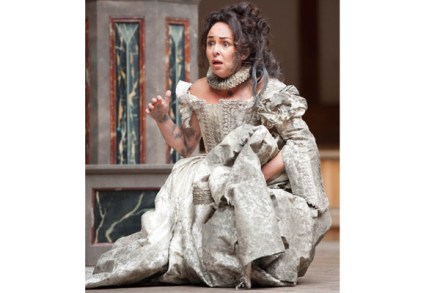
George Bernard Shaw argued passionately that Britain should create a public health service. And he lived long enough (1856–1950) to become one of its earliest victims. This play from 1906 shows the very best and the very worst of his creative abilities. He had a plan: to strip bare the iniquities of private medicine and stick the knife in deep. We open in Harley Street where a gang of slick and prosperous doctors are bantering away, like tipsy clubmen, about their patients. I cured this one. I killed that one. Each quack has his preferred treatment. One thinks all disease is caused by blood poisoning. Another that surgery cures every ailment. A third that cheerful nurses and a decorative sick-bay are an infallible panacea.

Death in Damascus

From our UK edition

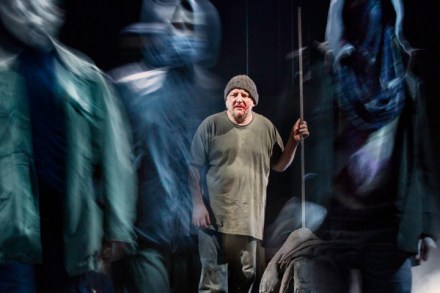
A timely show at the Finborough takes us into the heart of Bashar al-Assad’s terror state. Zoe Lafferty’s verbatim piece gathers evidence from activists and torture victims and flings it straight at us. The result is utterly gruesome and utterly compelling. A fractured, blood-stained snapshot of an ancient monstrosity blundering towards its own funeral. Syria, a Russian sidekick state, still pursues the traditions of Marxist totalitarianism. Every morning, ranks of schoolkids salute their leader. ‘Unity, Freedom, Socialism’ they chant in honour of a regime which traduces all three ideals. The Alawi minority, making up 12 per cent of the population, controls everything. Western music and literature are ruthlessly censored.

Extreme actions

From our UK edition

OK, I was wrong. I’ve said it a million times but I now realise it’s perfectly feasible. Antique dramas can make sense in a modern location. Nicholas Hytner sets Timon of Athens slap bang in the middle of present-day London. The action begins in a mock-up of the National Gallery’s Sainsbury wing, complete with that dull, forbidding grey hue that some miserable nutcase chose for the walls. Ominously, hanging centre-stage, is El Greco’s swirly pink vision of Christ ejecting the moneylenders from the temple. A launch party is in full swing. Champagne flows. A gang of yuppies, toadies, spivs and freeloaders has gathered to toast the opening of the ‘Timon Wing’. Glamorous sycophants hover around the millionaire philanthropist crying, ‘Timon, Timon!

Yesterday’s nearly-men

From our UK edition

Francis Beckett has come up with an intriguing new brand of political history. The Prime Ministers Who Never Were selects 14 of Britain’s nearly-men and imagines how they’d have fared in the top job. The big beasts are reduced to footnotes and the prat-fallers occupy centre stage. Beckett himself writes the story of Labour in the 1990s without the modernisers, and 13 other contributors cover the rest. John Smith survives his heart attack in 1994 and wins a 99-seat majority in 1997. His first act is to scrap the Millennium Dome, which Beckett describes as ‘a now long-forgotten proposal to build a vast round shed in Greenwich … which no one could find a use for’.

Double vision

From our UK edition

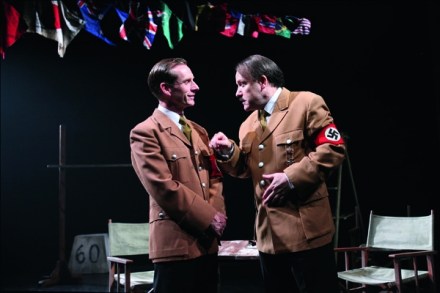
Michael Frayn is a schizophrenic. His creative personality bestrides the English Channel. When he’s at home he writes traditional West End farces with amusing titles and plenty of jokes. When he sits at his European desk he comes up with dour, static, talk-heavy historical dramas with boring titles and no jokes at all. Democracy, written in 2003, is a classic Euro-bureau production. Frayn invites us to examine Willy Brandt’s stewardship of West Germany in the early 1970s. Willy is referred to throughout as ‘Villy’ which, for some reason, sounds even more silly than just Willy. Chancellor Villy has a couple of problems. He’s an idealist and he wants the free world to embrace the eastern bloc and to give the misunderstood Soviets a big, warm, sloppy hug.

Fun for the hooligans at PMQs

From our UK edition

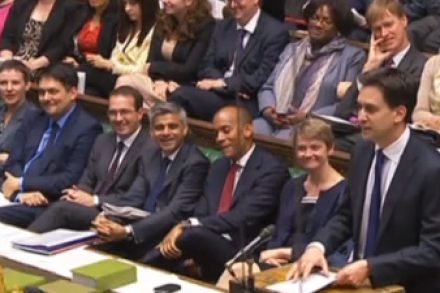
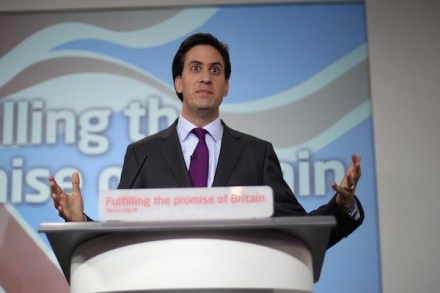
Ed Miliband is at his best when at his quietest. He began Prime Minister's Questions today by repeating a question put to David Cameron shortly before the last election. ‘Why do you want to be Prime Minister?’ Cameron had replied: ‘Because I think I’d be good at it.’ Great surges of Labour mirth greeted that quotation. When the noise died away, Miliband turned to the Prime Minister politely. ‘Where did it all go wrong?’ Cameron was like a man facing the downdraft of a helicopter. But he weathered the onslaught and responded forcefully with a list of government achievements. Two million taken out of tax. A cap on benefits, immigration and fuel duty. And the deficit cut by 25 per cent.

Disquieting truths

From our UK edition

Fear is a new drama by Dominic Savage and it’s one of the nastiest plays I’ve ever seen. It’s also one of the most scrappily written. Yet the subject matter and the clunky script make it weirdly captivating. We meet a pair of teenage muggers who hang around posh bits of London scoping out victims and totting up their ‘net worth’. A typical yuppie banker sports about five grand’s worth of portable accessories: Swiss watch, smart phone, designer briefcase, bespoke shoes, wallet full of cash. And these two muggers are expert valuers of lucrative prey. When they strike, they seek more than just upmarket goods. They want revenge as well.

Ed’s ahead with banking inquiry

From our UK edition

Low party interest parading as high political principle. That was the theme of today’s PMQs as the party leaders clashed over the scope and nature of the inquiry into the Libor scandal. David Cameron’s pungent language was intended to reflect public anger at the banks. He spoke of ‘spivvy and illegal activity’ in the City, and he promised that crime in financial centres would be pursued as rigorously as crime on the streets. One of the grandest of Tory grandees, Nicholas Soames, warned him that new regulatory mechanisms mustn’t be allowed to damage the City, ‘which remains a vital asset for our country.’   And he was followed by the very grandest of all the Tory grandees, Sir Peter Tapsell himself.

Hippie haven

From our UK edition

A mad leap into the dark on the South Bank. And I’m all for mad leaps into the dark. A big-name cast has been assembled for a new play by an untested writer at the 900-seater Lyttelton theatre. Cripes. Stephen Beresford is a Rada graduate who knows his way around the dramatic repertoire. And he seems to have approached his first commission from the National in a spirit of dazzling insouciance. ‘Hey, I’ll just nick everything from Chekhov: the plot, the setting, the characters, the relationships and the atmosphere. And no one’ll notice!’ Well, there are smarter ways to go poaching. If you steal from a lesser dramatist, you can improve what you’ve stolen. But if you mug a genius, his genius will embarrass you.

Is it time to let Scotland go?

From our UK edition

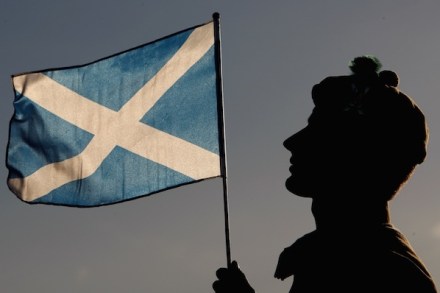
Lloyd Evans rounds up the highlights of this week's Spectator debate on the future of the union. The motion was 'It's time to let Scotland go'. Margo Macdonald, MSP, opened on a friendly note and declared that she had no plans to fall out with anyone. She wants to preserve Scotland’s ‘social union’ with England. But her country can no longer ‘shackle itself to the shell of a declining empire’. Nor should Scotland send ‘broad-kilted laddies’ to fight wars in foreign lands, ‘using armoured vehicles that are more dangerous to our servicemen than to the enemy.’ England, she claimed, uses Scotland to maintain its ‘magic seat’ on the Security Council.

Miliband’s notes still lack gusto

From our UK edition

Ed Miliband was spoilt for choice at today’s PMQs. Scarcely a week goes by without the government reneging on some budget promise, so Labour’s  leader had a whole fistful of blunders to consider. Wisely, he took the simplest option and quoted an apologia made by David Cameron on April 11th. ‘I will defend every part of the budget,’ the prime minister told some interviewer somewhere. ‘I worked on it very closely with the Chancellor. Line by line.’ That was pure gold for Miliband. And pure poison for the prime minister. ‘What went wrong?’ asked the Labour leader casually.   Cameron flipped into full denial mode. ‘I cannot be a U-turn!’ he shouted fierily.

Lukewarm in Narnia

From our UK edition

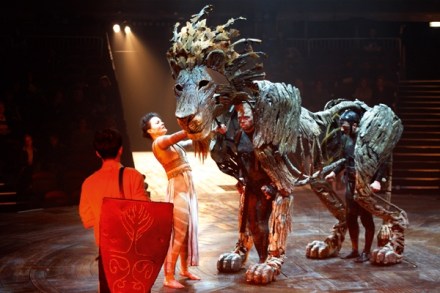
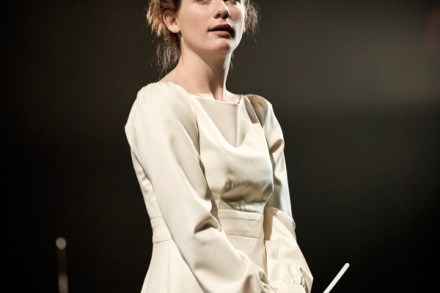
Off to Narnia. Director Rupert Goold has recreated C.S. Lewis’s permafrosted fantasy world in a circus tent moored in Kensington Gardens. And at the height of summer too. An impossible feat. But tons of cash, and many months of preparation, have been sunk into this effort. The show starts with The Wardrobe looming up in the middle of the stage, like a fat slab of mystery, a sort of Tardis perhaps, or the Kaaba at Mecca. Not much like a wardrobe, though. A child steps out and finds herself in a freaky kingdom run by a demented tundra-monger. Here she comes. Sally Dexter, playing the queen in a luminous white bedsheet, cackles sexily and yells commands at her cowering minions. Then she whooshes off in a great surge of whip cracks and dry ice. ‘Was that a bit scary?

Twinkle eyes turns on the charm

From our UK edition

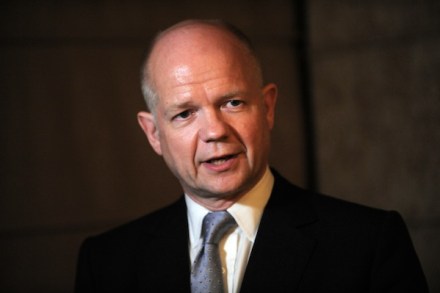
William Hague met Harriet Harman at PMQs. They were like old lovers bumping into each other at a party. The tension had vanished and little remained but warm mutual regard. Harman led on health rationing and Hague chose not to retaliate, as Cameron surely would have, by demanding to know why she hadn’t mentioned the fall in unemployment. Hague was all smiles and sunniness today. Harman wanted to know how he’d explain to a patient needing a new hip that the NHS couldn’t afford to operate. ‘Wait in pain? Or pay and go private?’ she suggested. Hague said that the rationing of services was a breakthrough pioneered by the last Labour government.

Time travelling

From our UK edition

When should you set Antigone? Apparently not in the time of Antigone. The greatest classics these days seem to be aimed at the stupidest ticket-holders. And these hapless wretches can’t possibly be expected to understand anything outside their immediate experience. Polly Findlay’s version of Sophocles’ tragedy doesn’t even get modernity right. Her slightly out-of-date set design includes antique reel-to-reel tape machines and hefty old photocopiers the size of freezers. She’s taken Thebes and transplanted it to the studio of Crimewatch UK in about 1994. Very odd. The usual justification for these fast-forwardings is that they add relevance.

The titans clashed over Leveson, and nobody cared

From our UK edition

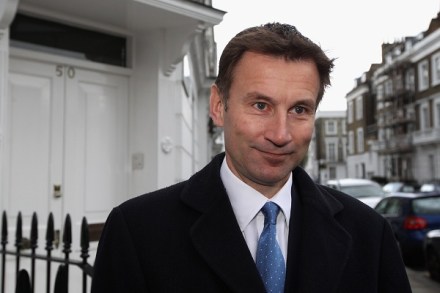
I got lost about two minutes into PMQs today. Or maybe sooner. Jeremy Hunt’s in trouble over that old business again. And Baroness Warsi has breached the ministerial code but hasn’t resigned. So Ed Miliband wanted to know why Warsi has been referred to someone or other and Hunt hasn’t. And David Cameron said it was because of the Leveson inquiry. And Miliband said no, it can’t be because of Leveson because Leveson has nothing do with it. And Leveson has said that Leveson has nothing do with it. And that’s when I lost track of who had, or hadn’t, been reported to this person, or that inquiry, about this blunder or that breach of this guidance or that code. It was wonks-only stuff.

Problem play

From our UK edition

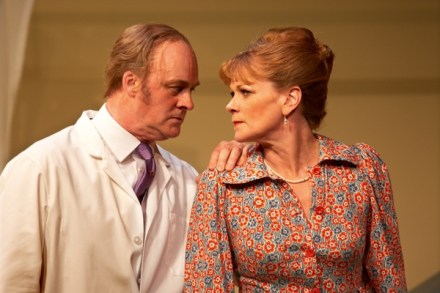
It’s all Kenneth Halliwell’s fault. By bashing in Joe Orton’s head with a hammer, he brought the playwright’s career to a premature halt when Orton was still experimenting with brittle and anarchic farces. Had Orton lived beyond 34, he’d have developed his technique and become a richer, truer and more rounded artist. And What the Butler Saw would now be a minor work by a major playwright. Instead it’s a major work by a minor playwright. Uneven in tone, lumpish in detail, unsure of its creative purpose, this is a problem play that doesn’t merit its status as a classic. Orton dashed it off in a few weeks and the script was discovered, after his death, lying in a drawer.

Old-git territory

From our UK edition

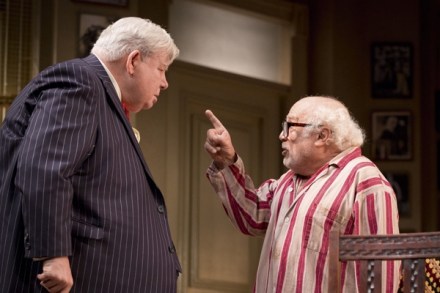
I’m not the biggest fan of Neil Simon, I admit it. In the programme notes for The Sunshine Boys, I discovered that Time magazine once called him ‘the patron saint of laughter’. Good, I thought. When the curtain goes up I’ve got someone to pray to. The show opens with Danny DeVito slumped in a hotel room watching TV in mid-afternoon. He’s a spent vaudeville star whose feud with his comedy partner forced him into retirement 11 years earlier. His nephew, a pushy young agent, wants to revive the famous duo for one last TV special. DeVito insists that he won’t do it. (But he will, of course.

Cameron’s attack on Balls is strangely endearing

From our UK edition

Ed Miliband had it easy at PMQs today. The government is bleeding in all directions. And a further haemorrhage has arrived in the shape of Adrian Beecroft, a government adviser, whose proposal to relax employment law has delighted the Tory right and incensed the soft-and-cuddly Lib Dem left. ‘A proposal to fire at will’, is how Mr Miliband described the Beecroft plan. Did the Prime Minister support it or did he agree with the Business Secretary who has covered it in scorn? Cameron didn’t so much duck the question as swan straight past it. He pretended it wasn’t there. Instead he cherry-picked some positive footnotes from yesterday’s IMF statement on our economy and announced that everything is rosy in the garden.

Select all. Delete all

From our UK edition

If you want to see Scotland’s superiority complex in action, take a look at its literary culture. The works of Hume, Boswell, Walter Scott and Robert Louis Stevenson adorn libraries the world over, and it suits Scotland’s arts lobby to pretend that the age of excellence is still alive. It’s great PR and it justifies the mighty wodges of tax-payer dosh that fund new writing north of the border. But when you seek out the latest Jock geniuses you find someone called David Harrower. Familiar name? Maybe not, but then he’s better known abroad than at home. His most celebrated play Blackbird, written in 2005, told of a child-rape victim who met up with her molester 15 years later and found the stirrings of lurvve still tingling in her loins. Yeah, sure.