Lloyd Evans

Lloyd Evans

Lloyd Evans is The Spectator's sketch-writer and theatre critic

Rickety Racine

From our UK edition

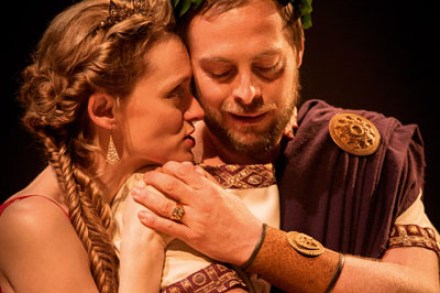
High ambitions at the Donmar. Artistic supremo Josie Rourke has chosen to direct one of Racine’s more impenetrable dramas, Berenice. The play introduces us to the emperor Titus, a besotted weakling, and his lover, Queen Berenice, an ageing sexpot from Palestine. Berenice wants to become Titus’s official squeeze but the xenophobic Romans don’t care for asylum-seeking adventuresses seducing their rulers. So Titus sends Berenice packing. She’s reluctant to go and she hangs around while her ex-lover, Antiochus, hovers in the wings awaiting developments. This is the position at the start of the play and, 90 minutes later, not much has happened although a lot of feelings have been discussed in wordy speeches. Racine writes like a corporate lawyer.

Passage to India

From our UK edition

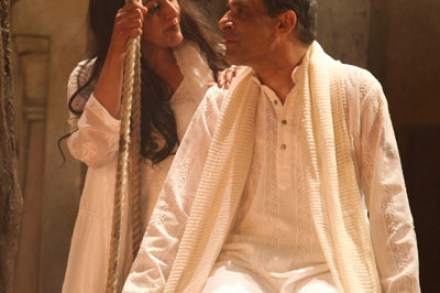
I’ve just come back from India. At least that’s how it feels after a double attack of subcontinental drama. Tara Arts, in Wandsworth, has relocated Molière’s The Miser to modern India and commissioned a script from the Glaswegian standup, Hardeep Singh Kohli. He brings the two cultures together with the insouciant aplomb of an experimental chef concocting a lobster and peppercorn fruit sundae. The result may not please hardcore Molière fans, who speak in reverential tones of the master’s subtlety and elegance, his satirical adroitness and his talent for intricate and charming narrative constructions. This is a show that confidently abandons all such sophistication. It aims for low-brow burlesque. And it scores a direct hit.

Hell hath no fury…

From our UK edition

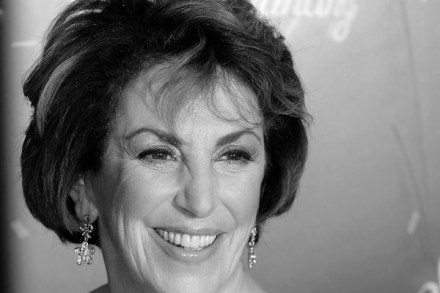
We all know Edwina Currie as a shrill, tasteless, attention-seeking Thatcherite nuisance from Liverpool. But the private Edwina —  as revealed in her Diaries: Volume II, 1992-97 (Biteback, £20) — is thoughtful, engaging, witty, kind-hearted and, politically, very astute. Has anyone framed a neater analysis of John Major’s idiotic ‘Back to Basics’ drive than this? ‘It outlawed the one protective factor the Tory party has always relied on — hypocrisy.’ She watches senior colleagues plotting to replace him during the mid-1990s, and she sums them up with lethal concision. Michael Portillo: ‘very steely, very cool, very unpleasant’. Ken Clarke: ‘fine brain … lazy character’.

Weaving an artful web

From our UK edition

The Charing Cross Theatre has followed the trends of performance art for more than a century. It used to be a music hall. Then it put in a stint as a cinema. Now it’s a small theatre and it specialises in experimental comedies. The Man on her Mind fits the bill nicely. It opens with Nellie, a sexy young book editor, being seduced in her one-bedroom flat by her handsome lover. There’s a knock on the door. The lover hides in the bathroom. In comes Nellie’s horrible sister, Janet, and she — surprise, surprise — needs the bathroom. She goes in and the lover is discovered. But no. The lover isn’t discovered. The lover doesn’t exist. He’s a figment of Nellie’s imagination.

Fright night

From our UK edition

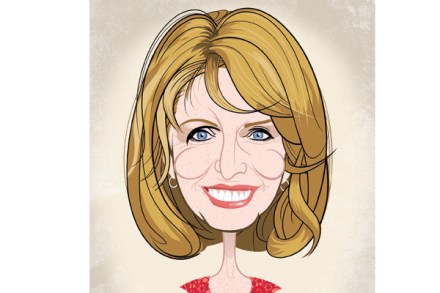
Here comes Jane Asher. She swings through the doors of a small Chelsea hotel, chucks her bag on the floor, and sits down with an expectant look. Her voluminous red hair has attractive hints of something blonder on top. Her eyes are pale blue, and extraordinarily intense, and she has a fulsome rack of plump white teeth that hint at large appetites. But her figure is as trim as a teenager’s. We meet a few weeks before she begins rehearsing Charley’s Aunt, the classic Victorian farce in which she plays a Brazilian dowager, Donna Lucia d’Alvadorez. Does she think it’ll be more fun because the script is a bundle of laughs? ‘No, there are always those technical things that are just as tricky to do. And if it’s not funny, it’d be a disaster.

Underpowered Ibsen

From our UK edition

The tone is the thing. Ibsen is among the heaviest of the heavy-going playwrights and his masterpiece, Hedda Gabler, is an unbearably tense psychological thriller that ends with one of the biggest shocks in the theatrical repertoire. The play takes us into a doomed marriage between Hedda, a brilliant and eccentric depressive, and George Tesman, a dull-as cheesecake university lecturer. Director Anna Mackmin has read the Old Vic audience correctly. They’ve spent all day at the office, raising enough funds to buy tickets, and they’re not interested in a three-hour Nordic brain-bruiser. Instead, they want a frothy, offbeat marital comedy with a few sad bits. And that’s what they get.

Variety was the spice of life

From our UK edition

Tough job being a disused prime minister. John Major has resisted the temptation to flounce off in a sulk, or to play the international peacemaker, or (as Harold Macmillan was said to do during the 1970s) to fantasise about a glorious comeback urged on him by a despairing populace eager to rediscover its lost greatness. Instead, Major has become a social historian. After a book on cricket he now offers us a personal history of the music hall. His father, Tom Major (b. 1879), made a living as a comic artiste for over 30 years, and his recollections are the starting-point for Major’s investigations. Music hall grew out of the glee clubs and saloon theatres of the 18th century where ‘catches’ (hummable melodies) were played to boozing crowds by impromptu artistes.

Song and strife

From our UK edition

Without You is a show that requires a bit of prior explanation. However, if you’re a gay jobless thesp living in New York in 1994, and your Mom’s dying of cancer back home in Illinois, and you’ve landed a role in Rent, a new musical about Aids, then you’re already up to speed. You have all the data required. In fact, you’re probably Anthony Rapp, the author of this musical autobiography which has just arrived from Edinburgh. Rapp tells two tales through narrative and song. First we hear about Rent which, you may be aware, is a smash-hit musical based on La bohème and relocated to New York during the HIV epidemic. This house-move intensifies its kitsch morbidity by a factor of about a thousand.

A quietly simmering PMQs

From our UK edition

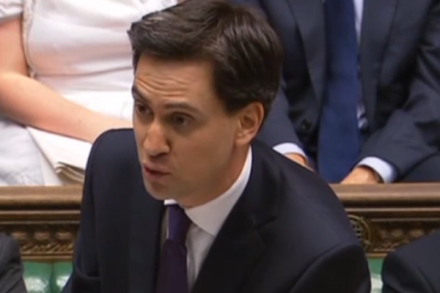
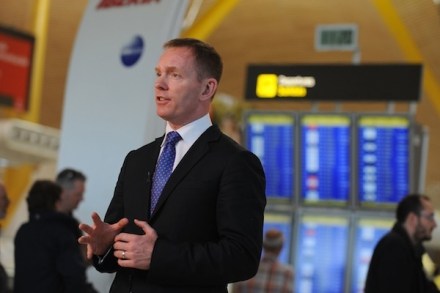
Butch? What the hell does it mean? At the last session of Prime Minister's Questions, Cameron boasted rather rashly that he was ‘butch’. Today Chris Bryant  used it again when he accused the prime minister of anti-female prejudice in the recent reshuffle. ‘He described himself as butch last week,’ said Bryant. ‘Just what is his problem with women?’ Ed Miliband added to the attack and dubbed the prime minister, ‘Mr Butch.’ The word is out-dated but full of flavour and it carries hints of campness and homoeroticism. And perhaps a dash of homophobia too. But it doesn’t pack enough semantic value to have any traction as an insult. Hostilities remained on a low simmer today.

Chance encounter | 6 September 2012

From our UK edition

If you’re thinking of putting on a West End show, here’s what you need. Half a million quid. That should cover it. Unless it’s a musical, in which case you’ll need five or ten times as much, depending on how munificent/crazy you happen to be. Investors tend to be fretful, superstitious types who rarely make rational decisions about the start date of their theatrical ventures. No producer is willing to send 500 grand’s worth of dramatic wonderment into the skies if his rivals aren’t launching similar attractions in the same week. So the West End calendar is either overcrowded or utterly barren. Every year there are two dead zones. One is the end-of-Edinburgh lull, from which we’re just emerging.

A ritualised dust-up for PMQs

From our UK edition

Broom broom. That was the noise that PMQs made today. Britain’s ebullient car sector is the only sliver of happiness the government can glean from our wimpering, faltering, flat-lining economy. And Cameron brought up the broom-brooms as soon as he possibly could. First he had to deal with Ed Miliband who started the session with one of those casual, chatty questions which are designed to make the PM look like a berk by quoting his words back to his face. ‘After two and half years in government,’ Ed began, ‘the PM returned from his break and said he now realises it’s time to cut through the dither. What did he have in mind?’ Beautifully barbed. But Cameron returned strongly. ‘He’s had all summer to think of a question.

The accidental director

From our UK edition

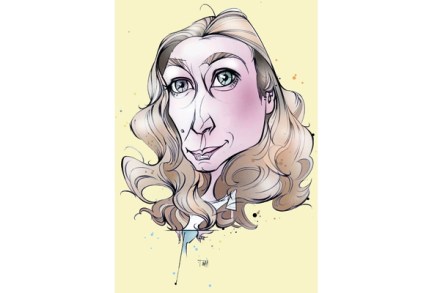
She’s certainly a class act. But how did she manage it? Nina Raine, the 36-year-old writer-director, has established a formidable position in the British theatre. Her first play, Rabbit, opened at a pub venue in Islington in 2007. It transferred to New York and has since been performed all over the world. Last year she directed April de Angelis’s family comedy Jumpy at the Royal Court and the show has just transferred to the Duke of York’s in the West End. Yet, the way Raine tells it, her career has been nothing but a series of blunders and accidents. She left Oxford with an English degree and a few drama productions under her belt. ‘I thought about being an academic. For about five minutes. Both my parents are academics.

Edinburgh snippets

From our UK edition

I saw a few car crashes at Edinburgh but I’ll mention only one. Hells Bells (Pleasance, Courtyard) by the excellent Lynne Truss is a peculiar experiment. Truss sets her play in a TV studio and she spends the first 40 minutes explaining the storyline. The show lasts 45 minutes. So when we finally learn what the action is about, the action is about to cease. The nub of the drama concerns a TV show that was cancelled suddenly in 1995. So the play’s conflicts are rooted in the distant past and involve characters who aren’t on stage. The play culminates, weirdly, in a fight involving the destruction of some elaborately ugly hats. It’s hard to avoid the suspicion that this closing scene is Truss’s comment on her own work. Strange, pointless and a bit desperate.

A Decade at the Donmar, 2002-2012, by Michael Grandage

From our UK edition

Here’s a picture book that triumphantly exceeds the narrow bounds of the coffee-table genre. At £50 it’s hardly an impulse buy, but the photographs, covering Michael Grandage’s ten years in charge of the Donmar Warehouse, are sumptuously reproduced. And Grandage’s text is a revelation. It offers a fascinating glimpse into the mentality of a man who has established himself as London’s leading creator of Mercedes-class theatre. And it’s crammed with juicy gossip too.  Every Grandage production is rooted in two disciplines: performance and design. He aims to create a ‘forensic, beat-by-beat examination of a play’.

Walk on the wild side

From our UK edition

A good title works wonders at the Edinburgh Fringe. Oliver Reed: Wild Thing (Gilded Balloon) has a simple and succinct name that promises excitement, drama and celebrity gossip. And it delivers. Mike Davis and Bob Crouch’s exhilarating monologue races through the chief highlights of Oliver Reed’s career. Showmanship ran in his veins. On his father’s side, he was the grandson of Herbert Beerbohm Tree, the founder of Rada. But the connection was illegitimate. Reed’s grandmother had six children with Tree although they never married. Her surname, she claimed, was a facetious comment on the relationship. ‘I’m a frail Reed in the shadow of a mighty Tree.

Touch of evil

From our UK edition

Richard III is seriously bad for your health. Any actor will tell you that the part of the ‘bunch-backed toad’ is so physically punishing that the chap in the title role usually ends up being injected with painkillers by the local quack before each show. Or he finds himself in hospital when he should be on stage. Mark Rylance has heeded these warnings. His Richard — an astonishing feat of creative originality — is very nearly able-bodied. He has no crutches, no twisted limbs, no bandy legs, no hump weighing him down like a medicine ball. He walks with a faint limp. He carries a withered arm discreetly under his doublet. And he has a slight suggestion of a cyst-ette on his shoulder. Otherwise, he’s perfectly formed.

Northern lights | 4 August 2012

From our UK edition

No one knows quite why we go. It’s not for the whisky (which is like drinking liquefied peppercorns), or for the shortbread (like eating undercooked biscuit-mix), or for the weather (like walking through a car-wash). Nor does the moaning falsetto of the bagpipes draw us north. But every year, without fail, the London media colony sets off for the Scottish capital to watch a gang of wackos and wannabes (mostly from the London media colony) making a bid for fame and glory. This is my tenth visit and here are my tips for maximising the fun. Big question first. How to avoid being engulfed in an avalanche of pretentious tripe put on by waffling preeners and self-adoring garbage-smiths? That’s easy. Don’t see anything at the International Festival (9 August to 2 September).

In health and hypocrisy

From our UK edition

George Bernard Shaw argued passionately that Britain should create a public health service. And he lived long enough (1856–1950) to become one of its earliest victims. This play from 1906 shows the very best and the very worst of his creative abilities. He had a plan: to strip bare the iniquities of private medicine and stick the knife in deep. We open in Harley Street where a gang of slick and prosperous doctors are bantering away, like tipsy clubmen, about their patients. I cured this one. I killed that one. Each quack has his preferred treatment. One thinks all disease is caused by blood poisoning. Another that surgery cures every ailment. A third that cheerful nurses and a decorative sick-bay are an infallible panacea.

Death in Damascus

From our UK edition

A timely show at the Finborough takes us into the heart of Bashar al-Assad’s terror state. Zoe Lafferty’s verbatim piece gathers evidence from activists and torture victims and flings it straight at us. The result is utterly gruesome and utterly compelling. A fractured, blood-stained snapshot of an ancient monstrosity blundering towards its own funeral. Syria, a Russian sidekick state, still pursues the traditions of Marxist totalitarianism. Every morning, ranks of schoolkids salute their leader. ‘Unity, Freedom, Socialism’ they chant in honour of a regime which traduces all three ideals. The Alawi minority, making up 12 per cent of the population, controls everything. Western music and literature are ruthlessly censored.

Extreme actions

From our UK edition

OK, I was wrong. I’ve said it a million times but I now realise it’s perfectly feasible. Antique dramas can make sense in a modern location. Nicholas Hytner sets Timon of Athens slap bang in the middle of present-day London. The action begins in a mock-up of the National Gallery’s Sainsbury wing, complete with that dull, forbidding grey hue that some miserable nutcase chose for the walls. Ominously, hanging centre-stage, is El Greco’s swirly pink vision of Christ ejecting the moneylenders from the temple. A launch party is in full swing. Champagne flows. A gang of yuppies, toadies, spivs and freeloaders has gathered to toast the opening of the ‘Timon Wing’. Glamorous sycophants hover around the millionaire philanthropist crying, ‘Timon, Timon!