Lloyd Evans

Lloyd Evans

Lloyd Evans is The Spectator's sketch-writer and theatre critic

PMQs sketch: Labour stage a relentless attack on Cameron

From our UK edition

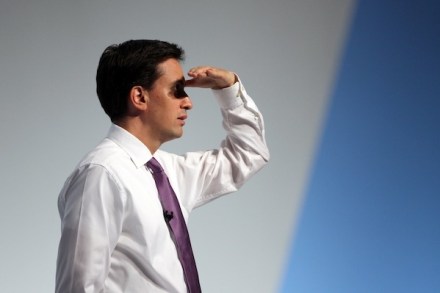
A fascinating PMQs. Labour staged one of the most carefully orchestrated attacks on David Cameron they’ve ever mounted. It was relentless. Ed Miliband kicked off by asking the PM about the six fold rise in food-bank dependency. Cheekily, Cameron praised Miliband for applauding the volunteer spirit. ‘It’s what I call the Big Society.’ Miliband gave him the ‘withering disbelief’ look which he practises in the mirror. He then revealed that two out of every three teachers ‘know a colleague’ who has given food or cash to famished children. Cameron shrugged this aside and replied that he wanted to do the most for the poorest.

PMQs sketch: Ed Miliband, the political vulture

From our UK edition

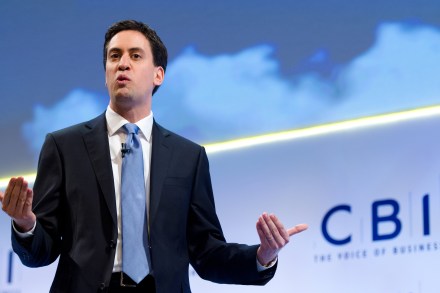
PMQs today revealed just how dependent Ed Miliband is on Britain’s future performance. The public finances have shaped his entire career. In government, he watched Gordon Brown screw the economy. Then he watched the economy return the compliment. Now he hopes the economy will wreck the Coalition and propel him into Downing Street. But there’s a snag. The economy has to tank, and to carry on tanking, for Miliband’s Mission Zero to succeed. And today, in defiance of all the soothsayers, the economic news is good. Employment figures are rising. Nearly 30 million Britons are in work. And those tricky youth unemployment totals are moving into sunny territory too. Ed Miliband, the political vulture, will starve without fresh corpses on the savannah.

Thank men for women’s lib

From our UK edition

Let’s get this straight. I’m a feminist. That’s the way I was brought up. My mum was a passionate women’s libber and I always agreed with my mum — even when she was wrong — but she was right on that one. The struggle to free one sex has liberated both. The human species is now freer, more dynamic and more fulfilled than ever. But here’s the oddity. When I read histories of the women’s movement I rarely find any hint that men were involved at all. Men are either sidelined completely or portrayed as a bunch of sexist wreckers who strove to hold women back at every turn. Quite untrue, of course. But a fascinating prejudice. What’s even more fascinating is to discover why it still goes unchallenged. First, a few facts.

Male bonding

From our UK edition

Both these plays are about concealed sexuality. Straight, by D.C. Moore, is based on an American indie flick named Humpday. The play has one of the funniest openings you’ll ever see. We’re in a flat occupied by suburban nonentity Lewis and his wife Morgan. Lewis’s old college mucker, Waldorf, has come home after seven years in Mongolia and he cheekily decides to announce his return to western civilisation by inserting his unsheathed tumescence through the letterbox. Lewis doesn’t see it. His wife does and she has to persuade him that she isn’t hallucinating. The gate-crashing phallus symbolises the play’s theme of male eroticism thrusting itself uninvited into soporific domesticity.

Battle of the sexes | 6 December 2012

From our UK edition

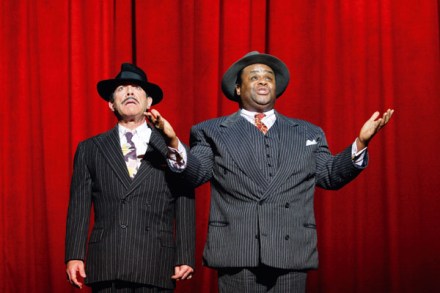
Tough play, The Taming of the Shrew. Uniquely among Shakespeare’s comedies, it moves audiences to pity and fear. It’s a video-nasty in the garb of a marital farce, an uncomfortable romance whose closing reconciliation scene invariably draws lusty hisses from female play-goers as Kate renounces her autonomy and bows to the will of her brutal husband, Petruchio. Directors prefer to approach this squirm-inducing parade of sexual violence through the comforting distortions of a veil. Single-gender productions are popular. In a Gujurati version, Kate is portrayed as an immigrant and the title had been coyly changed to A Foolish Foreign Woman Comes to Her Senses. Cole Porter goes for the vegetarian option by taking us backstage during a tour of the play.

Autumn Statement sketch: Sub-arctic Chancellor warms up the Commons

From our UK edition

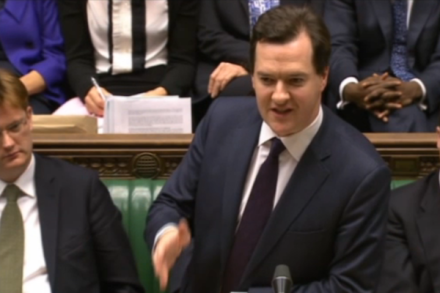
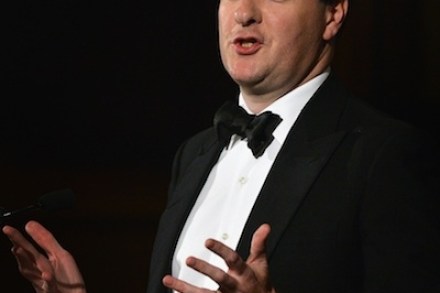
From our sub-arctic chancellor this was a rip-roaring performance. Using all the arts perfected by Gordon Brown, he dazzled the house with his Autumn Statement. A chancellor should never be entirely candid. His job is to blame others for failure, to take credit for all successes, (no matter what their true origin), to engender confidence in the future and to attract cautious applause. George Osborne did all this. The bad news came out first. There were sharp intakes of breath as he revealed that the economy had shrunk by 6.9 per cent during the credit crunch. And he offered a personal confession which, in accordance with tradition, was masked in flowery statistical language.

Leveson press conference sketch: the supreme authority of the Lord

From our UK edition

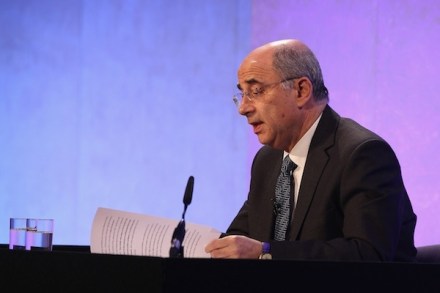
The conference platform was surrounded by screens tinted a deep and easeful blue. At just after 1.30 pm, Lord Leveson ambled forth, sporting a white shirt, a grey suit and a slight stoop. He peered out at the assembled pack of journalists from beneath his curmudgeonly black eyebrows. Then he sat at his desk. Microphones at either end bowed towards him like praying mantises. He began to speak. His quiet voice and his dense, circuitous prose suggest that he’s used to being listened to in awed silence. So he was. Occasionally he slowed the pace and upped the volume suddenly. A court-room device, perhaps, to jog a dozy juror awake. ‘The press, operating freely,’ he intoned, ‘is one of the true safeguards of our democracy.

Comic clockwork

From our UK edition

Pinero’s comedy The Magistrate is a marvellous confection of shameful secrets and multiplying concealments. Agatha, a beautiful widow of 36, has trimmed five years from her age in order to bag her second husband, Aeneas Posket, an agreeably pompous magistrate. Her subterfuge is imperilled by her 19-year-old son who must pretend to be 14 in order to make the maths work. To please his mother, the young buck behaves like a child at home. But elsewhere he pleases himself. He keeps a private room at the racy Hotel des Princes in town. One evening, he persuades his weakling stepfather to accompany him for a night of drunken antics. The police swoop on the hotel and Posket has to run pell-mell from the officers of the law.

PMQs sketch: PM paints Work Programme a marvellous success

From our UK edition

While Leveson packs his sun-cream and flip-flops and prepares for a holiday in Australia, the nation holds its breath in anticipation of his report. One lucky citizen, the prime minister, is permitted a sneak glance at the findings of the great inquisitor into press malpractice. At 11.45 this morning, the monumental hardback landed with a thump on Number 10’s doormat. David Cameron barely had time to turn to the index and see how many name-checks he’d been given before he was whisked off to the Commons to answer questions from Ed Miliband. It was not a great occasion. The opposition leader challenged Cameron on the failure of the Work Programme, (b. June 2011), to terminate long-term unemployment. Reports yesterday revealed that just 3.

Warring outcasts

From our UK edition

Are we barmy or what? Our mawkish obsession with the first world war demonstrates that we’re in the grip of a mass delusion: institutional sentimentality. The latest symptom of our death-mania is Nick Dear’s engaging play about the pastoral poet Edward Thomas, who was killed in action in 1917. Thomas began writing verse aged 36 at the suggestion of his American chum Robert Frost. We first meet the pair in a West Country croft in 1914. Frost is a smug, wily and sententious trustafarian who likes the idea of tilling the earth but stops short of actually tilling it himself. Thomas, a suicidal depressive, is incapable of showing warmth to his wife, Helen, and his three squealing nippers.

PMQs: Ed Miliband goes mainstream

From our UK edition

A muted PMQs today. But Cameron opened a fresh offensive which may prove to be a blunder. The leaders began by discussing the Gaza crisis in bland and soporific tones. The absence of heat and noise from the debate indicates how little it affects Britain. And how little Britain affects the debate. Cameron and Miliband were in virtual agreement throughout. And they were keen to urge everyone, other than themselves, to work harder to create peace. Cameron suggested that Obama should make the Middle-East a key objective of his second-term, just as one might make weeding the raspberries a key objective of the coming weekend. Miliband noted that ‘confidence in the two-state solution is dwindling.

Issues of Trust

From our UK edition

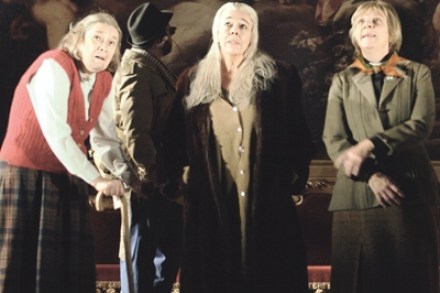
An orgy of navel-gazing on the South Bank where a national treasure is satirising the National Trust at the National Theatre. Alan Bennett sets his latest comedy in the drawing room of a crumbling Georgian mansion in South Yorkshire. Greedy speculators are queuing up to seize the house from its plucky owner, Lady Dorothy Stacpoole, a high-born hippie who spent her youth going to parties and modelling. Now aged 80 or 90, she’s ill equipped to outwit the circling vultures. Bennett is good at creating warm, believable women but with Lady Dorothy he simply regurgitates a stale theatrical burp: the beatnik with a bus pass. Writing plots has never been his strong point and he unwisely stuffs his story with fistfuls of loose threads. They poke out all over the place.

He knows it teases

From our UK edition

Simon Hoggart has spent 20 years going to Westminster to annoy people. He entertains no high-minded delusions about politics and he writes his Guardian sketches in a state of amused bewilderment by the sheer barminess and abnormality of most parliamentarians. This collection reads like the diary of an intelligent, mild-mannered child whose parents happen to own a knocking-shop. He makes enemies along the way. John Prescott has several times threatened to kill Hoggart, even though he directs very few explicit barbs at the former deputy prime minister. What he does is to quote him at length and with terrible accuracy. And because Prescott’s brain is like a wrecking-ball to his credibility, any transcription of his words is bound to inflict serious damage.

Nadine Dorries prepares for burial

From our UK edition

Nadine Dorries sidled back into view last night on ‘I’m Celebrity … Get Me Out Of Here.’ The show is a parody of transportation. A gang of well-known show-offs are rounded up and removed to Australia where they endure privation and meagre living. They wear prison uniforms with serial numbers stencilled on the back. Phones and other luxuries are banned. So are script-writers. Everyone is wired for sound and the producers are desperate to broadcast anything approaching a witticism. ‘Slike a bleedin Bon movie, I’m tellin you,’ said Brian Conley as the contestants were ferried by helicopter into the bush. Their corner of the Outback looked like a Hampstead Heath beauty spot prepared for a hippy wedding.

Essential Chekhov

From our UK edition

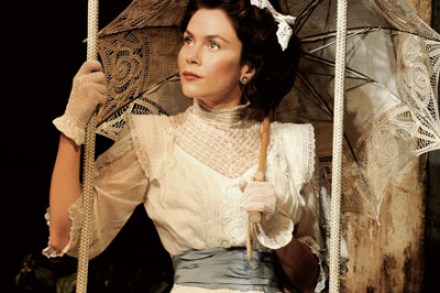
Uncle Vanya comes into the Vaudeville at an artful slouch. Lindsay Posner’s take on Chekhov’s story of bickering Russian sophisticates has an unusual visual style. In Britain we’re used to seeing Chekhov set in some fading Palladian mansion just outside Haslemere or Bath. Designer Christopher Oram has rummaged through the archives and discovered some hideously authentic stylings. He offers us a gloomy Siberian dacha, all cobwebby nooks and stacked timbers painted cowpat brown and carved with ornamental Asiatic doodles. This hulking coffin of a house emphasises the isolation and pinched misery of the play. The starry cast shine with fitful brilliance.

Tragically flawed

From our UK edition

This is a story of impossible gifts. The Chancellor, George Gideon Oliver Osborne, stands to inherit a 17th-century baronetcy and a large fortune accumulated by his enterprising father. He was also blessed with intelligence, charm, ambition, eloquence and the mysterious ability to seek out power and use it for his own ends. His biographer, Janan Ganesh, has written a pacy, well-researched book whose only fault is its unquestioning fealty to its subject. Osborne excelled at St Paul’s and Oxford and then strolled into Conservative Central Office as a special adviser. No career but politics interested him. At 25, he was holding one-to-one briefings with the prime minister, John Major. In 2001, he became the youngest member of the Commons, after bagging the ultra-safe seat of Tatton.

PMQs sketch: Harriet Harman enters her Elvis-in-Vegas phase

From our UK edition

With the prime minister abroad flogging jets to tyrants, Nick Clegg was left to play the statesman at PMQs. He was opposed by Labour’s Harriet Harman. Once a plucky and hard-working performer, Harman is now entering her Elvis-in-Vegas phase. She can remember the words but can’t find the feeling. She accused the Lib Dem leader of various atrocities. Sacking policemen. Doing the dirty on tuition fees. Vandalising the Surestart scheme. Nobbling mums with extra taxes. But her meandering phrases were so vaguely scripted, and so feebly delivered, that she might as well have stitched them into a sewing sampler. Clegg had all the time in the world to sharpen up a few hurtful replies. He demanded that Harman apologise for Labour’s ‘no more boom and bust’ promise.

Ryans’ daughter

From our UK edition

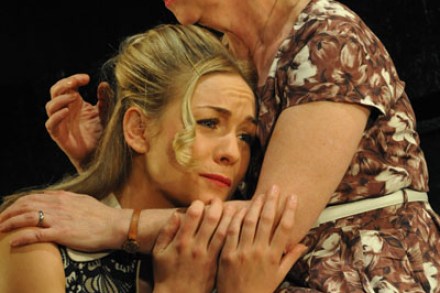
Martina Cole is a rarity among novelists. Her work is set in the ugly, male-dominated world of London’s criminal fraternity and yet nearly all her fans are women. Blonde women, in particular, as I found out when I took my seat in the Theatre Royal Stratford East to see Patrick Prior’s adaptation of her breakthrough novel, Dangerous Lady. In a great sea of peroxide hairdos, my coiffure was the only point of darkness. Cole’s novel starts with a gem of an idea. She takes the brutal mythology of the Kray twins and softens it with a dash of femininity. Her criminal gangsters have a sister. The Ryans are a family of Irish Catholics dominated by a ruthless matriarch, Sarah.

PMQs sketch: Ed Miliband poses as the king of the jungle

From our UK edition

Ed Miliband had fun with his dressing-up box today. At PMQs he tried on all kinds of disguises in the hope of scaring the government. First Europe and the EU budget negotiations. Miliband’s approach here is full of cunning and dishonesty. He called for ‘real terms reduction’ even though he knows full well that a freeze is the best the government can hope for. But by suggesting an impossible tactic he can claim that David Cameron has missed a trick. ‘Rank opportunism,’ declared the PM, ‘and the country will see through it.’ He reminded us of Labour’s record at the negotiating table seven years ago. Back then Ed Milband and his colleagues were happy to pitchfork great flapping bales of cash onto the EU money-pyre.

Addicted to Chekhov

From our UK edition

One departs and three more come charging in. It’s always rush-hour for Chekhov in the capital. As the Young Vic’s production of Three Sisters is drawing to a close, the Vaudeville is preparing to host a star-studded version of Uncle Vanya. Up the road, at the Novello, another Uncle Vanya is about to arrive from Moscow. And rehearsals are already under way for The Seagull, starring Matthew Kelly, at Southwark Playhouse. For years, we’ve been recreational users of Chekhov. We’re now in danger of becoming hopeless addicts. How come we’re hooked? Chekhov’s career as a dramatist was short and full of trouble. Early plays flopped.