Lloyd Evans

Lloyd Evans

Lloyd Evans is The Spectator's sketch-writer and theatre critic

PMQs sketch: Wimbledon and trade union scandals

From our UK edition

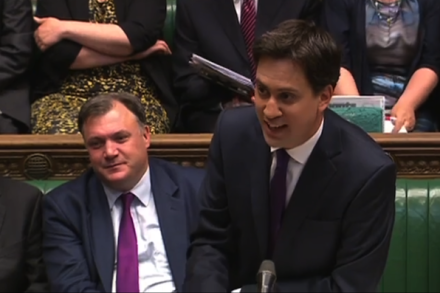
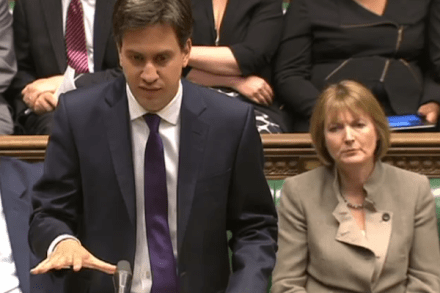
Andy Murray’s joy is now complete. Yes, he won Wimbledon and all that, but his crowning glory came today when he was mentioned at the start of PMQs. Cameron apparently has no idea how goofy and devious he looked last Sunday when he half-opened the door of Downing Street and stepped out to greet Murray with a shifty smirk plastered across his face. In the House, he declared that the first British victory at Wimbledon in 77 years was a historic event. Ed Miliband agreed but appended the triumph of Virginia Wade in 1977 to Cameron’s tribute. This was greeted by a Labour cheer so loud that it registered at ‘by-election triumph’ level. Why were they so chuffed?

Theatre: Responsible Other: an assured effort from newcomer Melanie Spencer; The Moment of Truth: Peter Ustinov fails to impress as a playwright

From our UK edition

Dominic Cooke did it at the Royal Court. Now Ed Hall is having crack as well. Cooke’s crazy decision to place his theatre at the disposal of young scribblers prompted the emergence of several brilliant new female playwrights, some barely out of their teens. Ed Hall, following suit, has brought a play by newcomer Melanie Spencer into the Hampstead’s studio space downstairs. Responsible Other is a relationship drama set in Northampton. Teenage Daisy has just lost her mum to cancer. And she’s afflicted by a rare condition, lupus, which damages the organs and prevents sufferers from venturing outdoors. Her best mate Alice tries to cheer her up with newsflashes from the classroom and romantic chitchat about fit young shelf-stackers at Sainsbury’s.

PMQs sketch: Another wretched day for Ed Miliband

From our UK edition

Today Ed Miliband headed for the favourite destination of faltering leaders: abroad. Any crisis-stricken banana republic will do. At PMQs the Labour leader decided that Egypt would fit the bill. Knitting his brows into a gap-year frown of munificent superiority, Miliband asked the PM to tell us how Britain is encouraging President Morsi ‘to secure a negotiated settlement in advance of the army deadline.’ Yes, Ed. Absolutely. The whole of Tahrir Square is hanging on your every word. Cameron might have come clean at this point and told us what Ed was playing at: ‘I may not save Egypt from its looming civil war but its looming civil war may save me.’ Cameron didn’t, however. Bogus statesmanship is a plague no politician is immune to.

Anna Chancellor: I vetoed a kiss with Dominic Cooper

From our UK edition

We meet in the late afternoon at a jazzy little bistro near the Old Vic. I hadn’t quite prepared myself for the sheer visual impact of Anna Chancellor. Imposingly tall and wearing a simple glamorous frock, she rises to greet me. The dispositions of her face — the dimpled chin, the high cheekbones and the smoky blue eyes — combine in an extraordinary synthesis of softness, elegance and power. It’s like looking at a beautifully designed weapon. She’s playing Amanda alongside Toby Stephens, as Elyot, in Jonathan Kent’s production of Private Lives at the Gielgud. The show originated in Chichester last autumn. ‘I’m thrilled it’s going into town.

Theatre review: Wonka will create enough kiddie glee to guarantee its survival. What a pity it isn’t good!; Four farces: two weak; two excellent

From our UK edition

Off to Wonka. With no preconceptions either. I’ve never seen this story on stage, page or screen and it strikes me as a dysfunctional hybrid of Oz and Twist. The show kicks off with a cartoon history of chocolate which — whoopsidaisy! — omits to mention sugar as an ingredient. We meet Charlie Bucket, an angelic drudge, who must win a prize in order to rescue his whining, crippled parents from impoverishment. He visits Willy Wonka’s candy emporium along with four surpassingly obnoxious child-rivals. There are two grotesque beauty queens (one is slaughtered early on in an industrial accident). There’s a Bavarian fatso who scoffs garbage non-stop and belches into the microphone.

PMQs sketch: Tasered choirboys and hilarious failings

From our UK edition

listen to ‘Spending review 2013: the Coffee House analysis’ on AudiobooShock news at PMQs. Miliband scored a hit. He succeeded in making Cameron look silly. True, he enjoyed his triumph a little too much, but his performance will have cheered his party enormously. For weeks they’ve had to watch their leader bungling at the despatch-box like an octopus trying to make a pancake. Miliband’s weapon of choice: statistics. It’s hard to use mere mathematics to hurt a politician but Miliband handled his materials with deadly aplomb. He uncovered woeful failures in government programmes. And the revelations weren’t just bad. They were hilariously bad.

Theatre: James Baldwin’s The Amen Corner is dazzlingly funny. Kim Cattrall is a revelation in a monstrous role

From our UK edition

Good and bad at the National. The Amen Corner by James Baldwin is a wryly observed comedy drama written for a studio theatre. It’s an excellent small play. The director Rufus Norris pumps it full of steroids and tries to turn it into a great American epic like Streetcar or The Crucible. His staging suggests the finale of a country-house opera festival. Costly baggage impedes the script’s sprightly flow. On-stage jazzmen snivel through trombones and hack at double basses. Preening choirs warble and sway. Spare actors hang out of windows trying to look cool and indolent. The running time reaches a Napoleonic 155 minutes. Megalomania infects the furniture too. Baldwin asked for two cheap sets, a ramshackle kitchen and a dingy meeting-room.

PMQs sketch: In which Labour join the coalition

From our UK edition

This was a card-shredder of a performance by Ed Miliband. He’s had some difficult outings lately but he barely even showed up at PMQs today. His team of phrase-makers and sloganeers have abandoned him too. Either they’re in the Priory, taking emergency anti-depressants, or they’ve quit the party altogether. And those in Labour’s heartlands watching their leader floundering today are probably composting their membership cards right now. Ed’s central attack looked like an attempt to give Cameron a relaxing massage. He accused the government of offering tax-breaks to the rich. Yet Labour’s top tax-rate was lower for most of their 13 years than it is today. Cameron took the opportunity to gloat over Labour’s woeful economic record.

Theatre review: Despite the wordiness and monstrous plotlines, Strange Interlude is gripping

From our UK edition

First the good news. Strange Interlude by Eugene O’Neill has been cut down from five hours to just under three and a half. The action, if you can call it that, begins at 7 p.m. but if you reach the Lyttelton theatre at the more civilised hour of 8 you’ll have missed very little. The first act could be disposed of in six words, ‘my fiancé died in the war’, but O’Neill is such a colossal twaddler that he wastes absolutely ages gabbling on about this and that before plunging into his story. The main character, Nina, is a bourgeois flapper who approaches life in a spirit of cynical pragmatism. In the middle of Act II (at roughly 8.10 p.m., in real time), she marries an impotent jerk whose bloodline turns out to be infested with lunacy.

PMQs sketch: David Cameron lashes out at Labour

From our UK edition

Oh dear. Another lousy day at the races for Ed Miliband. It began as soon as he stood up at PMQs. The mournful angularities of his face settled into a frosty grimace as the Tories greeted him with ironic whoops and cheers. And on they went, yelling and braying. Miliband seems to believe that adopting a look of injured decency will bring the house to order. But the more he glowered at the Tories the more they crowed back at him. It was awful to behold. He stood there, immobile, like a man returning from a difficult hour at the dentist only to find his house is on fire. His woes today were compounded by a set of economic indicators which seem to be inching in the coalition’s direction. With little else to complain about, he accused the PM of overseeing a fall in living standards.

Theatre review: Below par Mamet is still more fun than a personal-best performance from a second-rater

From our UK edition

Mamet is back. His 2009 play Race is an offbeat courtroom drama set entirely in a lawyers’ office before the trial begins. Jack and Henry are two hotshot attorneys, one white, one black, who must decide whether to accept the case of a prosperous banker, Charles, accused of raping a black woman in a hotel. Jack and Henry have a young black trainee, Susan, whose ethnicity and gender may help them sway the jury. The case against Charles turns on sequins. The victim swears that her dress was torn off during the attack but a hotel cleaner found no sequins on the floor. Sequinned attire is naturally deciduous, or, as Jack puts it, ‘a sequined dress, you look at it wrong, they start to fall off’.

Interview: Theatre director Marianne Elliott on really, really good and bad plays

From our UK edition

Ah! Here comes the girl from the temping agency. That’s my first reaction when I meet Marianne Elliott, director of the global hit War Horse, and winner of this year’s Olivier for her work on The Curious Incident of the Dog in the Night-time. She’s a trim, attractive fortysomething with a neat blonde bob and she wears a shrill turquoise blouse of the kind favoured by Romford copy typists in the 1980s. Her blue eyes are amazing — huge, screen-goddess orbs, which shine with an exceptional brilliance and clarity. She’s two weeks into the rehearsal period for her next play, Sweet Bird of Youth, at the Old Vic, which stars Kim Cattrall. ‘And how are the actors? Complaining like mad?

Strictly Ann, by Ann Widdecombe – review

From our UK edition

An oddball. And proud to be one. Ann Widdecombe has sailed through life with the same brisk, no-nonsense style that she brings to this highly readable memoir. She attended a school where God was taught ‘as a fact not a belief’. Her parents encouraged her to choose friends on the basis of ‘fun and kindness’ and nothing else. When she entered parliament in 1987 she suspected that her personal eccentricities would disbar her from high office while guaranteeing the loyal affection of the country at large. She embraced this fate cheerfully. Her ‘Doris Karloff’ tag was originated by the Labour MP Paul Flynn and she instantly adopted it as a personal signature.

PMQs sketch: moaning and groaning from Ed Miliband

From our UK edition

Thwack! That was the sound of Ed Miliband being knocked for six at PMQs. He didn’t stand a chance. Even before he could get to his feet, David Cameron had put a question to him. Against the rules. But so what? Cameron wanted to know if the Labour leader would withdraw his constant attacks on Tory plans to remove child benefit from high earners? Miliband stood up midst a barrage of Tory jeers, (and a few supplementary squawks from LibDems too). The humiliation of Labour’s U-turn showed on his face. He looked like an elevator-boy with his conk caught in the closing doors. The chamber was in full cry and the decibel levels were rising. And he still hadn’t spoken a word!

Theatre review: Relatively Speaking, Disgraced

From our UK edition

Here are your instructions. Relatively Speaking by Alan Ayckbourn is a comedy classic so you’d better enjoy it or else. The play dates from 1967 when Ayckbourn was working as a sketch writer for Ronnie Barker. It was his first hit. Notes in the programme testify to the play’s excellence. A telegram sent to Ayckbourn by Noël Coward is quoted twice.  ‘Congratulations on a beautifully constructed and very, very funny play.’ Take the Master’s kindness with a pinch of salt. The script is ingeniously strung out from a rather threadbare premise. Two couples, both with infidelity problems, meet and talk at cross-purposes for an afternoon.

It’s madness to slash the British Museum’s budget

From our UK edition

The best argument in favour of state funding of the arts was made in the middle of the 18th century. In 1753 an Act of Parliament established the personal collection of Sir Hans Sloane as a national resource, ‘to be preserved and maintained not only for the Inspection and Entertainment of the learned and the curious, but for the general Use and Benefit of the Public’. But a dark cloud looms over the British Museum today. Rumour suggests (and ministers won’t deny) that the Chancellor is keen to lop a few million quid from its budget in the 2015/16 spending review which is due to be published this month. Culture Minister Ed Vaizey is being encouraged to fight like a weapon dog in defence of this invaluable cultural asset.

Are theatre critics on drugs? Fallen in Love and Pastoral reviewed

From our UK edition

A marvellous novelty at the Tower of London. The Banqueting Suite of the New Armouries has been converted into a pop-up theatre and the Tower authorities have welcomed a new play following the rise and fall (into two pieces) of Anne Boleyn. Joanna Carrick, who directs her own script, has chosen a tricky format. Two characters, Anne and her brother George, tell the story of Anne’s fatal marriage to Henry VIII. Even Aeschylus found this ancient format rather constricting and introduced a third character. Perhaps Carrick knows better. Anne and George are evidently attracted to each other and they romp around a four-poster bed exchanging gossip in fits of giggles. At first the characterisation is a little thin. Then it gets thinner.

Passion Play; The Match Box

From our UK edition

How fashions change. Peter Nichols’s adultery drama, Passion Play, will seem tame and rather conventional to modern audiences. It was written in 1981 at a time when the rites and idioms of therapy hadn’t penetrated every level of our culture. Back then the candid scrutiny of one’s emotions, supervised by a ruminating analyst, was a thrilling and sophisticated novelty available only to high-earning fashion junkies. Today’s self-elevators choose different proofs of social altitude. They drink Bhutanese champagne, they purchase dachas in Moldova, or they holiday on the Great Barrier Reef in the family bathyscaphe.

5 Days in May, by Andrew Adonis – review

From our UK edition

Andrew Adonis enjoyed a week of glory in 2010. The former Lib Dem activist was asked to join Labour’s negotiating team as they tried to forge a coalition with Nick Clegg in the aftermath of 6 May general election. Adonis admits that his account of those five days is ‘vivid, partisan and angry’. And it seems strange that, as a Lib Dem defector himself, he should accuse the Lib Dems of ‘perfidy’ in their dealings with Labour. The politician in him can’t resist the opportunity to attack his former colleagues. He shoves the knife into David Laws for admiring George Osborne and for advocating ‘faster and deeper’ cuts to the deficit.

PMQs sketch: ‘What a penetrating insight into the affairs of state’

From our UK edition

A mood of giggles and mischief descended on PMQs today. David Cameron is in America – attempting to cure insomniacs by explaining Tory Euro-scepticism to them – and his role was taken by Nick Clegg. Harriet Harman, a notoriously sluggish debater, stood in for Ed Miliband. It’s said that when Harman trained as a solicitor she conceived such a high regard for the law that she went into politics instead. Today she seemed as effervescent as last week’s Prosecco. She droned through a series of pre-scripted gags and less-than-sparkling jibes. This was one of her feeblest ever performances on the front bench. She started by mocking David Cameron for posing in a London bus while in New York. ‘That’s something he hasn’t done here.