Lloyd Evans

Lloyd Evans

Lloyd Evans is The Spectator's sketch-writer and theatre critic

Theatre review: Fleabag’s scandalous success

From our UK edition

Suddenly they’re all at it. Actors, that is, writing plays. David Haig, Rory Kinnear and Simon Paisley Day are all poised to offer new dramas to the public. But someone else has got there first. You may have spotted Phoebe Waller-Bridge playing a secretarial cameo in The Iron Lady. She’s a rangy Home Countries brunette with rosy lips, large inviting eyes and an angular, forthright face that suggests intelligence, amusement and a hint of subversive sexual power. Her immaculate skin is as white as a snowdrop. All in all, she’s perfectly set up for a steady career in frocks and pearls playing Downton gold-diggers and hyperventilating Jane Austen virgins. But she seems to want more, something wilder, something weirder, from her profession.

PMQs sketch: All Miliband has left is food banks and class war

From our UK edition

Tough times for Ed Miliband. He looked pretty glum at the start of PMQs. Was he wishing that Syria had developed in a different direction? A few weeks of statesmanlike ‘unity and consensus’ – while Assad got his wrists slapped by a volley of Tomahawks – might have suited him better. Instead he was forced onto the domestic agenda. And it’s turning into quicksand. All his best accusations have been sucked into the mire. He can no longer mention the following: flat-lining, Plan B, the double dip, the bedroom tax, the benefit cap, cutting too fast and too deep. As for his trustiest platitude – ‘a recession made in Downing Street’ – that now sounds as quaint as ‘dial-up’ or ‘Suffragette’. Is anything left?

Sketch: Dancing on the head of a BBC pin

From our UK edition

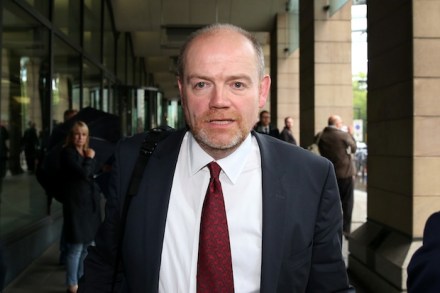
The BBC’s managerial superstars, past and present, arrived at the Public Accounts Select committee yesterday afternoon to answer questions about executive pay. Like a frightened flock of geese they all began waddling in the same direction. Away from responsibility. Up first was Mark Thompson. The former D-G had jetted in from New York and his aim was to exonerate himself with a bulldozer strategy. ‘I paid senior staff fortunes to remove them swiftly. Delay would have cost more. I saved the BBC millions. I was brilliant. No one can touch me. Beat that.’ The Thompson tank was very effective and flattened all questioners. The issue then turned to the BBC Trust’s ability to hold the executive to account.

Blue Stockings defames women in order to defame men; Thark succeeds thanks to a trio of great perfomances

From our UK edition

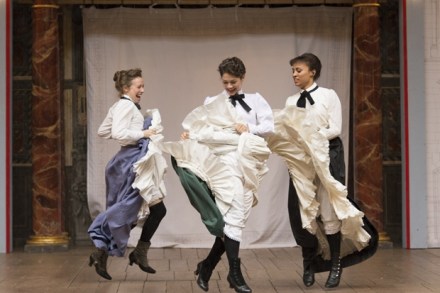
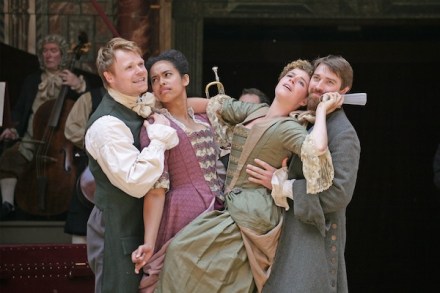
More un-Shakespearean drama at London’s leading Shakespeare venue. The Globe has pushed the Bard off stage to make way for Blue Stockings, by Jessica Swale, which portrays the lives of female students at Girton College, Cambridge, in the 1890s. The script, which veers between weepy romcom and manipulative satire, sets out to elicit a collective gasp of outrage at the sexist piggery of the last century but one. To achieve this Swale has to rely on several fabrications. First, that intelligent women are rare. (Really?) Second, that men seldom meet intelligent women. (Surely they mingle all the time.) Third, that men find intelligent women threatening, tricky and outlandish. (In fact, men find them attractive, stimulating and fun.

PMQs: Playing politics with dead children was avoided. Instead, Prince George got the attention

From our UK edition

It never happened. That’s what happened at PMQs today. Westminster fans tuned in expecting to see the ugly moment when MPs would start accusing each other of playing politics with dead babies. Instead it was a live baby – Prince George – who got all the attention. David Cameron wished ‘a happy and healthy life’ to the royal rug-rat. Then up stood Ed Miliband. The Tories cheered and jeered at him with ironic savagery. Clearly, he was about to be rinsed in the Westminster car-wash.  He glared at the government benches wearing his favourite expression of indignant grandeur. If only it made him look like a leader rather than like a stoned postman who’s turned up to work on a bank holiday. His questions were all softies.

Chimerica is a triumph

From our UK edition

Chimerica. The weird title of Lucy Kirkwood’s hit play conjoins the names of the eastern and western superpowers and promises to offer a snapshot of both nations just as the baton of economic primacy passes from America’s wizened youth to China’s reborn antiquity. The script has an unusually complex set of creative ambitions. It takes the formula of the romantic comedy, gives it a bittersweet twist, and plants it in the arid terrain of international politics. And it starts as a whodunnit. Joe Schofield, a fêted American photo-journalist, was in Tiananmen Square in 1989 when he shot a few frames of the unknown citizen who halted a Chinese tank in its tracks. Scroll forward 23 years and Joe believes Tank Man is living undercover in America.

Henry Goodman interview: How to make Brecht fun

From our UK edition

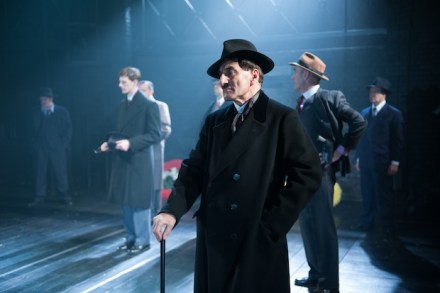
The face is unlined. The tan is as deep as Brazilian hardwood. The thatch of grey hair looks like a gift from God rather than the achievement of surgical intervention. At 63, the actor Henry Goodman keeps himself in excellent trim. He exudes energy and concentration, and in the hour we spend together, he relates every aspect of our talk straight back to the show he’s promoting, The Resistible Rise of Arturo Ui. Brecht’s political allegory uses imaginary figures from Chicago’s underworld to satirise Hitler’s assumption of power in Germany during the 1930s. The script was written in just three weeks, in 1941, while Brecht was in exile in Helsinki awaiting his visa for America. ‘Brecht wrote this to warn the Americans: fascism could happen in your country.

Completely Gar-Gar

From our UK edition

Irish playwright Brian Friel has built a formidable reputation out of very slender materials. A couple of international hits and a handful of Chekhov translations have won him a mountain of trophies. He’s still best known for his 1990 turbo-weepy Dancing at Lughnasa, which featured five mad Irish birds stuck in the bog with no hope of escape. His breakthrough play, Philadelphia, Here I Come, written in 1964, tackled the same themes of frustration and longing but in a brighter, lighter tone. Our hero is Gar and we meet him during his last night in Ballybeg (a cobbling-together of the Irish words for ‘small’ and ‘town’), just before he heads off for a new life in the city of brotherly love.

The best satire at the Edinburgh Festival Fringe

From our UK edition

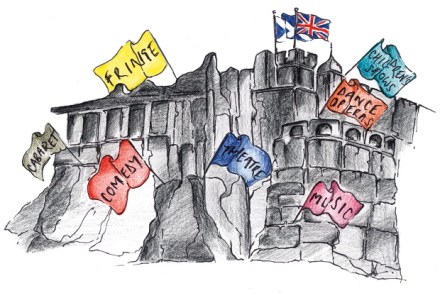
Politics is everywhere in Edinburgh. It’s embedded in the architecture of the streets. The New Town, built in the latter half of the 18th century, is a granite endorsement of the Act of Union, a stone pledge of loyalty to Britain’s new Germanic monarchy in London. The layout forms an oblong grid. The horizontals of George Street, Princes Street and Queen Street intersect at right angles with Charlotte Street and Hanover Street. This makes the approximate proportions of a flag. There are rumours that a scheme was proposed to dig two diagonal avenues, meeting in a central X, which would have turned the New Town into a colour-free Union Jack. My hunch is that this is a fantasy dreamed up retrospectively by ingenious nationalists.

Crash-for-cash scam at the Donmar

From our UK edition

High summer and it’s blockbuster time. The Donmar’s latest show is by the acclaimed Nick Payne, whose play about string theory, Constellations, wowed the West End last year. Constellations niftily incorporated its subject matter into its formal structure. What does that mean? It means the storylines multiplied like an exploding atom until an infinite number of possible endings came crashing through the space-time continuum and collided with the viewer’s patience, bundling it down a black hole. It was very clever and very boring but theatre-goers were so chuffed with themselves for understanding the physics that they kept quiet about the ‘boring’ bit. Payne returns with a sitcom.

The next Joyce Grenfell at the Edinburgh Fringe

From our UK edition

Strict bylaws in Edinburgh prevent you from buying off-licence booze after ten at night. You can, however, buy all the sauce you want from ten in the morning. (This may explain why alcoholism is so rare up here.) When midnight tolls, Festival revellers pour forth and fill the air with chanting and singing of variable aesthetic quality, and the only way to get any peace is to lapse into a Valium coma. By day I venture forth with sleepy eyes in search of great art. Lee Kern: Bitter Twitter (Gilded Balloon) wants to unmask the superficial malignity of Twitter. His tactic is to tweet silly questions to silly celebs and to recite their silly replies on stage in an angry voice. This doesn’t take us very far.

A mega-musical that’s like watching the Downton cast crammed into a telephone kiosk

From our UK edition

Hats off for theatrical recklessness. The producer Danielle Tarento has taken a $10-million Broadway mega-musical and staged it in the 240-seat Southwark Playhouse. Titanic, by Peter Stone and Maury Yeston, opened in 1997 to howls of critical derision that it merrily ignored. The run lasted for two years. The writers take a comprehensive approach. All the passengers, from first class to steerage, are represented. There are smut-smeared boilermen and bustling waiters. Salts of various ranks are shown alongside the designer, the builder, the financiers, the lot. It’s like watching the Downton cast crammed into a telephone kiosk. This method leaves no room for a catchy storyline to appear. Quite deliberately.

Thwarted love between geriatrics

From our UK edition

This is brilliant. The new play by Oliver Cotton, a 69-year-old actor, is set in New York in 1986. An ageing couple, Joe and Ellie, are practising their ballroom dancing when Joe’s maverick brother Billy comes crashing through the front door. The cops are after him. He was holed up in a Florida hotel when he spotted the Nazi brute who tortured them all at a death-camp during the war. He shot the bastard dead and left him floating in a swimming pool in front of hundreds of gawping witnesses. Then he ran for it. He’s not even sorry. He’s pleased he did it. This is gripping stuff. What next? A hundred options blaze through the mind, not least the possibility that Billy has mistakenly slotted an innocent lookalike. But Cotton fails to elaborate on his marvellous opening.

What GOV.UK doesn’t want you to know

From our UK edition

At last. They’ve done it. The government has unified every snippet of data about itself on a single website. GOV.UK is bland-looking and easy to navigate. The home page tells surfers how Britain is administered. ‘The prime minister runs the government with the support of the cabinet.’ Which is true, I suppose, on a good day. Those writing dissertations about Nick Clegg will find much to pore over. The DPM’s site reveals, in antiseptic prose, that Clegg ‘works on the full range of government policy’. The headline example is his ‘royal baby response’ which he wrote, edited, revised and finally released on 22 July. ‘News which will make the whole country smile,’ was his definitive view.

The National Theatre of Scotland has done more to demean Scotland’s cultural reputation than anything I can think of

From our UK edition

West End producers are itching to get their hands on the new show at the Bush. Mama Mia’s director, Phyllida Lloyd, takes charge of a script written by the Torchwood actress Cush Jumbo about the world’s first black female celebrity. Josephine Baker was born to wow the crowds. A child cabaret artiste from St Louis, she performed as a chorus girl in New York and then leapt the Atlantic to become the toast of Paris in the 1920s. Aged 19, she was one of the biggest theatrical stars in Europe. She married an Italian count, adopted 12 children, bought a château, went bankrupt, fought for the Resistance during the war, returned to America in the 1950s and became a heroine of the civil rights movement. Cush Jumbo brings a formidable range of skills to the role.

Interview: David Haig on King Lear and The Wright Way

From our UK edition

David Haig is one of those actors who can’t escape the visual identity of his characters. He’s the sad suburban salaryman. He’s the pasty-faced petty bureaucrat. He’s the bungling office curmudgeon with a volcanic temper. He just looks that way. Except that he doesn’t. I barely recognise the suntanned Bohemian figure who strolls up and shakes me by the hand. With his summery shirt and his trim grey beard he looks like a rakish Cretan sailor ready to pour himself a double ouzo and start reminiscing about the mermaids. He’s rehearsing Lear, at the Theatre Royal Bath, when we meet. ‘It’s an addiction,’ he says. ‘Any actor, past a certain age, wants to do it.

A cast of celebs fails to bring any oomph to The Ladykillers

From our UK edition

The Ladykillers is back. Sean Foley’s adaptation of the classic Ealing comedy introduces us to a crew of villains who stage a train heist while lodging in the house of a sweet old lady. She discovers their crime and when they try to bump her off she proves indestructible. The 1955 movie makes a huge effort to manage the plot’s credibility. The audience is never quite sure if this is a criminal gang in a comic predicament or comic gang in a criminal one. Sean Foley abjures such nuances and gives us a bunch of clowns in a two-hour slapstick routine. This approach deprives the tale of all its subtlety and shadowy strangeness. Michael Taylor’s complex, expressionist design adds to the sense of artifice. A cast of celebs compete to get the most laughs.

PMQs sketch: Cigarettes and alcohol and Lynton Crosby

From our UK edition

Cigs and booze. These issues dominated PMQs today. Ed Miliband tried to portray the PM as a puppet of ‘Big Tobacco’ whose decision not to introduce plain packaging for cigarettes was influenced by his electoral guru, Lynton Crosby. Had the PM ever ‘had a conversation’ with Crosby about fag packets? Shifty Cameron dodged sideways and declared that Crosby never ‘lobbied me about anything’. ‘Weasel words,’ said Miliband, looking triumphant. He quoted a Tory GP, Sarah Wollaston, who labelled the decision ‘a day of shame’ for the government. Up popped the lady herself from the backbenches.

Private Lives at the Gielgud: Spot the sexual tension between Anna Chancellor and Toby Stephens

From our UK edition

It’s always a problem with Macbeth: what accents to use? The Globe is applying the traditional remedy. Lord and Lady Macbeth come from Epsom. Everyone else comes from Glasgow. This is a highly entertaining production — one of the best at the Globe in recent years — but it’s not entirely perfect. Joseph Millson has pretty much everything you need to play Macbeth, good looks, physical stature, a soldierly bearing and a dash of melancholy. But he has something you don’t need at all. A gift for laughter. He’s such an instinctive comedian that he sends the audience into fits, without noticing it, by accident almost. And in the oddest places, too. Macduff and Lennox arrive at the castle where Duncan lies murdered.

Wanted: a producer for Peter Nichols’s four new plays

From our UK edition

Gosh. I wouldn’t mind being Peter Nichols. Eighty-six this month and still enjoying the easy domesticity and professional stimulation he’s benefited from since the 1960s when he was propelled to stardom by his play about raising a disabled daughter, A Day in the Death of Joe Egg. He lives in a penthouse flat in north Oxford on the verge of cow-dappled meadows, tufty footpaths and a low grey canal full of quacky coots and ducklings. He’s fit, sharp-witted and fun to be around. (After our interview he and his wife called a cab and went off to Corpus Christi to knock back champagne at a summer party.) He dismisses his age with a paragraph of jokey self-evaluation.