Lloyd Evans

Lloyd Evans

Lloyd Evans is The Spectator's sketch-writer and theatre critic

3,000 acts and no quality control – why the Edinburgh Fringe is the greatest (and patchiest) arts festival in the world

From our UK edition

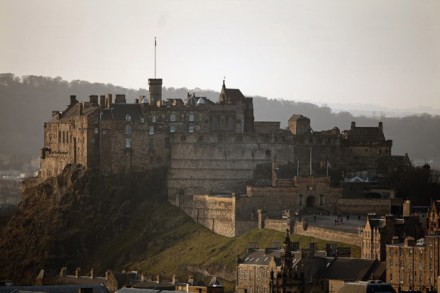
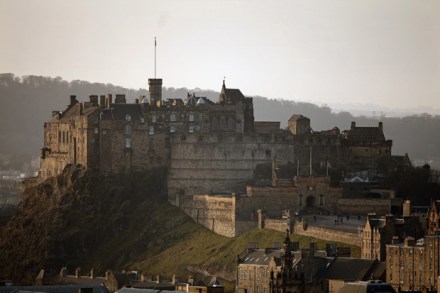
And they’re off. The mighty caravan of romantic desperadoes, radical egoists, stadium wannabes, struggling superstars and vanity crackheads is on its way to Edinburgh. This year’s Fringe sponsor is Virgin Money, which must be some kind of in-joke because most performers spend August watching their life savings being ritually despoiled by landlords, press agents and venue owners. Five years back the Fringe was ready for a gastric band when it grew to more than 2,000 productions. This year it glides past the 3,000 mark and it seems determined to maintain its place as the most cluttered congregation of twits and pipe-dreamers on the planet.

Sorry, Gillian Anderson, but you’ve caught the wrong Streetcar

From our UK edition

Streetcar. One word is enough to conjure an icon. Tennessee Williams’s finest play, written in the 1940s, is about a fallen woman trying to salvage her reputation before madness overwhelms her. All its horror and tension rely on the Victorian code that required a single woman to appear morally pure or to face ruin in the marriage market. The 1960s destroyed those conventions and this modern-day version feels like a lawsuit being pursued by a stammering counsel interrogating a corpse. The questions are baffling, the answers non-existent. Director Benedict Andrews trusts his own instincts far too much and the author’s not at all. To evoke the lush, exotic heat of Louisiana, he goes for Danish minimalism and clean white surfaces.

Let’s face it, Greek tragedy is often earnest, obscure or boring. Not this Medea

From our UK edition

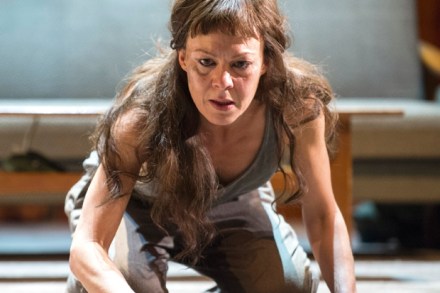
Carrie Cracknell’s new version of Medea strikes with overwhelming and rather puzzling force. The royal palace has been done up to resemble a clapped-out Spanish villa that seems to date from about 1983 if the kennel-sized TV set is anything to go by. (Weren’t TVs massive then? And always brown.) The villa’s peeling wallpaper and suppurating marble edifices form a balcony that straddles an eerie little copse, which manages to look both indoors and outdoors at once. These warring effects — villa and forest — do little to elucidate the play’s simple story: jilted Medea avenges herself on love rat Jason by murdering their two sons and bumping off his new sex-bunny.

Call Me Dave still has much to learn from The Master

From our UK edition

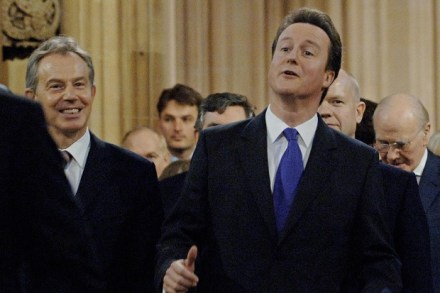
David Cameron and Tony Blair faced identical tasks earlier this week. Both wished to force a reluctant group of back-sliders to adopt a more robust and pragmatic position. Cameron wanted Europe to toughen up against Putin. Blair wanted Labour to toughen up against Cameron. Blair’s opportunity was the 20th anniversary of his enthronement as Labour’s leader. Oddly enough the chief beneficiary of that leadership – the Labour party itself – mysteriously forgot to give its messianic champion a chance to reflect on his methods. Instead, he offered his blueprint for further Labour victories to the think-tank, Progress. Blair likes to write in the early morning, in long-hand, seated at a window.

When Mr and Mrs Clever-Nasty-and-Rich met Mr and Mrs Thick-Sweet-and-Poor

From our UK edition

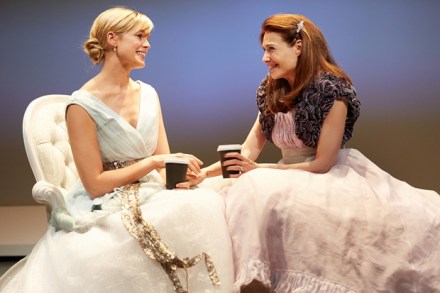
Torben Betts, head boy at Alan Ayckbourn’s unofficial school of apprentices, has written at least a dozen plays I’ve never seen. Invincible, my first encounter with the heir apparent, is a sitcom that pitches London snobs against northern slobs. The script is fascinating because it demonstrates, in concentrated form, the limitations of the Ayckbourn method and the narrowness of his psychological palette. The characters are emanations of tribal prejudices rather than flesh-and-blood human beings. The plot begins with two earnest Islington prigs moving ‘up north’ after losing money in the recession. Where exactly ‘up north’ is unclear but the accents suggest Blackburn. The pair could win prizes for ghastliness. He’s a stammering emotional eunuch.

Richard Bean doesn’t believe in humans – just weasels, snakes, rats and vultures

From our UK edition

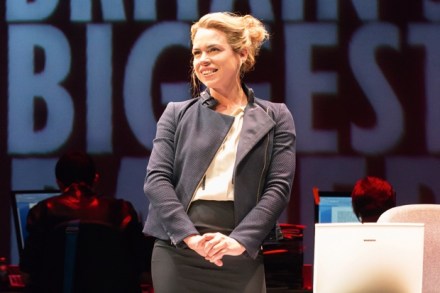
Mr Bean, one of our greatest comic exports, has an alter ego. The second Mr Bean, forename Richard, is the author of One Man, Two Guvnors, which thrilled audiences on both sides of the Atlantic. His latest play, Great Britain, dissects the corruption of power in parliament and beyond. The inevitable comparisons with The Duck House, which mocked the expenses scandal, are a little unfair, since the temperament and the intention of the two shows are vastly different. The Duck House was a delicious slice of theatrical levity about a Home Counties couple drawn into criminality by the culture of parliament. And being a family comedy, it had reserves of emotional warmth that Mr Bean’s scabrous blast of satire entirely lacks.

Dave the radical feminist gets a helping hand from Harriet

From our UK edition

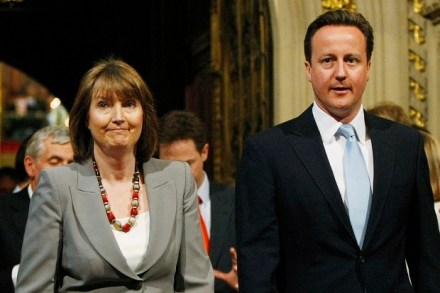
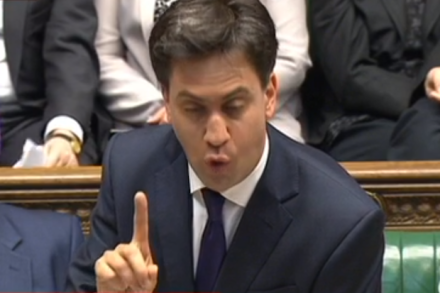
It was the final PMQs before the sun-stroke season begins. Usually these are high-spirited Derby Day affairs and Ed Miliband came to the house knowing things could hardly be easier. A political grenade has just been lobbed into the prime minister’s bunker – by the prime minister himself. He’s sacked two of his closest allies (and Ken Clarke). He’s fatally weakened himself in Europe by sending Lord Nobody to Brussels. And he’s surrendered to hypocritical calculation by stuffing his cabinet with skirt. Cameron the radical feminist? The silliest pose he’s ever adopted. Miliband began by striking a note that he does particularly well: low-key, gloating irony.

The sweating, dust-glazed saints at the Hampstead Theatre tells us nothing new about the miners’ strike

From our UK edition

Hampstead’s new play about the 1984 miners’ strike was nearly defeated by technical glitches. Centre stage in Ed Hall’s production there’s a clanking great iron chute that stubbornly refused to go up and down when ordered. A bit like the miners. The writer, Beth Steel, is a collier’s daughter and she romanticises the pit workers to the point where they seem like an exotic species of humming bird. Brave, high-minded and selfless, these noble sons of toil go marching off to the pithead every day to hack and burrow their way through the depths of hell. Into the elevator they trudge, their shovels resting on their shoulders, their voices uplifted in song.

Isn’t it time we asked the National Theatre to support itself?

From our UK edition

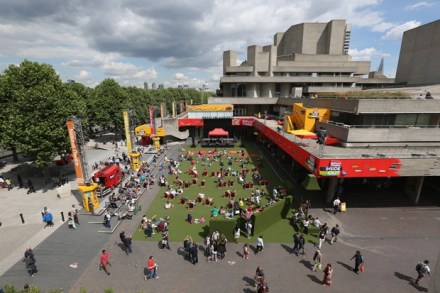
[audioplayer src="http://traffic.libsyn.com/spectator/TheViewFrom22_10_July_2014_v4.mp3" title="Lloyd Evans and Kate Maltby discuss the National Theatre's funding" startat=1261] Listen [/audioplayer]Two glorious playhouses grace the south bank of the Thames. Shakespeare’s Globe and the National Theatre stage the finest shows available anywhere in the world. Both are kept in business by the play-going public who last year helped the Globe to turn over £21 million, with a surplus of £3.7 million. Audiences also flocked in record numbers to the NT and it notched up nearly 1.5 million paid attendances, with its three houses playing to over 90 per cent capacity. But there’s a massive difference between the two.

PMQs sketch: Ed Miliband has giving up on winning – now he just wants to enjoy losing

From our UK edition

Today we saw a brand new Ed Miliband. And a brand new campaign strategy. He’s given up trying to win the election. All he wants to do now is to enjoy losing it and to go down in style. This must be quite a relief to him. For the next 10 months he can ignore the grassroots and the business vote and the floaters and swingers in the key marginals. He can even dismiss the tedious views of his Manson Family shadow cabinet. What matters now is to raise a cheer from the die-hard loyalists. To put a spring in the step of the back-room boys. To hearten the SpAds and the ad-men and the sound-bite designers. And to make the Bubble burst with pride. listen to ‘PMQs: Cameron and Miliband’ on Audioboo It’s an astonishing strategy. Almost a death-bed admission.

The National Theatre could – and should – survive without state funding

From our UK edition

Two glorious playhouses grace the south bank of the Thames. Shakespeare’s Globe and the National Theatre stage the finest shows available anywhere in the world. Both are kept in business by the play-going public who last year helped the Globe to turn over £21 million, with a surplus of £3.7 million. Audiences also flocked in record numbers to the NT and it notched up nearly 1.5 million paid attendances, with its three houses playing to over 90 per cent capacity. But there’s a massive difference between the two. The Globe is funded by customers who spend cash freely in an open market. The NT gets a bung of £17.6 million from the Arts Council, which is extracted from you and me, through the Inland Revenue, on pain of prosecution.

Fashion Victim – the Musical!: daft camp with a warm heart

From our UK edition

Fashion Victim — the Musical!. There’s a title that’s been waiting to be used for ages. The Cinema Museum is a frumpy warehouse, tucked away in a Kennington backwater, crammed with big-screen memorabilia. A cobwebby salon fitted with a catwalk serves as the theatre. Charmingly camp Carl Mullaney kicks things off by introducing the cast as if they’re already Hollywood legends. Which they are. In their heads. The storyline is eccentric and a little out of step with the world it seeks to mock. A Canadian wannabe, Mimi Steel, descends on London determined to become a superstar. She seduces a Parisian hunk, Cedric Chevalier, whose list of contacts is sufficiently high-powered to confer success on anyone.

PMQs sketch: Miliband’s integer attacks dissolve into a whirl-pool of squiggles

From our UK edition

It was damn close. And it scored top marks for effort. Miliband’s plan today was to prove that Cameron’s NHS policy is a disaster. And to prove it with Cameron’s own admissions. Or omissions. ‘It’s four years since his top-down re-organisation of the NHS,’ began Miliband in that quiet, meticulous manner that always foretells a forensic ambush. ‘Have the numbers waiting for cancer treatment got better or worse?’ Cameron instinctively dodged the question. Miliband moved on to A&E waiting times. Cameron shifted and ducked again. Miliband asked about numbers waiting over four hours on a trolley. Cameron ran for cover.

Mark Benton’s Hobson spares us nothing in his journey from rooftop to gutter

From our UK edition

Nice one, Roy. Across the West End secret toasts are being drunk to the England supremo for his exquisitely crafted belly flop in Brazil. A decent run by our boys in the World Cup has the potential to put a nasty dent in the box-office takings. As a welcome home present the lads deserve free tickets to Hobson’s Choice at the Open Air Theatre. The play is one of those dependable classics that directors don’t entirely trust. Few can resist the temptation to give it a tweak or stick it in a time machine. The storyline has the simplicity and boldness of a fairy tale. Hobson, a despotic widower, forces his three daughters to toil in his shoe shop for no wages. His eldest girl, Maggie, persuades a spineless underling, Willie Mossop, to marry her.

Red wine… with a hint of Diet Coke

From our UK edition

A mixed case arrives from Corney & Barrow. My orders are to improvise so I pull out a bottle at random. Here it is. El Campesino, a 2013 Chardonnay (£7.13), from Chile, which has a full, direct flavour and a slightly bitter tang that cuts against the sweetness. The Dionysian experts who scour the earth on Corney & Barrow’s behalf describe it as ‘fresh’ and ‘modern’ but not ‘overly oaked’. That, I presume, is a reference to cheapskate vintners who chuck oak shavings into the barrel to enhance the flavour. No crime there, I’d say, if it produces results. Customising wine is as old as wine itself.

Ed Miliband bruises Cameron over Coulson. But will it make a difference?

From our UK edition

The pressure was all on Miliband today. With Cameron hurt, he needed to show that he can still press home an advantage. First, we all had to listen to the Speaker, who rather enjoys listening to himself. He began with a long and winding overture about the dangers of prejudicing the Coulson trial. One sentence would have done it: yesterday’s convictions are mentionable, those due today aren’t. But he rambled on and on. His legal witterings were delivered with all the clunking sonorities and ham pauses of an under-employed luvvie delivering the Gettysburg address. And he couldn’t stop interfering during the debate. Miliband had carefully planned his ambush and committed its wording to memory.

Alex Jennings interview: the new Willy Wonka on Roald Dahl’s ‘child killer’

From our UK edition

‘Oompa Loompa juice,’ says the actor Alex Jennings when I ask if he takes any supplements to preserve his looks. He’s 57 but could pass for a decade younger. We meet backstage in his Drury Lane suite, which boasts a fridge crammed with pink champagne, where he’s preparing to play the lead role in Charlie and the Chocolate Factory. His relaxed demeanour and silky voice create an air of instant geniality that is reinforced by his towering figure. He’s six foot four and as lean as a fast bowler. Though he’s due on stage in 90 minutes, he lounges semi-horizontal in an armchair showing no trace of anxiety. ‘I do get nervous before the first big number. The great thing is, once the music starts, it don’t stop.

Did Turgenev foresee Russia’s Stalinist future?

From our UK edition

Fans of Chekhov have to endure both feast and famine. Feast because his works are revived everywhere. Famine because he concentrated all his riches in just four great plays that grow stale with repetition. For fresh nourishment we turn to Brian Friel, whose stage adaptations of the short stories go some way to appease our hunger. In 1987, Friel applied his skills to Fathers and Sons, by Turgenev, which is now revived at the Donmar. The magical charm of a Russian estate is superbly conjured by Rob Howell’s set. Slatted timbers and peeling paintwork. Golden shafts of sunlight falling on crimson rugs and scattered wicker baskets.

PMQs sketch: The bombshell from a man who could be a bore

From our UK edition

Explosive stuff at PMQs. Question two and Sir Peter Tapsell, the Father of the House, was called. This quaint semi-official title makes him, potentially, the chamber’s most dependable bore. Not today. He called on backbenchers to enact their ‘ancient but still existing power’ to commence procedures of impeachment against ‘the Rt. Hon. Tony Blair’. Not for war crimes. For lying to parliament about the Iraq invasion. Wow. This bombshell took the pressure off Miliband who’s in lousy shape and could do with a win at PMQs. Badly. He hasn’t got near Cameron for months. But he decided to shelter behind the nation-quake in Iraq, and he spent all six questions exchanging lightly-armed platitudes with the PM.

The Globe’s larf-a-minute Antony and Cleopatra

From our UK edition

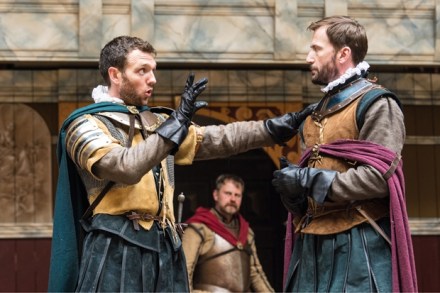
It’s hilarious. It’s also annoying that it’s so hilarious. Jonathan Munby’s earthy and glamorous production of Antony and Cleopatra goes almost too far to please the Globe’s fidgety, giggly crowds. The Egyptian queen is often treated as a female Lear, a trophy role, a lap of honour for a transatlantic facelift as she enters her bus-pass years. But Eve Best is the same age, around 40, as the real thing, and she invests the character with a fine mixture of romanticism, majesty and erotic guile. She also has a strong Home Counties branding. Slender-limbed and deeply tanned, she drifts around her palace in a range of floaty white linen dresses. Her dark-brown hair extensions wouldn’t disgrace a Clairol advert.