Lloyd Evans

Lloyd Evans

Lloyd Evans is The Spectator's sketch-writer and theatre critic

Magnificent: The Deep Blue Sea, at the Theatre Royal Haymarket, reviewed

From our UK edition

Richard Bean appears to be Hampstead Theatre’s in-house dramatist, and his new effort, House of Games, is based on a 1987 movie directed by David Mamet. The script sets up a rather laborious collision between two vastly different cultures. A gang of small-time crooks in Chicago are visited by a beautiful, high-flying, Harvard-educated academic who wants to investigate their lives. The catalyst for this unlikely set-up is therapy. Dr Margaret Ford is a successful shrink whose latest book has become a bestseller and she needs a new theme to write about. She speaks to a troubled young patient who owes $2,000 to a betting syndicate and when she visits their seedy gambling den she’s welcomed by the crooks and given an integral role in the team. Just like that.

Butlin’s is cashing in on nostalgia

From our UK edition

Butlin’s is no longer a holiday ‘camp’. The company has evolved from its postwar heyday and now describes its properties as ‘resorts’ which are crammed with restaurants, bars and venues for live gigs. It’s like a cruise but on dry land. I went to Bognor Regis for a nostalgic ‘Ultimate 80s’ weekend where the performers included half-forgotten acts such as Aswad and T’Pau, and the remnants of the boyband Bros. The site lies 200 yards from Bognor’s shallow, pebble-strewn beach. The town itself is doing all right, if not exactly thriving. The charity shops are cheap, the estate agencies are full of recently vacated bungalows and the funeral parlours offer a special service for customers in a hurry.

Badenoch responded well to Starmer’s winter fuel U-turn

From our UK edition

That hardly ever happens. A major climbdown was announced in the house of commons at PMQs. Sir Keir Starmer used a scripted question to reveal a massive U-turn on winter fuel payments and he timed his bombshell to give the opposition leader, Kemi Badenoch, very little chance to improvise a reply. Sir Keir’s gamble worked. To deaden the effect of his surrender he used the dullest phrases that his un-lyrical brain can contrive. He said he hoped that ‘more pensioners are eligible for winter fuel payments. And we will look at that as part of a fiscal event.’ In English he meant he won’t freeze granny to death next December. Kemi appeared to react fast. ‘It was extraordinary listening to that last answer,’ she began.

Two hours of yakking about Israel: Giant, at the Harold Pinter Theatre, reviewed

From our UK edition

Two hours of yakking about Israel. That’s all you get from Giant at the Harold Pinter Theatre. Endless wittering laced with venomous bigotry. The year is 1983 and the celebrated kiddie author, Roald Dahl, has kicked up a massive stink by denouncing Israel for attacking Lebanon in late 1982. His latest scribble, The Witches, is about to be published in America but a handful of bookshops are threatening to boycott his work. Tom and Jessie, two executives from Dahl’s publishing firm, visit him at home and beg him to withdraw his anti-Semitic rant. Dahl refuses because he loathes the Jews, hates Israel and endorses all the usual myths about Jewish control of politics and finance.

Badenoch lacked bite at PMQs. Again

From our UK edition

Sir Keir Starmer had a new song today at PMQs. The Tories are finished. He said it twice to Kemi Badenoch. It was a deliberate ploy. So what’s he up to? Kemi was ill-prepared for the session. She should have changed tack as soon as she heard Sir Keir’s opening statement about immigration. Kemi’s day didn’t recover. Her questions lacked bite ‘This party will end the open-border experiment of the party opposite,’ said the PM. Instead of challenging him, Kemi stuck to her prepared script. ‘Unemployment is up by 10 per cent since the general election,’ she said. ‘Why is it rising on his watch?’ Sir Keir has just arranged trade deals with America and India – the richest and the most populous nations on earth – which is good news for employment.

What happened to Canterbury?

From our UK edition

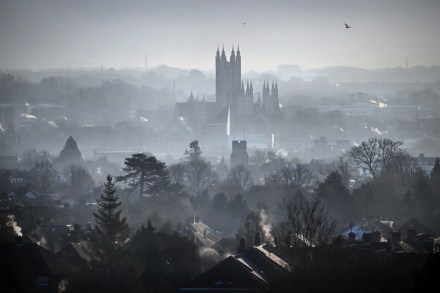
War is raging over Canterbury’s future. Only two Labour councillors are left in the whole of Kent, in the north and south of the city, compared to the 57 Reform councillors who now control the county. Reform entirely replaced the Tories, who were left with just five councillors.  Canterbury’s tale is one of general decline. The lucrative parties of French schoolchildren and day-trippers have largely gone, partly because Ashford International, the Kent stop of the Eurostar, was shut and never reopened after Covid. The local economy has suffered as a result. The remaining businesses are coarsening the appearance of a city which is as important to the Anglican communion as Rome is to the Catholic Church. Some residents deplore the changing appearance of the commercial centre.

Delightful nostalgia for political wonks: The Gang of Three, at the King’s Head Theatre, reviewed

From our UK edition

The Gang of Three gets into the nitty-gritty of Labour politics in the 1970s. It opens with the resignation of Roy Jenkins as deputy leader in 1972 in a desperate attempt to quell the party’s growing hostility to the Common Market. He holds a council of war with Anthony Crosland, his old Oxford chum, and they discuss their next moves while awaiting the arrival of Denis Healey whom they both heartily detest. The writers, Robert Khan and Tom Salinsky, capture the characters beautifully. Crosland considers himself more gifted and mature than Jenkins but he hasn’t yet made his mark by holding one of the great offices of state. He boasts about his record during the 1960s when he destroyed the grammar school system and cancelled the Channel tunnel. Both achievements make him deeply proud.

Starmer used Kemi’s words against her at PMQs. It worked

From our UK edition

Kemi Badenoch tried two ambushes at PMQs. She lambasted Sir Keir Starmer for cutting the winter fuel allowance and leaving old folks to shiver through the coldest months of the year. But Sir Keir claimed that he was merely trying to stabilise the economy. Kemi accused him of balancing the books ‘on the backs of pensioners.’ Sir Keir Starmer blamed his favourite cavity at PMQs, the ‘black hole’ Good start. Kemi has waited a long time to lead on this issue and the clamour of dissent grows daily. She read out a list. The mayor of Doncaster, the Welsh first minister and various grumble-bunnies on Labour’s backbenches are united against the cut to pensioners’ payments. ‘When is he going to listen to his own party,’ asked Kemi. ‘And change course?

Pure gold: My Master Builder, at Wyndham’s Theatre, reviewed

From our UK edition

My Master Builder is a new version of Ibsen’s classic with a tweaked title and a transformed storyline. Henry and Elena Solness are a British power couple living in the Hamptons whose relationship is in meltdown after the accidental death of their son. Elena has scrambled to reach the top of the publishing world but she feels bitter that Henry’s career as an architect came to him so easily. When their marriage went awry, she played the field, seducing both men and women, and now she lusts after Henry’s protegé, Ragnar, a camp young stud who may be bisexual. Ragnar is almost too complicated to understand. He’s a philandering black Norwegian with dyed blond hair who speaks English in a Billy Bunter accent that includes flourishes such as ‘crikey!

Is Starmer more afraid of Badenoch or Farage?

From our UK edition

We have two leaders of the opposition. Labour can’t decide which is the larger threat. Prime Minister's Questions opened with a botched query from Labour backbencher Dan Tomlinson. He asked Sir Keir Starmer to comment on a possible pact between the Tories and Reform. An amazing spectacle. An MP so clueless that he can’t ask a question without being ruled out of order. ‘The Prime Minister has no responsibility for any of that,’ said the Speaker. Tomlinson sat down, unanswered. But the timing of the question, at the start of the session, indicates that Sir Keir’s team are terrified of an anti-Labour alliance. We have two leaders of the opposition. Labour can’t decide which is the larger threat Tory leader Kemi Badenoch asked about the rape-gang scandal.

The case for replacing nurses with robots

From our UK edition

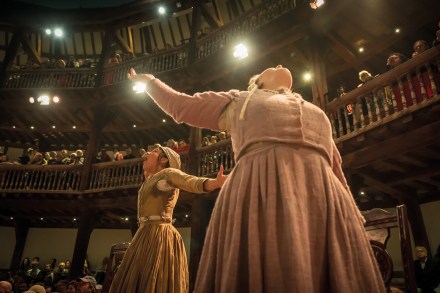
Tending is a work of activism on behalf of the NHS. The script brings together the testimony of 70 nurses in a show spoken by three performers. It’s full of surprises and shocks. All NHS nurses are obliged to annotate their actions as they work. ‘If you haven’t documented it, you haven’t done it,’ they’re told. A nurse estimates that she spends 20 per cent of her time caring for patients and the rest of it chronicling her doings on bits of paper. There appears to be no feedback mechanism that enables the nurses to help managers find ways to improve the service. A nurse tells the story of a lunatic who barricaded himself inside a lavatory cubicle and slit his throat open. He couldn’t be helped because the locks operated from the inside only. Could this flaw be corrected?

PMQs: Kemi had Keir on the ropes

From our UK edition

Women and Sir Keir Starmer. That was the issue that dominated a fiery PMQs today. Tory leader Kemi Badenoch asked Sir Keir if he’d been ‘wrong to say trans women are women.’  His bland but careful answer expressed a wish that ‘service providers’ should obey the ruling. Then he loftily advised the house to ‘lower the temperature.’  Kemi noted his failure to admit that he was wrong. And she accused him of targeting Rosie Duffield, ‘the brave member for Canterbury,’ and of ‘hounding her out of the Labour party for telling the truth.’ Would he apologise? No chance. Sir Keir boasted that Labour’s approach is to ‘treat everyone with respect’ and never to use the issue as a political football. Then he went off on a weird tangent.

Those behind this fabulous new comedy are destined for big things

From our UK edition

Rhinoceros by Eugene Ionesco is a period piece from 1959. It opens with the invasion of a French village by a herd of rhinoceroses. This paranormal event is never explained. In Act Two, the villagers start to imagine that they’ve become rhinoceroses and changed species. But one plucky sceptic, who defies conformity, refuses to swap his human character for an animal alternative. That’s it. Ionesco is offering the same arguments about peer-group pressure that Arthur Miller made with far more grace, artistry and psychological penetration in The Crucible. The show can’t decide what register to aim for and the cast are dressed in a mishmash of cheap costumes. Some wear white coats like asylum orderlies and some are in Primark expendables.

A horribly intriguing dramatic portrait of Raoul Moat

From our UK edition

Robert Icke’s new play examines one of the least appetising characters in British criminal history. Raoul Moat went on a shooting spree in July 2010 that left his wife injured, a cop blinded and an innocent man dead. This superb piece of reportage offers us a glimpse into the mind of a damaged brute. Moat had a rough childhood, like a lot of kids. His dad was absent, his mother was mentally unstable and when he was seven, she set fire to all his toys. Very traumatic, no doubt, but kids have survived worse. He grew into a 17st bully who felt cheated by the system and blamed everyone else for his woes. Part of the tragedy is that he had talent. He was energetic and ambitious. He worked as a bouncer, as a scrap-metal dealer, and as a tree surgeon with the tradename ‘Mr Trimmit’.

Visit the King’s Head Theatre for one of the greatest theatrical surprises of the year

From our UK edition

Amanda Abbington’s new show is heavily indebted to Noël Coward’s Hay Fever.Coward’s early play follows the tribulations of the superficial Bliss family and at first it was rejected by producers because it lacked action or incident. The oddly titled show, (This is not a) Happy Room, opens on the eve of a family wedding. Disaster strikes when the groom dies in a car cash and the nuptials are hastily transformed into a funeral. (Don’t ask how the dead body was released for burial so quickly.) Abbington plays Esther Henderson, a careless matriarch, who walked out on her children when they were small and left her firstborn, Laura, in charge of the parenting duties. Laura struggled to raise the youngsters properly and she now feels responsible for their wonky personalities.

I am deeply impressed by Ayoub Khan

From our UK edition

Kemi Badenoch is doing all right at PMQs. The Tory leader is effective in the build-up but her finishing is weak. The point of the inquisition is make the interviewee tremble with fear. Here’s how she ended each of today’s question to Sir Keir Starmer: 'What’s his advice to business owners laying off staff?' 'Why should voters trust Labour again?' 'Does he regret promising a council tax freeze?' 'Will he break his fiscal rules or raise taxes?' 'Does he disagree with the Bank of England?' 'Is the motor industry being protected?' Hardly killer points. Sir Keir swatted them aside without effort. The Prime Minister counter-attacked with a booby-trap that Kemi had set for herself.

I wish someone would kill or eat useless Totoro 

From our UK edition

My Neighbour Totoro is a hugely successful show based on a Japanese movie made in 1988. The setting is a haunted house occupied by two little girls who encounter various creatures rendered on stage by puppets. The story has no action, danger or jeopardy so it’s likely to bore small boys and their dads. Perhaps mums and daughters will appreciate it more. The big selling point is the puppetry whose quality varies. The naturalistic animals are done well. Cute yapping dogs, fluffy chickens scampering about, mischievous goats that steal maize from unguarded fields. The silliest creature is an orange latex cat equipped with 12 spindly legs that don’t work. It looks like a cross between a bed bug and a crippled tiger.

Reeves’s Spring Statement just doesn’t add up

From our UK edition

Is Rachel Reeves toast? Not according to her. The Chancellor delivered an aggressively self-confident statement about Labour’s spending plans this afternoon. Soberly dressed in maroon, she rattled through her speech like a garden shredder grinding up branches and reducing them to pale little woodchips. Anyone would think she was pondering a leadership bid. After listing her achievements since last July, she issued a warning to the doubters.  ‘I will return in the autumn to deliver the Budget.’  She relied on a good deal of amateur magicianship to conceal her fibs and exaggerations. Last autumn she claimed that £6.5 billion could be raised by cracking down on tax evasion. But that’s only the start.

The Zoom call that confirmed my fears about Just Stop Oil

From our UK edition

Just Stop Oil are their own worst enemies. I support their aims and I do my best to minimise my carbon footprint. I haven’t flown since 1993, I don’t own a car and I have eleven solar panels on my roof, but I’m losing patience with the movement. Meeting the JSO activists who disrupted a West End play only confirmed my suspicions that the movement has gone off the rails. Weir and Walsh evidently care about the planet, yet they seem to lack ordinary human sympathy Most people think the protestors who sabotaged Sigourney Weaver’s performance as Prospero at London's Drury Lane theatre in January are a nuisance. Not JSO.

Irresistible: Clueless, at the Trafalgar Theatre, reviewed

From our UK edition

Cher Horowitz, the central character in Clueless, is one of the most irritating heroines in the history of movies. She’s a rich, slim, beautiful Beverly Hills princess obsessed with parties, boys and clothing brands. According to her, the world’s problems can easily be settled by using the solutions she applied to the seating plan at her dad’s birthday dinner. But Cher is also a creation of genius because she draws us into her life and makes us understand the raw, damaged reality that lies behind her superficial perfection. She’s not a privileged brat. She’s all of us. At the start of this musical remake, Cher takes us on a tour of her luxury home. ‘The Greek columns date all the way back to 1975,’ she says.