Lloyd Evans

Lloyd Evans

Lloyd Evans is The Spectator's sketch-writer and theatre critic

Roll up, psychos

From our UK edition

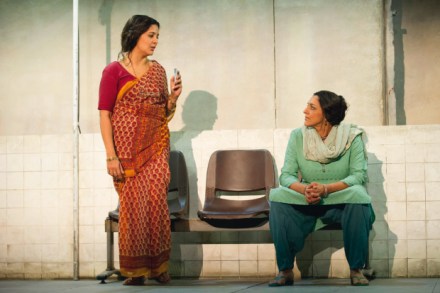
Describe the Night opens in Poland in 1920 where two Russian soldiers, Isaac and Nikolai, discuss truth and falsehood. Next we’re in Smolensk, 2010, where some strangers scream at each other about a hire car. Next Moscow, 1931 (or 1937 — the surtitles are illegible), where Nikolai, now a top soldier, asks Isaac, now a successful screen-writer, to audition his wife for a movie. Isaac improvises a scene with the wife and then fondles her bottom as they perform a weirdly sexless dance that is supposed to symbolise something, but it’s unclear what because everything that preceded the dance was indecipherable. Then the interval. I looked for enlightenment in the programme notes and discovered what the play is supposed to be about. It’s fascinating stuff.

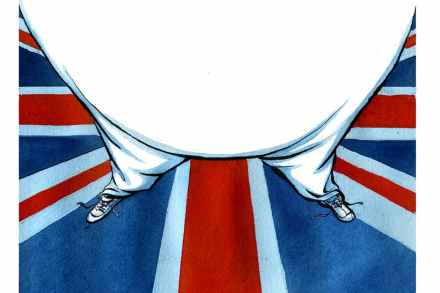
Corbyn’s comic timing is more Karl Marx than Groucho

From our UK edition

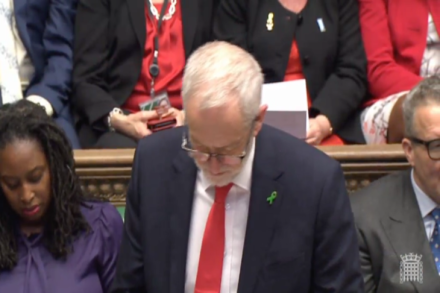
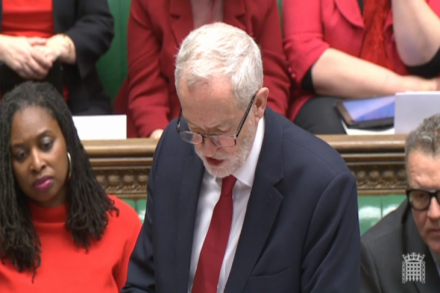
He’s making the most of it before he gets the push. The Speaker chaired one of the longest-ever sessions of PMQs today. It lasted nearly an hour. He opened proceedings with a ceremonial speech welcoming a handful of visitors to the chamber. They thought they’d come to watch parliament but Bercow knew better. They were there to see him. He greeted each of his guests by name and then turned towards the public gallery, his right arm sweeping upwards in a gesture of munificent benediction. Caesar offering peace-terms to the humbled tribes of Gaul could scarcely have looked nobler. Jeremy Corbyn seized on the latest Brexit wounds. He asked the PM what she’d meant by ‘as little friction as possible’.

Death duties

From our UK edition

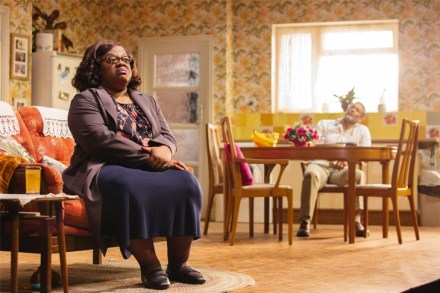
Nine Night refers to a Jamaican custom that obliges bereaved families to party non-stop for more than a week following the death of a parent. When Gloria expires her relatives arrive from all parts of London and the Caribbean to indulge in a boozy blow-out. Gloria’s daughter Lorraine tussles with her businessman brother, Robert, who wants to stave off bankruptcy by flogging the family home immediately. Their half-sister, Trudy, arrives from Jamaica and collapses in hysterics over her abandonment by Gloria in infancy. Everyone lives in fear of Auntie Maggie, a pious matriarch, who uses a walking stick and whose religious devotion conceals the heart of an emotional despot. Cecilia Noble (Maggie) delivers a tour de force as the nit-picking hypochondriac.

Is time up for John Bercow?

From our UK edition

More trouble for the Speaker today. It’s becoming clear that John Bercow is not just unpopular but unlucky as well. He skipped PMQs to attend the funeral of his predecessor, Michael Martin, who was ousted by a mutiny in 2009. Newer members, perhaps believing that insurrection is the correct way to eject an unwanted speaker, may be plotting Bercow’s dethronement already. Unluckier still, he’s just earned a new tabloid nickname, ‘Bully Bercow’, over allegations of "explosive and intemperate" behaviour toward staff, which he denies and are now under investigation. The phrase has a certain felicitous musicality – like Billy Bunter – that may soften the sting of its literal meaning, but whatever happens to him the tag will stick forever.

Artistic Munchausen’s

From our UK edition

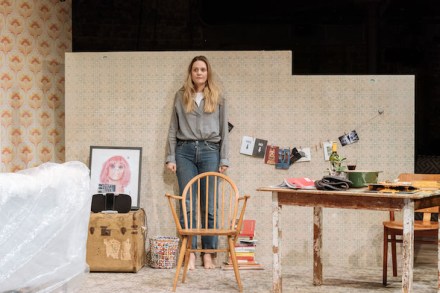
Ella Hickson’s last play at the Almeida was a sketch show about oil. Her new effort uses the same episodic format ornamented with ‘meta-textual experimentation’ (i.e. plotless confusion). The central character is a brilliant young female writer who finds that all male theatre directors are boorish cynical greedy philistine racist sex pests. In Sketch One she meets a smarmy monster twice her age who tries to seduce her with the offer of a script commission. Sketch Two is a commentary on Sketch One, which turns out to have been a play within a play. Sketch Three shows the writer cohabiting with a loser who ‘sells football boots’. The loser has just bought a new sofa (with her money) and he baptises it with an enforced bout of loveless copulation.

Jeremy Corbyn’s PMQs capitulation

From our UK edition

It was a masterclass in capitulation, a stunning act of self-slaughter. And yet, in a way, it was pitifully inept. At PMQs, Corbyn behaved like a quicksand victim who sucks in his breath in order to speed his descent.  May arrived at the House in trouble. Her Home Secretary has resigned and the PM has not yet picked her way clear of the Windrush omnishambles. Corbyn seemed unaware that Amber Rudd’s scalp was dangling from his belt and he surrendered the trophy as soon as he opened his mouth. He blamed Windrush on ‘successive home secretaries’. May pounced on this lazy soundbite, and extended its scope: 'Including the last Labour government.

Courting disaster

From our UK edition

‘Hunt the Flop’, the Royal Court’s bizarre quest for dud plays, has found a candidate for this year’s overall prize. Instructions for Correct Assembly by Thomas Eccleshare is a family satire set in the near future. Plot: suburban parents replace their missing son with a computerised cyborg which malfunctions. That’s it. Were this a pitch for a TV sketch show the producer would say, ‘OK, but then what?’ The answer here is virtually nothing. Early on, the cyborg makes embarrassing political statements and expresses support for Brexit. The parents hastily silence him using a hand-held device that returns him to their dead-safe Guardianista outlook.

Why didn’t David Lammy give Corbyn a helping hand at PMQs?

From our UK edition

The royal nativity opened proceedings at PMQs. Mrs May sounded thrilled about the newborn nipper but the Labour leader could barely conceal his ill-temper. Mr Corbyn slouched at the despatch box and forced a muttered tribute to ‘their baby’ out of the side of his mouth. He sounded like a man who’s just twisted his knee laying flowers on his mother-in-law’s grave. But why the aversion to Supermum Kate’s non-stop sproggery? A wise Marxist ought to welcome a population explosion at the palace. The more numerous and parasitical the royals, the swifter and bloodier their overthrow. Mr Corbyn led on the Windrush crisis and accused Mrs May of creating ‘a hostile environment’ that stoked discrimination against Caribbean workers.

Question time | 19 April 2018

From our UK edition

Quiz by James Graham looks at the failed attempt in 2001 to swindle a million quid from an ITV game show. Jackpot winner Major Charles Ingram was thought to have been helped by strategic coughs emanating from Tecwen Whittock, a fellow contestant on Who Wants to Be a Millionaire? Graham, best known for his gripping political dramas, can’t muster any passion for this story or his characters. Ingram is a posh, weepy lummox. His wife, Diana, comes across as a blur of aloofness, cunning and banality. Whittock, who claimed to suffer from a persistent throat condition, is a clueless hobbit with a wonky Welsh accent. And Diana’s brother, tangentially involvedin the drama, is an amiably bumbling spendthrift. The material has a built-in problem. Whose side are we on?

John Bercow spares Jeremy Corbyn’s blushes at PMQs

From our UK edition

Would she resign over Windrush? Having spent nearly eight years at the heart of government, Theresa May was clearly deeply involved in the scandal, and as PMQs began she seemed nervous and ill-at-ease. Lispy almost. She started on safe ground by thanking the Windrush generation for their ‘massive contribution’ to modern Britain. Then she garbled Windrush and turned it into ‘Windruss’. Then came this: ‘For those who have mistakenly received letters challenging them, I want to... apologise to them – and to say sorry to anyone who (has been) caused confusion and anxiety...as a result of this.’ Prezza couldn’t have put it better. She was floundering and Corbyn had yet to ask his first question.

Politics at play

From our UK edition

David Haig’s play Pressure looks at the Scottish meteorologist, James Stagg, who advised Eisenhower about the weather in the week before D-Day. The play works by detaching us from our foreknowledge of events. We’re aware that the landings went off smoothly on 6 June in fine conditions. However, D-Day was originally scheduled for 5 June, and for the preceding month southern England had basked in a prolonged sunny spell. According to Eisenhower’s American meteorologist, this was set to continue. But Stagg believed a storm was about to engulf the channel. Eisenhower trusted Stagg and postponed D-Day. The storm arrived, albeit tardily, which vindicated Stagg who then foresaw a brief period of clear skies and low winds for the following day. Eisenhower trusted him again.

Quentin Letts isn’t racist – our theatrical culture, which hands out jobs on the basis of racial profiling, is

From our UK edition

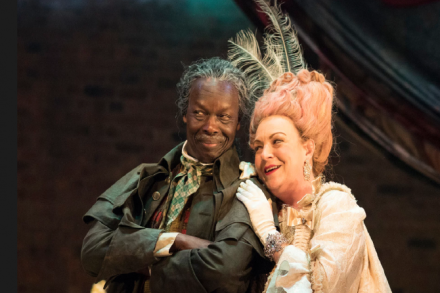
Oh my goodness. Quentin Letts is ‘a racist’ apparently . It says so on Twitter. In his review of the RSC’s The Fantastic Follies of Mrs Rich he referred to the quality of Leo Wringer’s performance and asked, ‘Was Mr Wringer cast because he is black?’ The RSC’s top brass assembled in full muster and denounced Letts for his ‘blatantly racist attitude to a member of the cast.’ I haven’t seen the production, only the reaction to Letts’s reaction to the production, but that’s enough. What’s striking is that the RSC’s accusation is false. Letts did not say the actor was bad because he was black. That would have been racist. Instead he asked if the actor was cast because he was black. Which is different.

The killer instinct

From our UK edition

Ruthless! The Musical is a camp extravaganza about ambitious actors stranded in small-town America. Sylvia St Croix, a pushy agent, visits a super-talented 10-year-old, Tina, and persuades her to audition for Pippi Longstocking in a school play. Tina’s mother fears that stardom may spoil her little girl but Tina is finished with childhood. ‘Time to move on.’ The production feels like a zany Spike Milligan sketch with a garish set and over-the-top costumes. Sylvia is played by Justin Gardiner who swaggers about like a cross-dressing cowboy in a clingy frock and false breasts. The dialogue, which takes cheap shots at bourgeois morality, may not suit all tastes. Try this. Tina complains to Sylvia that she never sees her father.

May’s PMQs attitude should worry Corbyn

From our UK edition

Poor Jeremy Corbyn seemed muted and cowed at PMQs. He stooped over the despatch box, his chin down, his voice murmuring like a trapped bluebottle, his stature loose and uncertain. He grizzled through his six questions without a trace of passion or conviction. He couldn’t even whip himself into his trademark strimmer-call of petulant outrage. Is he having a bit of a crisis? Last night Jewish protestors gathered outside parliament to denounce him. Which is rather ironic. One story has it that his parents met at an anti-Mosley rally. Perhaps the parents of a future Labour leader will meet at an anti-Corbyn march. May had brought up Labour’s anti-Semitism last week so she had a perfect excuse to mention it today. She didn’t. And that should worry Corbyn.

Rising star

From our UK edition

The Plough and the Stars by Sean O’Casey looks at the Irish nationalist movement during the events of Easter 1916. The setting is a Dublin tenement where the residents exchange gossip and insults and sometimes punches. What begins as an elevated soap opera develops into a tragedy of vast and harrowing proportions. Sean Holmes’s production was first seen at Dublin’s Abbey Theatre and it tells the historic tale with contemporary costumes and furnishings. These chronological confusions rarely work but the performers here have so much spirit, energy and truthfulness that the narrative feels immediate and topical. The set is spare, unlovely, brutal.

What’s the big idea?

From our UK edition

Summer and Smoke by Tennessee Williams dates from the late 1940s. He hadn’t quite reached the peaks of sentimental delicacy he found in his golden period but he was getting there. As a lesser-known curiosity, the script deserves a production that explains itself openly and plainly. Rebecca Frecknall has directed a beautiful and sometimes bizarre-looking show which is beset by ‘great ideas’. What a great idea to encircle the stage with upright pianos that the actors can cavort on, and whose exposed innards can twinkle with atmospheric lights at poignant moments. The pianos are an ingenious and handsome solo effort but they serve the designer’s ends and not the play’s. Another great idea was to include a booming soundtrack, often irrelevant, sometimes intrusive.

Jeremy Corbyn shows why he shouldn’t stick to the script at PMQs

From our UK edition

Brexit is going well, apparently. And the prime minister seemed in chipper mood at PMQs. She was even enjoying herself. To neutrals this is a distressing sight. To fans of the Tory leader it must seem downright dangerous. History has taught us that when May feels she’s on top the world, the world promptly lands on top of May. Corbyn raised council tax. His theme was Tory misrule, higher bills and vanishing services. Privatisation fetishists at Northamptonshire, he said, had caused the council to implode entirely. May felt herself on solid ground as she fought back by cataloguing Corbyn’s troubles at council level which have led to two recent Labour defections to the Tories. She seemed to relish the thunderous dissent raised by the opposition benches.

Seeing stars

From our UK edition

The Best Man by Gore Vidal is set during a fictional American election in 1960. Two gifted candidates seek their party’s nomination. Secretary Russell is a chilly but experienced political hack whose marriage is a sham. Senator Cantwell, a more attractive character, is an impulsive charmer married to a blonde bombshell who adores him. The show feels dated but the acting, the costumes and the set designs capture the period nicely. The plot is perhaps short of pace and density. Each character has an embarrassing secret to hide. Secretary Russell suffered a mental breakdown a few years ago. Senator Cantwell enjoyed a bisexual fling in the army. The action turns on their ability to keep these details hush-hush.

John Bercow was curiously quiet at PMQs

From our UK edition

John Bercow, parliament’s anti-bullying tsar, was strangely reticent at PMQs today. The all-but-speechless Speaker limited himself to a single intervention. ‘Order! Lots of questions to get through. And they must be heard.’ That was it. Twelve brisk words. Usually he spends several minutes bobbing up and down and screeching at MPs about the importance of behaving decorously in the chamber, and ‘conducting themselves in a statesmanlike manner’ – one of his favourite phrases. Allegations of misconduct seem to have curbed his interfering verbosity. What a relief. With no interruptions from the umpire, the session moved fast for once. The Russian crisis has made the PM look imposingly Churchillian in the last few days.

His dark materials | 8 March 2018

From our UK edition

He looks like an absent-minded watchmaker, or a homeless chess champion, or a stray physics genius trying to find his way to the Nobel Prize ceremony. He’s in his early sixties, tall and stooping, a bit thin on top, wearing a greatcoat and a crumpled polo-neck jumper. A blur of whiskers obscures the line of his jaw. He has a bulbous, Larkinesque skull and battleship-grey teeth; and if you wanted to cast someone as Spooner, the literary vagrant in Pinter’s No Man’s Land, you’d struggle to find a closer match. This is Michael Boyd, former director of the RSC, who was knighted in 2012 for services to drama. We meet in a dressing-room in a west London studio where he’s rehearsing the Cherry Orchard for Bristol Old Vic. He has deep roots in the Russian theatre.