Lloyd Evans

Lloyd Evans

Lloyd Evans is The Spectator's sketch-writer and theatre critic

What a slippery, hateful toad Fred Goodwin was

From our UK edition

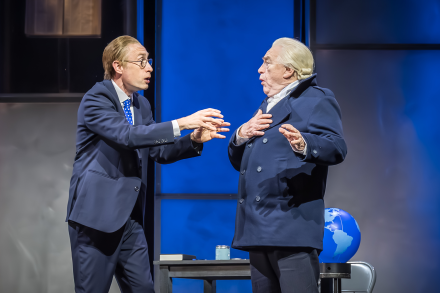
Make It Happen is a portrait of a bullying control freak, Fred Goodwin, who turned RBS into the largest bank in the world until it came crashing down in 2008. Fred the Shred’s character makes him a tough subject for a drama. His morning meetings were called ‘morning beatings’ by terrified staff. He ordered executives to pitch him an idea in the time it took him to eat a banana. Inciting arguments between staff amused him and he once sacked an employee for saying ‘I tried’ instead of ‘I succeeded’. He was obsessed with colours and fabrics and he personally oversaw the design of the carpets and even the handwash at the bank’s headquarters. But James Graham’s play offers us very few clues about the origins of his character flaws.

Jess Phillips: ‘I’m being controlled by aggression and violence’

From our UK edition

Jess Phillips begins her interview with Iain Dale at the Edinburgh Fringe with a meandering homage to her hometown, Birmingham, which is still in mourning for Ozzy Osborne. ‘Birmingham is like a village. I can link anyone in my family to someone in your family in three steps. Barbara Cartland is from Birmingham. Lawn tennis was invented on the Cartland estate. I grew up around Ozzy Osbourne’s first son, Louis. I count them as good friends. My son went to the funeral procession. And Sharon is a lovely, lovely woman.’ ‘There were fireworks thrown, tyres slashed and constituents threatened at polling stations. And they were almost exclusively men’ Phillips makes a promise to her host. She offers to recruit Sharon as part of his All Talk line-up at next year’s festival.

Rachel Reeves couldn’t be prouder of crippling the economy

From our UK edition

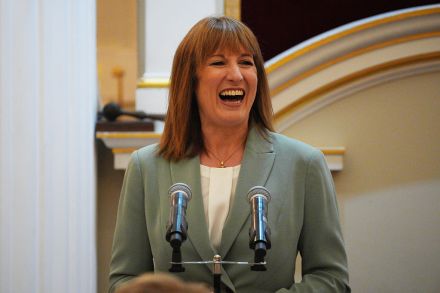
Rachel Reeves strode onto the stage at the Edinburgh festival in a black jumpsuit and an orange scarf. Iain Dale, in a dark maroon jacket, kicked with a dare. ‘Try, if you can, not to use the phrase “13 wasted Tory years” or “22 billion pound black hole.”’  She likes anything that involves net zero. She regards the Labour party as the saviour of this self-harming energy policy. ‘What else am I going to talk about?’ said Reeves. She’s a much warmer and funnier soul than her TV image suggests. Dale asked about the awkward moment when she wept during PMQs in June.  ‘I was having a bit of a day, a difficult day at work,’ she said vaguely. ‘There was stuff going on. But it’s different for me. The cameras are on me.

Edinburgh Fringe’s war on comedy

From our UK edition

Every day my inbox fills with stories of panic, madness and despair. The Edinburgh Fringe is upon us and the publicists are firing off emails begging critics to cover their shows. If the festival is a national X-ray, this year’s image is shadowed by emotional frailty and a distinct sense of humour failure. The brochure is full of performers advertising their mental disorders (ADHD, OCD, PTSD, and so on), as if they were badges of achievement. The chair and chief executive of the Fringe say that the festival means ‘giving yourself over to the (safe) hands of our performers allowing yourself to be swept away by their creativity’. The word ‘safe’, in brackets, assures nervous visitors that their mental wellbeing won’t be jeopardised.

Wonderfully corny: Burlesque, at the Savoy, reviewed

From our UK edition

Inter Alia, a new play from the creators of Prima Facie, follows the hectic double life of Jess, a crown court judge, played by Rosamund Pike. As a high-flying lawyer with a family to care for, she knows that ‘having it all’ means ‘doing it all’. When not in court, she skivvies non-stop for her indolent husband and her useless son, who telephones her at work to ask why his Hawaiian shirt isn’t in the fridge where he left it. She races home, finds the shirt, irons it back and front, and then starts to prepare supper for eight guests. Husband and son pretend to help by Frisbeeing the dinner plates around the kitchen and tossing pots of taramasalata to each other. A spillage of gunk lands on the kitchen floor and Jess promptly kneels down and wipes it clean.

The National have bungled their Rishi Sunak satire

From our UK edition

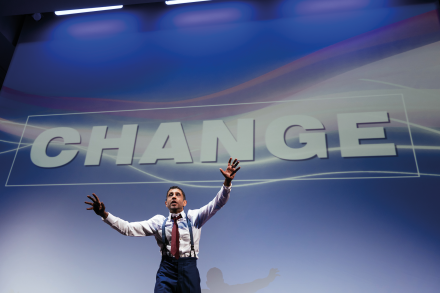
The Estate begins with a typical NHS story. An elderly Sikh arrives in A&E after a six-hour wait for an ambulance and he’s asked to collect his own vomit in an NHS bucket. The doctors tell him he’s fine and sends him home where he promptly dies. His only son, Angad, inherits all his property, which irritates his two daughters, who receive nothing. The personality of the dead Sikh is left deliberately obscure. Newspapers in Britain and India publish glowing accounts of his achievements but his youngest daughter calls him ‘a slum landlord’ who owed his fortune to ‘a lifetime of tax-evasion’. The bad-tempered tussle over his will takes place in Angad’s west London mansion, owned by his mega-rich wife who supports the decision to withhold cash from the greedy sisters.

A bland, reverential portrait of a socialist martyr: Nye at the Olivier Theatre reviewed

From our UK edition

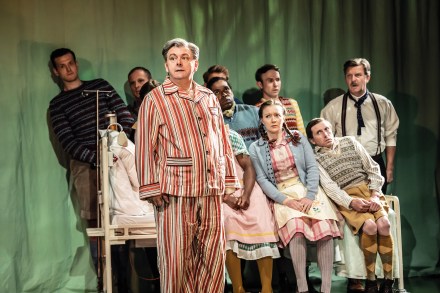
The memory of Nye Bevan is being honoured at the National Theatre. Having made his name as a Marxist firebrand, Nye was quick to take advantage of the privileges enjoyed by the governing classes whom he affected to despise. He entered parliament in 1929 and began to hang around the Commons bar plying female MPs with double gins. His future wife, Jennie Lee, referred to him as a ‘rutting stag’. Was he a serial bed-hopper as well as a problem drinker? It’s hard to tell from this bland, reverential portrait of a socialist martyr. The director, Rufus Norris, adds song and dance routines, requiring the services of two choreographers, as if to suggest that Nye was a gifted crooner with a great pair of pins as well. Is that true? Or just part of the packaging?

More drama-school showcase than epic human tragedy: Evita reviewed

From our UK edition

Evita, directed by Jamie Lloyd, is a catwalk version of the Andrew Lloyd Webber musical. The actors perform on the steps of a football stadium where they race through an effortful series of dance routines accompanied by flashy lights and thumping tunes. It’s more a drama-school showcase than an epic human tragedy. There are no interiors, no furnishings and no props – not even a suitcase for ‘Another Suitcase in Another Hall’. Rachel Zegler plays the lead in black pants and a bra from M&S. In Act Two, she changes into a new bra and pants. White this time, with silvery spangles. She looks like a majorette. Why no proper clothing?

John Connolly, Gavin Mortimer, Dorian Lynskey, Steve Morris and Lloyd Evans

From our UK edition

26 min listen

On this week’s Spectator Out Loud: John Connolly argues that Labour should look to Andy Burnham for inspiration (1:51); Gavin Mortimer asks if Britain is ready for France’s most controversial novel – Jean Raspail’s The Camp of the Saints (4:55); Dorian Lynskey looks at the race to build the first nuclear weapons, as he reviews Frank Close’s Destroyer of Worlds (11:23); Steve Morris provides his notes on postcards (16:44); and, Lloyd Evans reflects on British and Irish history as he travels around Dublin (20:44).  Produced and presented by Patrick Gibbons.

Scooby-Doo has better plots: Almeida’s A Moon for the Misbegotten reviewed

From our UK edition

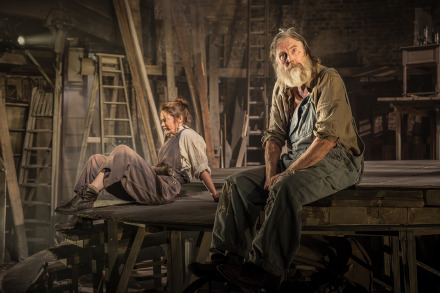
A Moon for the Misbegotten is a dream-like tragedy by Eugene O’Neill set on a barren farm in Connecticut. Phil Hogan and his daughter Josie have worked the rocky soil for 20 years and they’ve come up with a joke. ‘If cows could eat stones this would be a grand dairy farm.’ Phil is a coarse, shifty bully who starts the play by assaulting his neighbour and threatening to murder him. For some reason this crime goes unpunished and the incident isn’t mentioned again. Very odd. The elements of this lop-sided story are clumsily arranged by O’Neill. His cold, narcissistic characters don’t make much sense and the subplot concerning a property deal is so complicated that it doesn’t affect the narrative one way or another.

Will the Irish ever forgive the English?

From our UK edition

Leaving home is the best way to find out who you are. In my case, it’s a muddle. Welsh dad. Irish mum. English upbringing. And I feel pleasantly detached wherever I go. In England, I’m considered Welsh. In Ireland, I’m considered English. In Wales, I’m considered inadequate because I don’t speak the language, apart from the odd term like ‘popty ping’ (microwave). From childhood I’ve been a scholar of English preconceptions about my Celtic brethren. ‘Welsh? Cave-dwellers who love sheep.’ ‘Irish? Bog-trotters who love horses.’ The Irish are preferred, especially by the English upper classes, who are infatuated with Ireland as an abstract concept. But they’re less keen on the real thing. An Irish accent in the family is an ornament.

The Ministry of Lesbian Affairs is as sweet and comforting as a knickerbocker glory

From our UK edition

The Ministry of Lesbian Affairs is a comedy that feels as sweet and comforting as a knickerbocker glory. The show is set in a leaky scout hut where a bunch of lesbians meet to perform choral music. The conductor, Connie, has the bluff, good-natured energy of an RAF squadron leader. ‘Snippety-snap,’ she calls as she encourages the ‘ladies’ to warm up. Correct pronoun usage doesn’t interest her. Nor does non-binary language. She’s an OWL (older wiser lesbian) and she runs the choir like a drop-in centre for strays, fugitives and sexual rejects in need of a substitute family. The newest arrival, Dina, is a Qatari princess who lives in a luxury apartment with her controlling brute of a husband.

Superb: Stereophonic, at Duke of York’s Theatre, reviewed

From our UK edition

Stereophonic is a slow-burning drama set in an American recording studio in 1976. A collection of hugely successful musicians, loosely based on Fleetwood Mac, are working on a new album which they hope will match the success of their previous number one smash. This is an absolute treat for anyone who appreciates subtle, oblique and quietly daring theatre The studio could almost be an orphanage because the characters keep squabbling and bickering like siblings in need of a parent. The self-appointed leader is Peter (Jack Riddiford) who dresses in classic hippy mode with a kaleidoscopic shirt and a droopy moustache. But he rules the studio with a rod of iron.

Ingenious: the Globe’s Romeo & Juliet reviewed

From our UK edition

Cul-de-Sac feels like an ersatz sitcom of a kind that’s increasingly common on the fringe. Audiences are eager to see an unpretentious domestic comedy set in a kitchen or a sitting-room where the characters gossip, argue, fall in love, break up and so on. TV broadcasters can’t produce this sort of vernacular entertainment and they treat audiences as atomised members of racial ghettos or social tribes. And they assume that every viewer is an irascible brat who can’t bear to hear uncensored language without having a tantrum. The result is that TV comedy often feels like appeasement rather than entertainment. Theatre producers are keen to fill the gap, and the latest effort by writer-director David Shopland declares its ambitions in its title.

Provocative, verbose and humourless: Mrs Warren’s Profession reviewed

From our UK edition

George Bernard Shaw’s provocative play Mrs Warren’s Profession examines the moral hypocrisy of the moneyed classes. It opens with a brilliant young graduate, Vivie Warren, boasting about her dazzling achievements as a mathematician at Newnham College, Cambridge. She explains her future plans to a pair of mild-mannered chaps who clearly adore her. Like most of Shaw’s characters, Vivie is hard-nosed, emotionally cold, incapable of speaking concisely and boundlessly self-confident. Quite irritating, in other words. She plans to start a firm with another hyper-brainy female and to make a killing in the London insurance market. This occurs in 1902. Was it normal for two unmarried Edwardian women to enter the world of high finance straight out of university? Hard to say.

Badenoch’s ‘chaos’ attack on Starmer will be less effective than she hopes

From our UK edition

Fists flew at Prime Minister's Questions. The party leaders sprang from their corners and bashed each other repeatedly in the face. It was fun to watch. Kemi Badenoch accused Sir Keir Starmer of performing so many U-turns that ‘his head must be spinning.’ Two weeks ago, he panicked and cancelled his decision to withdraw the winter fuel allowance. ‘The Chancellor is rushing her plans,’ she said, ‘because she’s just realised when winter is.’ Kemi sprang her trap. She leapt to her feet, glittering with triumph Sir Keir shrugged this off. ‘I’m glad to see she’s catching up on what happened two weeks ago.

Everyone should see the Globe’s brilliant new production of The Crucible

From our UK edition

Sanity returns to the Globe. Recent modern-dress productions have failed to make use of the theatre’s virtues as a historical backdrop. The Crucible by Arthur Miller is set in the 1690s (about a century after Shakespeare’s heyday) and the script works beautifully on this spare, wooden stage. To make the groundlings feel involved, the playing area has been extended into the pit with two separate platforms for the judges and the witnesses. James Groom, as Willard the demented jailer, terrifies the crowd by striding around the arena, barking madly at anyone who gets in his way. It grabs your attention. The dashing Gavin Drea (John Proctor) looks terrific in the lead role alongside Phoebe Pryce as his mistrustful, nervy wife, Elizabeth. Both play their parts with strong Irish accents.

The naked truth about life modelling

From our UK edition

When I left university, I prepared for a short spell of poverty while I sent off amusing and opinionated articles to newspaper editors who needed the work of smart alecks like me to entertain their readers. My short spell of poverty lasted 17 years. In the meantime, I survived on odd jobs, including a stint as a life model. ‘Starts at ten,’ said Piers, a friend who taught at a college in Kensington. Before my shift, I flipped through Ernst Gombrich’s The Story of Art in case a life model was expected to know the classical poses by heart. I imagined Piers starting me off with an easy one: ‘The Thinker’ by Rodin, or ‘Moses’ by Michelangelo, or ‘The Martyrdom of St Sebastian’ by Mantegna.

James Heale, Angus Colwell, Alice Loxton, Lloyd Evans, Richard Bratby, Christopher Howse and Catriona Olding

From our UK edition

38 min listen

On this week’s Spectator Out Loud: James Heale analyses the splits in Labour over direction and policy (1:27); Angus Colwell asks if the ‘lanyard class’ are the new enemy (6:21); Alice Loxton explains why bite-sized histories have big appeal (9:58); Lloyd Evans reports on how Butlin’s is cashing in on nostalgia (15:00); Richard Bratby on Retrospect Opera, the non-profit record label that resurrects the forgotten works of British opera (20:40); Christopher Howse provides his notes of typos (27:27); and, Catriona Olding reflects on the death of her partner, the Spectator’s Jeremy Clarke, two years ago this week (32:15).  Produced and presented by Patrick Gibbons.

Magnificent: The Deep Blue Sea, at the Theatre Royal Haymarket, reviewed

From our UK edition

Richard Bean appears to be Hampstead Theatre’s in-house dramatist, and his new effort, House of Games, is based on a 1987 movie directed by David Mamet. The script sets up a rather laborious collision between two vastly different cultures. A gang of small-time crooks in Chicago are visited by a beautiful, high-flying, Harvard-educated academic who wants to investigate their lives. The catalyst for this unlikely set-up is therapy. Dr Margaret Ford is a successful shrink whose latest book has become a bestseller and she needs a new theme to write about. She speaks to a troubled young patient who owes $2,000 to a betting syndicate and when she visits their seedy gambling den she’s welcomed by the crooks and given an integral role in the team. Just like that.