Lloyd Evans

Lloyd Evans

Lloyd Evans is The Spectator's sketch-writer and theatre critic

Dominic Cummings: why the elites keep getting politics wrong

From our UK edition

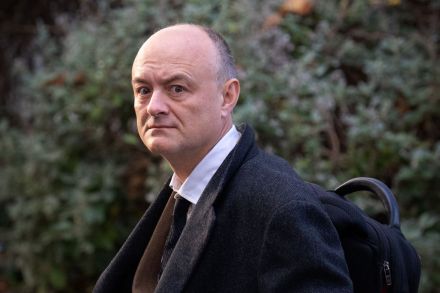
Last night, Dominic Cummings was interviewed at the O2 by the activist start-up, Looking for Growth. Cummings walked on stage in his trademark T-shirt and baseball cap and made a series of predictions about UK politics. A general election is unlikely before 2029, he said. ‘It won’t be earlier. The MPs will postpone the nightmare that’s coming to them.’ He warned that Keir Starmer's time is limited. ‘If Labour keeps losing voters to the Greens, Starmer will be got rid of next year.’ He made the same prediction about the Tory leader. ‘Kemi’s going to be got rid of after the May elections.’ Cummings chuckled over the idea that, ‘the UK is a multicultural success story. That idea is cracking up.’  He seemed amazed by the folly of Starmer’s administration.

Why was the 19th century so full of bigots and weirdos? 

From our UK edition

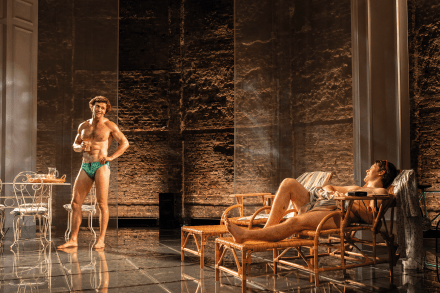
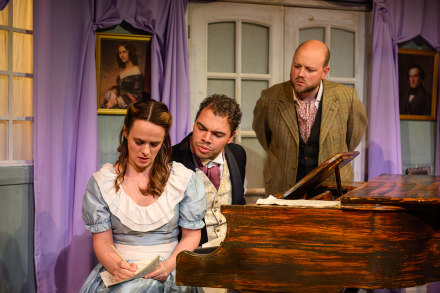
Da Vinci’s Laundry is based on an art world rumour. In 2017, Leonardo’s ‘Salvator Mundi’ sold at Christie’s for $450 million but some experts claimed that the attribution was inaccurate. Could the world’s costliest artwork be a fake? Writer, Keelan Kember, considers the provenance of a fictional Leonardo owned by a thuggish oligarch, Boris, who claims to have bought the masterpiece at a flea market. He invites two posh British experts, Christopher and Milly, to authenticate the painting and when Christopher questions its origins he earns Boris’s instant displeasure. Boris threatens to toss Christopher from the roof of his luxury mansion. Enter a brash American, named Tony, who wants to buy the Leonardo on behalf of a rich Saudi clan.

Tracy Letts’s magic touch

From our UK edition

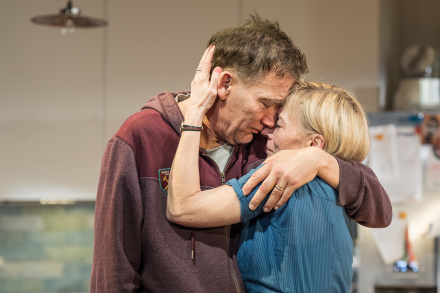
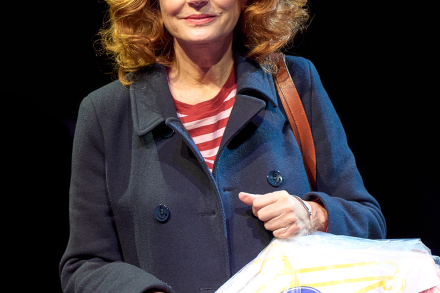
Tracy Letts’s Mary Page Marlowe is a biographical portrait of an emotionally damaged mother struggling with romantic and family problems. Susan Sarandon shares the lead with four other actresses which makes the show a little hard to follow. And the timeline is jumbled up so that the audience has to find its bearings at the start of each new episode. Why? Perhaps to give the material a complexity it doesn’t deserve. We first meet our heroine, aged 40 (played by Andrea Riseborough), as she tells her kids that they’re moving to Kentucky without their dad. This unpromising scene is hilarious because the word ‘Kentucky’ is repeated so often that it becomes a profanity. Pinter loved verbal games like this.

Yoga is slow-motion pole-dancing for grannies

From our UK edition

It’s hard work being rich. I gave up trying years ago. You must waste money on everything, even the basics, to advertise your status as a big spender. Food and drink are easy. You buy organic veg from a dim-witted aristocrat at a farmers’ market. And you choose sparkling water filtered through the porous flanks of a Malaysian volcano. A tougher challenge is oxygen. The rich need top quality air as well. But how do you let people know that your breaths are costlier and more refined than the inhalations of the mob? Well, yoga. Yoga turns breathing into a five-star indulgence. You hire a servant (known as a ‘guru’ to make her feel important) who stands in attendance while you fill and empty your lungs for 45 minutes.

Stephen Fry is the perfect Lady Bracknell

From our UK edition

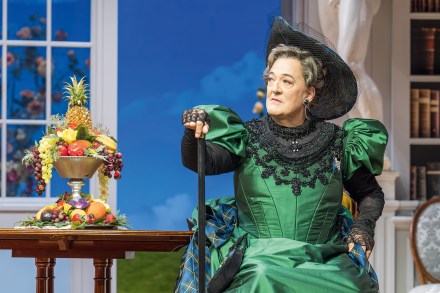
Hamlet at the National opens like a John Lewis Christmas advert. Elegant celebrations are in progress. The stage is full of dining tables draped in white linen and adorned with flowers and beautiful glassware sparkling in the candlelight. Elsinore is reimagined as the home of a multicultural royal family. Claudius, resplendent in a dark dinner jacket, toasts his Asian bride, Gertrude, who wears a banana-yellow sari. Enter Hamlet, hunched and mutinous, in a snaky black suit like a moody star at a film première. He cheers up when he reaches his first soliloquy which he delivers to the crowd like a larky routine at a comedy club. Hiran Abeysekera (Hamlet) is a talented and hyperactive clown who gets big laughs from unpromising material. But he lacks the substance for the role.

Obsolete message: Led By Donkeys in conversation, reviewed

From our UK edition

https://www.youtube.com/watch?v=xVdR7DvLbjw The founding members of Led By Donkeys granted a public interview last Thursday at a theatre in Walthamstow. They were questioned by Guardian columnist Zoe Williams. Seated on squashy sofas, the four men looked like an ageing boyband who met at public school. James Sadri, suave and handsome, seems to be the boss. Ollie Knowles is the ebullient charmer. Ben Stewart, who scowls as he talks, is the grumpy technical wizard. And Will Rose, who says very little, seems to be the token northerner. The Donkeys specialise in harmless political pranks. Their approach is new but their content is stale.

A dazzling musical celebration of the 1970s

From our UK edition

Clarkston is an American-backed production featuring a Netflix star, Joe Locke. He plays a young graduate with a terminal illness, Jake, who works at a Costco warehouse in a failing midwest town. Jake is a brainbox with an IQ of 140 who takes a scholarly interest in early American history. On his first day at work, he befriends a bookish intellectual, Chris, who loves literature and wants to dazzle the world with his fiction. The entry requirements for this branch of Costco seem to be tougherthan Harvard’s. The romance between the two boys is impeded by Jake’s clingy mum, Trisha, who feeds her meth habit by stealing his money and forbids him to leave town. Chris would have escaped from his mother ages ago but the playwright, Samuel D.

Nutrition is a bogus creed

From our UK edition

Time to think about my diet. A test kit arrives from the NHS screening team who want to inspect a stool sample to see if a hostile cluster of cells is growing in my guts. What I eat horrifies everyone – except me. I live on Bran Flakes and Frosties straight from the box, and I enjoy chocolate bars or digestive biscuits coated with redcurrant jam (Lidl, 51p). Each year I spend about £600 on food – mostly processed pap full of fructose and additives. ‘Chemical rubbish,’ my mother called it. I avoid restaurants because I can do better at home. I like boiled rice or noodles smothered with sauces that glow like the core of a nuclear reactor. Ketchup is my favourite. The perfect condiment. A delicious creamy blend of sugar and tangy vinegar suspended in a thick scarlet relish.

An amazing piece of entertainment: Reunion, at the Kiln Theatre, reviewed

From our UK edition

What a coincidence. Two plays running in London have the same storyline: an obsessed lover bursts into a family gathering to reclaim the woman who spurned him.The Lady from the Sea, written and directed by Simon Stone, is based on a late drama by Ibsen. Alicia Vikander stars as the neurotic Ellida, who feels repelled by her charming, erudite, handsome and successful husband, Edward. Ellida can’t shake off the memory of a fat, bearded eco-warrior, Finn, who raped her when she was 15. And when Finn shows up at her beautiful home in Cumbria, she has to choose between Edward (Andrew Lincoln) and her rapist (Brendan Cowell). It’s Paul Newman vs Shrek. Naturally Ellida chooses Shrek. After all, this is Ibsen. Poor Edward has other problems.

When Freud met Hitler

From our UK edition

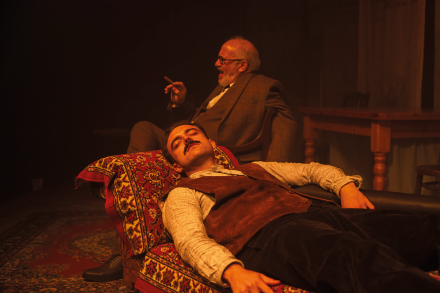
A new play by Lawrence Marks and Maurice Gran, the writers of Birds of a Feather, feels like a major event. This is a period drama that examines an imaginary association between Hitler and Freud and develops into an enquiry about the nature of evil. As Hitler grows into adulthood he gravitates towards the Freud family, muscling in on their summer holidays The play opens with a scene from Hitler’s childhood, as his father, Alois, thrashes the young boy while his mother watches and weeps helplessly. This tableau is oddly hilarious because it explains in simple domestic terms the unimaginable horrors of the 20th century. As a teenager, Hitler meets Freud by accident and shares his dream of becoming a painter and an opera composer. ‘A Renaissance man,’ chuckles Freud.

Inside Zarah Sultana’s ‘Your Party’ rally

From our UK edition

The ‘nonce party.’ That’s how Zarah Sultana described the Labour party at a rally in Brixton last night where the independent MP for Coventry South addressed supporters of her new movement, Your Party. She claimed to have posted numerous images of Peter Mandelson and Jeffrey Epstein on her X account, but her warnings went unheeded by Labour strategists. The lively rally opened with a videotaped greeting from Jeremy Corbyn, co-leader alongside Sultana, who affirmed his support for ‘Net Zero by 2030’, and a handful of benefit increases. After this formality, his name was barely mentioned. Sultana topped the bill ahead of seven activists who urged the crowd to oppose ‘the far-right on the streets.

Shallow and silly: Born With Teeth, at Wyndham’s Theatre, reviewed

From our UK edition

Born With Teeth is a camp two-hander starring a pair of TV luminaries, Ncuti Gatwa and Edward Bluemel, as Marlowe and Shakespeare. The year is 1591 and the great dramatists are holed up in a tavern working on an early draft of Henry VI (Part 3). Not much writing gets done. It’s all rhetoric and bombast. Marlowe is a bullying egomaniac who boasts of his ‘throbbing quill’ and parades a peacock’s feather which he strokes lasciviously. Both playwrights are gay, of course, and they live in a world that views heterosexual couplings as a mystifying aberration. Marlowe prances about on the table and re-enacts his conquests of grateful gay aristocrats. He peels off his undershirt and flings himself at Shakespeare who responds with fake reluctance.

David Bowie’s roguish plans for a Spectator musical

From our UK edition

David Bowie wrote a musical. Well, nearly. A cache of notes found in his New York apartment after his death indicates that he was planning a new theatre project in the final months of his life. The archive includes the phrase ‘18th cent musical’ among a collection of Post-it stickers filled with ideas and motifs. Creating a musical would have satisfied a lifelong ambition. ‘Right at the very beginning,’ he told the BBC in 2002, ‘I really wanted to write for the theatre. I could have just written for theatre in my living room but I think the intent was to have a pretty big audience.’ He seems to have chosen Spectator as the show’s title.

Mercifully short: Interview at Riverside Studios reviewed

From our UK edition

Interview is a blind-date play. Only it’s not a blind date but a showbiz interview for a journal called the New York Chronicle. The characters (played by Robert Sean Leonard and Paten Hughes) bicker, flirt and get emotionally involved during a 90-minute conversation. Naturally it all starts badly. The interviewer, Pierre, arrives at Katya’s Brooklyn apartment and tells her straight off that he’s never seen her perform on TV or in a movie. He hates covering the lives of brattish starlets because he used to be the Courier’s ace political reporter but his career has been terminated. At least his journalistic skills are still intact and he makes her admit that she can’t name her mother’s birthplace in Georgia. She’s fibbing. So the games begin.

Nicola Sturgeon on J.K. Rowling, Farage and Trump

From our UK edition

Last night, Nicola Sturgeon appeared at the Queen Elizabeth Hall to promote her autobiography Frankly. On stage she was questioned by Cathy Newman of Channel 4, who began with J.K. Rowling’s savage review of the book. On her website Rowling described Sturgeon as ‘Trumpian in her denial of reality and hard facts’. Sturgeon fired back: ‘Thank you, J.K. Rowling. Anything that brings publicity for my book is great.’ Then a change of tone. She criticised Rowling’s decision to ‘pour vitriol on somebody’s head … I wouldn’t have the time or the inclination to do to J.K. Rowling what she does to me.’ She warned that ‘hyper-personalised’ rhetoric may have unforeseen consequences.

An English Chekhov: The Gathered Leaves at Park200 reviewed

From our UK edition

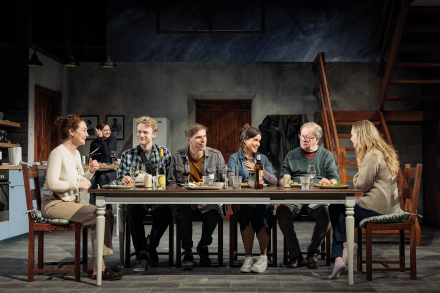
Chekhov with an English accent. That’s how Andrew Keatley’s play, The Gathered Leaves, begins. The setting is a country house where a family of recusant English Catholics meet for a weekend of surprises and high drama. The audience was on its feet, cheering and clapping, some of them in tears At first, the main conflict seems a little flimsy. William Pennington, a pompous grandee born in the 1920s, won’t forgive his children for being who they are. His daughter Alice scooted off to the south of France where she raised an illegitimate girl whom William has never met. His sons, Giles and Samuel, were sent to boarding school where Giles had to protect the autistic Samuel from bullies who mocked his eccentric behaviour.

Death was easier when I was a kid

From our UK edition

Somebody dies and his friends say ‘he passed’. Passed what? He didn’t pass. He failed. He took the most basic test of all, ‘are you responsive?’, and his answers fell short of the required standard. True, he was awarded a bit of paper, a death certificate, but it’s no use to him on his CV. Death was easier when I was a kid. People spent most of their lives dying. They ate burgers, pork chops and potatoes fried in lard. They shunned exercise and fresh fruit. They filled their cars with leaded petrol (which gave the air a pleasing lavender tinge). They glugged down beer and gin galore. And they sucked burning tobacco fumes into their lungs. My grandparents smoked 30 or 40 cigarettes a day, which was normal back then. They died in their early seventies.

Glorious: Good Night, Oscar, at the Barbican, reviewed

From our UK edition

Good Night, Oscar is a biographical play about Oscar Levant, a famous pianist who was also a noted wit and raconteur. The script starts as a dead-safe comedy and it develops into a gripping battle between the forces of anarchy, represented by Oscar, and the controllers of NBC who want to censor his crazy humour. The backstory is complicated. Oscar has been secretly committed to a mental asylum and his wife gets him released for a few hours so he can do an interview on Jack Paar’s TV show. It takes two long scenes to explain this improbable set-up but it’s worth it because Oscar (Sean Hayes) is such a lovable character. He’s a total wreck, addicted to drugs, suffering from OCD, and afflicted by aural and visual hallucinations that leave him curled up on the floor like a baby.

Patrick Kidd, Madeline Grant, Simon Heffer, Lloyd Evans & Toby Young

From our UK edition

28 min listen

On this week’s Spectator Out Loud: Patrick Kidd asks why is sport so obsessed with Goats; Madeline Grant wonders why the government doesn’t show J.D. Vance the real Britain; Simon Heffer reviews Progress: A History of Humanity’s Worst Idea; Lloyd Evans provides a round-up of Edinburgh Fringe; and, Toby Young writes in praise of Wormwood Scrubs – the common, not the prison. Produced and presented by Patrick Gibbons.
The problem with psychiatrists? They’re all depressed

From our UK edition

Edinburgh seems underpopulated this year. The whisky bars are half full and the throngs of tourists who usually crowd the roadways haven’t materialised. There’s a sharp chill in the air too. Anoraks and hats are worn all day, and anyone eating outdoors in the evening is dressed for base camp. Perhaps tourists don’t want to travel because they’re too depressed. That’s the specialism of Dr Benji Waterhouse, an NHS shrink, who writes and performs comedy about his patients. Dr Benji is an attractive presence on stage with his crumpled Oxfam clothes and his dreamy, half-shaven look. He could be the guy who tunes up U2’s guitars. His act is very funny and it contains some amazing revelations.