Lloyd Evans

Lloyd Evans

Lloyd Evans is The Spectator's sketch-writer and theatre critic

Corbyn: A deity has fallen

From our UK edition

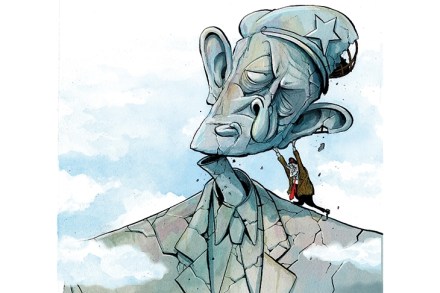
Jeremy Corbyn’s brand is slipping. Yesterday, supporters of his Peace and Justice movement joined a much larger demo in London organised by the People’s Assembly. About a thousand protestors showed up for an event where the dominant theme was Palestine. When the marchers arrived at Parliament Square they were led by a shrill gang of teenagers from a sixth form college who waved Palestinian flags and belted out a rhyming couplet. ‘One. Two. Three. Four. Occupation, no more. Five. Six. Seven. Eight. Israel is a terrorist state.’ In Corbyn’s heyday he topped the bill wherever he went and he was free to speak for as long as he wished. Yesterday, he got three minutes With them were two orthodox Jews from the Neturei Karta sect.

This interactive Doctor Who show is as bombastic, fey and tedious as the TV series

From our UK edition

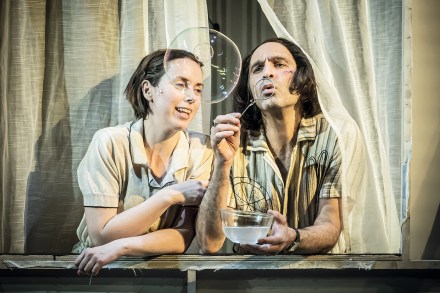
Death of a Black Man is a little-known script from the 1970s written by Alfred Fagon who suffered a fatal heart attack in 1986, aged 49. It’s an intriguing but sloppily written play set in 1973 about a pair of black London teenagers who are hustling for cash in the music business and the furniture trade. Shakie has lucked his way into a Chelsea flat where he makes money flogging African chairs to gullible Americans. His best friend, Stumpie, needs a loan to bring a band of African drummers to the UK. Meanwhile Shakie’s ex-girlfriend, Jackie, has returned from Jamaica to sponge off him and enjoy the high life. Scriptwriting blunders abound. Fagon uses soliloquys to reveal motivation. ‘I wonder who owns this flat,’ says Jackie to herself.

PMQs: Boris feels more threatened by Sir Ed than Sir Keir

From our UK edition

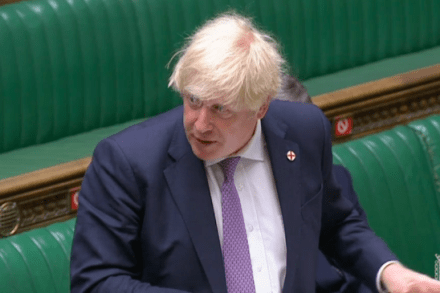
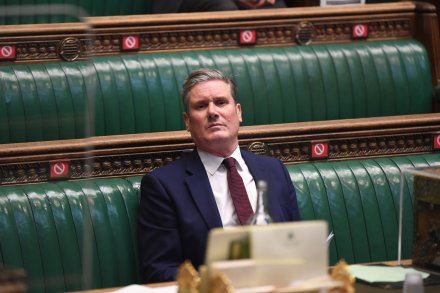
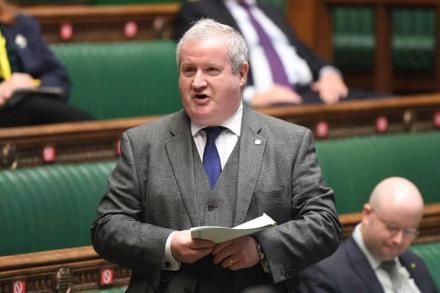
At PMQs Sir Keir Starmer led on the tricky subject of rape. He cornered the PM with a precisely worded four-part question about the fact that 98 per cent of reported rapes don’t lead to criminal charges. The PM countered that Labour had recently voted against a bill that toughened up sentences for violent sexual offenders. Sir Keir had war-gamed this in advance. And how he pounced. ‘What provision, what clause, what chapter or what words of that bill will do anything to change the fact that 98.4 per cent of reported rapes don’t end up in a charge?’ Without hesitation, Boris said, ‘Section 106 and 107 of that bill would have stopped the early release of rapists.’ Sir Keir was aghast. ‘What an appalling answer!

Godot Is a Woman will have you laughing all evening and arguing all night

From our UK edition

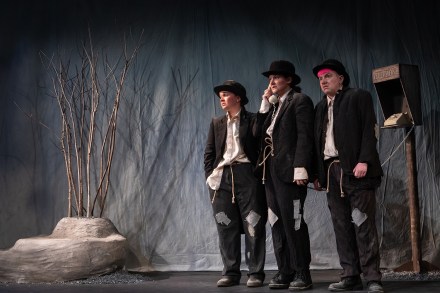
Godot Is a Woman opens with three tramps standing on a bare stage beneath a solitary upright. This isn’t Samuel Beckett’s famous drama about a pair of vagrants, Vladimir and Estragon, who wait in vain for a mysterious visitor. This is a spoof in which a trio of actors (two female, one non-binary) seek a licence to perform the script that Beckett insisted must be played by male actors only. The upright prop is a telephone box and the thesps are trying to get through to the Beckett estate. They’re answered by a robotic female voice. ‘You are 9,124th in the call queue.’ A burst of inane lift music fills the air and the actors pass the time by performing a comic dance routine that lasts 15 minutes.

PMQs: Ian Blackford’s trade rage

From our UK edition

Covid changes its identity more often than Grant Shapps. The latest strain emerged with the appealingly exotic name ‘Indian’. Now it’s been given a more military-sounding tag, ‘the Delta variant.’ Today’s PMQs featured a tussle over the date on which this dangerous mutant sneaked through the UK’s borders. Sir Keir Starmer waved a file of papers at Boris. ‘It’s all here in the transcript,’ he said and he accused the PM of waiting too long to slap a ‘red list' notice on India.  For once, Sir Keir had his timelines in a twist. Boris flourished a counter-file at the opposition leader. It was written, said the PM, by the general secretary of the Labour party. ‘This is the document on which I believe he is relying.

Two hours of kitsch tomfoolery: Amélie at the Criterion reviewed

From our UK edition

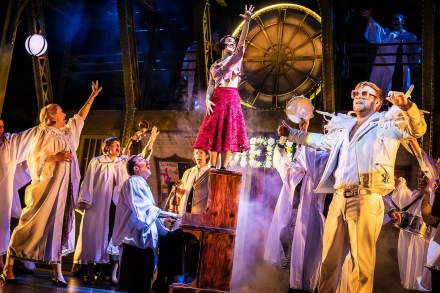
The latest movie to turn into a musical is Amélie, from 2001, about a Parisian do-gooder or ‘godmother of the unloved’. Some rate Amélie as the worst film ever made in France. Some consider it the worst film ever made. Our heroine is a 20-year-old waitress, a sort of proto-Greta, who plays truant from her restaurant job and wanders around Paris doing nice things to random strangers. Her inspiration is a box hidden by a child in her apartment 40 years earlier which she wants to restore to its original owner. Or, as the clunky narrator puts it, ‘Why is she holding that box like her future is inside it?’ Amélie’s odyssey brings her into contact with all kinds of misfits, pests and layabouts who belong in a magic realist novel.

PMQs: Hoyle takes on Johnson

From our UK edition

What is Prime Ministers' Questions? Is it a simple contest of ideas? Or is it a judicial roasting in which a lone defendant, governed by strict rules, must face an army of malign inquisitors? Boris thinks it’s an open debate about policy. Speaker Hoyle sees it as a court-hearing over which he presides as judge and procedural expert. Today they clashed. It began with Sir Keir Starmer blowing holes in Boris’s botched catch-up plan for schools. A government wonk, Sir Kevan Collins, had ordered huge sums to be lavished on the programme but the Treasury declined. Boris agreed with the Treasury. And Sir Kevan flounced off into obscurity leaving a few stinging insults about the education department in his wake. Ho-hum. Just another day in Whitehall.

A Shakespeare play at the Globe whose best features have nothing to do with Shakespeare

From our UK edition

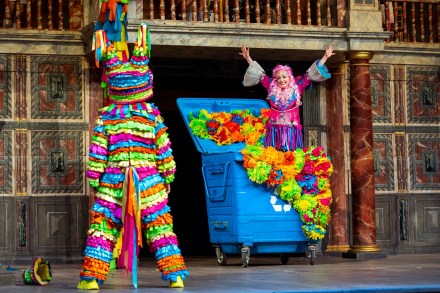
Back to the Globe after more than a year. The theatre has zealously maintained its pre--Covid staffing levels. On press night, there were eight sentries patrolling the forecourt where just 42 masked spectators watched a revival of Sean Holmes’s A Midsummer Night’s Dream. The Globe describes his show as ‘raucous’. The action is set in a forest near Athens during the classical era but the text uses 16th-century English. So it seems crazy to add a third time zone but most directors do so unquestioningly. This modernised production features an array of multicoloured stylings inspired by funfairs and Caribbean carnivals. The palette is a mad rainbow of acid pinks, savage yellows, eye-stabbing greens and brutal scarlets.

Ikea Starmer: Labour’s wooden leader

From our UK edition

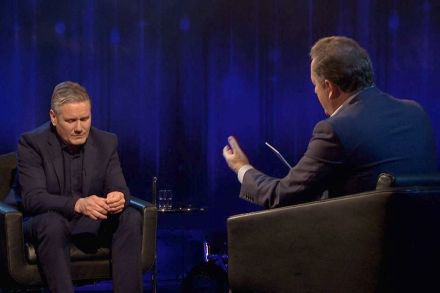
This was perhaps the most heavily-trailed Kleenex moment in recent TV history. The advance clips of Sir Keir Starmer’s interview with Piers Morgan suggested that the Labour leader would well up on-screen as he recalled his parents’ deaths and the fate of a family pet that was killed in a shed fire. We’re accustomed to seeing our leaders in tears. Mrs Thatcher wept after delivering her farewell address outside No. 10 in November 1990. She held it together for the speech itself but cracked up when she walked away from the microphone and towards her official car. Photos of her inside the vehicle showed her biting her jaw while her eyes brimmed over with emotion. 'Tears in the back seat,’ ran the Daily Mirror headline.

A brilliant, tense, ragged slice of drama: Waiting for Lefty reviewed

From our UK edition

A Russian Doll is a monologue about Putin’s campaign to swing the Brexit vote in his favour. It stars Rachel Redford whose Borat accent becomes grating after a little. She plays Masha, a computer wizard and language expert, who works for a firm of hackers appointed to spread fake news ahead of the referendum. Masha uses two techniques. She poses as a British Facebook subscriber and drops scary comments on to her timeline. ‘If we don’t leave the EU, Muslim extremists will flood the country.’ Her other ploy is to share a quiz about bikinis with her female correspondents. If the offer is taken up, the bots can harvest data from the correspondents and from their followers too. These methods seem rather time-consuming and haphazard.

Boris will be delighted with Dominic Cummings’s evidence

From our UK edition

Here it was. At long last. Dominic Cummings in the flesh at the parliamentary select committee. He was dressed in the same immaculate white cotton shirt that he sported for his ‘agony in the garden’ appearance in Downing Street a year ago. But this time he wasn’t in the dock. He was like a school governor on prize-giving day, handing out gongs, and delivering the odd stiff rebuke to senior prefects. Matt Hancock got a dressing-down he won’t forget. He was accused of misleading officials and the public. ‘He should have been fired for at least 15 or 20 things,’ said Dom, ‘for lying to everyone on multiple occasions.’ Whoops. Time for Hancock to start work on his memoirs. Boris got off fairly lightly.

A last hurrah for the Zoom play

From our UK edition

Lockdown is about to end but some theatres are gripped by cabin fever and want to explore the two new formats created by the pandemic. One is the Zoom play with multiple actors, the other is the sequence of filmed soliloquys linked by a theme or storyline. Tim Crouch has directed a Zoom version of B.S. Johnson’s satire House Mother Normal, which is set in an old folks’ home in the 1960s. The inmates are detained in a communal ward run by a sadistic nurse, the ‘house mother’, who enforces a programme of singalongs and party games. The house mother carries a weapon and feels free to beat anyone who defies her authority. That sounds peculiar but in the mid-20th century it was common for medical staff to lord it over their patients like public school prefects.

Sir Keir was defeated by his own strategy at PMQs

From our UK edition

The great thing about being trashed in the polls is that the tiniest improvement looks like a triumphant comeback. At PMQs the Labour leader, Sir Keir Starmer, needed to do some minor damage to Boris’s armour. The teeniest dent could be spun as a glorious revival. But Sir Keir was defeated by his own strategy. He attacked the government’s red-amber-green system of travel restrictions. This metaphorical tricolour is easy to interpret: amber-list countries are safe to travel to except when they’re dangerous. And amber-list countries are dangerous to travel to except when they’re safe. It’s the legal equivalent of an ‘amber shopping day,’ when thieves can operate with impunity. Sir Kier mocked the absurdity of this kaleidoscopic travel advice.

Clever, funny and fearless: Good Girl at Soho Theatre online reviewed

From our UK edition

A new work by Alan Bennett features in Still Life, a medley of five ‘untold stories’ from Nottingham Playhouse. The dramas were filmed during lockdown. Before the Bennett première, there’s a monologue by a wittering granny complaining about the price of cereal in a deserted food bank. Then, a banality-crammed slice of jabber between two van drivers eating lunch on a flight of stairs. This is followed by a ten-minute soliloquy from a precocious schoolgirl whose insights include, ‘my books are very heavy’ and ‘England is not part of Scotland’. A fourth cascade of tosh is parroted by a dim cab driver who trundles around the city bantering aimlessly with an eminently forgettable passenger.

Do theatres actually read scripts before agreeing to stage them?

From our UK edition

Money is a new internet play about financial corruption starring Mel Giedroyc. She appears on-screen for less time than it takes to eat a Malteser. Giedroyc plays the boss of a palm-oil firm that wipes out orangutan habitats in Asia and wants to launder its reputation by donating cash to a London charity. A million quid is on the table. The charity staff meet via Zoom to discuss the gift. But first they brief each other about their latest activities which, predictably enough, consist of stoking grievances and spreading self-pity. Their charitable aims include ‘tackling local loneliness’, and ‘breaking down barriers based on age, race and gender’. The meeting then moves to the big question: should they accept cash from a firm that kills cuddly animals?

Xenophobic twaddle: Bush Theatre’s 2036 reviewed

From our UK edition

The Bush Theatre’s new strand, 2036, opens with a monologue, Pawn, which takes its name from the most downtrodden piece on the chessboard. The speaker, Jordan, is an amiable dimwit of mixed Trinidadian and South African heritage whose mother explains his background to him like a condescending anthropologist: ‘Trinidad and South Africa are countries with cultures too rich for most people to understand.’ Jordan describes his life in London which consists exclusively of battling oppression. He buys fried chicken from Yusef, a Turkish food-seller, and he learns a greeting in Turkish that Yusef recognises. So Yusef starts to slip him extra portions as a perk. A white teenager hears of this practice and orders Yusef to suspend the freebies to Jordan.

Boris Johnson’s Krakatoa moment

From our UK edition

He blew his stack. His mop almost came loose from his scalp. He wasn’t just jabbing his forefinger and tossing his arms around, he was throwing combinations and swinging at punch-bags. He almost did the Ali shuffle. At PMQs Boris delivered an amazingly combative performance. Last week he smouldered like Etna. This week the summit exploded. This was Krakatoa. Sir Keir arrived, with his starched quiff and his icy smirk, hoping to undo the Prime Minister by stealth. He raised the notorious October quote when Boris is alleged to have said that ‘bodies piled high’ would be preferable to a renewed lockdown. Did he say that? ‘No,’ Boris replied. ‘Lockdowns are miserable, appalling things to have to do.

Why do theatres think audiences want Covid-related drama?

Hats off to the Orange Tree Theatre in Richmond. They’ve discovered a new form of racism. Some people say we have enough ethnic division already but in south-west London they’re gagging for more apparently. A new play, Prodigal, examines the prejudice endured by a Ugandan chap whose mother moved to London when he was a child and whose younger siblings are British. Family tensions depressed him. ‘You all made me feel ugly,’ he moans. The shifty whinger has returned home after his mother’s death in order to cheat his family out of an insurance pay-off. It’s remarkable to see a drama that reinforces a damaging stereotype but the author, Kalungi Ssebandeke, is content to put a bungling African crook on stage.

Boris’s mask slipped at PMQs

From our UK edition

Oh dear. Those texts. A bit awkward isn’t it? At PMQs, Sir Keir quizzed Boris about the exchanges between James Dyson and the PM which have been leaked by a saboteur. Boris was rattled. The texts reveal a side of his nature that he wants kept secret. The smug and rather puerile grandee luxuriating in his power and status. Look at me. Marvel at my cleverness. Watch as I solve your problems with my fingertips. See how ministers leap at my command. This will permanently damage a man who likes to pose as the people’s servant, toiling night and day to restore the fortunes of a once mighty kingdom. Sir Keir did well. Not brilliantly. ‘Favours, privileged access, tax breaks for mates,’ he said, ‘This is the main currency in this Conservative government.

Theatre’s final taboo: fun

From our UK edition

How will the theatre look after lockdown? A clue emerges in a statement made by Guy Jones, the literary associate of the Orange Tree in Richmond. ‘The victims of this year are many. Homelessness is on the rise, loneliness is deadly, the monster of racism lurks in every-day interactions… and many of the inequalities we live with are written into the systems in which we are asked to participate.’ ‘The victims’. That’s his starting point. It might seem odd that a theatre should prioritise the injured and the aggrieved, as if the stage were a tribunal or a public court where justice is dispensed. But that’s how theatres see themselves. Lockdown and the rise of BLM in 2020 have created a host of new causes to be fought over by snarling dramatists.